
Virginia Beach VA Firearm Charges Lawyer
 If you have been charged with a firearm or weapon offense in Virginia Beach, the case may depend on who allegedly possessed the firearm, where it was found, how it was carried, displayed, or used, whether another criminal offense is alleged, and how police obtained the firearm or other evidence. Virginia firearm charges can involve prohibited possession, concealed weapons, brandishing, reckless handling, use of a firearm during another offense, firearm-purchase allegations, unlawful discharge, and other gun-related offenses. The exact Virginia Code section matters because firearm charges can carry very different elements, penalties, and collateral consequences. Our Virginia Beach firearm charges lawyers review possession and ownership issues, vehicle and residence searches, statements to police, body-camera and surveillance footage, firearm and ammunition evidence, criminal-history issues, protective orders, firearm-right restoration, self-defense where applicable, and other facts that may affect the charge or available defenses. A firearm charge can also affect employment, professional licensing, security clearance, military service, firearm rights, and future opportunities. Our attorneys represent clients facing misdemeanor and felony firearm and weapon charges in the Virginia Beach courts.







Virginia Beach Firearm Charges Defense Guide
Virginia Beach Defense Services
For broader statewide guidance, see our Virginia Firearm Charges Lawyer page.
Firearm and Weapon Charges in Virginia Beach
Virginia law contains numerous criminal offenses involving firearms and other weapons. The exact charge matters because the elements, classification, possible defenses, and potential punishment vary significantly depending on who allegedly possessed the firearm, where it was found, how it was carried, displayed, discharged, or used, the accused person’s legal status, and whether another criminal offense is alleged.
Virginia Beach firearm and weapon cases may involve:
- carrying a concealed firearm or other covered concealed weapon;
- pointing, holding, or brandishing a firearm;
- possession or transportation of a firearm by a convicted felon or other prohibited person;
- false statements made during a firearm purchase or transfer;
- use or display of a firearm while committing certain felonies;
- possession of a firearm together with certain controlled substances;
- possession or use of a firearm during drug distribution or possession with intent to distribute;
- reckless handling of a firearm;
- unlawful discharge of a firearm;
- possession of firearms in restricted locations;
- certain loaded-firearm allegations in public areas of Virginia Beach; and
- other offenses involving possession, transportation, purchase, transfer, discharge, or use of firearms.
Some Virginia Beach firearm offenses are misdemeanors. Others are felonies carrying substantial prison exposure. Certain firearm statutes also impose mandatory minimum sentences that must be served consecutively to punishment for another offense.
The warrant, indictment, criminal history, related court orders, and exact Virginia Code section should therefore be reviewed before determining the potential consequences or defense strategy.
Carrying a Concealed Weapon in Virginia Beach
 Virginia Code § 18.2-308 regulates carrying specified firearms and other weapons hidden from common observation. Whether a weapon was actually concealed, whether the accused knew it was present, and whether a concealed handgun permit or statutory exception applies can become important issues in a Virginia Beach concealed-weapon case. A first violation is generally a Class 1 misdemeanor. A second qualifying violation is punishable as a Class 6 felony, and a third or subsequent qualifying violation is punishable as a Class 5 felony.
A concealed-weapon case can involve several separate questions:
- Was the item actually a weapon covered by § 18.2-308?
- Was the weapon carried about the accused person’s body?
- Was it hidden from common observation?
- Did the accused know the weapon was present?
- Did the accused possess a valid concealed handgun permit?
- Did a residence, business, vehicle, or other statutory exception apply?
- Was the weapon discovered during a lawful Virginia Beach police stop or search?
- Is the Commonwealth relying on a prior concealed-weapon conviction to increase the classification of the charge?
What Does Hidden From Common Observation Mean?
Whether a firearm or other covered weapon was actually concealed can become a central issue.
The question is not simply whether a police officer eventually discovered the weapon. The circumstances in which it was carried, what portions of the weapon were visible, whether an ordinary observer could recognize it as a weapon, and whether clothing, a bag, vehicle compartment, or another object obscured it may all matter.
Virginia law contains numerous statutory exceptions. A Virginia Beach concealed-weapon allegation should therefore be evaluated under the specific subsection and facts rather than assuming that any firearm not immediately visible was unlawfully concealed.
Concealed Handguns in Virginia Beach Vehicle Cases
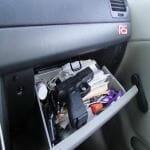 Many Virginia Beach firearm charges arise after traffic stops and vehicle searches. Virginia law provides an exception for a person who may lawfully possess a firearm and carries a handgun in a personal, private motor vehicle or vessel when the handgun is secured in a container or compartment. The precise location and condition of the handgun can therefore be important. A handgun secured within a qualifying container or compartment presents a different legal issue from a weapon lying loose and concealed under a seat.
Vehicle firearm cases may involve a weapon located in:
- a glove compartment;
- a center console;
- a backpack or bag;
- a firearm case;
- a purse;
- a storage compartment;
- under or beside a seat; or
- another location inside the vehicle.
Vehicle ownership, the number of occupants, where each person was seated, ownership of the firearm, access to the location, statements made during the traffic stop, and how police discovered the firearm may affect both possession and search-and-seizure issues.
Brandishing a Firearm in Virginia Beach
Virginia Code § 18.2-282 prohibits specified conduct involving pointing, holding, or brandishing a firearm, an air- or gas-operated weapon, or an object similar in appearance in a manner that reasonably induces fear in another person.
Ordinary brandishing under § 18.2-282 is generally a Class 1 misdemeanor. A qualifying violation occurring on specified school property or public property within 1,000 feet of such school property can be prosecuted as a Class 6 felony.
Virginia Beach brandishing allegations may arise from arguments, road or parking disputes, confrontations between acquaintances, domestic incidents, neighborhood disputes, business encounters, or other situations in which witnesses disagree about how or why a firearm was displayed.
A brandishing case may depend on:
- exactly how the firearm was held or displayed;
- whether it was pointed at another person;
- what was said before and during the incident;
- whether the alleged conduct reasonably induced fear;
- whether the firearm was displayed in a public place;
- witness credibility;
- surveillance, cellphone, body-camera, or other video;
- 911 calls and contemporaneous statements;
- whether the accused was responding to a threat; and
- whether self-defense applies.
Self-Defense and Virginia Beach Brandishing Charges
Section 18.2-282 expressly provides that the statute does not apply to a person engaged in excusable or justifiable self-defense.
The events leading to the firearm display can therefore be particularly important. The defense may examine who initiated or escalated the confrontation, how close the parties were, whether threatening words or conduct occurred, whether the accused reasonably perceived an imminent threat, what happened immediately before the firearm was displayed, and whether the alleged danger continued.
Video, witness testimony, 911 recordings, injuries, physical positioning, and prior communications where legally relevant may help establish the circumstances in which the firearm was displayed.
Possession of a Firearm by a Prohibited Person in Virginia Beach
Virginia firearm prohibitions can arise from several different legal circumstances. The source of the alleged prohibition matters because different statutes contain different elements, exceptions, durations, and penalties.
Possession of a Firearm by a Convicted Felon
Virginia Code § 18.2-308.2 generally prohibits a person convicted of a felony from knowingly and intentionally possessing or transporting a firearm or firearm ammunition.
A violation is generally a Class 6 felony.
The statute also imposes mandatory minimum punishment in certain cases. A person previously convicted of a violent felony who knowingly and intentionally possesses or transports a firearm can face a five-year mandatory minimum sentence. A person whose prior felony was not classified as violent but occurred within the preceding 10 years can face a two-year mandatory minimum sentence.
Those mandatory minimum sentences are required to run consecutively with other punishment.
A Virginia Beach felon-in-possession prosecution may involve questions concerning:
- the exact prior conviction;
- the date and jurisdiction of the conviction;
- whether the Commonwealth can establish knowing possession;
- whether the firearm belonged to someone else;
- whether the firearm was found in a shared vehicle or residence;
- whether civil rights and firearm rights had previously been restored;
- whether another statutory exception applies; and
- whether police lawfully obtained the firearm.
Other Virginia Firearm Prohibitions
Virginia law contains additional firearm restrictions involving circumstances such as certain protective orders, mental-health adjudications or commitments, substantial-risk orders, qualifying juvenile adjudications, and certain qualifying misdemeanor assault convictions.
The prohibited conduct is not identical under every statute. Depending on the particular restriction, Virginia law may prohibit purchase, possession, transportation, carrying, or some combination of those activities.
The actual court order, conviction record, offense date, statutory provision, restoration history, and duration of the restriction should be reviewed carefully before assuming that a particular firearm prohibition applies.
Federal law can create separate firearm disabilities even when Virginia law produces a different result.
Actual and Constructive Possession of a Firearm in Virginia Beach
Many Virginia Beach firearm prosecutions depend on whether the Commonwealth can prove that the accused knowingly possessed the firearm.
Possession does not necessarily require police to find a firearm in someone’s hand, pocket, or waistband. The Commonwealth may attempt to establish constructive possession when a firearm is recovered from a vehicle, residence, bedroom, hotel room, bag, container, or another location.
Important circumstances may include:
- where the firearm was found;
- who owned the firearm;
- who owned or controlled the vehicle, residence, room, bag, or container;
- whether other people had access to the location;
- where the accused was positioned in relation to the firearm;
- whether the accused knew the firearm was present;
- whether fingerprints or DNA connect the accused to the firearm;
- whether photographs, text messages, or social-media evidence reference the firearm;
- what statements were made to police; and
- whether the surrounding circumstances establish dominion or control.
Ownership and possession are different issues. A firearm can belong to one person while the Commonwealth alleges that another person possessed it.
Conversely, the presence of a firearm in a vehicle, residence, hotel room, or other location shared by several people does not by itself answer whether a particular person knowingly possessed it.
False Statements During a Firearm Purchase or Transfer
 Virginia Code § 18.2-308.2:2 requires specified criminal-history record checks and documentation in connection with certain firearm transactions. The statute makes it a Class 5 felony to willfully and intentionally make a materially false statement on the required firearm-purchase consent form or on specified firearm transaction records required by federal law. These cases can turn on the precise wording of the question, the answer provided, whether the answer was actually false and material, and whether the accused acted willfully and intentionally. The person’s underlying legal status and understanding of that status can therefore become important.
Relevant issues may include:
- the exact question asked on the firearm form;
- the answer provided;
- whether the answer was actually false;
- whether the statement was material;
- whether the accused acted willfully and intentionally;
- the person’s criminal history;
- protective-order information;
- mental-health records relevant to an alleged firearm prohibition;
- substantial-risk-order records;
- Virginia State Police records;
- federal firearm transaction documents; and
- whether the accused misunderstood the question or underlying legal status.
The existence of a potentially disqualifying event does not eliminate the requirement that the Commonwealth prove the elements of the false-statement offense, including the required mental state and material falsity.
Use or Display of a Firearm While Committing Certain Felonies
Virginia Code § 18.2-53.1 creates a separate felony when a firearm is used, attempted to be used, or displayed in a threatening manner while committing or attempting to commit certain specifically listed felonies.
Covered offenses include murder, rape and certain other sexual offenses, robbery, carjacking, burglary, malicious wounding, aggravated malicious wounding, abduction, and other offenses identified in the statute.
A first conviction under § 18.2-53.1 carries a mandatory minimum sentence of three years.
A second or subsequent conviction carries a mandatory minimum sentence of five years.
The firearm sentence is separate from and must run consecutively to punishment imposed for the underlying felony.
A defense to a § 18.2-53.1 charge may involve both the firearm allegation and the underlying felony. Relevant issues can include:
- whether the Commonwealth can prove the underlying felony;
- whether the accused possessed the alleged firearm;
- whether the object was a firearm for purposes of the charged statute;
- whether it was used, attempted to be used, or displayed in the required manner;
- identity;
- witness credibility;
- video evidence;
- statements attributed to the accused; and
- self-defense where legally applicable to the underlying allegations.
Firearms and Drug Charges in Virginia Beach
Virginia Code § 18.2-308.4 creates separate felony offenses involving firearms and certain controlled substances.
Under Virginia law currently in effect, a person who unlawfully possesses a Schedule I or Schedule II controlled substance and simultaneously, with knowledge and intent, possesses a firearm can be charged with a separate Class 6 felony.
When the firearm is possessed on or about the person together with the qualifying controlled substance, the statute provides for a two-year mandatory minimum sentence.
The statute also provides a five-year mandatory minimum when a firearm is possessed, used, attempted to be used, or displayed in a threatening manner while committing or attempting certain manufacture, sale, distribution, or possession-with-intent-to-distribute offenses involving Schedule I or II controlled substances. Under the law currently effective in 2026, that provision also addresses more than one pound of marijuana.
These firearm offenses are separate from the underlying drug charge, and applicable mandatory punishment is consecutive.
Important issues can include:
- whether the accused knowingly possessed the firearm;
- whether the accused knowingly possessed the controlled substance;
- where the firearm and alleged drugs were found;
- whether the firearm was actually on or about the accused person’s body;
- whether constructive possession can be established;
- whether another person had access to the firearm or drugs;
- whether the Commonwealth can prove distribution or intent to distribute;
- whether the traffic stop or search was lawful; and
- whether statements or electronic evidence are admissible and reliable.
Virginia has enacted changes to this statute scheduled to take effect July 1, 2027. A firearm-and-drug allegation should therefore be evaluated under the law in effect on the alleged offense date.
Reckless Handling and Unlawful Discharge of a Firearm in Virginia Beach
Virginia law contains several separate criminal offenses involving the handling or discharge of firearms.
Reckless Handling of a Firearm — § 18.2-56.1
Virginia Code § 18.2-56.1 makes it unlawful to handle a firearm recklessly so as to endanger the life, limb, or property of another person.
Ordinary reckless handling is a Class 1 misdemeanor.
When firearm handling is so gross, wanton, and culpable as to show a reckless disregard for human life and causes serious bodily injury resulting in permanent and significant physical impairment, the offense can be prosecuted as a Class 6 felony.
A Virginia Beach reckless-handling case may depend on what the accused actually did with the firearm, whether it was loaded, where other people were located, whether a discharge occurred, the direction in which the weapon was pointed, firearm-safety evidence, witness testimony, video evidence, and statements made afterward.
Willfully Discharging a Firearm in a Public Place — § 18.2-280
Virginia Code § 18.2-280 prohibits specified willful firearm discharges in streets, places of public business, and places of public gathering.
When no bodily injury results, the offense is generally a Class 1 misdemeanor.
When the discharge results in bodily injury to another person, the offense is a Class 6 felony.
The statute provides substantially more serious treatment for specified discharges on school property or public property within 1,000 feet of school property.
Shooting Within or at an Occupied Building — § 18.2-279
Virginia Code § 18.2-279 addresses firing a weapon within or at certain occupied buildings or dwelling houses.
A malicious shooting that places occupants’ lives in peril can constitute a Class 4 felony. Conduct that is unlawful but not malicious can constitute a Class 6 felony.
Cases involving discharge allegations can depend heavily on intent, malice, the exact location, whether a building was occupied, trajectory evidence, witness testimony, firearm evidence, and whether the conduct was justified or excusable.
Firearms on School Property and Other Restricted Locations
Virginia Code § 18.2-308.1 restricts knowing possession of firearms and certain other weapons on specified school property, school buses, and during certain school-sponsored activities, subject to statutory exceptions.
A qualifying firearm-possession violation can constitute a Class 6 felony.
Location can also affect the classification of other firearm offenses. For example, Virginia’s brandishing and firearm-discharge statutes contain enhanced penalties for specified conduct on or near school property.
A restricted-location allegation should be evaluated by determining:
- the precise location where the firearm was allegedly possessed or used;
- whether the location falls within the statute;
- whether the accused knowingly possessed the firearm;
- whether a statutory exception applies;
- how the firearm was transported or stored;
- whether the accused had lawful authority to be armed; and
- whether the firearm was discovered through a lawful police encounter or search.
Certain Loaded Firearms in Public Areas of Virginia Beach
Virginia Beach is specifically named in Virginia Code § 18.2-287.4, which under the law currently effective through June 30, 2027 restricts carrying certain loaded firearms in specified public areas.
The provision applies to certain loaded semi-automatic center-fire rifles or pistols based on magazine capacity or specified firearm characteristics, as well as certain shotguns based on magazine capacity. Covered locations include public streets, roads, alleys, sidewalks, public rights-of-way, parks, and other places open to the public in Virginia Beach.
The statute contains important exceptions, including specified exceptions involving concealed handgun permit holders, law-enforcement officers, certain security personnel, military personnel acting in their lawful duties, lawful hunting, and qualifying recreational shooting activities.
A charge under this provision should be evaluated by examining the exact firearm, its configuration, magazine capacity, whether it was loaded, the location involved, and whether an exception applied.
This Virginia Beach-specific provision is presently scheduled to change on July 1, 2027. The law in effect on the date of the alleged conduct should therefore be identified before evaluating the charge.
Vehicle Firearm Cases in Virginia Beach
Firearm charges frequently arise from Virginia Beach traffic stops and vehicle searches.
A firearm discovered somewhere inside a vehicle can create several different legal issues at the same time. Depending on the facts, the Commonwealth may allege concealed carry, prohibited-person possession, constructive possession, possession in connection with drugs, or another firearm offense.
The defense may need to determine:
- who owned the vehicle;
- who owned the firearm;
- where each occupant was seated;
- the precise location where the firearm was found;
- whether it was inside a closed container or compartment;
- whether anyone admitted owning or possessing the firearm;
- whether passengers had equal access to the location;
- whether fingerprints, DNA, photographs, or electronic evidence connect a person to the firearm;
- whether Virginia Beach police lawfully stopped the vehicle; and
- whether the subsequent search was lawful.
The discovery of a firearm somewhere inside a vehicle does not by itself determine which occupant knowingly possessed it or whether the manner in which it was carried violated Virginia law.
Search and Seizure Issues in Virginia Beach Firearm Cases
 Virginia Beach firearm charges often begin when police recover a weapon during a traffic stop, investigative detention, pat-down, vehicle search, residence search, execution of a search warrant, or another law-enforcement encounter. The recovery of a firearm does not end the legal inquiry. The defense should examine why police made contact, what legal authority supported the detention or search, where the firearm was discovered, and whether officers remained within the scope of their lawful authority. When evidence is obtained in violation of constitutional protections, a motion to suppress may substantially affect the Commonwealth’s ability to proceed with the Virginia Beach firearm charge.
Depending on the circumstances, relevant questions can include:
- whether police had reasonable suspicion for the original traffic stop or detention;
- whether the detention was unlawfully prolonged;
- whether officers had lawful grounds to conduct a frisk;
- whether an officer had probable cause for a warrantless vehicle search;
- whether consent to search was actually given;
- whether any consent was voluntary and what its scope was;
- whether officers relied on a lawful vehicle-search exception;
- whether a search warrant was supported by probable cause;
- whether officers remained within the scope of the warrant;
- whether the accused had a protected privacy interest in the place searched; and
- whether statements or additional evidence resulted from unlawful police conduct.
Self-Defense Issues in Virginia Beach Firearm Cases
Self-defense can become particularly important when an allegation involves brandishing, pointing, displaying, firing, or otherwise using a firearm during a confrontation.
The analysis may depend on:
- who initiated or escalated the confrontation;
- whether the accused reasonably perceived an imminent threat;
- the nature of the threatened harm;
- whether the accused was lawfully defending another person;
- the amount and type of force used;
- whether the perceived danger continued;
- witness testimony;
- surveillance, cellphone, or body-camera recordings;
- 911 calls;
- physical evidence and injuries; and
- statements made before, during, and after the encounter.
Self-defense should not be treated as a universal defense to every firearm offense. A separate legal prohibition on firearm possession, for example, can present issues different from whether displaying or using a firearm during a confrontation was justified.
Evidence Used in Virginia Beach Firearm Cases
Virginia Beach firearm prosecutions may involve physical, documentary, electronic, forensic, and testimonial evidence.
Relevant evidence can include:
- the firearm and ammunition allegedly recovered;
- photographs showing where the firearm was located;
- Virginia Beach Police body-camera footage;
- dashboard-camera recordings;
- surveillance or cellphone video;
- 911 calls and dispatch records;
- vehicle or residence search evidence;
- fingerprints or DNA evidence where available;
- ballistics or firearm examination evidence;
- text messages, photographs, social-media material, or other electronic evidence;
- firearm purchase and transaction records;
- concealed handgun permit records;
- Virginia State Police or criminal-history records;
- prior court orders allegedly creating a firearm disability;
- firearm-right restoration records where applicable;
- witness testimony;
- statements attributed to the accused; and
- evidence relating to any underlying criminal offense.
The evidence should be evaluated as a whole. Recovery of a firearm may establish that a weapon was present without necessarily establishing who knowingly possessed it, whether possession was prohibited, whether it was unlawfully concealed, or whether every element of the charged Virginia Beach offense can be proven.
Common Defense Issues in Virginia Beach Firearm Cases
The available defense depends on the exact firearm statute and evidence.
Lack of Knowing Possession
The Commonwealth may be unable to establish that the accused knew the firearm was present or exercised sufficient dominion or control over it. Shared vehicles, residences, hotel rooms, bags, and containers can create significant possession issues.
The Weapon Was Not Concealed
A § 18.2-308 prosecution requires proof that the covered weapon was carried hidden from common observation. How the firearm or weapon was carried and what could actually be observed can therefore become important.
Permit or Statutory Exception
Virginia firearm laws contain numerous exceptions and qualifications. A concealed handgun permit, vehicle exception, residence exception, restoration order, occupational status, military status, or another statutory provision may affect whether the conduct was prohibited.
Self-Defense
Self-defense may apply to certain allegations involving the display or use of a firearm. Virginia’s brandishing statute expressly contains a self-defense exception.
Incorrect Prohibited-Person Status
A firearm prosecution may depend on a prior conviction, juvenile adjudication, protective order, mental-health proceeding, substantial-risk order, qualifying misdemeanor conviction, or other legal status. The underlying records should be reviewed to determine whether the alleged firearm disability actually existed on the offense date.
Unlawful Search or Seizure
A firearm recovered during an unconstitutional traffic stop, detention, frisk, vehicle search, residence search, or execution of a warrant may present a suppression issue.
Mistaken Identity
The Commonwealth must establish that the accused was the person who possessed, carried, displayed, discharged, purchased, or otherwise engaged in the conduct charged.
Failure to Prove Intent or Knowledge
Several firearm statutes contain specific intent or knowledge requirements. A false-statement prosecution, possession offense, drug/firearm charge, or discharge allegation may depend on proving a particular mental state rather than simply establishing that a firearm was involved.
Failure to Prove the Underlying Offense
Charges under §§ 18.2-53.1 and 18.2-308.4 can depend on proof of a separate felony or drug offense. A weakness in the Commonwealth’s proof of the underlying crime may therefore affect the related firearm prosecution.
Witness Credibility and Conflicting Accounts
Brandishing, discharge, and firearm-use allegations frequently depend heavily on witness testimony. Video, 911 recordings, physical evidence, prior inconsistent statements, and other evidence may corroborate or contradict those accounts.
Firearm Penalties and Mandatory Minimum Sentences
Virginia firearm offenses vary substantially in seriousness.
| Charge | General Treatment |
|---|---|
| First-Offense Concealed Weapon under § 18.2-308 | Generally Class 1 Misdemeanor |
| Ordinary Brandishing under § 18.2-282 | Generally Class 1 Misdemeanor |
| Felon in Possession under § 18.2-308.2 | Class 6 Felony; mandatory minimums may apply |
| False Statement on Firearm Transaction Records under § 18.2-308.2:2 | Class 5 Felony |
| Firearm During Certain Felonies under § 18.2-53.1 | Separate Felony; 3-year first-offense mandatory minimum |
| Firearm on or About the Person with Certain Drugs under § 18.2-308.4 | Class 6 Felony; 2-year mandatory minimum |
| Firearm During Certain Drug Distribution Offenses under § 18.2-308.4 | Class 6 Felony; 5-year mandatory minimum |
| Ordinary Reckless Handling under § 18.2-56.1 | Class 1 Misdemeanor |
This table provides only a general overview. Repeat offenses, prior convictions, injury, location, an underlying felony, drug conduct, and other statutory circumstances can substantially change the potential punishment.
Mandatory-minimum and consecutive-sentencing provisions make identifying the precise statute and subsection particularly important in Virginia Beach firearm cases.
Virginia Beach Firearm Charges and Future Firearm Rights
A firearm-related conviction can affect a person’s future ability to purchase, possess, transport, or carry firearms, but the consequences depend on the exact conviction and any separate Virginia or federal prohibition.
A felony conviction can create significant firearm consequences. Certain misdemeanor convictions, protective orders, mental-health proceedings, substantial-risk orders, and other legal disabilities may also affect firearm rights.
Virginia and federal firearm laws must be evaluated separately. A change in state law or restoration of rights under one legal system does not necessarily eliminate a prohibition imposed by the other.
For information about restoration after a qualifying Virginia felony conviction, see our Virginia Restoration of Firearm Rights page.
Virginia Beach Firearm Investigations and Prosecution
Firearm investigations in Virginia Beach may involve the Virginia Beach Police Department, Virginia State Police, or another law-enforcement agency with jurisdiction over the location or conduct at issue.
A firearm investigation may begin with a traffic stop, domestic call, assault allegation, 911 report, vehicle search, search warrant, prohibited-person investigation, drug investigation, firearm transaction, or another encounter in which law enforcement recovers or receives information about a firearm.
The defense may examine police body-camera footage, 911 recordings, witness statements, search-warrant materials, photographs, firearm evidence, criminal-history information, transaction records, electronic communications, and statements attributed to the accused.
Criminal firearm charges arising in Virginia Beach are prosecuted by the Virginia Beach Commonwealth’s Attorney’s Office. Riley & Wells Attorneys-At-Law is a private criminal defense firm and is not affiliated with the prosecutor, courts, or law-enforcement agencies.
Virginia Beach Firearm Charges, Military Service and Security Clearances
A firearm charge can create concerns beyond the criminal-court sentence for active-duty military personnel, government employees, defense contractors, professional-license holders, and people who hold or seek security clearances.
Depending on the circumstances, a firearm arrest, charge, protective order, prohibited-person allegation, or conviction may create reporting, employment, command, base-access, licensing, or security-clearance concerns.
Those collateral consequences should be identified when evaluating the criminal case and possible resolutions rather than considered only after the case has concluded.
Virginia Beach Courts and the Firearm Charge Process
 Adult misdemeanor firearm and weapon charges in Virginia Beach are generally handled in Virginia Beach General District Court. Felony firearm charges may begin there for preliminary proceedings and later proceed to Virginia Beach Circuit Court through preliminary hearing, waiver, indictment, or another procedure authorized by Virginia law. Virginia Beach General District Court and Virginia Beach Circuit Court are located within the judicial complex on Nimmo Parkway. The charging documents should be reviewed at the beginning of the case to identify the exact Virginia Code section, offense classification, alleged firearm conduct, court date, and court in which the matter is pending.
Virginia Beach General District Court
Virginia Beach General District Court is located at:
2425 Nimmo Parkway
Virginia Beach, Virginia 23456
Proceedings can include an advisement or arraignment, bond issues, discovery, suppression motions, misdemeanor trials, negotiations, and preliminary hearings in felony firearm cases.
Virginia Beach Circuit Court
Virginia Beach Circuit Court is located at:
2425 Nimmo Parkway
Virginia Beach, Virginia 23456
Circuit Court handles felony trials and other felony proceedings after indictment, as well as appeals of qualifying misdemeanor convictions from General District Court.
Virginia Beach firearm cases in Circuit Court may involve suppression motions, search warrants, vehicle or residence searches, statements, forensic evidence, criminal-history records, firearm-transaction documents, mandatory-minimum sentencing provisions, and litigation concerning an underlying felony or drug offense.
Virginia Beach Firearm Charges Lawyer Reviews

What to Send for a Virginia Beach Firearm Charge Case Review
Helpful information may include:
- the summons, warrant, indictment, or other charging document;
- the scheduled Virginia Beach court date;
- bond or release paperwork;
- any search warrant or warrant inventory provided by police;
- property or evidence receipts;
- information concerning where the firearm was allegedly recovered;
- documents concerning ownership of the firearm;
- a concealed handgun permit, if applicable;
- prior conviction or court records if prohibited-person status is alleged;
- firearm-right restoration documents if applicable;
- protective orders, substantial-risk orders, or other orders relevant to an alleged firearm restriction;
- firearm purchase or transaction paperwork if a false-statement charge is alleged;
- photographs of the vehicle, bag, compartment, residence, hotel room, or other location where the firearm was found;
- vehicle ownership or registration information;
- photographs or video relating to the incident;
- relevant text messages or other electronic communications;
- names and contact information for potential witnesses;
- information concerning any related drug, assault, or felony charge;
- military, employment, licensing, or security-clearance concerns; and
- other paperwork provided by law enforcement, a magistrate, prosecutor, or court.
Potentially relevant evidence should be preserved in its original form. Do not alter, delete, crop, edit, or overwrite photographs, video, messages, documents, electronic records, or other information that may relate to the charge.
Frequently Asked Questions About Virginia Beach Firearm Charges
What types of firearm charges are prosecuted in Virginia Beach?
Virginia firearm offenses prosecuted in Virginia Beach can include carrying a concealed weapon, brandishing, prohibited-person possession, false statements during firearm transactions, possession or use of a firearm in connection with certain felonies or drug offenses, reckless handling, unlawful discharge, possession in restricted locations, and other firearm-related offenses.
Is carrying a concealed weapon a felony in Virginia?
A first violation of Virginia Code § 18.2-308 is generally a Class 1 misdemeanor. A second qualifying violation is punishable as a Class 6 felony, and a third or subsequent qualifying violation is punishable as a Class 5 felony.
Can I legally have a handgun in my vehicle in Virginia Beach?
Virginia law contains exceptions that can permit a person who may lawfully possess a firearm to carry a handgun in a personal, private motor vehicle when the handgun is secured in a qualifying container or compartment. Whether an exception applies depends on the precise facts, location of the firearm, manner in which it was stored, and the person’s legal status.
What is brandishing a firearm in Virginia?
Virginia Code § 18.2-282 prohibits specified pointing, holding, or brandishing of a firearm or similar weapon in a manner that reasonably induces fear in another person. Ordinary brandishing is generally a Class 1 misdemeanor, although enhanced treatment applies in certain school-related locations.
Does self-defense apply to a Virginia Beach brandishing charge?
Virginia Code § 18.2-282 expressly provides that the brandishing statute does not apply to a person engaged in excusable or justifiable self-defense. Whether self-defense applies depends on the circumstances leading to the firearm display, the threat reasonably perceived, and the evidence concerning the confrontation.
Can a convicted felon possess a firearm in Virginia?
Virginia Code § 18.2-308.2 generally prohibits a person convicted of a felony from knowingly and intentionally possessing or transporting a firearm or firearm ammunition unless an applicable exception or valid restoration applies. Violations can carry mandatory minimum sentences depending on the prior felony record.
What is constructive possession of a firearm?
Constructive possession may be alleged when a firearm is not physically on the accused but is found in a vehicle, residence, room, hotel room, bag, container, or another location. The Commonwealth must rely on evidence establishing knowledge and a sufficient connection to or control over the firearm rather than mere proximity alone.
What happens if someone gives a false answer on a firearm purchase form?
Virginia Code § 18.2-308.2:2 makes it a Class 5 felony to willfully and intentionally make a materially false statement on the required firearm-purchase consent form or specified firearm transaction records required by federal law.
Can an illegal search affect a Virginia Beach firearm charge?
Yes. Virginia Beach firearm charges frequently arise from traffic stops, pat-downs, vehicle searches, residence searches, or search warrants. If a firearm or other evidence was obtained through an unconstitutional stop, detention, search, or seizure, a suppression motion may affect whether the Commonwealth can use that evidence.
Where are Virginia Beach firearm charges heard?
Adult misdemeanor firearm and weapon charges are generally handled in Virginia Beach General District Court. Felony firearm charges may begin in General District Court and later proceed to Virginia Beach Circuit Court, or they may proceed through indictment in Circuit Court.
Talk to a Virginia Beach Firearm Charges Lawyer
If you have been charged with a firearm or weapon offense in Virginia Beach, early review can help identify the exact statute involved, determine what the Commonwealth must prove, evaluate how the firearm was recovered, and identify possession, concealment, prohibited-person status, self-defense, search-and-seizure, mandatory-minimum, or other issues that may affect the case. Our attorneys represent clients facing misdemeanor and felony firearm and weapon charges in the Virginia Beach courts. Contact our attorneys for a confidential case review and include the name on the paperwork, the Virginia Beach court date, the exact charge, and a copy or photograph of the available documents.
10/12/2026