
Manassas VA Speeding Ticket Lawyer
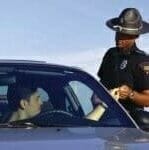 Riley & Wells Attorneys-At-Law represents Virginia and out-of-state drivers charged with speeding in Manassas, Virginia. Our Manassas speeding ticket lawyers defend allegations involving radar, lidar, pacing, school zones, work zones, and other speed-measurement evidence. An ordinary speeding ticket is generally a traffic infraction rather than a criminal offense, but a conviction may still result in fines, court costs, Virginia DMV demerit points, driving-record consequences, automobile-insurance concerns, and possible action by an out-of-state licensing authority. We review the summons, alleged speed, posted speed limit, location, officer’s measurement method, driving record, and available mitigation to determine the appropriate strategy for the case.






Manassas Speeding Ticket Defense Guide
Manassas Defense Services
- Manassas VA Overview
- Manassas Traffic Lawyer
- Manassas Reckless Driving Lawyer
- Manassas DUI Lawyer
- Manassas Criminal Defense Lawyer
For broader statewide guidance, see our Virginia Speeding Ticket Lawyer page.
Ordinary Speeding Tickets in Manassas, Virginia
An ordinary speeding violation is generally prosecuted as a traffic infraction rather than a criminal misdemeanor. The prosecution must still establish that the accused operated the identified vehicle in excess of the speed limit that applied at the location of the alleged offense. A Manassas speeding case may involve radar, lidar, pacing, a police-vehicle speedometer, or another speed-measurement method. The appropriate defense and preparation depend on the alleged speed, posted limit, location, measurement method, driving record, and evidence available to the officer. The strategy may involve contesting the speed evidence, challenging whether the prosecution can establish the offense, presenting mitigation, seeking an amended charge, or preparing the matter for trial. Our Manassas speeding ticket lawyers review:
- The exact Virginia Code section charged
- The alleged speed and posted speed limit
- The location of the alleged offense
- The officer’s speed-measurement method
- Radar, lidar, pacing, or other speed evidence
- The identification of the accused vehicle
- Equipment calibration and testing records
- The driver’s Virginia or out-of-state record
- Road, weather, visibility, and traffic conditions
- Statements attributed to the driver
- Speedometer-calibration evidence
- Mitigation that may affect the disposition
Virginia Speed-Limit Laws
The applicable speed limit may be established by a posted sign, the type of roadway, the surrounding district, or a special designation such as a school crossing, work zone, or highway safety corridor.
Virginia speeding allegations may arise under laws involving:
- § 46.2-870 — General maximum speed limits
- § 46.2-873 — School crossing zones
- § 46.2-873.1 — Nonsurface-treated highways
- § 46.2-873.2 — Rural rustic roads
- § 46.2-874 — Business and residence districts
- § 46.2-875 — Certain city and town highways
- § 46.2-878 — Posted speed-limit changes
- § 46.2-878.1 — Highway work zones
- § 46.2-881 — Bridges and tunnels
- § 46.2-947 — Highway safety corridors
The summons should identify the statute charged, alleged speed, and applicable speed limit. Those details help determine whether the charge is an ordinary speeding infraction, a special-zone violation, or criminal reckless driving by speed.
Speeding Fines, DMV Points and Other Consequences
The consequences of a speeding conviction depend on the amount above the speed limit, the statute charged, the location of the offense, and the driver’s prior record. Court costs and other assessments may be added to the fine.
A conviction may result in:
- A fine and court costs
- Virginia DMV demerit points
- An entry on the driving record
- Driver-improvement requirements
- DMV administrative action based on accumulated points
- Automobile-insurance consequences
- Employment or professional concerns
- Commercial driver’s license consequences
- Home-state action for nonresident drivers
- Company-vehicle or rental-vehicle consequences
Virginia DMV Demerit Points
Virginia DMV assigns demerit points after receiving notice of a conviction. For ordinary speeding violations, the point assessment generally depends on the amount above the applicable speed limit:
- Speeding 1 to 9 miles per hour above the limit — three demerit points;
- Speeding 10 to 19 miles per hour above the limit — four demerit points; and
- Speeding 20 miles per hour or more above the limit — six demerit points.
Ordinary speeding convictions generally remain on a Virginia DMV driving record for five years. The associated demerit points ordinarily remain active for two years from the offense date.
The effect on an individual driver also depends on the number and timing of other convictions. Accumulating multiple demerit-point violations may result in a DMV advisory letter, mandatory driver-improvement clinic, probation, or suspension.
When Speeding Can Become Reckless Driving
 Not every speeding allegation is reckless driving. An ordinary speeding violation is generally a traffic infraction, while reckless driving by speed is ordinarily prosecuted as a Class 1 misdemeanor criminal offense. The statute printed on the Virginia Uniform Summons determines whether the officer issued an ordinary speeding ticket or charged criminal reckless driving. A driver should not assume that a document commonly described as a “speeding ticket” necessarily alleges only a traffic infraction. Virginia Code § 46.2-862 permits a reckless-driving-by-speed charge when the alleged speed is:
- 20 miles per hour or more above the applicable maximum speed limit; or
- Faster than 85 miles per hour regardless of the applicable maximum speed limit.
Either part of the statute may support the charge. For example, an allegation of 76 miles per hour in a 55-mile-per-hour zone may qualify because it is at least 20 miles per hour above the limit. An allegation of 86 miles per hour may qualify because the speed exceeds 85 miles per hour, even when it is fewer than 20 miles per hour above the posted limit.
Virginia Uniform Summons for a Manassas Speeding Ticket
 A Virginia Uniform Summons is commonly issued during a traffic stop to notify the driver of the alleged offense, applicable statute, court, and scheduled hearing date. Motorists frequently refer to the document as a speeding ticket or citation. Signing the summons is not the same as pleading guilty. The signature generally confirms the driver’s promise to respond to the charge according to the instructions on the document. Because the summons is the charging document, the information printed on it can affect the penalties, court procedure, and available options. The driver should review both sides of the summons and confirm:
- The exact Virginia Code section charged
- The alleged speed and posted speed limit
- The location of the alleged offense
- The law-enforcement agency
- The court identified on the summons
- The hearing date and time
- Whether the offense is marked as prepayable
Prepaying a Speeding Ticket
Many ordinary speeding infractions are eligible for prepayment. Prepaying generally waives the court hearing and results in a conviction being entered and reported to Virginia DMV.
A driver who wants to contest the allegation, request a reduction, present mitigation, or avoid an automatic conviction should understand the consequences before submitting payment. A criminal reckless-driving charge is not handled through the ordinary traffic-infraction prepayment process.
Manassas Speeding Ticket Court Process
 Many adult speeding-ticket cases arising within the City of Manassas are heard in Prince William General District Court at the Judicial Center located at 9311 Lee Avenue in Manassas. The driver should rely on the court, date, and time printed on the Virginia Uniform Summons. A driver who prepays an eligible speeding ticket ordinarily does not attend a contested hearing because the prepayment resolves the charge as a conviction. A driver who contests the charge may appear for trial, retain counsel, or determine whether counsel can request that the driver’s personal appearance be waived. Whether personal appearance can be waived depends on the charge, alleged speed, driving record, court requirements, and circumstances. A waiver should not be assumed unless it has been authorized. The defense may challenge whether the evidence is admissible, whether the correct vehicle was identified, whether the speed was accurately measured, and whether the prosecution has proven every required element. At a contested hearing, the prosecution may present:
- Testimony from the officer
- The officer’s visual estimate of speed
- Radar, lidar, or pacing evidence
- Calibration and accuracy certificates
- Evidence of the applicable speed limit
- Video, photographs, or other exhibits
Radar, Lidar and Pacing Evidence
 Virginia law authorizes several methods for determining the speed of a motor vehicle. A Manassas speeding allegation may involve radar, a laser speed-determination device commonly called lidar, pacing by a police vehicle, or another approved method. Each speed-measurement method presents different evidentiary issues. Radar and lidar cases may depend on the officer’s identification of the targeted vehicle and the accuracy of the equipment. Pacing cases may depend on the accuracy of the police vehicle’s speedometer, the distance of the pace, and whether the officer maintained a consistent relationship with the accused vehicle. A reported numerical speed does not eliminate the need to examine how the measurement was obtained. Surrounding traffic, visibility, the officer’s location, the distance and angle of measurement, and available video may affect the reliability and weight of the speed evidence. Relevant issues may include:
- The officer’s training and experience
- The identification of the targeted vehicle
- The officer’s visual speed estimate
- The distance and angle of measurement
- Traffic near the accused vehicle
- The location of the officer and vehicle
- The type of speed-measurement device
- Calibration and accuracy documentation
- The date on which the device was tested
- The method used to test the equipment
- The duration and distance of a pace
- Available body-camera or dash-camera footage
Equipment Calibration
Virginia Code § 46.2-882 addresses certificates showing the calibration or accuracy of radar, lidar, patrol-car speedometers, tuning forks, and other speed-determination equipment. Except for qualifying photo-monitoring devices, calibration or testing is generally not valid for longer than six months.
The certificate and officer’s testimony should be reviewed to determine whether the prosecution can establish the evidentiary foundation required for the particular speed measurement.
Speedometer Calibration Evidence
 A vehicle speedometer may display a speed that differs from the vehicle’s actual speed. A speedometer-calibration test measures that difference and produces a report showing whether the speedometer was accurate, displayed a speed lower than the actual speed, or displayed a speed higher than the actual speed. Virginia Code § 46.2-942 permits a qualifying sworn speedometer-calibration report to be considered in a prosecution for exceeding a maximum speed limit. The court may consider the report when determining guilt or innocence and when fixing punishment. A calibration does not automatically produce a dismissal or reduction. A driver should determine whether a calibration is appropriate before incurring the expense. A result showing that the speedometer displayed a speed higher than the vehicle’s actual speed may not assist the defense. Its significance may depend on:
- The amount and direction of the speedometer error
- The alleged speed and posted limit
- The statute charged
- The form and contents of the report
- The driver’s statements during the stop
- The remaining evidence and driving record
Manassas Roads and Speeding Traffic Stops
Speeding allegations arising within the City of Manassas may follow a traffic stop by the Manassas City Police Department or another law-enforcement agency with jurisdiction at the location of the alleged offense.
Traffic stops may occur on or near:
- Route 28 and Centreville Road
- Sudley Road
- Liberia Avenue
- Nokesville Road
- Wellington Road
- Godwin Drive
- Grant Avenue
- Center Street and surrounding city streets
The exact location matters because a mailing address does not always establish whether an alleged offense occurred within the independent City of Manassas or in a surrounding locality. The location can affect the applicable speed limit, law-enforcement agency, court, and whether a special speed-zone provision applies.
School Zones, Work Zones and Other Special Speed Limits
A speeding allegation in a specially designated area may carry different fine provisions or require proof of additional facts. The signs, time of day, flashing signals, presence of workers, and statutory requirements should be reviewed.
Relevant issues may include:
- Whether the school crossing zone was operating
- Whether the required signs or signals were displayed
- Whether a work-zone speed limit was properly posted
- Whether the requirements for an increased penalty were satisfied
- Whether the alleged offense occurred within the marked zone
- Whether the speed limit shown on the summons was correct
Out-of-State, Commercial and Student Drivers
Out-of-State Drivers
A driver who lives outside Virginia may contest a Manassas speeding ticket. A nonresident should not assume that a Virginia conviction will remain only in Virginia. The disposition may be reported to the driver’s home-state licensing authority, which may apply its own point, suspension, or driving-record rules.
Distance from Virginia may also create practical concerns involving court attendance. An attorney may be able to request a waiver of the driver’s personal appearance in some cases, but permission depends on the charge, alleged speed, driving record, and court’s decision.
An out-of-state driver should consider:
- Whether personal appearance may be waived
- Home-state driving-record consequences
- Automobile-insurance consequences
- Employment or professional-license concerns
- Completion of any court requirements
Commercial Drivers
A speeding conviction may create additional consequences for a commercial driver. Federal and state CDL rules can classify certain excessive-speed convictions as serious traffic violations. Employer reporting, company safety policies, insurance eligibility, and continued employment may also be affected.
A commercial driver should provide the complete summons, CDL class and endorsements, current driving record, employer policies, and information about prior traffic convictions.
George Mason and NOVA Students
Students associated with George Mason University’s Science and Technology Campus or Northern Virginia Community College’s Manassas Campus may have concerns involving automobile insurance, employment, internships, school discipline, scholarships, and future professional programs.
A student should provide the complete summons, current driving record, school notices, and information concerning any academic or employment deadline that may be affected by the case.
Evidence and Speeding-Ticket Defense Strategy
No single defense or preparation plan applies to every speeding case. The relevant issues depend on the statute, alleged speed, measurement method, location, driving record, and available evidence.
Potential considerations include:
- Whether the correct vehicle was identified
- Whether the applicable speed limit can be proven
- Whether the speed was accurately measured
- Whether calibration requirements were satisfied
- Whether a pace was conducted reliably
- Whether video conflicts with the officer’s account
- The driver’s statements during the stop
- The driver’s prior record
- A vehicle speedometer calibration
- Road and traffic conditions
- Emergency or surrounding circumstances
- Mitigation that may affect the disposition
Possible outcomes may include dismissal, acquittal, conviction of the original speeding charge, or amendment to another offense. No particular result can be guaranteed because every case depends on its own facts, evidence, law, and court proceedings.
Manassas Speeding Ticket Client Reviews

What to Send for a Speeding Ticket Review
Providing complete and readable documents can make the initial case review more productive. Useful materials may include:
- Front and back of the Virginia Uniform Summons
- A current Virginia driving record
- A home-state record for a nonresident driver
- Speedometer-calibration documentation
- Photographs or video of the location
- Witness information
- Commercial-driver and employer information
- Prior traffic or license documents
- Documents showing completed mitigation
- A written account of the traffic stop
- Information about any emergency
- The scheduled court date
Manassas Speeding Ticket Lawyer FAQs
Is an ordinary speeding ticket a criminal offense in Virginia?
No. An ordinary speeding violation is generally a traffic infraction rather than a criminal misdemeanor. Reckless driving by speed is a separate criminal charge.
Where are Manassas speeding-ticket cases heard?
Many adult speeding-ticket cases arising within the City of Manassas are heard in General District Court at the Judicial Center located at 9311 Lee Avenue. The driver should confirm the court, hearing date, and time printed on the summons.
What happens if I prepay a speeding ticket?
Prepaying an eligible speeding ticket generally waives the court hearing and results in a conviction being entered. The disposition is reported to Virginia DMV and may result in demerit points and other driving-record consequences.
Must I personally appear in court?
That depends on whether the charge is prepaid or contested, the alleged speed, the summons, the court’s requirements, and the circumstances. An attorney may request a waiver of personal appearance in some contested cases, but the driver should not assume that a waiver will be granted.
How many DMV points does a Virginia speeding conviction carry?
Virginia DMV generally assigns three points for speeding 1 to 9 miles per hour above the limit, four points for speeding 10 to 19 miles per hour above the limit, and six points for speeding 20 miles per hour or more above the limit.
When can speeding become reckless driving?
Virginia Code § 46.2-862 permits a reckless-driving charge for driving 20 miles per hour or more above the applicable maximum speed limit or faster than 85 miles per hour regardless of the applicable speed limit.
Can radar or lidar evidence be challenged?
The defense may examine the identification of the vehicle, the officer’s operation of the device, calibration and testing records, measurement conditions, surrounding traffic, and whether the prosecution can establish the required evidentiary foundation.
Can a speedometer calibration help my case?
It may. Virginia law permits a qualifying sworn speedometer-calibration report to be considered when determining guilt or innocence and punishment. Its usefulness depends on the direction and amount of the error and the other evidence in the case.
Can an out-of-state driver contest a Manassas speeding ticket?
Yes. A nonresident may contest the charge. A conviction may be reported to the home-state licensing authority and may affect the driver’s record, insurance, employment, or commercial driving privileges.
Can a Manassas speeding ticket be reduced or dismissed?
That depends on the speed, statute, evidence, measurement method, driving record, available defenses, mitigation, prosecutor, and court. Possible outcomes may include dismissal, acquittal, amendment, reduction, or conviction of the original charge.
What should I provide to a Manassas speeding ticket lawyer?
Provide the front and back of the summons, current driving records, information about the stop, and any photographs, videos, witness information, calibration records, commercial-driver documents, or other evidence that may assist with the review.
Contact a Manassas Speeding Ticket Lawyer
If you have received a speeding ticket in Manassas, reviewing the summons, alleged speed, posted limit, measurement method, driving record, and possible consequences can help identify the available options before court. Our attorneys represent Virginia and out-of-state drivers charged with ordinary speeding violations, school-zone and work-zone speeding, and other speed-related traffic offenses. Contact us for a confidential case evaluation.
4/5/2022 | Updated 7/26/2026