
Virginia Speeding Ticket Lawyer • 1500+ Reviews
 Virginia speeding tickets are not all handled the same way. Some speeding violations can be prepaid, while others require a court appearance, and higher-speed allegations may be charged as reckless driving by speed under Virginia law. Riley & Wells Attorneys-At-Law defends drivers charged with speeding throughout Virginia and can review your summons, explain whether prepayment is treated as a guilty plea, determine whether court is required, and outline the most practical next step based on the alleged speed, the charge code, and the court listed on your ticket. In some cases, drivers hire a Virginia speeding ticket lawyer to challenge the allegation, seek a reduction, avoid reckless driving consequences, or protect their driving record. A speeding conviction can affect DMV demerit points, automobile insurance, and your driving record, so it is important to understand the full consequences before deciding how to handle the case.







Related Virginia Defense Services
- Virginia Traffic Lawyer
- Virginia Reckless Driving Lawyer
- Virginia DUI / DWI Lawyer
- Virginia Criminal Defense Lawyer
Jump to:
| Virginia Speeding Ticket Guides | When Speeding Becomes Reckless |
| Do I Have to Go to Court? | When to Hire a Lawyer |
| Common Case Outcomes | RADAR and LIDAR Evidence |
| Out-of-State Drivers | FAQs |
Virginia Speeding Ticket Guides
If you want to understand how Virginia speeding tickets are handled, what the court process looks like, and what penalties may apply, start with these guides.
- Virginia Speeding Ticket Guide
- How Virginia Speeding Ticket Court Works
- Virginia Speeding Ticket Penalties
- Reckless Driving by Speed in Virginia
- Out-of-State Drivers with Virginia Speeding Tickets
When Speeding Becomes Reckless Driving in Virginia
 In Virginia, some speeding allegations are charged as reckless driving by speed, which is a criminal offense. Driving 20 mph or more above the posted speed limit, or over 85 mph regardless of the posted limit, may be charged under Va. Code § 46.2-862. For example, on a 70 mph interstate, 86 mph can cross the “over 85” threshold. If your summons lists reckless driving, review the exact charge, alleged speed, and court before deciding whether to prepay, appear, or contest the case. Read more about reckless driving by speed under Va. Code § 46.2-862 or request a confidential case review. When a speeding allegation crosses Virginia’s statutory thresholds, the case may be charged as reckless driving by speed instead of a simple speeding ticket. For broader guidance on defending reckless driving charges, see our Virginia Reckless Driving Lawyer page.
Do I Have to Go to Court for a Virginia Speeding Ticket?
 Whether you must appear depends on the charge and the court listed on your summons. Many basic speeding infractions can be prepaid, but prepaying is usually treated as a guilty plea and results in a conviction on your driving record. Higher-speed cases, and any charge classified as reckless driving by speed, often require a court appearance. Missing a required court date can create additional problems, including license consequences and, in some situations, a capias. Because court requirements vary by statute and by court, review the summons carefully before deciding whether to prepay, contest the ticket, or appear. Learn more about Virginia speeding tickets and the court process. Speeding tickets are one part of Virginia traffic law, and the right next step often depends on the exact charge, the court, and whether the case stays a traffic infraction or is treated more seriously. For broader guidance on Virginia traffic offenses and court process, see our Virginia Traffic Lawyer page.
When You Should Hire a Virginia Speeding Ticket Lawyer
Not every Virginia speeding ticket requires the same approach. Some charges can be prepaid, while others require a court appearance and can carry more serious consequences for your driving record and insurance. A case review is especially important when the alleged speed is high, when the charge is (or could be treated as) reckless driving by speed, or when you have a prior record that increases the stakes.
- Your speed is high: alleged speed near reckless driving by speed (20+ mph over the limit or over 85 mph) or any case that feels “more than a routine ticket.”
- You’re unsure whether to prepay: prepaying is often treated as a guilty plea and typically results in a conviction.
- You must appear in court: missing court can create additional problems, including possible license consequences.
- You have prior points/tickets or drive professionally: your existing driving record can affect what outcomes are realistic or the consequences can affect employment.
- You live out of state: travel logistics and home-state license consequences can make planning and timing more important.
Many speeding cases turn on details that are easy to overlook without experience—such as the exact charge code, how speed was measured (RADAR/LIDAR/pacing), what documentation exists, and what the court listed on your summons typically expects. A Virginia speeding ticket lawyer can review the summons, explain what you are facing in that specific court, and help you choose the most practical path to protect your record.
Successful Virginia Speeding Defense Attorney Client Review

Common Outcomes We Pursue in a Virginia Speeding Case
The right goal in a speeding case depends on your alleged speed, your driving history, the court, and the evidence the Commonwealth can prove. Some cases are best handled through negotiation and mitigation. Others require a tighter challenge to the stop or the speed measurement itself. Our focus is to pursue the most practical outcome for your record and your license based on the facts.
- Reducing the charge to a lesser infraction when supported by the evidence and the court’s practices.
- Amending reckless driving by speed to a non-reckless offense when appropriate.
- Avoiding a new conviction when possible through defensible resolutions and court-approved options.
- Minimizing demerit points and limiting insurance impact when a reduction is not available.
- Seeking alternatives that better protect your record, such as outcomes that reflect a lower level of culpability.
- Addressing collateral issues for drivers with points, prior tickets, or license-risk concerns.
- Helping out-of-state drivers pursue a result that minimizes consequences at home when feasible.
Because outcomes can vary by locality and by the facts of the stop, the best next step is a quick review of your summons and the alleged speed. Our Virginia speeding ticket lawyers can explain what the court typically requires, what options are realistic, and what steps can strengthen your position before the court date.
How RADAR and LIDAR Evidence Works in Virginia Speeding Cases
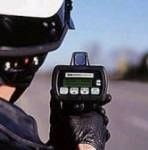 In many Virginia speeding cases, the Commonwealth relies on speed measurements from RADAR or LIDAR (laser). Because these devices are used to generate key evidence, the details matter—how the device was used, whether it was operated properly, and whether the required steps were followed so the speed reading is admissible in court. Virginia law also sets rules for the use and proof of speed measurements in court under Va. Code § 46.2-882. In a case review, we focus on the practical issues that often affect the strength of the speed evidence, such as the method used, the officer’s documentation and testimony, and whether the proof supports the charge on your summons. The right approach may involve challenging the evidence, presenting mitigation, or pursuing a reduction based on the facts and the court where your case is pending.
Prepaying a Virginia Speeding Ticket vs. Fighting It in Court
Many drivers assume a speeding ticket is something you can simply pay and move on. In Virginia, prepaying is treated as an admission of guilt, which results in a conviction on your driving record. That conviction can add demerit points and may lead to higher insurance costs. Before you prepay, confirm the exact charge on your summons and whether the court allows prepayment for that offense.
Virginia Uniform Summons: What It Means
Most speeding charges are issued on a Virginia Uniform Summons. Signing the summons is not an admission of guilt—it is typically an agreement to comply with the instructions on the ticket, which may include a court appearance. The summons lists the charge code, the alleged speed, the court, and the date. Before you prepay or make assumptions, confirm the exact charge and whether your court allows prepayment for that offense.
Fighting a ticket does not always mean going to trial. In many cases, the goal is to evaluate the strength of the Commonwealth’s evidence and pursue the most practical outcome for your record. This may involve challenging the speed measurement, presenting mitigation, or negotiating an amendment when appropriate based on your facts and the court where your case is pending.
If your alleged speed is high—especially if reckless driving by speed is charged or possible—or if you have prior points, are a professional driver, or live out of state, a case review can clarify what “prepay” really means in your situation and what options may be available before your court date.
Out-of-State Drivers with a Virginia Speeding Ticket
 Drivers who live outside Virginia must still resolve a Virginia speeding charge in the court listed on the summons, because the case is handled in the city or county where the stop occurred. Depending on the charge and locality, an in-person appearance may be required—especially in higher-speed cases or when the citation is charged as reckless driving by speed. A conviction in Virginia is reported to the Virginia Department of Motor Vehicles and is also transmitted to a driver’s home state through interstate reporting systems and databases used by insurers. Even when a home state does not assess identical points, insurance carriers may still treat the conviction as a risk factor and increase premiums. Out-of-state drivers should pay close attention to court date requirements and the exact statute charged, because missing a required appearance can create additional consequences. For a deeper explanation of reporting and court logistics, see our Virginia speeding ticket guide for out-of-state drivers.
Virginia Speeding Ticket Penalties, Points, and Insurance
 A Virginia speeding ticket can lead to consequences beyond the amount of the fine. The court can impose a monetary penalty, and a conviction is reported to the Virginia Department of Motor Vehicles, where demerit points are assessed based on the speed and the specific charge. In many cases, insurers treat speeding convictions as increased risk and may raise premiums, especially for higher-speed violations, repeat offenses, or any conviction charged as reckless driving by speed. Because reckless driving is a Class 1 misdemeanor, it can also create longer-term concerns beyond DMV points, including a criminal record and more significant insurance impact. The practical effect of a speeding conviction often depends on the alleged speed, the posted limit, the driver’s prior record, and the locality where the case is heard. For a detailed statewide explanation of points, fines, and long-term consequences, see our Virginia speeding ticket penalties guide.
Local Courts and What to Expect in a Virginia Speeding Case
Speeding tickets in Virginia are handled in the court listed on your summons—most often a General District Court in the county or city where you were stopped. While the underlying law is statewide, local court practices can vary. Some courts move dockets quickly and expect cases to be ready when called. Others place more emphasis on documentation, driving record history, or proof of mitigation. That is why it helps to know what your specific court typically requires and how speeding cases are commonly resolved there.
In most speeding cases, you can expect a docket-style hearing where the officer may testify about the stop and how speed was measured (RADAR, LIDAR/laser, or pacing). The judge will review the charge, your driving record when relevant, and any materials presented. If your alleged speed is high—especially if reckless driving by speed is charged or possible—expect the court to treat the matter more seriously. A case review before court helps you understand what the charge means in that locality, what outcomes are realistic, and what steps can strengthen your position before the court date.
Virginia Interstate Speeding Ticket “Hot Zones”
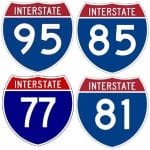
Virginia speeding enforcement is often heaviest on major interstate corridors, especially where traffic volume, lane changes, construction zones, bridge approaches, or changing speed limits create more enforcement opportunities. The key facts in any speeding case are the posted speed limit, the alleged speed, where the stop occurred, and the method used to measure speed. If the alleged speed is 20 mph or more above the limit or over 85 mph, the charge may be treated as reckless driving by speed. Many Virginia speeding and reckless-by-speed summonses originate on corridors such as I-95, I-64, I-81, I-66, I-77, I-85, and I-264.
Additional Virginia Speeding Ticket Resources
Learn About Virginia Speeding Ticket Laws
Before deciding whether to prepay or fight a Virginia speeding ticket, it helps to understand how speeding laws work, when speeding can become reckless driving, and what penalties may apply. Start with our Virginia speeding ticket guide.
Virginia School Zone and Work Zone Photo Speed Enforcement
Virginia allows photo speed monitoring in certain active school crossing zones and highway work zones under Va. Code § 46.2-882.1. These camera citations are civil penalties issued to the registered owner and do not post to your driving record or affect insurance premiums. Practical issues include whether the zone was active, whether required signage was present, and whether the images and documentation support the allegation. We do not defend camera ticket cases.
New Virginia Intelligent Speed Assistance (ISA) Program (Effective July 1, 2026)
Virginia law creates an Intelligent Speed Assistance (ISA) Program effective July 1, 2026 under Va. Code § 46.2-507. The program is not part of every speeding case. It becomes relevant only in the types of cases where a court orders enrollment. A case review can confirm whether it is even a potential issue based on the charge, alleged speed, and your record.
Reducing a Speeding Charge to “Defective Equipment” — Speedometer Issues
In some Virginia speeding cases, one possible resolution is amending the charge to a defective equipment-type offense when the facts and the court support it. When speedometer accuracy is genuinely in question, documentation such as a calibration report may help support mitigation or a reduction. The right approach depends on the alleged speed, the evidence, and the court listed on your summons.
Speedometer Calibration for VA Speeding Ticket Cases
In some cases, speedometer calibration can be a practical mitigation tool, especially when the alleged speed is close to a serious threshold. A calibration is a specialized test performed by a qualified shop to determine whether the speedometer was reading correctly and, if not, how far off it was. The results are usually provided in a written report.
Virginia law allows speedometer calibration evidence to be presented in certain cases, and the court may consider that evidence in determining guilt or innocence and in fixing punishment. See Va. Code § 46.2-942.
Whether calibration makes sense depends on timing, the alleged speed, and what other evidence exists, including RADAR, LIDAR, pacing, or video. A case review can help you decide whether it is a practical option in your situation.
Driver Improvement Program for a VA Speeding Ticket
A Virginia Driver Improvement Program is an educational course designed to improve driving knowledge and safe-driving habits. In some speeding cases, completing a course can be a useful mitigation step depending on the charge, the alleged speed, your driving history, and the court where the case is pending. Courses are commonly offered in different formats and lengths, often 8-hour or 12-hour options.
It is usually best to confirm the strategy before you enroll so you do not spend time and money on a step that does not help in your court. A case review can help you decide whether a course is likely to matter and what documentation the court typically expects.
Virginia Speeding Ticket Code Sections — Reference
- Va. Code § 46.2-862 — Reckless driving by speed
- Va. Code § 46.2-870 — Speed limits; general speeding
- Va. Code § 46.2-882 — Proof of speed / speed measurement devices
- Va. Code § 46.2-882.1 — Photo speed monitoring in certain zones
- Va. Code § 46.2-947 — Highway Safety Corridor provisions
- Va. Code § 46.2-507 — Intelligent Speed Assistance (ISA) Program
- Va. Code § 46.2-1080 — Speedometer requirements / defective equipment
- Va. Code § 46.2-942 — Speedometer calibration evidence
This list is provided as a general reference. The controlling information for your case is the exact charge code on your summons and the court listed on your paperwork.
Virginia Speeding Ticket Lawyer FAQs
Is speeding a criminal offense in Virginia?
Most speeding tickets in Virginia are traffic infractions, not criminal offenses. However, certain speeds qualify as reckless driving by speed,
which is a criminal offense. If your summons lists reckless driving, often Va. Code § 46.2-862, treat it as a higher-stakes case that typically
requires a court appearance.
What speed is considered reckless driving in Virginia?
Virginia law commonly treats excessive speeding as reckless driving when the allegation is:
- 20 mph or more over the posted speed limit, or
- Over 85 mph, regardless of the posted speed limit.
How many demerit points is a speeding ticket in Virginia?
Virginia DMV demerit points commonly depend on speed:
- 3 points: speeding 1–9 mph over the limit
- 4 points: speeding 10–19 mph over the limit
- 6 points: speeding 20+ mph over the limit and certain reckless driving by speed convictions
The exact impact depends on the final conviction code, meaning what you are convicted of, not just the stop.
Will a Virginia speeding ticket increase my insurance rates?
It can. Insurance impact often depends on your driving history, the alleged speed, and the final conviction code. Higher-speed convictions and
reckless driving by speed convictions tend to have a bigger impact, and out-of-state drivers may still see consequences through insurer databases.
Do I have to go to court for a Virginia speeding ticket?
For some traffic infraction speeding tickets, you may be able to prepay, which is usually treated as a guilty plea and results in a conviction.
To contest the charge, you or your attorney must appear. For reckless driving by speed charges, a court appearance is typically required. Missing a
required court date can lead to additional consequences, including possible license consequences and a capias, or warrant, in some situations.
Can I just pay my Virginia speeding ticket online?
Paying online is generally the same as pleading guilty. That means a conviction goes on your driving record, points may be assessed, and insurance
consequences may follow. Before you prepay, confirm the exact charge code on your summons and whether your case should be reviewed first.
Can a speeding ticket be reduced or dismissed in Virginia?
Sometimes, depending on the evidence, your record, and the court. Possible outcomes can include reduction to a lower-speed offense, amendment to a
different traffic offense, or, in some cases, dismissal. No lawyer can promise a specific result, but strategy often focuses on proof of speed,
the charging code, and mitigation.
Is radar or laser LIDAR evidence always accurate?
RADAR and LIDAR evidence can be challenged. Devices typically must be properly calibrated and operated, and Virginia law includes rules about proof
of speed and speed measurement evidence. Issues can include calibration documentation, operator training, interference, and whether paperwork and
testimony match.
What happens if I ignore a Virginia speeding ticket?
Ignoring a ticket can make the situation worse. You may face additional fees, and if you miss a required court date, the court can take further
action, including issuing a capias in certain cases. This can apply to Virginia residents and out-of-state drivers.
Will Virginia report my speeding ticket to my home state?
A Virginia conviction is reported to the Virginia DMV, and out-of-state drivers may also see the conviction reflected through interstate reporting
and on records used by insurers. Even if your home state does not assess points the same way, insurers may still see the conviction.
How long does a speeding ticket stay on my Virginia driving record?
How long a conviction remains on your record depends on the conviction code. Many speeding convictions remain for several years, and reckless
driving convictions are commonly listed as remaining longer. A case review can confirm the specific charge and what record-retention period is
typically associated with that conviction.
Start With a Confidential Virginia Speeding Ticket Case Review
 If you received a speeding ticket in Virginia, do not guess about whether to prepay, whether you must appear in court, or whether reckless driving by speed is a possibility. Riley & Wells Attorneys-At-Law can review your speeding ticket, explain what to expect in the court listed on your paperwork, and help you understand the most practical next step to protect your record and your license. Contact us today to schedule a confidential review and get clear next steps for your Virginia speeding case.
What to Send
- The name on the summons and your court date
- The exact charge code and the alleged speed / posted speed limit
- The location of the stop and the court listed on the ticket
- Your license status, Virginia or out-of-state
We can help. Let us review your case.
11/10/2015 | Updated 5/10/2026