
Harrisonburg DUI Lawyer • 1,500+ Reviews
 Riley & Wells Attorneys-At-Law represents clients charged with DUI and DWI offenses in Harrisonburg, Virginia, including allegations involving alcohol, drugs, prescription medication, and other impaired driving offenses. Cases may begin with a traffic stop, accident investigation, checkpoint, or other encounter with law enforcement. Our Harrisonburg DUI lawyers examine the legal basis for the stop, evidence of driving or operation, field sobriety testing, probable cause for arrest, breath or blood testing, prior convictions, and potential license consequences. We represent Harrisonburg residents, out-of-state drivers, and students attending James Madison University and Eastern Mennonite University who face DUI or underage drinking and driving charges. Our attorneys advise clients about court procedures, appearance requirements, available defenses, and possible consequences. An arrest is not a conviction, and the Commonwealth must prove the charged offense beyond a reasonable doubt.







Harrisonburg DUI and DWI Defense Guide
| Defense Services | Virginia DUI Charge |
| Traffic Stop | Field Sobriety Testing |
| Breath & Blood Testing | Refusal Allegations |
| DUI Penalties | License & VASAP |
| Court Process | Frequently Asked Questions |
Harrisonburg VA Defense Services
- Harrisonburg VA Overview
- Harrisonburg VA Criminal Defense Lawyer
- Harrisonburg VA Traffic Lawyer
- Harrisonburg VA Reckless Driving Lawyer
- Harrisonburg VA Speeding Ticket Lawyer
For broader statewide representation information, see our Virginia DUI Lawyers page.
Harrisonburg DUI and DWI Defense
 A Harrisonburg DUI or DWI case may begin with a traffic stop, accident investigation, checkpoint, or other encounter with law enforcement. The Commonwealth may rely on driving observations, physical appearance, statements, field sobriety exercises, preliminary breath testing, evidential breath testing, blood testing, and video recordings. A proper review considers the legal basis for the stop, the progression of the investigation, probable cause for arrest, testing procedures, and whether the prosecution can prove every required element through admissible evidence. DUI investigations within Harrisonburg may involve the Harrisonburg Police Department, Virginia State Police, or James Madison University Police Department, depending on the location and circumstances. Incidents may occur along Interstate 81, South Main Street, East Market Street, Port Republic Road, Reservoir Street, or other streets within the city. The location and investigating agency may affect the evidence available for review. An arrest is not a conviction, and each Harrisonburg DUI case should be evaluated according to its individual facts, testing history, and procedural record.
Virginia DUI and DWI Charges
 Virginia Code § 18.2-266 prohibits driving or operating a motor vehicle while a person has a blood alcohol concentration of 0.08 or more, is under the influence of alcohol, is under the influence of drugs to a degree that impairs the ability to operate safely, is under the combined influence of alcohol and drugs, or has certain specified drugs in the blood at or above the statutory concentrations. A chemical result below 0.08 does not necessarily prevent an alcohol-related prosecution under another part of the statute. The Commonwealth must prove driving or operation and at least one applicable statutory theory beyond a reasonable doubt.
Operation of a Motor Vehicle
The Commonwealth must establish that the accused person drove or operated a motor vehicle. Operation may become disputed when a vehicle was parked, disabled, or involved in an accident that no officer witnessed. Cases involving a vehicle stopped in a parking lot, along a roadway, or near a business may require careful review of the circumstances and applicable Virginia law.
Relevant evidence may include:
- The location and condition of the vehicle
- Whether the engine was running
- Possession and location of the keys
- Statements attributed to the accused person
- Witness testimony
- Body-camera and dashboard-camera recordings
- Surveillance video and electronic records
- Physical evidence from an accident scene
Alcohol, Drugs, and Combined Influence
A Harrisonburg DUI charge may involve alcohol, an illegal drug, prescription medication, over-the-counter medication, or a combination of substances. Lawful possession or use of medication does not automatically resolve whether the Commonwealth can prove impairment under the statute.
Drug-related cases may involve blood testing, toxicology evidence, medical information, officer observations, and testimony concerning the effect of the substance. The presence of a substance and proof that it impaired driving are related but distinct evidentiary issues under some statutory theories.
Harrisonburg DUI Traffic Stops and Investigations
 A Harrisonburg DUI investigation may begin after an officer observes an alleged traffic violation, unusual driving, an accident, a disabled vehicle, or conduct at a checkpoint. The defense may examine whether the officer had a lawful basis to stop or detain the driver and whether the investigation remained within constitutional limits. Officer reports should be compared with body-camera recordings, dashboard-camera recordings, dispatch records, witness accounts, and physical evidence. Differences involving driving behavior, road conditions, timing, lighting, weather, statements, or performance during the encounter may affect the reliability of the prosecution’s evidence.
Issues arising during the stop may include:
- The reason for the traffic stop
- The officer’s observations before the stop
- Whether a checkpoint complied with legal requirements
- Statements made by the driver
- The alleged odor of alcohol or another substance
- Speech, balance, and physical appearance
- The presence of containers or medication
- Requests to exit the vehicle
- The length and scope of the detention
- Field sobriety instructions and demonstrations
- Preliminary breath testing
- Body-camera and dashboard-camera evidence
Harrisonburg Streets, Landmarks, and DUI Investigations
Harrisonburg is an independent Virginia city located along Interstate 81 in the Shenandoah Valley. The city includes downtown businesses, restaurants, entertainment establishments, university campuses, residential neighborhoods, and major transportation corridors. The location of a DUI investigation may help identify the investigating agency, witnesses, traffic conditions, road signs, surveillance recordings, and other evidence.
Important streets and transportation corridors within Harrisonburg include:
- Interstate 81 and its Harrisonburg exits
- North and South Main Street (U.S. Route 11)
- East and West Market Street (U.S. Route 33)
- Port Republic Road
- Reservoir Street
- University Boulevard
- Martin Luther King Jr. Way
- Liberty Street
- Water Street
- South High Street
- Mason Street
- Park Road
Downtown Harrisonburg and Court Square
Downtown Harrisonburg centers around Court Square and the surrounding Main Street, Market Street, Liberty Street, and Water Street corridors. Restaurants, entertainment establishments, public parking areas, and downtown businesses attract residents, university students, and visitors. A DUI investigation in this part of Harrisonburg may involve an alleged traffic violation, accident, parking-area encounter, or police investigation arising from other reported conduct.
Businesses and public areas may have surveillance recordings or witnesses who observed events before or after a police encounter. The availability and relevance of that evidence depend on the location and circumstances of the individual case.
Port Republic Road, Reservoir Street, and University Areas
Port Republic Road provides an important connection between Interstate 81 and James Madison University. Reservoir Street, University Boulevard, South Main Street, Martin Luther King Jr. Way, and nearby intersections carry university, commuter, and visitor traffic. These streets may be relevant to investigations involving suspected impaired driving, traffic collisions, or other alleged offenses.
Additional recognizable Harrisonburg locations include Valley Mall along East Market Street, Bridgeforth Stadium, the Edith J. Carrier Arboretum, Purcell Park, and Hillandale Park. The proximity of businesses, campus property, parking facilities, and public streets may affect the availability of witnesses, recordings, and other evidence.
The specific location of an alleged offense matters. A defense review should consider the actual roadway, traffic conditions, posted signs, investigating agency, and available recordings rather than assume that every Harrisonburg DUI investigation follows the same pattern.
Field Sobriety Testing in Harrisonburg DUI Cases
 An officer investigating suspected impairment may request roadside exercises such as horizontal gaze nystagmus, walk-and-turn, or one-leg stand. The evidentiary value of these exercises depends on the instructions, demonstrations, testing location, environmental conditions, physical limitations, and observations actually recorded. Body-camera video may show whether the officer followed the claimed procedure and whether the written report accurately describes the driver’s performance. Fatigue, injury, footwear, age, medical conditions, uneven pavement, traffic, weather, and communication problems may also affect the investigation. For a more detailed explanation, review our Virginia DUI field sobriety testing guide.
A review of field sobriety evidence may address:
- What instructions the officer provided
- Whether the instructions were demonstrated
- Whether the driver understood the directions
- The surface, slope, lighting, and weather conditions
- Medical or physical conditions affecting performance
- Whether the officer interrupted or changed the exercise
- Whether the report matches video recordings
- Whether the observations supported probable cause for arrest
Preliminary Roadside Breath Testing
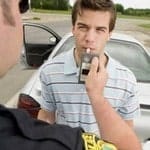 Virginia Code § 18.2-267 governs preliminary breath analysis before arrest. This roadside test is used to estimate the probable alcoholic content of the blood and may be considered during the probable cause determination. The statute gives a person stopped and suspected of DUI the right to refuse the preliminary roadside breath analysis. The failure to permit that preliminary analysis is not evidence in a prosecution under the listed DUI statutes. The preliminary roadside test is different from the official evidential breath or blood testing governed by Virginia’s implied consent statutes after arrest.
Probable Cause and a Harrisonburg DUI Arrest
An officer must have probable cause before making a warrantless DUI arrest. The probable cause decision may be based on driving behavior, an accident, statements, physical observations, field sobriety performance, a preliminary breath result, and other circumstances known to the officer at that time.
The defense may compare the officer’s stated reasons with recordings, witness accounts, and the sequence of events. If the arrest was not supported by probable cause, the admissibility of evidence obtained afterward may become an important issue.
A probable cause review may involve:
- The timing and source of each observation
- Whether the officer personally observed driving or operation
- Statements attributed to the accused person
- The driver’s physical appearance and conduct
- The administration of roadside exercises
- Any preliminary breath result
- Witness and accident evidence
- The point at which the arrest occurred
Breath and Blood Testing in a Harrisonburg DUI Case
 Chemical testing after arrest is distinct from a preliminary roadside breath test. Virginia’s implied consent law may require breath, blood, or both when the statutory conditions are satisfied. In an alcohol case, breath testing is generally required unless the test is unavailable or the person is physically unable to provide a sample. Blood testing may be used in drug investigations and other circumstances authorized by law. The defense may review the timing, advisements, equipment, observation period, operator qualifications, certificate, blood collection, chain of custody, laboratory procedures, and compliance with the governing statutes and regulations. For more information about testing procedures, certificates, and potential evidentiary issues, review our Virginia DUI breath and blood testing guide.
Evidential Breath Testing
The prosecution may offer a certificate reporting the breath alcohol result. The defense should examine whether the test was administered on approved equipment by a qualified operator and whether required procedures were followed.
The testing process may involve:
- The time of driving, arrest, and testing
- The required observation period
- The condition and approval of the instrument
- The operator’s license and training
- The breath test sequence and reported samples
- Any error messages or interrupted tests
- Statements and observations recorded at the testing site
- The certificate and supporting records
Blood Testing
Blood evidence may be used when drug impairment is suspected, breath testing is unavailable, or another statutory basis authorizes blood collection. The records may include medical collection documents, sealed sample information, chain-of-custody materials, and a Department of Forensic Science certificate.
A blood test review may address:
- The legal authority for obtaining the sample
- The qualifications of the person drawing blood
- The collection materials and procedure
- The sealing, storage, and transportation of the sample
- The chain of custody
- The laboratory method and reported result
- The presence of alcohol, drugs, or both
- Whether the evidence proves the charged statutory theory
Breath or Blood Test Refusal Allegations
Virginia Code §§ 18.2-268.2 and 18.2-268.3 govern implied consent and unreasonable refusal after a qualifying arrest. A refusal allegation is separate from the underlying DUI charge and may create additional license consequences. The classification and possible punishment depend on whether the requested sample was breath or blood, the person’s prior history, and the particular statutory subsection.
The defense may examine whether implied consent applied, whether the arrest occurred within the required period, whether the statutory advisement was properly given, whether a refusal actually occurred, and whether any refusal was unreasonable.
For additional information, review our Virginia DUI breath test refusal page.
A refusal review may involve:
- Whether implied consent applied to the alleged operation
- The time between the alleged offense and arrest
- The legal basis and probable cause for arrest
- Whether breath, blood, or both were requested
- The wording and delivery of the advisement
- The accused person’s response and conduct
- Medical or physical inability to provide a sample
- Language, communication, or comprehension issues
- Prior qualifying DUI or refusal findings
- The officer’s sworn refusal paperwork and recordings
A first unreasonable refusal of a post-arrest breath test is generally a civil offense carrying a one-year suspension of the privilege to drive. A qualifying subsequent breath refusal may be prosecuted as a Class 1 misdemeanor and may carry a three-year revocation. Blood refusal provisions are addressed separately by the statute.
Virginia DUI and DWI Penalties
A first violation of Virginia Code § 18.2-266 is generally a Class 1 misdemeanor with a mandatory minimum fine of $250. Other required or possible consequences depend on the blood alcohol result, prior convictions, whether a minor was transported, and the individual facts of the case.
For a broader explanation of sentencing and administrative consequences, review our Virginia DUI penalties guide.
Potential consequences may include:
- Jail or penitentiary exposure
- Mandatory minimum confinement in qualifying cases
- Fines and court costs
- Suspension or revocation of driving privileges
- Probation and court-imposed conditions
- VASAP participation
- Ignition interlock requirements
- Alcohol monitoring requirements
- Restricted driving conditions
- Insurance consequences
- Employment or professional consequences
- A criminal conviction record
Elevated Blood Alcohol Results
For a first offense, a qualifying blood alcohol level of at least 0.15 but not more than 0.20 carries an additional mandatory minimum five days in jail. A level greater than 0.20 carries an additional mandatory minimum 10 days.
Additional mandatory punishment may apply to a second offense involving an elevated blood alcohol result. Cases involving a reported concentration of 0.15 or higher may also require review of the issues discussed on our Virginia high BAC DUI page.
Prior DUI Convictions
A prior qualifying DUI conviction may affect the classification, mandatory minimum punishment, license revocation, and ignition interlock requirements. The prosecution must establish that a prior offense qualifies under the applicable statute.
A second offense within 10 years carries increased minimum punishment. A third offense committed within 10 years is generally prosecuted as a Class 6 felony, with additional mandatory punishment depending on whether the qualifying offenses occurred within five or 10 years.
Minor Passenger
A conviction for DUI committed while transporting a person 17 years of age or younger carries an additional fine and mandatory minimum period of confinement under Virginia Code § 18.2-270.
License Suspension, VASAP, and Ignition Interlock
A Harrisonburg DUI case may affect driving privileges before and after trial. The possible suspension periods and available relief depend on the charge, chemical result, refusal allegation, prior record, and final disposition.
A first DUI conviction generally results in a one-year loss of the privilege to drive, while repeat convictions carry longer periods. A person convicted under Virginia Code § 18.2-266 is generally required to enter and successfully complete a certified alcohol safety action program under the applicable statutory provisions.
Eligibility for restricted driving privileges and the scope of those privileges depend on the statute and court order. Ignition interlock may be required as a condition of restricted driving or license restoration.
For additional information, review our Virginia DUI license suspension guide.
License issues may include:
- Administrative suspension after arrest
- Suspension or revocation following conviction
- Additional suspension arising from refusal
- Eligibility for a restricted license
- Permitted purposes or lawful driving authorized by an order
- Enrollment in and completion of VASAP
- Ignition interlock installation and monitoring
- Remote alcohol monitoring in an applicable case
- DMV reinstatement requirements
- Consequences of violating a restriction
Harrisonburg DUI Court Process
 Most misdemeanor DUI and refusal cases arising in Harrisonburg are heard in General District Court. A felony DUI may begin in General District Court with preliminary proceedings before later consideration in Circuit Court. The summons, warrant, bond paperwork, or official court notice should identify the charge, assigned court, hearing date, and appearance instructions. The process may include an arraignment, attorney appearance, evidence review, motions, plea discussions, trial, and sentencing. A final General District Court conviction may generally be appealed to Circuit Court for a new trial when the statutory appeal requirements are satisfied. For a fuller explanation of the stages of a Virginia DUI case, review our Virginia DUI court process guide.
General District Court in Harrisonburg
53 Court Square, Room 132
Harrisonburg, VA 22801
Phone: 540-564-3130
Circuit Court
80 Court Square
Harrisonburg, VA 22802
Phone: 540-564-3111
The stages of a DUI case may include:
- Traffic stop or accident investigation
- Roadside investigation
- Arrest and bond determination
- Administrative license suspension
- Arraignment or attorney appearance
- Review of reports, recordings, and testing records
- Pretrial motions
- Plea discussions when appropriate
- Trial and sentencing
- Possible appeal
Harrisonburg DUI Defense Strategy
 No single defense applies to every Harrisonburg DUI case. The appropriate strategy depends on the statutory theory, operation evidence, reason for the stop, officer observations, field sobriety evidence, probable cause, chemical testing, prior record, and admissibility of the prosecution’s evidence. A defense may involve a constitutional motion, challenge to operation, factual dispute, testing issue, evidentiary objection, witness credibility question, or preparation for trial. Possible outcomes depend on the law, evidence, prosecutorial decisions, and court rulings. No particular result can be guaranteed.
Issues requiring review may include:
- Whether driving or operation can be proved
- The legal basis for the stop or detention
- Whether the arrest was supported by probable cause
- Accuracy of the officer’s report
- Field sobriety instructions and observations
- Medical or physical explanations
- Breath or blood testing procedures
- Timing of alcohol consumption and testing
- Drug identification and impairment evidence
- Admissibility of statements and certificates
- Whether prior convictions qualify
- Mitigation relevant to resolution or sentencing
Evidence in a Harrisonburg DUI Case
Available evidence should be identified and preserved as early as practical. Some video, dispatch, business, or electronic records may not be retained indefinitely.
Potential evidence may include:
- Body-camera recordings
- Dashboard-camera recordings
- Dispatch and emergency call records
- Officer reports and notes
- Accident reports and photographs
- Witness statements
- Preliminary breath test records
- Breath test certificates and supporting records
- Blood collection and laboratory records
- Medical and prescription records
- Receipts and location records
- Surveillance and electronic evidence
JMU and Eastern Mennonite University Students Charged With DUI
Harrisonburg is home to James Madison University and Eastern Mennonite University. College students may face DUI allegations following traffic stops, accidents, or investigations occurring on public roads within the city. Cases involving university students may arise near South Main Street, Port Republic Road, Martin Luther King Jr. Way, Reservoir Street, or other streets near James Madison University. Eastern Mennonite University is located along Park Road in northern Harrisonburg.
A DUI charge involving a college student should be evaluated under the same applicable Virginia criminal statutes and evidentiary requirements as other DUI cases. The investigation may involve driving observations, field sobriety exercises, breath or blood testing, witness statements, and recordings from law enforcement or nearby businesses.
A criminal conviction may also create consequences for academic standing, internships, professional licensing, employment, graduate school applications, and future background checks. Separate university disciplinary procedures may apply depending on the institution’s policies and the alleged conduct. Criminal court proceedings and university disciplinary matters are distinct processes.
Underage Drinking and Driving in Harrisonburg
Virginia Code § 18.2-266.1 addresses certain alcohol-related driving offenses involving persons younger than 21. A person under 21 who operates a motor vehicle after illegally consuming alcohol with a qualifying blood alcohol concentration of at least 0.02 but less than 0.08 may be charged under this statute.
A violation is a Class 1 misdemeanor. The statute provides for a one-year forfeiture of driving privileges and a mandatory minimum $500 fine or at least 50 hours of community service. A person under 21 may also face prosecution under Virginia’s general DUI law when the evidence supports a violation of § 18.2-266.
Defense issues may include the circumstances of the traffic stop, evidence of operation, the chemical test, statutory requirements, and the accused person’s age. A college student should not assume that an underage alcohol-related driving charge is merely a university disciplinary issue or an ordinary traffic ticket.
Out-of-State Drivers Charged With DUI in Harrisonburg
Interstate 81 carries drivers from other states through Harrisonburg, including travelers using the city’s interstate exits and connecting roads. An out-of-state driver charged with DUI in Harrisonburg faces a Virginia criminal case and possible restrictions on the privilege to drive in Virginia.
A conviction may also be reported to the licensing authority in the driver’s home state, which determines the additional effect on that person’s license and driving record. Living outside Virginia does not eliminate the obligation to appear or respond to a criminal charge.
Court appearance requirements, restricted driving issues, VASAP arrangements, and ignition interlock obligations should be reviewed according to the charge and the client’s state of residence.
For additional information about multistate license and court issues, review our Virginia DUI guide for out-of-state drivers.
What to Send for a Harrisonburg DUI Case Review
Complete documents and a clear timeline can help identify the charge, testing sequence, license issues, and approaching deadlines. Photographs, recordings, messages, and other potential evidence should be preserved in their original form whenever practical.
Useful materials may include:
- The complete summons or warrant
- Bond and release paperwork
- Administrative suspension documents
- Refusal warrant or summons
- The court date and assigned court
- A current driving record
- Prior DUI or refusal records
- Accident reports and photographs
- Medical and prescription information
- Witness names and contact information
- Receipts, messages, and location records
- A written timeline of the incident
Harrisonburg DUI and DWI Lawyer Client Review

Harrisonburg DUI and DWI FAQs
Is DUI or DWI a criminal charge in Harrisonburg?
Yes. A violation of Virginia Code § 18.2-266 is a criminal offense. A first or second offense is generally prosecuted as a misdemeanor, while certain repeat or aggravated offenses may be felonies.
Where are Harrisonburg DUI cases heard?
Most misdemeanor DUI and refusal cases arising in Harrisonburg are heard in General District Court at 53 Court Square, Room 132, Harrisonburg, Virginia. Felony proceedings may later continue in Circuit Court.
What must the Commonwealth prove in a Virginia DUI case?
The Commonwealth must prove that the accused person drove or operated a motor vehicle and violated at least one applicable part of Virginia Code § 18.2-266 through admissible evidence.
Can a DUI charge involve prescription medication or illegal drugs?
Yes. Virginia law addresses impairment involving alcohol, drugs, or a combination of alcohol and drugs. The required proof depends on the statutory theory charged and the evidence.
What is the difference between a roadside breath test and the breath test after arrest?
The roadside preliminary breath analysis under Virginia Code § 18.2-267 is used during the investigation and probable cause determination. Chemical testing after arrest is governed by Virginia’s implied consent statutes and carries different requirements and consequences.
Can a driver refuse the preliminary roadside breath test?
Virginia Code § 18.2-267 gives a person suspected of DUI the right to refuse the preliminary roadside breath analysis, and the failure to permit that preliminary analysis is not evidence in the DUI prosecution.
What happens if a driver refuses chemical testing after arrest?
An unreasonable refusal after a qualifying arrest may create a separate refusal case and additional license consequences. The classification and penalties depend on whether breath or blood was requested, the person’s prior history, and the applicable statutory provision.
Can a Harrisonburg DUI charge affect driving privileges?
Yes. A DUI arrest or conviction may result in administrative suspension, court-ordered suspension or revocation, restricted driving conditions, VASAP participation, and ignition interlock requirements.
What are the penalties for a first Virginia DUI conviction?
A first offense is generally a Class 1 misdemeanor carrying a mandatory minimum fine of $250, loss of driving privileges, and other statutory requirements. Elevated blood alcohol results and other aggravating circumstances may create additional mandatory punishment.
Can a Harrisonburg DUI charge be reduced or dismissed?
A charge may be dismissed, amended, or resolved in another manner depending on the facts, law, admissible evidence, prosecutorial decisions, and court rulings. No particular result can be guaranteed.
Can a JMU student face criminal charges for underage drinking and driving?
Yes. Virginia Code § 18.2-266.1 addresses certain alcohol-related driving offenses involving persons younger than 21. A qualifying violation is a Class 1 misdemeanor and carries statutory driving privilege and sentencing consequences. A separate DUI charge may also be possible when the evidence establishes a violation of Virginia Code § 18.2-266.
Can an out-of-state driver contest a Harrisonburg DUI charge?
Yes. An out-of-state driver may contest a Virginia DUI charge filed in Harrisonburg. The person must also consider court appearance requirements and possible consequences imposed by Virginia and the home-state licensing authority.
What should I provide for a Harrisonburg DUI case review?
Provide the summons or warrant, bond paperwork, administrative suspension or refusal documents, court information, driving record, prior DUI history, accident materials, medical information, and a written timeline of the incident.
Request a Confidential Harrisonburg DUI Case Review
A DUI or DWI allegation in Harrisonburg, Virginia, may affect liberty, driving privileges, employment, education, insurance, and other important interests. Reviewing the traffic stop, arrest, field sobriety evidence, chemical testing, prior record, and possible consequences before court can help identify the issues requiring attention. Our attorneys represent clients charged with DUI and DWI offenses arising in Harrisonburg. Contact our attorneys to request a confidential Harrisonburg DUI case review.
9/15/2024 | Updated 10/31/2026