
Top Rated Virginia DUI / DWI Lawyers • Experienced Defense Attorney
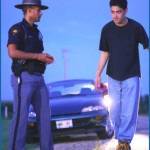 Driving Under the Influence (DUI) also referred to as Driving While Intoxicated (DWI) is a criminal offense that occurs when a person operates a motor vehicle while intoxicated with alcohol or drugs. A DUI / DWI arrest can be an embarrassing and devastating event. Now is not the time to have a lawyer that is going to lecture you about your choices. The simple fact is that you are in trouble with the law and you need a non-judgmental advocate to give you straightforward advice about protecting you before the Court and presenting your best defense. You need an experienced Virginia DUI / DWI Lawyer if you have been arrested for driving drunk in Virginia. We can help!
***Our attorneys are licensed to practice law in all Virginia Courts***
Virginia DUI / DWI Defense Attorney Client Review

Recognized as a “Best Law Firm” For DUI / DWI Defense
 Riley & Wells Attorneys-At-Law is a Virginia criminal law & traffic defense firm specializes in defending clients accused of driving while intoxicated or under the influence of alcohol or drugs. Our DUI / DWI lawyers possess over 60 years of combined Virginia DUI / DWI law experience and are routinely recognized for legal excellence and high ethical standards. Our firm is a recognized “Best Law Firm” according to U.S. News & World Report. We represent clients across Virginia. Our attorneys have an established reputation for effectively representing clients accused of drunk driving offenses. You can benefit from our experience – Let us review your case!
30,000+ Clients Represented
1500+ Client Reviews
60+ Years of Combined Experience
Effective Drunk Driving Defense Attorney • Specialized Training
 The DUI / DWI law is a specialized area of the criminal law. Exercise caution before you engage a lawyer for representation that lacks the proper training or experience. Our Virginia DUI / DWI defense lawyers are either members of or have been recognized by various prominent national organizations such as the National College for DUI Defense and the National Advocacy for DUI Defense. We are experienced and skilled Virginia DUI / DWI Lawyers that clients who are serious about their freedom and future want to represent them. We use every resource the law allows and consider guilty pleas only when they are in the best interest of our clients.
Dedicated Virginia DUI / DWI Lawyer • For The Best Defense
 Driving While Intoxicated (DWI) & Driving Under the Influence (DUI) are often used interchangeably in Virginia because they are both charged under the Va. Code 18.2-266. The prosecutor can prosecute the offense regardless of whether alcohol or drugs or both are the intoxicant. The law makes it unlawful for any person to operate a motor vehicle (i) while such person has a blood alcohol concentration of 0.08 percent or more or (ii) while such person is under the influence of alcohol or drugs. The Virginia DUI / DWI law is very technical & complex. The law requires an investigating law enforcement officer to gather various certain pieces of evidence that often include field sobriety evidence along with breath testing.
Virginia DUI / DWI Penalties Are Harsh
 A DUI / DWI arrest does not automatically mean you will be convicted of drunk driving. A DUI / DWI conviction also does not automatically mean that you will be ordered to serve a jail sentence. But make no mistake, the Virginia Courts are very serious about DUI / DWI cases. An experienced, dedicated Virginia DUI / DWI lawyer on your side who regularly practices DUI / DWI law can help mitigate the effects of your case. Our seasoned lawyers possess decades of collective successful DUI / DWI defense. We will carefully analyze the facts of your case and present your best case.
- Incarceration
- Ignition Interlock
- Loss of driving privileges
- Expensive fines
- Probation
- VASAP education & treatment
- Employment issues
- Automobile insurance issues
Virginia Implied Consent Breath Test Law
 Virginia like most states has an implied consent law. This means that by driving on the state’s roads, you have impliedly consented to a chemical test to determine your blood alcohol content (BAC) if there is probable cause evidence that you operated a motor vehicle on the highway while intoxicated. The motorist does not get to choose between a blood or breath test. Unreasonable refusal of a breath or blood test can result in an additional charge that carries a driver’s license suspension if convicted. In some cases, if a driver refuses to take a chemical test, then law enforcement officers may obtain a search warrant for a blood test.
Virginia Underage Baby DUI • Driving After Illegally Consuming Alcohol
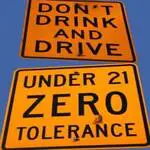 Persons under age 21 driving after illegally consuming alcohol is a criminal misdemeanor offense in Virginia. This offense is often referred to as a “Baby DUI.” Such persons may not operate a motor vehicle with a blood alcohol concentration (BAC) of 0.02 or more as indicated by a chemical test. This is not a drunk driving offense. The prosecution is not required to prove intoxication. However, the penalties for this offense are almost the same as a DUI / DWI conviction. The main distinction between this offense and a DUI / DWI is that a chemical test is required. DUI / DWI cases can be proved even with no chemical test.
Virginia Alcohol Safety Action Program (VASAP) Required if Convicted
 The Commission on VASAP originally began as a pilot program of the National Highway Traffic Safety Administration (NHTSA) in 1972. VASAP is a state-administered program designed to address issues related to alcohol and substance abuse. Virginia law requires individuals convicted of DUI / DWI offenses to be referred to VASAP for assessment, education, and treatment services if necessary. Individuals with more serious alcohol or substance abuse problems may be directed to substance abuse treatment programs. Participants will likely be required to submit to random drug and alcohol testing. VASAP also monitors Ignition Interlock devices.
Ignition Interlock Systems if convicted of a Virginia DUI / DWI
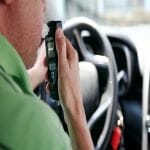 An ignition interlock device is a breathalyzer-like device that is installed in a motor vehicle to prevent a driver from operating the vehicle if they have consumed alcohol. The primary purpose of an ignition interlock device is to reduce incidents of drunk driving by requiring the driver to pass a breath alcohol test before starting the vehicle. If the driver’s breath sample registers a blood alcohol concentration (BAC) above a predetermined limit, the vehicle will not start. There are also random rolling retests while driving to ensure that no alcohol has been consumed since starting the vehicle. Ignition interlock violations are criminal offenses that can carry stiff penalties.
Virginia DUI /DWI Attorney Defenses to Drunk Driving Cases
 Defending a DUI / DWI charge can be complex, and the success of your defense often depends on the specific circumstances of your case. We will investigate your case and look for every possible defense you may have. It is important to remember that each DUI / DWI case is unique and the strength of the defense will depend on the specific facts and evidence involved. Our experienced DUI / DWI attorneys will assess your case, identify the most effective defense strategies, and help you navigate the legal process. If you are facing a DUI /DWI charge, it is strongly recommended that you seek legal counsel to protect your rights and build a strong defense. Some defenses may include the following:
- Challenging the Stop: Law enforcement must have a valid reason to stop your vehicle. If the initial traffic stop was unlawful, it may be possible to challenge the entire case.
- Lack of Probable Cause: To make an arrest, law enforcement officers must have probable cause to believe you were driving under the influence or driving while intoxicated.
- Errors in Field Sobriety Tests: Field sobriety tests, such as the walk-and-turn, one-leg stand or horizontal gaze nystagmus are often used to assess impairment. These tests can be subjective and prone to errors.
- Problems with Breathalyzer Tests: Breathalyzer results can be influenced by various factors, and the device must be properly calibrated and maintained.
- Rising BAC: If your BAC was rising at the time of your arrest, you may be able to argue that you were not above the legal limit while driving, even if you tested over the limit later at the police station.
- Medical Conditions: Certain medical conditions or medications can affect a person’s ability to perform field sobriety tests or can cause false positives on breath tests.
- Necessity Defense: In rare cases, a necessity defense can be employed if you can show that driving under the influence was the only reasonable option to prevent a more significant harm.
Virginia DUI / DWI DISMISSED – The After Consumed Alcohol Defense
 There can be many defenses to DUI / DWI cases. The burden is always on the Commonwealth to prove every element of the offense beyond a reasonable doubt. In this case, our firm’s Virginia DUI / DWI lawyer argued what is referred to as the after consumed alcohol defense. This means that alcohol was consumed after the alleged offense. The only evidence in the case was a breath sample given at the police station after the arrest. The Certificate of Analysis indicated that our client’s blood alcohol content was 0.23. The prosecution could not establish whether our client became intoxicated before or after the alleged operation of a motor vehicle. Case dismissed.
Virginia DUI / DWI AMENDED to Reckless Driving
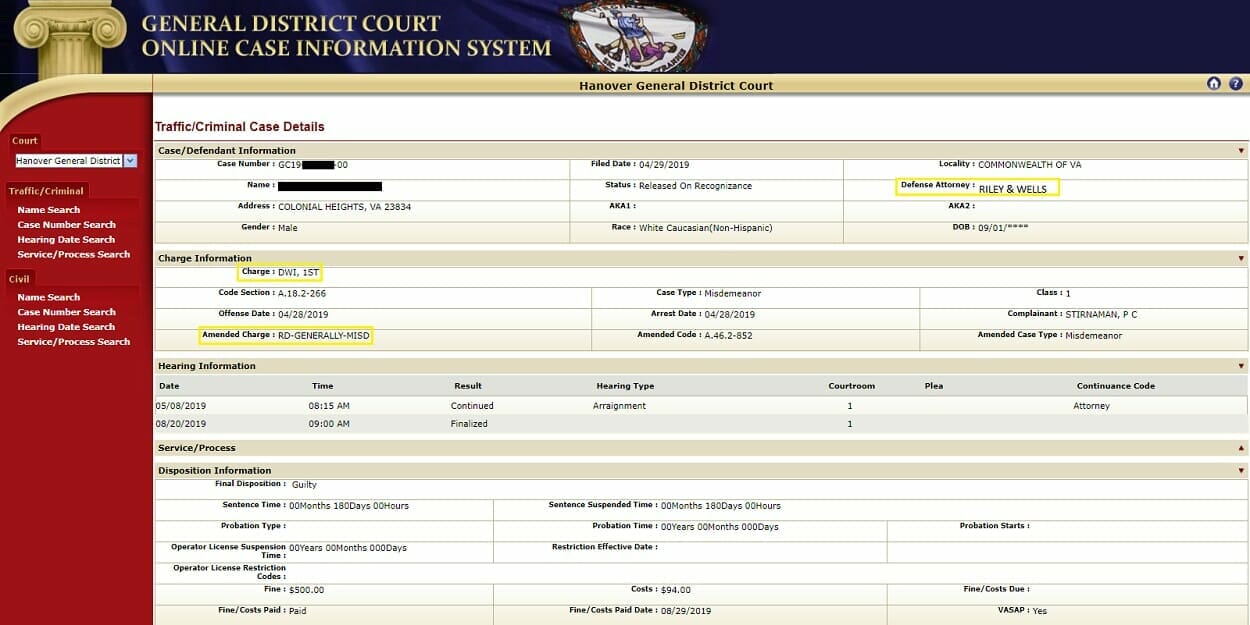 A Virginia DUI / DWI lawyer knows every DUI / DWI case is different. Some cases involve procedural errors. Other cases involve evidence that may not be sufficient to prove intoxication beyond a reasonable doubt. In some instances, the defense and prosecution reach a plea agreement that amends the DUI / DWI case to reckless driving. It may be in the client’s best interest to accept this type of plea. Reckless driving is a misdemeanor but is not DUI / DWI. This type of disposition is often considered a win because there is no DUI / DWI conviction and there is no mandatory suspension of driving privileges and no mandatory ignition interlock for restricted driving privileges. Click “Case Result” for actual court disposition.
Contact Us today for a free evaluation of YOUR case!
11/10/2015 | Updated 10/31/2023