
Virginia Underage DUI (Baby DUI)
 Virginia’s underage DUI law, commonly called “Baby DUI,” applies to drivers younger than 21. Under Virginia Code § 18.2-266.1, the offense involves illegal alcohol consumption and a qualifying BAC of at least 0.02 but below 0.08. A violation is a Class 1 misdemeanor carrying a one-year license forfeiture and either a minimum $500 fine or at least 50 hours of community service. Unlike a traditional DUI prosecution based on impairment, a Baby DUI charge does not require proof that the driver was visibly intoxicated. This guide explains Virginia’s underage DUI law, criminal penalties, chemical testing, restricted driving, court procedures, and potential defenses.
Virginia Underage DUI Guide Contents
Virginia’s Underage DUI Law: Code § 18.2-266.1
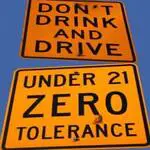 Virginia Code § 18.2-266.1 makes it unlawful for a person younger than 21 to operate a motor vehicle after illegally consuming alcohol when the statutory chemical-test requirements are satisfied. The statute establishes an alcohol-concentration range beginning at 0.02 and ending below 0.08.
Continue Reading
This is substantially lower than the general 0.08 BAC threshold associated with ordinary DUI.
The Commonwealth must establish the elements of the charged offense. Relevant issues may include the driver’s age, vehicle operation, illegal alcohol consumption, the chemical-test result, and whether the evidence satisfies the statutory requirements.
Elements of an Underage DUI Charge
A prosecution under § 18.2-266.1 generally involves proof of:
- The accused was younger than 21 at the time of the offense.
- The accused operated a motor vehicle.
- The accused illegally consumed alcohol.
- A qualifying chemical test established a BAC of at least 0.02 but below 0.08.
The prosecution must establish the charged offense beyond a reasonable doubt. The presence of a low BAC result does not eliminate questions concerning identity, operation, test admissibility, and compliance with required procedures.
Illegal Alcohol Consumption
The statute specifically addresses driving after illegally consuming alcohol.
The legality of the alcohol consumption and the circumstances surrounding it may therefore matter. The charge should be evaluated under the actual language of § 18.2-266.1 rather than treating every underage alcohol-related encounter as automatically establishing Baby DUI.
Statements, observations, and other evidence may be relevant to whether the required elements have been established.
Underage DUI Is Not an Ordinary Traffic Infraction
Although Baby DUI involves a BAC lower than 0.08, it is classified as a Class 1 misdemeanor.
For an adult defendant between 18 and 20, that means a criminal prosecution rather than a routine speeding-ticket proceeding.
When the accused was younger than 18 at the time of the offense, the matter generally proceeds through the juvenile court system, which has its own procedures and record rules.
For a broader explanation of Virginia’s impaired-driving offenses, review our Virginia DUI Law Information Guide.
The 0.02 BAC Standard for Virginia Drivers Under 21
The most distinctive feature of Virginia’s Baby DUI law is its low alcohol-concentration threshold.
Under § 18.2-266.1, the relevant chemical-test range is:
- At least 0.02 percent BAC; and
- Less than 0.08 percent BAC.
The statute also provides the corresponding alcohol concentration measured in grams per 210 liters of breath.
A result of exactly 0.02 falls within the statutory range. A result below 0.02 does not satisfy the statute’s specified chemical-test threshold.
The Difference Between 0.02 and 0.08
A BAC of 0.02 is far below the ordinary 0.08 threshold.
An underage driver does not have to appear severely impaired for a qualifying chemical-test result to become important in a Baby DUI prosecution.
Conversely, a driver under 21 who has a BAC of 0.08 or higher may face a prosecution under the general DUI statute rather than the lower-range provision of § 18.2-266.1.
The exact charge on the summons or warrant determines which statutory requirements and potential penalties must be evaluated.
Alcohol Consumption and BAC Timing
A person’s BAC can change over time as alcohol is absorbed and eliminated.
The time of driving, time of arrest, time of testing, and available evidence concerning alcohol consumption may therefore be important.
Because the statutory threshold begins at 0.02, relatively small differences in the reported result can affect whether the chemical evidence falls within the required range.
However, the significance of a timing or testing issue depends on the evidence and applicable law. A later test does not automatically invalidate the prosecution.
Baby DUI vs. Regular DUI in Virginia
Baby DUI under § 18.2-266.1 and regular DUI under § 18.2-266 are different statutory offenses.
The distinction matters because the prosecution’s required proof and the applicable penalties are not identical.
| Issue | Underage DUI: § 18.2-266.1 | Regular DUI: § 18.2-266 |
|---|---|---|
| Age | Applies to drivers younger than 21. | Can apply to drivers of any age. |
| Alcohol-concentration provision | BAC of 0.02 or higher but below 0.08. | BAC of 0.08 or higher. |
| Impairment | Traditional impairment need not be separately established when the statutory Baby DUI elements are proven. | May be established through a qualifying BAC or other statutory impairment provisions. |
| Criminal classification | Class 1 misdemeanor, with separate juvenile procedures when applicable. | Generally a Class 1 misdemeanor for a first offense; qualifying repeat offenses can be felonies. |
| Specific penalties | One-year license forfeiture and a minimum $500 fine or at least 50 hours of community service. | Generally a minimum $250 fine for a first offense, with separate jail, licensing, and repeat-offense provisions. |
| Restricted driving | Potentially available, subject to statutory requirements including ignition interlock. | Eligibility and conditions depend on the charge and prior history. |
Regular DUI Charges Against Drivers Under 21
Being younger than 21 does not prevent prosecution under § 18.2-266.
An underage driver may face a regular DUI charge when the evidence establishes a qualifying BAC of 0.08 or higher, alcohol impairment, drug impairment, or another statutory basis.
A conviction under the general DUI statute carries its own sentencing provisions. The Baby DUI fine and license-forfeiture rules should not be substituted for the penalties governing a regular DUI conviction.
For a comparison of misdemeanor, repeat-offense, and enhanced sentencing provisions, review our Virginia DUI Penalties Guide.
Drug-Related DUI for Younger Drivers
Section 18.2-266.1 concerns illegal alcohol consumption and the specified lower BAC range.
Drug impairment is addressed through the general impaired-driving law when its elements are established.
A driver under 21 may therefore face a different statutory DUI allegation when the evidence involves marijuana, prescription medications, illegal drugs, or combined alcohol-and-drug impairment.
The statutory charge and evidence determine the applicable legal analysis.
Breath and Blood Testing in Underage DUI Cases
Chemical testing is particularly important in a Baby DUI prosecution because § 18.2-266.1 expressly identifies a numerical BAC range.
Breath and blood testing may involve statutory requirements concerning the testing procedure, timing, equipment, documentation, and admissibility of results.
Preliminary Roadside Breath Test
Virginia Code § 18.2-267 permits preliminary roadside breath testing in investigations involving suspected underage DUI.
The preliminary test may help an officer evaluate whether alcohol is present and whether further investigation or an arrest is justified.
A person suspected of a covered offense has the statutory right to refuse the preliminary roadside breath test. The refusal cannot be used as evidence in the prosecution of that offense.
The preliminary roadside breath-test result is not admissible as evidence of guilt in the underlying DUI prosecution.
Post-Arrest Evidentiary Breath Testing
 Virginia Code § 18.2-268.2 expressly includes arrests for violations of § 18.2-266.1 within Virginia’s implied-consent provisions. The statute generally applies when a person operates a motor vehicle on a Virginia highway and is arrested within three hours of the alleged offense for a covered impaired-driving violation.
Continue Reading
In qualifying underage alcohol cases, post-arrest evidentiary breath testing may produce the chemical result relied upon at trial.
The procedures and consequences differ from those governing voluntary preliminary roadside testing.
Blood Testing
Blood testing may arise when authorized under the applicable implied-consent provisions and surrounding circumstances.
The defense may examine collection methods, timing, sample identification, laboratory procedures, chain of custody, and statutory compliance.
The applicable test requirements depend on the specific circumstances and type of testing performed.
Testing Reliability Near the 0.02 Threshold
Because the underage statute begins at 0.02, testing issues can be particularly important when the reported BAC is close to that threshold.
Potential issues may include:
- The accuracy and admissibility of the reported result.
- Identification of the person who provided the sample.
- Compliance with required testing procedures.
- Timing of the test in relation to driving.
- Instrument operation and relevant testing documentation.
- Sample handling and laboratory procedures when blood testing is involved.
The presence of one of these issues does not automatically invalidate a test. Its significance depends on the evidence and controlling law.
For more detailed information, review our Virginia DUI Breath and Blood Testing Guide.
Refusal of Post-Arrest Chemical Testing
Unreasonable refusal of a required post-arrest chemical test may lead to separate consequences under Virginia Code § 18.2-268.3.
A first unreasonable refusal is generally a civil offense carrying a one-year loss of driving privileges. Certain later breath-test refusals involving qualifying prior history may have criminal consequences.
Blood-test refusal has separate civil provisions.
These consequences are distinct from the underlying Baby DUI charge.
For the specific refusal classifications, legal requirements, and penalties, see our Virginia DUI Refusal Guide.
Field Sobriety Tests in Underage DUI Investigations
Field sobriety exercises may appear in a Baby DUI investigation, but they do not directly measure a person’s BAC.
An officer may use roadside observations and performance on standardized or nonstandardized exercises while investigating suspected alcohol consumption or impairment.
Role of Field Sobriety Evidence
Field sobriety evidence may be relevant to the circumstances of the stop, continued detention, probable cause for arrest, or observations about the accused.
However, the statutory Baby DUI alcohol-concentration provision depends on proof of the required BAC range through qualifying chemical evidence.
Performance on field sobriety exercises does not substitute for every element of § 18.2-266.1.
Factors Affecting Roadside Performance
Field sobriety performance can be affected by circumstances unrelated to alcohol.
Relevant considerations may include:
- Fatigue and lack of sleep.
- Medical conditions or physical limitations.
- Injuries or balance problems.
- Stress and nervousness.
- Footwear, lighting, weather, and the road surface.
- The instructions and demonstrations provided by the officer.
These circumstances may affect how an officer’s observations should be evaluated.
For additional information, review our Virginia DUI Field Sobriety Tests Guide.
Virginia Underage DUI Penalties
Virginia Code § 18.2-266.1 establishes its own penalty provisions.
A conviction carries criminal consequences even though the statute applies to BAC results below the ordinary 0.08 DUI threshold.
Class 1 Misdemeanor
A violation of § 18.2-266.1 is classified as a Class 1 misdemeanor.
For adult defendants, a Class 1 misdemeanor carries a potential jail sentence of up to 12 months, although the Baby DUI statute does not establish the elevated-BAC mandatory jail terms applicable under certain provisions of § 18.2-270.
Juvenile proceedings are handled under different procedural rules. A juvenile adjudication should not automatically be described as identical to an adult criminal conviction.
Mandatory Fine or Community Service
Section 18.2-266.1 requires one of the following:
- A mandatory minimum fine of $500; or
- At least 50 hours of community service.
The statute uses an alternative requirement rather than requiring both punishments in every case.
Other lawful court costs or case-specific requirements may apply.
One-Year License Forfeiture
A conviction under § 18.2-266.1 requires forfeiture of driving privileges for one year from the date of conviction.
The current statute also directs the juvenile and domestic relations district court to apply the specified statutory disposition when a juvenile is adjudicated delinquent for this offense.
The one-year period is separate from any applicable immediate administrative suspension under § 46.2-391.2.
Separate Penalties from Regular DUI
The statute expressly provides that the penalty and license-forfeiture provisions of §§ 18.2-270 and 18.2-271 do not apply to a violation of § 18.2-266.1.
Consequently, the Baby DUI penalty structure must not be confused with the ordinary first-offense DUI fine, elevated-BAC mandatory jail enhancements, or general repeat-offense sentencing provisions.
A separate prosecution under § 18.2-266 involves a different analysis.
For more information about mandatory incarceration under the general DUI statute, see our Virginia DUI Jail Time Guide.
Underage DUI License Suspension, Restricted Driving and Ignition Interlock
For many drivers younger than 21, the loss of driving privileges is one of the most significant consequences of an underage DUI conviction.
A one-year forfeiture can affect transportation to school, college, work, medical appointments, and other daily obligations.
Restricted Driving Privileges
Section 18.2-266.1 permits a person convicted under that section to be considered for a restricted license during the period of license forfeiture.
Eligibility is subject to statutory requirements and the controlling court or DMV process.
Restricted driving should never be assumed merely because the person needs transportation for employment or education.
Ignition Interlock for Restricted Driving
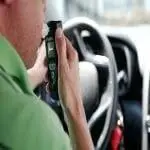 The underage DUI statute requires ignition interlock when a restricted license is issued under its provisions. The statute refers to § 18.2-270.1 and provides that the interlock requirement is for a period not exceeding one year.
Continue Reading
A driver must comply with the applicable order and interlock conditions. The actual requirements should be verified before operating a vehicle.
Virginia Alcohol Safety Action Program
Section 18.2-266.1 makes a person convicted of Baby DUI eligible to attend an Alcohol Safety Action Program under § 18.2-271.1.
That eligibility should not be confused with the general rule requiring VASAP participation after most convictions under the ordinary DUI statute, § 18.2-266.
Whether program participation is ordered or becomes a condition of restricted driving depends on the applicable law and circumstances.
Administrative Suspension and Restoration
A qualifying arrest or chemical-test result can trigger an administrative suspension before trial under § 46.2-391.2.
This immediate suspension is separate from the one-year license forfeiture imposed following conviction under § 18.2-266.1.
At the end of a forfeiture period, the driver should verify all applicable reinstatement conditions before resuming unrestricted driving.
For additional information about administrative suspension, restricted privileges, and reinstatement, review our Virginia DUI License Suspension Guide.
Court Proceedings for Virginia Underage DUI Charges
Underage DUI cases do not all proceed in the same court.
The driver’s age at the time of the alleged offense determines whether ordinary adult misdemeanor procedures or juvenile court procedures generally apply.
Drivers Ages 18 Through 20
A person who was 18, 19, or 20 at the time of the alleged offense generally faces an adult misdemeanor prosecution in the appropriate Virginia general district court.
The case may involve an initial court appearance, review of the charging document, examination of the Commonwealth’s evidence, pretrial proceedings, and trial or other lawful resolution.
The exact process depends on the court and circumstances.
Drivers Younger Than 18
When the alleged offense was committed by a person younger than 18, the case generally proceeds in juvenile and domestic relations district court.
Juvenile cases involve distinct procedures, terminology, confidentiality provisions, and disposition rules.
A finding that a juvenile committed an offense should not automatically be equated with every consequence of an adult criminal conviction.
However, § 18.2-266.1 expressly requires the juvenile court to impose the disposition specified by the statute upon an adjudication for Baby DUI.
Evidence Review and Court Preparation
Important documents and evidence may include:
- The summons, petition, or charging document.
- The court date and location.
- Breath-test certificates or blood-test documentation.
- Officer reports and available recordings.
- Statements concerning alcohol consumption and timing.
- Evidence relating to the driver’s identity and operation of the vehicle.
- Administrative suspension notices and DMV documentation.
The Commonwealth must prove the charged offense under the applicable legal standard.
For a broader explanation of hearings, trial procedures, and dispositions, see our Virginia DUI Court Process Guide.
Underage Drivers Licensed Outside Virginia
Virginia’s underage DUI law is not limited to Virginia residents.
A college student or visiting driver licensed in another state may face the Virginia charge and potential consequences affecting the privilege to drive in Virginia.
The home-state licensing authority may independently apply its own laws to a reported conviction or license action.
Those interstate issues are discussed in our Virginia DUI Guide for Out-of-State Drivers.
Evidence and Potential Defenses in Underage DUI Cases
An underage DUI arrest does not establish guilt. The Commonwealth must prove the elements of § 18.2-266.1, and the defense may evaluate both the legal foundation for the investigation and the evidence offered to support the charge.
No single defense applies automatically to every case.
Legality of the Traffic Stop
The defense may review whether the officer had a lawful basis for the original traffic stop or other encounter.
The circumstances surrounding a detention, extension of a stop, or arrest may raise separate legal questions.
The applicable standards depend on the facts and governing law.
Identity and Vehicle Operation
The Commonwealth must prove that the accused operated the motor vehicle.
Cases involving an accident, an unattended vehicle, or uncertainty about the driver may present factual questions about identity and operation.
The exact evidence matters.
Age and Statutory Classification
The underage statute applies to persons younger than 21.
The person’s age at the time of the offense and the statutory provision actually charged should be verified.
A prosecution under § 18.2-266.1 should not automatically be analyzed using the elements and penalties applicable to § 18.2-266.
Chemical-Test Evidence
Potential issues may involve the accuracy, timing, collection, admissibility, and interpretation of breath or blood evidence.
A test near the 0.02 threshold may require particularly careful examination, but a reported low-level result is not automatically defective.
The defense must evaluate the complete record rather than assume that a particular numerical result guarantees dismissal.
Statements and Other Evidence
Statements about drinking, the timing of consumption, the circumstances of the stop, and observations made by an officer may be relevant.
The circumstances in which statements were obtained and whether they are admissible can also matter.
Available video and other independent evidence may help establish what occurred.
Dismissal, Reduction and Other Resolutions
A Baby DUI charge may be dismissed if the Commonwealth cannot establish the required elements or if a legal issue prevents conviction.
Other resolutions may be available when legally and factually appropriate.
There is no automatic right to dismissal or reduction simply because the accused is young, has no prior record, or registered a BAC close to 0.02.
Criminal and Juvenile Record Consequences
For adult defendants, an underage DUI conviction is a misdemeanor criminal conviction that may affect background checks, employment, and professional licensing.
A conviction under § 18.2-266.1 is specifically excluded from petition-based sealing under § 19.2-392.12.
Juvenile records are governed by separate confidentiality, retention, and expungement provisions. Their treatment should not be assumed to be identical to that of adult criminal records.
Dismissed charges and other dispositions may present different record-relief questions.
Virginia Underage DUI Frequently Asked Questions
What is a Baby DUI in Virginia?
Baby DUI is the common name for Virginia Code § 18.2-266.1, which prohibits a person younger than 21 from operating a motor vehicle after illegally consuming alcohol when a qualifying chemical test establishes a BAC of at least 0.02 but below 0.08.
What BAC triggers an underage DUI charge in Virginia?
The statutory chemical-test range begins at 0.02 and extends to results below 0.08. The Commonwealth must also establish the other required elements of § 18.2-266.1, including the driver’s age and vehicle operation.
Can someone under 21 be charged under the regular DUI law?
Yes. Drivers younger than 21 can be prosecuted under § 18.2-266 when the evidence supports its statutory elements, including a qualifying BAC of 0.08 or higher or impairment under another provision. The penalties differ from Baby DUI under § 18.2-266.1.
Does the Commonwealth have to prove intoxication in a Baby DUI case?
Not traditional impairment when the prosecution relies on the statutory Baby DUI alcohol-concentration provision. The Commonwealth must prove the required elements, including illegal alcohol consumption, vehicle operation, age, and a qualifying chemical-test result.
Can someone be charged with Baby DUI without driving dangerously?
Yes. Dangerous driving is not a required element of the statutory alcohol-concentration offense. A traffic stop for another violation may lead to an underage DUI investigation, but the Commonwealth must still establish the elements of the charged offense.
Is underage DUI a misdemeanor in Virginia?
Yes. A violation of § 18.2-266.1 is classified as a Class 1 misdemeanor. For a person younger than 18 at the time of the offense, the case generally proceeds through the juvenile court system, which has different procedures from an adult criminal prosecution.
Is the Baby DUI penalty a $500 fine or 50 hours of community service?
Virginia Code § 18.2-266.1 requires either a mandatory minimum $500 fine or at least 50 hours of community service, along with a one-year forfeiture of driving privileges. Other lawful costs or conditions may apply.
How long does an underage DUI conviction suspend a driver’s license?
A conviction under § 18.2-266.1 requires forfeiture of driving privileges for one year from the date of conviction. The current statute also applies its specified disposition to juveniles adjudicated delinquent for this offense. Any qualifying administrative suspension is separate.
Is jail mandatory for an underage DUI conviction in Virginia?
Section 18.2-266.1 does not establish the elevated-BAC mandatory jail provisions found in the regular DUI sentencing statute. However, it is classified as a Class 1 misdemeanor, and adult or juvenile sentencing consequences must be evaluated under the applicable legal provisions.
Can an underage driver get a restricted license after Baby DUI?
Possibly. Section 18.2-266.1 permits restricted-driving eligibility during the one-year license forfeiture, subject to the applicable statutory and court requirements. A restricted license is not automatic.
Is ignition interlock required for an underage DUI restricted license?
Yes. Section 18.2-266.1 requires ignition interlock when restricted driving is granted under that provision. The applicable statutory requirement is governed by § 18.2-270.1 and is subject to a period not exceeding one year.
Is VASAP mandatory after a Baby DUI conviction?
The Baby DUI statute makes a convicted person eligible to attend an Alcohol Safety Action Program under § 18.2-271.1. This is different from the general mandatory VASAP provision for ordinary DUI convictions. Program participation may depend on the applicable court order and circumstances.
Which court handles an underage DUI for a 17-year-old versus a 19-year-old?
A person who was younger than 18 at the time of the offense generally proceeds in juvenile and domestic relations district court. A person who was 18, 19, or 20 generally faces a misdemeanor prosecution in general district court.
Can I refuse a preliminary roadside breath test in a Baby DUI investigation?
Yes. Virginia Code § 18.2-267 permits a person suspected of underage DUI to refuse the preliminary roadside breath test. That refusal cannot be used as evidence in the prosecution of the covered offense. Post-arrest evidentiary testing involves different requirements.
What happens if I refuse a post-arrest breath or blood test?
An unreasonable refusal of a chemical test required under Virginia’s implied-consent law may create separate consequences under § 18.2-268.3. A first refusal is generally civil, while certain qualifying subsequent breath-test refusals may involve criminal penalties.
Can a BAC result just above 0.02 be challenged?
Yes. Testing procedures, instrument operation, sample collection, timing, identification, documentation, and admissibility may all be relevant. A result near the statutory threshold deserves careful review, but a low result does not automatically establish a testing error.
Do field sobriety tests prove an underage DUI?
No. Field sobriety exercises do not directly measure BAC or establish every element of § 18.2-266.1. They may provide observational evidence relevant to the investigation or arrest, while the statutory alcohol-concentration provision relies on qualifying chemical evidence.
Can an underage DUI conviction be sealed or expunged?
An adult conviction under § 18.2-266.1 is excluded from petition-based sealing under § 19.2-392.12. Juvenile records follow separate confidentiality, retention, and expungement laws. A dismissed charge or another disposition requires its own eligibility analysis.
Can an underage DUI charge be dismissed or reduced?
Possibly. Dismissal may result when the Commonwealth cannot prove the elements or an applicable legal issue prevents conviction. Other resolutions depend on the evidence and circumstances. A first offense or a BAC near 0.02 does not automatically entitle the accused to a particular result.
What should I do after receiving an underage DUI summons in Virginia?
Confirm the court date and exact charge, preserve all paperwork, record the timeline of the stop and testing, and preserve potentially relevant evidence. Because adult and juvenile procedures differ, the age of the accused and the proper court should also be verified before decisions are made.
Talk With a Virginia DUI Lawyer About an Underage Charge
 If you or your child is facing an underage DUI charge in Virginia, the exact statute, BAC result, testing procedures, court, and potential license consequences deserve careful review. A charge under § 18.2-266.1 involves different legal requirements and penalties from a traditional DUI prosecution. Our attorneys can examine the summons or petition, review the circumstances of the investigation, evaluate chemical-test evidence, identify applicable legal issues, and address potential court and driving-privilege consequences. No particular outcome can be guaranteed. For information about legal representation and case review, visit our Virginia DUI Lawyer page.
2/8/2026 | Updated 11/11/2026