
Arlington County Concealed Weapon Lawyer
 If you have been charged with carrying a concealed gun or weapon in Arlington County, the case may depend on whether the weapon was actually hidden from common observation, where it was located, whether a permit or statutory exception applies, and how police discovered the weapon. Virginia Code § 18.2-308 prohibits carrying specified weapons concealed about the person under circumstances covered by the statute. Arlington concealed weapon cases commonly arise from traffic stops, vehicle searches, firearms found in bags, consoles or other compartments, and weapons allegedly concealed on a person’s body. Our Arlington concealed weapon lawyers review the location and visibility of the weapon, possession and knowledge, concealed handgun permits, vehicle and container exceptions, police searches, body-camera footage, statements, and other evidence that may affect the charge or available defenses.







Arlington Concealed Weapon Defense Guide
Arlington Defense Services
For broader statewide guidance, see our Virginia Concealed Weapon Lawyer page.
Carrying a Concealed Weapon in Arlington County
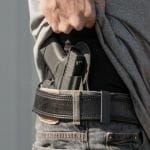 A concealed weapon charge in Arlington County is generally prosecuted under Virginia Code § 18.2-308, which prohibits carrying specified weapons about the person when they are hidden from common observation unless a permit, statutory exception, or other legal protection applies. The statute covers pistols and revolvers as well as specified knives and other identified weapons. The exact object involved matters because § 18.2-308 does not simply criminalize concealment of every object that could potentially be used as a weapon.
An Arlington concealed weapon prosecution can therefore involve several separate questions:
- Was the item a weapon covered by § 18.2-308?
- Was it carried about the accused’s person?
- Was it hidden from common observation?
- Did the accused know about and possess the weapon?
- Did a valid concealed handgun permit apply?
- Did a vehicle, residence, business, transportation, or other statutory exception apply?
- Was the weapon discovered through a lawful police stop or search?
The precise subsection and factual circumstances should be reviewed before concluding that the manner in which the weapon was carried violated Virginia law.
What Counts as Hidden From Common Observation?
Whether a weapon was actually concealed can be one of the central issues in a prosecution under § 18.2-308.
The statute applies to specified weapons carried about the person and hidden from common observation. It also provides that a weapon can be deemed hidden from common observation when it is observable but has such a deceptive appearance that its true nature as a weapon is disguised.
The question is therefore not simply whether a police officer eventually discovered or saw the weapon. The circumstances surrounding how the weapon was carried and what an ordinary observer could see may matter.
Relevant issues can include:
- How much of the weapon was visible;
- Where it was located on the person’s body;
- Whether clothing covered all or part of the weapon;
- The officer’s position and opportunity to observe it;
- Whether the weapon was inside a bag, purse, case, or other container;
- Body-camera or surveillance video;
- Photographs showing how the weapon was carried; and
- Whether an observer could recognize the object as a weapon.
A dispute about visibility can therefore present both a factual and legal issue rather than being resolved merely by an officer describing the weapon as concealed.
Penalties for an Arlington Concealed Weapon Charge
Virginia Code § 18.2-308 provides increasingly serious classifications for repeat concealed weapon violations.
| Violation | Classification |
|---|---|
| First offense | Class 1 misdemeanor |
| Second qualifying offense | Class 6 felony |
| Third or subsequent qualifying offense | Class 5 felony |
A second violation of § 18.2-308, or a conviction under § 18.2-308 following a conviction under a substantially similar local ordinance, can be prosecuted as a Class 6 felony. A third or subsequent violation is a Class 5 felony.
Because a prior concealed-weapon conviction can change a new Arlington charge from a misdemeanor to a felony, the Commonwealth’s allegation concerning prior convictions should be verified carefully. The charging documents and underlying court records may be important when repeat-offense treatment is alleged.
Concealed Handguns in Arlington Vehicle Cases
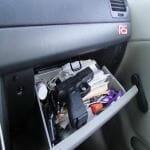 Many concealed weapon charges arise after a traffic stop in which an officer discovers a firearm inside a car, truck, or other vehicle. The precise location of the handgun can be particularly important because Virginia law contains a specific vehicle exception. A person who may lawfully possess a firearm may carry a handgun in a personal, private motor vehicle or vessel when the handgun is secured in a container or compartment in the vehicle or vessel. Whether that exception applies depends on the actual location and condition of the handgun rather than simply whether the gun was somewhere inside the vehicle.
Vehicle cases may involve a:
- Glove compartment;
- Center console;
- Backpack;
- Gun case;
- Purse or other bag;
- Storage compartment; or
- Other container inside the vehicle.
The container does not necessarily have to be locked. The Supreme Court of Virginia has held that a fully zipped backpack can qualify as a secured container for purposes of the vehicle exception. A properly secured console, glove compartment, gun case, or other qualifying container may likewise raise the statutory exception.
Whether the exception applies in an Arlington case can depend on whether the accused could lawfully possess the firearm, whether the vehicle was personal and private, whether the weapon was a handgun, and whether it was actually secured in a qualifying container or compartment.
A handgun lying loose under a seat can present a materially different issue from a handgun secured inside a qualifying compartment or fully fastened container.
Concealed Handgun Permits and Statutory Exceptions
 Virginia law authorizes qualified persons to carry concealed handguns pursuant to a valid concealed handgun permit. Section 18.2-308 also expressly provides an affirmative defense to the handgun provision when the person had been issued a valid concealed handgun permit at the time of the alleged offense. Permit status should therefore be verified carefully. The existence of a permit does not necessarily answer every firearm-law question, because other statutes and location restrictions can independently prohibit possession or carrying in particular circumstances.
Section 18.2-308 also contains exceptions that may apply in circumstances involving:
- A person’s own place of abode or its curtilage;
- A person’s own place of business;
- Certain transportation to or from an established shooting range;
- Transportation between a residence and a place of firearm purchase or repair under specified conditions;
- A handgun secured in a qualifying container or compartment in a personal, private vehicle or vessel;
- Certain firearms-training activities;
- Specified law-enforcement or governmental circumstances; and
- Other situations specifically identified by statute.
Whether an exception applies should be determined from the exact statutory language and facts rather than from a general assumption about Virginia concealed-carry law.
Possession and Knowledge in Arlington Concealed Weapon Cases
A concealed weapon allegation may also raise questions about whether the accused knew the weapon was present and whether the Commonwealth can connect that person to the weapon.
These issues can become especially important when a weapon is discovered in:
- A vehicle occupied by several people;
- A borrowed or shared vehicle;
- A backpack, purse, or bag belonging to another person;
- A shared residence or hotel room;
- A shared center console or storage compartment; or
- Another location accessible to multiple people.
Ownership and possession are not necessarily the same thing. A person can potentially possess a weapon owned by someone else, while ownership of a firearm does not necessarily establish that the owner was carrying or possessing it at the time charged.
Statements, fingerprints or DNA where available, photographs, electronic communications, vehicle ownership, the location of the weapon, and testimony from passengers or other witnesses may become relevant.
Search and Seizure in Arlington Concealed Weapon Cases
Traffic stops and police searches are common sources of concealed weapon charges in Arlington County.
The fact that officers ultimately recovered a firearm or other weapon does not resolve whether the encounter and search were lawful. The defense should examine how police contact began, how long the person was detained, and what legal basis officers relied upon to obtain access to the weapon.
Important questions can include:
- Did police have lawful grounds for the traffic stop or detention?
- Was a traffic stop unlawfully prolonged?
- Was a pat-down or frisk legally justified?
- Did the accused actually consent to a search?
- What was the scope of any consent?
- Did probable cause support a vehicle search?
- Was a closed bag or container lawfully searched?
- Was a warrant required?
- What does body-camera or dash-camera footage show?
- Were statements obtained during an unlawful detention or interrogation?
If a firearm or other weapon was obtained through an unconstitutional search or seizure, a motion to suppress may affect whether the Commonwealth can use that evidence.
Evidence Used in Arlington Concealed Weapon Cases
Evidence in a concealed weapon prosecution may include:
- The firearm or other weapon allegedly recovered;
- Photographs showing where the weapon was found;
- Police body-camera and dash-camera footage;
- Vehicle-search evidence;
- A concealed handgun permit;
- Vehicle registration or ownership information;
- Fingerprints or DNA where available;
- Statements attributed to the accused;
- Statements from passengers or other witnesses;
- Surveillance video;
- Text messages, photographs, or other electronic evidence; and
- Prior court records if repeat-offense treatment is alleged.
The physical location of the weapon should be documented carefully. Whether it was carried on the body, underneath clothing, loose inside a vehicle, inside a closed console, inside a fully zipped bag, or in some other location can materially affect the legal analysis.
Defending Concealed Weapon Charges in Arlington County
The appropriate defense depends on the particular facts, the weapon involved, the statute charged, and how the evidence was obtained.
The Weapon Was Not Concealed
The Commonwealth must establish concealment within the meaning of § 18.2-308. Photographs, video, officer testimony, witness testimony, and the manner in which the weapon was carried may create a factual dispute about whether it was actually hidden from common observation.
Vehicle Container or Compartment Exception
A person who may lawfully possess a firearm may fall within the statutory vehicle exception when a handgun is secured in a qualifying container or compartment in a personal, private vehicle or vessel.
The exact condition of the container or compartment can matter. A fully zipped backpack or properly secured compartment can present a substantially different legal issue from a firearm lying loose inside the passenger compartment.
Valid Concealed Handgun Permit
A valid concealed handgun permit may provide protection against the handgun provision of § 18.2-308. The existence and validity of the permit at the time of the alleged offense should be verified.
Lack of Knowledge or Possession
A weapon found in a shared vehicle, bag, residence, hotel room, or other location may raise questions about whether the accused knew it was present or actually exercised possession or control over it.
Statutory Exception
Section 18.2-308 contains multiple exceptions involving residences, places of business, transportation of weapons, private vehicles, training activities, and specified persons or circumstances. The precise exception should be compared with the facts of the Arlington case.
Unlawful Search or Seizure
Discovery of a concealed weapon does not automatically make the police stop or search lawful. A constitutional violation may provide grounds to seek suppression of the weapon, statements, or other resulting evidence.
Weapon Not Covered by the Statute
Depending on the object involved, a legal issue may exist concerning whether it falls within one of the weapon categories specifically identified by § 18.2-308 or otherwise falls within the statutory language.
Incorrect Prior-Offense Allegation
Because a second or subsequent qualifying conviction increases the classification of the offense, the Commonwealth must establish the prior conviction necessary for enhanced treatment.
Arlington Courts and the Concealed Weapon Court Process
 A first-offense concealed weapon charge under § 18.2-308 is generally a Class 1 misdemeanor and is ordinarily handled in Arlington County General District Court.
The Arlington County General District Court is located at:
1425 North Courthouse Road
Suite 2400, Second Floor
Arlington, Virginia 22201
A second qualifying concealed weapon offense is a Class 6 felony, and a third or subsequent qualifying offense is a Class 5 felony. Felony concealed weapon charges may begin in General District Court with bond proceedings, advisement or arraignment, discovery, motions, negotiations, and a preliminary hearing.
If the case is certified following a preliminary hearing, it may proceed through the grand jury to Arlington County Circuit Court. A felony charge may also proceed by indictment when permitted by law.
The charging document and criminal history should be reviewed carefully because the number and nature of prior concealed-weapon convictions can determine whether the current case is prosecuted as a misdemeanor or felony.
What to Send an Arlington Concealed Weapon Lawyer
Helpful information for a concealed weapon case review may include:
- The warrant, summons, indictment, or other charging document;
- The scheduled Arlington court date;
- The exact Virginia Code section charged;
- Your concealed handgun permit, if applicable;
- Information about exactly where the weapon was found;
- Photographs showing the vehicle, bag, compartment, clothing, or location involved;
- Any search warrant or property inventory provided by police;
- Vehicle ownership or registration information;
- Names of passengers or other potential witnesses;
- Any available video or photographs relating to the encounter;
- Prior concealed-weapon court records if a repeat offense is alleged; and
- Other paperwork provided by law enforcement, a magistrate, prosecutor, or court.
Potentially relevant evidence should be preserved in its original form. Do not alter or delete photographs, video, text messages, documents, or other electronic records that may relate to the charge.
Frequently Asked Questions About Arlington Concealed Weapon Charges
What is a concealed weapon charge in Arlington County?
An Arlington concealed-weapon allegation is generally prosecuted under Virginia Code § 18.2-308. Whether the statute applies depends on the weapon involved, how it was carried, whether it was hidden from common observation, and whether a permit or statutory exception applies.
What does hidden from common observation mean?
The issue is whether the weapon was concealed from common observation under the circumstances. Whether part of the weapon was visible does not necessarily resolve the issue. The manner in which it was carried, its appearance, and the observer’s opportunity to recognize it as a weapon may be important.
Is carrying a concealed weapon a misdemeanor or felony in Virginia?
A first violation of Virginia Code § 18.2-308 is generally a Class 1 misdemeanor. A second qualifying offense is a Class 6 felony, and a third or subsequent qualifying offense is a Class 5 felony.
Can I legally have a concealed handgun in my vehicle in Arlington?
Virginia law provides an exception for a person who may lawfully possess a firearm and carries a handgun in a personal, private motor vehicle or vessel when the handgun is secured in a container or compartment. Whether the exception applies depends on the particular circumstances.
Does the container in my vehicle have to be locked?
No. Virginia law uses the term “secured,” and the Supreme Court of Virginia has held that secured does not necessarily mean locked. A fully zipped backpack can qualify as a secured container under the vehicle exception.
What if the gun was in the glove compartment or center console?
A handgun secured in a qualifying compartment of a private vehicle may fall within the statutory vehicle exception when the other requirements are satisfied. How the compartment was closed or secured and the specific circumstances should be examined.
What if the concealed gun belonged to someone else?
Ownership and possession are different questions. The Commonwealth may attempt to prove possession of a weapon owned by another person, but knowledge, location, access, control, statements, and other circumstances may affect whether possession can be established.
Does a concealed handgun permit prevent a concealed weapon charge?
A valid concealed handgun permit provides statutory protection for carrying a concealed handgun, subject to Virginia law and other applicable restrictions. The permit’s validity at the time of the alleged offense should be verified.
Can an illegal vehicle search affect an Arlington concealed weapon charge?
Yes. If a weapon was discovered during an unlawful stop, detention, or search, the defense may have grounds to seek suppression of the firearm or other evidence obtained as a result.
Where are Arlington concealed weapon charges heard?
A first-offense misdemeanor is generally heard in Arlington County General District Court. Felony second or subsequent concealed-weapon charges may begin in General District Court and later proceed to Arlington County Circuit Court, or a felony charge may proceed by indictment when permitted by law.
Request a Confidential Arlington Concealed Weapon Case Review
If you have been charged with carrying a concealed gun or weapon in Arlington County, early review can help determine whether the weapon was actually concealed, whether a permit or statutory exception applies, whether the Commonwealth can prove possession and knowledge, and whether police lawfully obtained the evidence. Our Arlington concealed weapon lawyers represent clients facing misdemeanor and felony concealed weapon charges. Request a confidential case review and include the name on the paperwork, the Arlington court date, the exact charge, and a copy or photograph of the available documents.
9/19/2026