
Virginia Concealed Weapon Handgun Criminal Lawyer
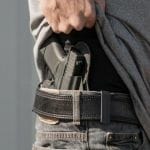 A concealed handgun often referred to as a concealed carry firearm is a handgun that is carried on a person in a hidden or inconspicuous manner, typically under clothing or in an easily concealed holster. Virginias concealed weapon law criminalizes the concealed carrying of a weapon according to Va. Code 18.2-308. It is illegal for anyone to carry his person, hidden from common observation, a firearm, specific types of knives, and other certain weapons. A first offense is a misdemeanor, and a subsequent offense is a felony. A weapon is deemed hidden from common observation when it is observable but is of such a deceptive appearance as to disguise the weapon’s true nature. There are exceptions to this Virginia law.
Top VA Concealed Handgun Criminal Lawyer Client Review


Experienced Firearm Law Attorney Defends Concealed Weapon Cases
 Riley & Wells Attorneys-At-Law is a law firm that represents clients accused of concealed weapon violations. The most common type of case involves carrying a handgun concealed. Our attorneys possess over 60 combined years of experience. We are recognized as a “Best Law Firm” according to U.S. News & World Report. We know firearm law – we wrote the Virginia Gun Law book. If you have been accused of carrying a concealed weapon, then you need an experienced professional to present your best defense. Let us review your case. We can help!
Virginia Defense Counsel for Concealed Weapon Handgun Cases
- Fairfax
- Prince William
- Loudoun
- Fredericksburg
- Richmond
- Henrico
- Chesterfield
- Hanover
- Goochland
- Virginia Beach
- Newport News
- Norfolk
- Sussex
- Prince George
- New Kent
- Dinwiddie
- Hopewell
- Williamsburg
- Roanoke
- Lynchburg
- Hampton
- Chesapeake
- Caroline/Bowling Green
- Colonial Heights
- Petersburg
- Lawrenceville/Brunswick
- Emporia/Greensville
Concealed Handgun Permit Exception to Concealed Weapon Law
 The most popular exception to the concealed weapon law is the Concealed Handgun Permit (CHP). The resident Virginia CHP is issued by the applicants local Circuit Court clerk’s office. CAUTION: A CHP does not legalize all forms of concealed carry. A CHP only excludes lawful concealed carry of a handgun. No other weapons are covered by the CHP. The CHP is invalidated if intoxicated. Virginia law prohibits firearms from being possessed on certain properties or within certain buildings. Convictions for certain offenses will invalidate the CHP.
Concealed Handgun Permit Application & Appeal Process
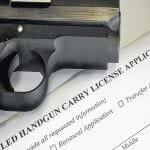 A Virginia concealed handgun permit is a legal document that allows an individual to carry a concealed handgun in public. In Virginia, any person 21 years of age or older may apply in writing to the clerk of the circuit court of the county or city in which he resides for a concealed handgun permit according to § 18.2-308.02. Nonresidents of the Commonwealth 21 years of age or older apply in writing to State Police according to § 18.2-308.06. Unfortunately, there are disqualifications that can render an applicant ineligible for a concealed handgun permit. Sometimes an application is improperly denied. Let us review your case.
Virginia Automobile Handgun Exception to Concealed Weapon Law
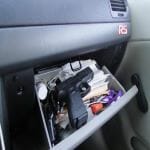 There are various exceptions to the Virginia concealed weapon law. Perhaps the most popular exception after carrying in your place of abode exception is the motor vehicle exception. The Virginia concealed weapon law does not apply in cases where a handgun is secured in a container or compartment of a personal private motor vehicle. The secured container or compartment is not required to be locked. Such compartment is commonly referred to a glovebox or center console but also includes containers such as a fully zippered backpack.
Common Concealed Carry Handgun Violations
 Carrying a concealed handgun is a serious responsibility-legally and in terms of safety. If you plan on carrying a concealed handgun, then you should know the law before doing so. Carrying a concealed handgun without a concealed handgun permit (CHP) where there is no CHP exception is a common violation. On the other hand, CHP holders also make concealed carry mistakes that can trigger an arrest. Carrying in bars or while intoxicated; CHP expiration; and carrying into prohibited locations such as an airport, a courthouse, or a school will also likely trigger an arrest if detected.
Concealed Handgun Permit Carry Attorney Legal Tips
 The lawful concealed carrying of a handgun takes a certain amount of diligence and responsibility. It’s vital to approach concealed carry with a strong commitment to safety, legal compliance, and responsible firearm handling. Continual education and training are essential to avoiding mistakes and being a responsible concealed carry permit holder. Here are some common concealed handgun carry mistakes to avoid:
- Carrying without a permit: Virginia law requires a concealed handgun permit (CHP) be carried along with proper identification while carrying a concealed handgun.
- Carrying in prohibited areas: Ignoring posted signs or disregarding the law regarding places where concealed carry is prohibited. It’s important to know and follow the specific premises restrictions.
- Not knowing the laws: Ignorance of the law regarding concealed carry is not a valid defense if you are arrested for a violation. It is essential to be well-informed about the laws, regulations, and requirements related to concealed carry.
- Carrying in an emotional state: Carrying a concealed handgun while angry, emotionally distressed, or in a compromised mental state can lead to impulsive actions that have grave consequences. It’s essential to maintain emotional control and sound judgment at all times.
- Failure to properly secure the firearm: An unsecured, loaded firearm in a bag or purse can lead to accidental discharges. Always use a proper holster and maintain control of your firearm.
- Improper firearm handling: Mishandling a concealed handgun can lead to unintentional discharges and accidents.
- Not regularly practicing at the range: Regular trips to the shooting range are essential to maintain proficiency and safety.
- Being complacent: Complacency can lead to safety lapses. Always treat your concealed carry firearm with the utmost respect and vigilance.
Let us review your case. We can help!
5/16/2021 | Updated 10/30/2023