
Arlington County Hit & Run Lawyer
 Riley & Wells Attorneys-At-Law defends clients charged with hit and run and leaving-the-scene offenses in Arlington County, Virginia. An Arlington hit and run charge can be prosecuted as a misdemeanor or felony depending on the facts, including whether the case involves injury, property damage, unattended property, or alleged failure to provide required information after an accident. Hit and run cases may involve questions about who was driving, whether the driver knew an accident occurred, the amount of property damage, injury evidence, witness identification, surveillance video, vehicle damage, police interviews, and whether the required reporting or information-sharing duties were satisfied. Our Arlington criminal defense lawyers review the investigation, charging documents, statements, physical evidence, and applicable statutes to identify the legal and factual issues that may affect the case.







Arlington Hit & Run Defense Guide
Arlington Defense Services
For broader statewide guidance, see our Virginia Hit and Run Lawyer page.
Arlington Hit & Run Defense
A hit and run charge in Arlington County, also called leaving the scene of an accident, can create serious criminal, driver’s-license, insurance, employment, and record consequences. The exact charge depends on the circumstances of the accident, whether anyone was injured, whether the damaged property was attended or unattended, the amount of alleged property damage, and which statutory duties the Commonwealth claims were violated.
Fault for causing the collision is not necessarily the central issue in a hit and run prosecution. The case may instead depend on whether the accused was the driver, whether the driver knew an accident occurred, whether injury or property damage was known or reasonably apparent, and whether the required stopping, information-sharing, assistance, or reporting duties were satisfied.
A careful review may include the police report, accident location, vehicle damage, witness statements, surveillance or dash-camera video, photographs, repair estimates, medical evidence, insurance information, electronic communications, and statements attributed to the accused.
Police Investigations After an Arlington Accident
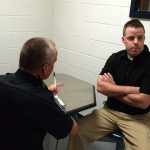 Many Arlington hit and run cases begin with a police investigation rather than an immediate arrest. Law enforcement may receive a license-plate number, contact the registered owner of a vehicle, speak with witnesses, obtain surveillance video, compare damage to vehicles, review repair or insurance information, or ask a suspected driver to provide a statement. The fact that a person owns the vehicle does not necessarily establish who was driving it at the time of the accident. Identification may depend on witness observations, video, statements, location data, possession of the vehicle, physical evidence, and other circumstances. Statements made during an investigation may later become evidence. Before discussing the incident, a person contacted by law enforcement should understand what is being investigated, whether the person is viewed as a witness or suspect, and what criminal exposure may exist. Photographs, dash-camera recordings, surveillance footage, repair records, insurance documents, text messages, and other potentially relevant information should be preserved in their original form.
Driver Duties After an Accident Under Virginia Code § 46.2-894
Virginia Code § 46.2-894 applies when a driver is involved in an accident in which a person is killed or injured or an attended vehicle or other attended property is damaged.
The statute generally requires the driver to stop as close to the scene as reasonably possible without obstructing traffic and provide required identifying information. Depending on the circumstances, that information includes:
- The driver’s name;
- The driver’s address;
- The driver’s license number; and
- The vehicle registration number.
The information may be required to be provided to law enforcement, the injured person, an occupant of the other vehicle, or the custodian of damaged attended property, depending on the circumstances.
When another person is injured, § 46.2-894 also requires reasonable assistance, including obtaining medical treatment when treatment is apparently necessary or requested.
If injuries sustained by the driver prevent immediate compliance, the statute requires the driver to make the required report as soon as reasonably possible and make a reasonable effort to locate the appropriate person and provide the required information.
Misdemeanor and Felony Hit & Run Charges in Arlington
For a driver charged under Virginia Code § 46.2-894, the criminal classification depends on the result of the accident.
| Accident Circumstance | Classification |
|---|---|
| Accident resulting in injury or death | Class 5 felony |
| More than $1,000 in damage to attended property | Class 5 felony |
| $1,000 or less in damage to attended property | Class 1 misdemeanor |
The classification therefore may depend on evidence that goes beyond whether a collision occurred. Medical evidence may affect an injury allegation, while photographs, repair estimates, invoices, expert testimony, or other records may affect the amount of claimed property damage.
The Commonwealth must prove the particular offense charged. A felony allegation should not be assumed merely because the accident was serious or because substantial damage is alleged.
Arlington Hit & Run Involving an Occupied Vehicle or Injury
 An accident involving another occupied vehicle, a pedestrian, cyclist, injured passenger, or other attended property may implicate the duties contained in § 46.2-894. The evidence may include the severity of the collision, visible vehicle damage, statements made at the scene, witness observations, medical treatment, 911 recordings, police body-camera footage, surveillance video, photographs, and repair records. Knowledge may become an important issue. The circumstances may affect whether the Commonwealth can prove that the driver knew a collision occurred and whether injury or property damage was known or reasonably apparent. The amount of property damage can also determine whether an attended-property allegation is prosecuted as a misdemeanor or felony. Repair estimates and claimed damage should therefore be examined rather than simply accepting a dollar amount stated in a police report.
Leaving the Scene of an Accident Involving Unattended Property
Virginia Code § 46.2-896 applies when an accident causes damage only to an unattended vehicle or other unattended property and no person is killed or injured.
Examples may include:
- A parked and unoccupied vehicle;
- A vehicle in a parking garage;
- A fence;
- A sign;
- A mailbox;
- A building or other structure; or
- Other unattended property.
The driver must make a reasonable effort to locate the owner or custodian and provide the identifying information required by law.
If the owner or custodian cannot be found, the statute requires the driver to leave sufficient identifying and contact information in a conspicuous place at the scene and make a written report to law enforcement within 24 hours. The written report must also provide information concerning the date, time and place of the accident and the driver’s description of the property damage.
Under § 46.2-900, a violation involving property damage is generally a Class 1 misdemeanor. When the vehicle or property struck was unattended and the damage was less than $250, the violation is a Class 4 misdemeanor.
An unattended-property case may turn on what efforts were made to locate the owner, what information was left, whether a police report was made, the timing of the report, and the amount of actual damage.
Passenger Reporting Duties in Arlington Hit & Run Cases
Virginia law can impose accident-reporting duties on certain passengers as well as drivers.
Under §§ 46.2-895 and 46.2-897, a person who is at least 16 years old, was in the vehicle with the driver, knew about the accident, and knows that the driver failed to perform the required duties may be required to ensure that a report is made to law enforcement within 24 hours.
Passenger cases present different issues from a prosecution of the driver. Relevant questions may include:
- The passenger’s age;
- Whether the passenger knew an accident occurred;
- Whether the passenger knew the driver failed to report;
- Whether another person made the required report;
- What information was available to the passenger; and
- Whether the statutory reporting requirements were otherwise satisfied.
The classification of a passenger-related offense can depend on whether the accident involved injury, death, or only property damage.
Driver’s License Consequences of an Arlington Hit & Run Conviction
A hit and run conviction can create driver’s-license consequences in addition to the criminal sentence.
Virginia Code § 46.2-901 permits a court to suspend a person’s Virginia driver’s license or privilege to drive for up to six months when the conviction involves a violation of §§ 46.2-894 through 46.2-897, the accident resulted only in property damage, and the damage exceeded $500.
Other convictions can result in mandatory DMV revocation. Virginia Code § 46.2-389 requires a one-year revocation for crimes punishable as felonies under Virginia motor-vehicle law and specifically includes a driver’s failure to stop and disclose identity after an accident resulting in injury or death.
The criminal classification and driver’s-license consequences should therefore be evaluated separately. A person should not assume that the only potential consequence is a fine or jail sentence.
Evidence and Defense Issues in Arlington Hit & Run Cases
 Hit and run cases can depend on detailed factual and evidentiary questions. The prosecution must establish the person charged, the circumstances creating the statutory duty, and the failure to perform the duty required by the particular statute. Evidence may include vehicle registration records, photographs, damage comparisons, repair invoices, witness testimony, license-plate information, surveillance recordings, dash-camera video, police body-camera footage, 911 calls, medical records, electronic communications, and statements attributed to the accused. The defense should be based on the exact charge and what admissible evidence exists rather than the assumption that every person connected to a vehicle involved in an accident committed a hit and run offense.
Identification of the Driver
Proof that a person owns or regularly uses a vehicle is not necessarily the same as proof that the person was driving at the time of the accident. Witness identification, video, statements, physical evidence, access to the vehicle, and other circumstances may become important.
Knowledge of the Collision
Some cases involve relatively minor contact, noise, road conditions, large vehicles, parking maneuvers, or other circumstances that raise a factual question about whether the accused knew an accident had occurred.
Knowledge of Injury or Property Damage
The nature of the impact, visible damage, conduct of the other people at the scene, statements, medical circumstances, and other facts may affect what the evidence establishes about the driver’s knowledge.
Compliance With Reporting Duties
A person may have stopped, attempted to exchange information, contacted law enforcement, left identifying information, returned to the scene, or taken other steps that must be considered when determining whether the statute was violated.
Amount of Property Damage
The amount of proven property damage can affect the classification of the offense. Repair estimates, photographs, invoices, preexisting damage, replacement costs, and testimony regarding the claimed loss may therefore become significant.
Proof of Injury
When felony treatment depends on personal injury, the evidence concerning whether an injury occurred and whether the accused knew or reasonably should have known of an injury may require careful review.
Witness and Video Evidence
Witness accounts may conflict regarding the driver, vehicle, collision, events immediately afterward, or what information was exchanged. Surveillance or dash-camera footage can sometimes confirm or contradict those accounts.
Driver Unable to Comply Because of Injury
Virginia law recognizes that a driver may be physically unable to comply immediately because of injuries suffered in the accident. The statute instead requires compliance as soon as reasonably possible under those circumstances.
Virginia Court of Appeals Hit & Run Case Result
 Riley & Wells Attorneys-At-Law represented a client convicted at trial of felony hit and run / leaving the scene of an accident involving alleged personal injury. The firm appealed the conviction to the Virginia Court of Appeals. The Court of Appeals concluded that the evidence was insufficient to establish the required knowledge of personal injury, reversed the conviction, and dismissed the case. The decision illustrates why evidence concerning the nature of the collision, visible injury, what occurred at the scene, and what the accused knew can be important in a hit and run prosecution. Past results do not guarantee future outcomes. Every case depends on its particular facts and evidence. Click the case file to read the Court of Appeals opinion.
Arlington County Hit & Run Court Process
Adult misdemeanor hit and run charges arising in Arlington County are generally tried in Arlington County General District Court. Felony charges may also begin in General District Court, which conducts preliminary hearings in felony cases before a case proceeds toward Circuit Court under the applicable procedures.
The Arlington County General District Court is located at:
1425 North Courthouse Road
Suite 2400, Second Floor
Arlington, Virginia 22201
A case may begin with a police investigation, arrest warrant, criminal summons, or other charging document. Depending on the classification and procedural posture, the case may involve:
- Investigation before a charge is filed;
- Arrest or issuance of a summons;
- Bond or release conditions;
- Advisement or arraignment;
- Discovery and review of police evidence;
- Pretrial motions;
- A misdemeanor trial in General District Court;
- A preliminary hearing in an applicable felony case;
- Certification and grand jury proceedings;
- Felony proceedings in Arlington County Circuit Court;
- Trial and sentencing; and
- Appeal where permitted by law.
The summons, warrant, bond paperwork, or other official court document should be reviewed to confirm the exact charge, court, hearing date, and procedural stage.
What to Send for an Arlington Hit & Run Case Review
Helpful information may include:
- The summons, warrant, or other charging document;
- The Arlington court date;
- The exact Virginia Code section charged;
- The police accident report, if available;
- Photographs of the vehicles or damaged property;
- Repair estimates and invoices;
- Insurance correspondence;
- Dash-camera or other video evidence;
- Surveillance footage in your possession;
- Witness names and contact information;
- Vehicle registration or ownership information;
- Medical information if injury is alleged;
- A timeline of what occurred before, during and after the accident;
- Information concerning any contact with law enforcement; and
- Any other documents received from police, the magistrate, prosecutor, DMV, or court.
Photographs, recordings, messages, electronic data, repair records, and other potentially relevant evidence should be preserved in their original form and should not be deleted or altered.
Frequently Asked Questions About Arlington Hit & Run Charges
Is hit and run a criminal offense in Arlington County?
Yes. Hit and run, also called leaving the scene of an accident, can be prosecuted as a misdemeanor or felony depending on the circumstances, the statute charged, whether anyone was injured, the type of property involved, and the amount of property damage.
When is hit and run a felony in Virginia?
For a driver charged under Virginia Code § 46.2-894, the offense is a Class 5 felony if the accident results in injury or death or more than $1,000 in property damage.
What if the property damage was $1,000 or less?
Under § 46.2-894, a driver’s violation involving $1,000 or less in damage to attended property is a Class 1 misdemeanor. Different rules apply to unattended-property and passenger-reporting offenses.
What if I did not know I hit another vehicle?
Knowledge of the collision can be an important issue in a hit and run prosecution. The nature of the contact, noise, vehicle damage, witness observations, video, statements, and other circumstances may affect what the Commonwealth can prove.
What if the other vehicle was parked and unattended?
Virginia Code § 46.2-896 imposes separate duties when only unattended property is damaged. The driver generally must make a reasonable effort to locate the owner. If the owner cannot be found, identifying information must be left at the scene and a written report must be made to law enforcement within 24 hours.
Do I have to be at fault for the accident to be charged with hit and run?
Not necessarily. A hit and run charge generally focuses on whether a person involved in the accident complied with the stopping, reporting, information-sharing, or assistance duties imposed by law rather than simply who caused the collision.
Can a passenger be charged for failing to report an accident?
Potentially. Virginia law can impose reporting duties on a person age 16 or older who was in the vehicle, knew about the accident, and knew that the driver failed to perform the required reporting duties.
Can an Arlington hit and run conviction affect my driver’s license?
Yes. Depending on the classification and circumstances, a hit and run conviction can result in a court-ordered suspension or mandatory DMV revocation in addition to the criminal penalties.
Should I speak with police if they contact me about an Arlington hit and run?
Statements made during an investigation may later be used as evidence. Before giving a statement, it is important to understand the accusation, whether police consider you a witness or suspect, and the potential criminal consequences of the investigation.
Which Arlington court handles a hit and run charge?
Adult misdemeanor hit and run cases are generally tried in Arlington County General District Court. Felony cases may begin there with proceedings that can include arraignment, bond, and a preliminary hearing before the case proceeds toward Arlington County Circuit Court.
Request a Confidential Arlington Hit & Run Case Review
An Arlington hit and run charge or police investigation should be reviewed based on the exact statute, accident circumstances, driver identification, alleged knowledge, claimed injury or property damage, reporting history, witness statements, video, vehicle damage, and other available evidence. Request a confidential case review with an Arlington County criminal defense lawyer.
9/18/2026