
Experienced Virginia Hit and Run Lawyer • For The Best Defense
 A Virginia hit and run accident, also referred to as leaving the scene of an accident, occurs when a person involved in a collision leaves the scene without performing certain functions. A hit and run violation is a criminal offense and can either be a felony or a misdemeanor depending on whether there was an injury or amount of property damage. Penalties may include incarceration, a fine & loss of driving privileges. If you have been involved in an accident that is being investigated by law enforcement as a hit or run or you have already been arrested, then you will need a top rated hit and run criminal defense attorney.
***Our attorneys are licensed to practice law in all Virginia Courts***
Top Rated Hit and Run VA Lawyer Client Review


Put our experience to work for you – Let us review your case!
30,000+ Clients Represented
1500+ Client Reviews
60+ Years of Combined Experience
VA Leaving The Scene of an Accident Attorney
 Riley & Wells Attorneys-At-Law has been successfully defending hit-and-run allegations for over 60 combined years throughout the Virginia Courts, including the Virginia Court of Appeals. Our firm is recognized as a “Best Law Firm” by U.S. News & World Report. A violation of the hit-and-run law can result in serious consequences. A common misconception is that you must be the at-fault driver to violate this law. NOTE: An arrest for hit and run is NOT a conviction. Do not waive your rights. Consult a law firm that specializes in this area and is dedicated to successfully defending clients accused of hit and run. Our firm has been positively reviewed more than any other law firm that defends hit and run cases.
Representation for VA Hit and Run Accident Police Investigation
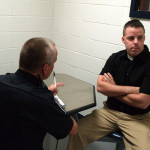 Police departments investigate traffic accidents that involve a party who leaves the scene of the accident. These law enforcement investigations almost always start with the police making contact with the owner of the suspect vehicle. These cases sometimes involve witnesses who were involved in the incident, independent witnesses and video evidence. Law enforcement will eventually want to speak with who they identify as a target of their investigation. Speaking with the police about a hit and run incident without first consulting a lawyer or having a lawyer present who regularly represents clients in this area can be a huge mistake. CAUTION: Law enforcement officers are trained professionals.
Virginia Hit & Run Accidents Involving an Occupied Vehicle
 Va. Code 46.2-894 prohibits a driver involved in an accident to leave the scene if there is personal injury or damage to attended property. The law requires that you stop immediately as close to the scene as possible without obstructing traffic. The driver is also required to report name, address, driver’s license number, and vehicle registration to police and to the injured party or to a person of the attended property. A violation of this law is a felony if the accident results in injury or death of any person or property damage exceeding $1000. A violation is a class 1 misdemeanor if the accident results in property damage of $1000 or less.
Assistance Requirements for Hit & Run Personal Injury Cases
 Va. Code 46.2-894 also has a reasonable assistance provision. The driver of any vehicle involved in an accident shall also render reasonable assistance to any person injured in such accident, including taking such injured person to a physician, surgeon, or hospital if it is apparent that medical treatment is necessary or is requested by the injured person. If the involved driver is unable to comply due to injuries sustained in the accident, then the driver shall as soon as reasonably possible make the required report to police and make a reasonable effort to locate the person struck or the person of the attended property, and report his name, address, driver’s license number, and vehicle registration number.
Leaving the Scene of an Accident Involving Unattended Property
 Any type of hit and run allegation requires a top rated Virginia Hit and Run Lawyer to successfully present your best defense. Va. Code § 46.2-896 requires the driver of any vehicle involved in an accident involving unattended property to make a reasonable effort to find the owner of the property and provide his name, address, driver’s license number, and vehicle registration. If the owner cannot be found then a note is to be left along with a written report to police within 24 hours including date, time and place of the accident along with a description of the property damage. If injured, the driver shall make the report as soon as reasonably possible. A conviction is punishable as a misdemeanor.
The Hit and Run Law Also Applies to Passengers of Involved Vehicles
 The VA hit and run law does not only apply to involved drivers. Va. Code §§ 46.2-895 & 897 require certain persons accompanying the driver involved in an accident to make a report in cases involving attended property and unattended property. The law requires persons age sixteen or older who were in the vehicle at the time and had knowledge of the accident to ensure a report is made to the police within 24 hours. Such report shall include name, address, driver’s license number, and vehicle registration. A violation is a felony if there is injury. Property damage only cases are either a class 1 misdemeanor or a class 4 misdemeanor depending on damage amount.
Defenses to VA Hit & Run Criminal Offenses
 There may be defenses to your case. The prosecution will have to prove the identification of the driver that fled the scene beyond a reasonable doubt. A top rated VA hit and run attorney may be able to raise enough reasonable doubt that the prosecutor cannot meet their burden of proof that you were the driver. Lack of knowledge is also a defense. The prosecutor must prove that you knew of the accident and that you had actual knowledge that someone was injured or property was damaged. Finally, you may have tried to stop, but the other driver was the one who actually left the scene, but later reported the collision as a hit and run.
Leaving the Scene of an Accident Hit & Run in Richmond VA DISMISSED
 Riley & Wells Attorneys-At-Law represented a client who was alleged to be in violation of the felony leaving the scene of an accident hit & run law in Richmond VA. During the trial, the prosecution did not present evidence of personal injury and the evidence of property damage did not prove damage over $1000. The Circuit Court Judge found our client guilty but we believed the trial judge misapplied the law and made and error when he found our client guilty. We appealed the case to the Court of Appeals. We convinced the appeals court to reverse the trial court’s ruling. Our client was acquitted and the case was dismissed. See case file for full opinion.
Richmond VA Hit & Run Involving Pedestrian DISMISSED
 Our attorneys represented a client accused of felony hit & run involving personal injury to a pedestrian. The client was driving thru the Intersection of W. Broad Street & N. Belvidere Street in Richmond VA. The client had the green light and was driving the speed limit when contact was made with an unidentifiable object near a crosswalk. The client circled the block to return to the accident scene. The Commonwealth Attorney wanted a conviction. We pled not guilty and argued the case. Case dismissed.
Contact us about YOUR case for a free initial consultation!
11/10/2015 | Updated 11/11/2023