
Hanover County Underage Possession of Alcohol Lawyer
 If you have been charged with underage possession of alcohol in Hanover County, Virginia Code § 4.1-305 may apply to more than simply having an alcoholic beverage in your physical possession. Virginia law also prohibits certain underage consumption, purchases, attempted purchases, and uses of false identification to obtain alcohol. Hanover County alcohol cases may arise from parties, traffic stops, restaurants, stores, parking areas, private residences, or incidents near Randolph-Macon College in Ashland. Our Hanover County underage possession of alcohol lawyers review possession and consumption evidence, statements to police, identification documents, body-camera recordings, witness observations, and the circumstances of the investigation. These offenses can involve misdemeanor penalties, driver’s-license suspension, community service, alcohol education requirements, and criminal-record consequences. Riley & Wells Attorneys-At-Law represents clients facing underage alcohol charges and related offenses in Hanover County General District Court and Juvenile and Domestic Relations District Court.







Hanover County Underage Alcohol Defense Guide
Hanover County Defense Services
For broader statewide guidance, see our Virginia Underage Possession of Alcohol Lawyer page.
Underage Possession and Consumption of Alcohol in Hanover County
 Underage alcohol charges in Hanover County may arise from investigations involving parties, restaurants, convenience stores, parking lots, vehicles, residences, college students, or other encounters with law enforcement. These cases may be investigated by the Hanover County Sheriff’s Office, Ashland Police Department, Virginia ABC special agents, Virginia State Police, or another agency with jurisdiction over the incident. Although the offense is commonly called underage possession of alcohol, Virginia Code § 4.1-305 addresses several different types of prohibited conduct.
Virginia Code § 4.1-305
Virginia Code § 4.1-305 generally prohibits a person to whom alcoholic beverages may not lawfully be sold from:
- Possessing alcoholic beverages
- Consuming alcoholic beverages
- Purchasing alcoholic beverages
- Attempting to possess alcoholic beverages
- Attempting to consume alcoholic beverages
- Attempting to purchase alcoholic beverages
The statute contains specific exceptions and separately addresses certain uses of false identification by persons younger than 21.
A Hanover County underage alcohol charge should begin with a review of the summons or warrant to identify the exact subsection and conduct alleged.
The evidence required to prove possession can differ from the evidence required to prove consumption, an attempted purchase, or the use of false identification.
Possession of Alcohol
An underage possession allegation may involve alcohol allegedly found directly on the accused, in a backpack, inside a vehicle, at a gathering, in a dormitory or residence, or in another location accessible to several people.
Actual possession may involve an alcoholic beverage found directly on the accused or in something the person is carrying.
Other cases may involve allegations of constructive possession, where the Commonwealth relies on surrounding circumstances to establish knowledge and control of alcohol found elsewhere.
When alcohol is discovered in a shared location, relevant questions may include:
- Where the alcohol was found
- Who owned or controlled the location
- Who had access to the alcoholic beverages
- Whether the accused knew the alcohol was present
- Whether the accused exercised control over it
- Whether statements or other evidence connect the accused to the alcohol
Being present where other people possess or consume alcohol does not automatically establish that every person committed an underage possession offense.
Underage Consumption of Alcohol
Police do not necessarily have to recover an alcoholic beverage container to pursue an allegation of underage consumption.
Depending on the circumstances, the Commonwealth may rely on:
- Statements or admissions
- Officer observations
- Odor of alcohol
- Observed drinking
- Speech, appearance, or behavior
- Witness testimony
- Body-camera or other video recordings
- Photographs or social-media evidence
- Other circumstances offered as evidence of consumption
Evidence suggesting that alcohol was consumed does not automatically establish every element of the charged offense.
The defense should examine precisely what the officer observed, what statements were made, and whether the Commonwealth can prove the allegation under the applicable statute.
Underage Purchase or Attempted Purchase of Alcohol
Virginia Code § 4.1-305 also prohibits qualifying purchases and attempted purchases by persons who may not lawfully purchase alcohol.
These prosecutions may involve store or restaurant surveillance, identification documents, receipts, electronic payment records, witness testimony, and statements attributed to the accused.
Whether a purchase occurred, whether the accused attempted to purchase alcohol, and whether the statutory requirements were satisfied can become important issues.
Where Can an Underage Alcohol Charge Be Prosecuted?
Virginia Code § 4.1-305 contains a specific venue provision.
A qualifying allegation under subsection A may be prosecuted in the county or city where alcohol was possessed or consumed or where the person exhibits physical indications of alcohol consumption.
The place where police encounter a person can therefore matter even when the alleged consumption occurred somewhere else.
The venue provision does not eliminate the Commonwealth’s obligation to prove the particular offense charged.
Penalties for Underage Possession of Alcohol in Virginia
A violation of Virginia Code § 4.1-305 is a Class 1 misdemeanor.
Under Virginia law, a Class 1 misdemeanor can carry up to 12 months in jail, a fine of up to $2,500, or both.
Section 4.1-305 also establishes specific mandatory sentencing and driver’s-license provisions.
| Consequence | Current Virginia Law |
|---|---|
| Offense classification | Class 1 misdemeanor |
| General misdemeanor maximum | Up to 12 months in jail and a fine of up to $2,500 |
| Specific statutory requirement | Mandatory minimum $500 fine or mandatory minimum 50 hours of community service as a condition of probation supervision |
| Driver’s-license suspension for a person age 18 or older | Not less than six months and not more than one year upon conviction |
| Restricted driving privileges | May be authorized upon a showing of hardship and satisfaction of statutory conditions |
| Juvenile cases | Disposition and license consequences governed by applicable juvenile provisions |
The driver’s-license consequence is important because it can arise even when the allegation has nothing to do with operating a vehicle.
A person charged with underage consumption at a party or gathering may still face significant driving consequences if convicted.
The statute provides for a mandatory minimum $500 fine or the specified community service alternative. It should not be described as automatically requiring both.
Restricted Driving Privileges and Alcohol Programs
Virginia Code § 4.1-305 permits a court to authorize restricted driving privileges for certain adults who demonstrate hardship and satisfy applicable requirements.
The court may impose monitoring through an Alcohol Safety Action Program or qualifying community-based probation services.
Depending on the disposition, conditions may involve alcohol education, assessment, treatment, abstinence, supervision, or other requirements authorized by law.
The precise conditions depend on the statute, court order, and individual circumstances.
First-Offender Deferred Disposition Under Virginia Code § 4.1-305(F)
Virginia Code § 4.1-305(F) provides a deferred-disposition procedure for certain eligible adults charged with a qualifying underage alcohol violation under subsection A.
When an adult has not previously been convicted of underage consumption, purchase, or possession of alcoholic beverages in Virginia or another jurisdiction, the court may consider a deferred disposition if the other statutory requirements are satisfied.
The procedure is not automatic.
After an appropriate plea and a finding of facts that would justify a finding of guilt, the court may defer further proceedings without entering a judgment of guilt and place the accused on probation with the accused’s consent.
Conditions of a First-Offender Disposition
In every qualifying deferred proceeding, the court must require participation in an appropriate treatment or education program, or both, when available.
Other conditions may include:
- Alcohol education or treatment
- Probation supervision
- Alcohol abstinence requirements
- Testing or monitoring when ordered
- Applicable driver’s-license restrictions
- Compliance with other court-imposed conditions
If the accused fulfills the required conditions, the court discharges the person and dismisses the proceedings without entering an adjudication of guilt.
If the accused violates a condition, the court may enter an adjudication of guilt and proceed accordingly.
A discharge and dismissal under this procedure is treated as a conviction for purposes of determining eligibility under § 4.1-305 in a subsequent proceeding.
The first-offender procedure under subsection F applies to qualifying subsection A allegations. A false-identification charge under subsection B should not automatically be assumed eligible for the same disposition.
Before pursuing a deferred disposition, the defense should evaluate the strength of the Commonwealth’s evidence, available legal defenses, and consequences of the proposed resolution.
Hanover County Fake ID and Alcohol Charges
 False-identification allegations frequently arise when a person younger than 21 is accused of attempting to purchase or consume alcohol using identification showing an incorrect age or identity. Virginia Code § 4.1-305(B) separately prohibits specified uses or attempted uses of false identification for purposes related to alcohol consumption or purchase. The provision can involve altered, fictitious, facsimile, or simulated identification, as well as certain identification documents belonging to another person. A fake-ID prosecution may depend on what document was allegedly used, whether the accused presented or attempted to use it, and what the Commonwealth can prove concerning the purpose of the alleged conduct.
Relevant evidence may include:
- The identification document itself
- Who possessed or presented the document
- Statements made to a bartender, employee, or police officer
- Store or restaurant surveillance footage
- Whether an alcohol purchase occurred or was attempted
- The age or identity shown on the document
- Police body-camera recordings
- Electronic payments or transaction records
- Witness testimony
Depending on the identification document and conduct alleged, additional charges may arise under separate Virginia statutes.
Each offense must be evaluated under the particular law charged rather than assuming all fake-identification allegations are legally identical.
Other Alcohol Violations Defended in Hanover County
Virginia law establishes several additional criminal offenses involving alcoholic beverages.
These include furnishing alcohol to minors, prohibited alcohol sales, public intoxication, public drinking, and certain alcohol-related driving offenses.
Although these charges may arise from the same incident as an underage alcohol allegation, each has separate statutory elements and potential penalties.
Providing Alcohol to a Person Under 21 — Virginia Code § 4.1-306
Virginia Code § 4.1-306(A1) generally prohibits purchasing for, giving, providing, or assisting in providing alcoholic beverages to another person when the accused knows or has reason to know the recipient is younger than 21, subject to statutory exceptions.
A violation is a Class 1 misdemeanor.
The statute also requires driver’s-license suspension for a period of not more than one year upon conviction. Restricted driving privileges may be available under applicable statutory requirements.
A furnishing-alcohol allegation may arise when:
- An adult allegedly purchases alcohol for someone under 21
- Alcohol is provided at a party or gathering
- A person allegedly delivers alcohol to an underage individual
- Several people contribute money toward a purchase
- Someone allegedly arranges a purchase for another person
- Electronic communications or payment records concern the alleged transaction
The defense may examine what the accused knew or had reason to know about the recipient’s age, who purchased or provided the alcohol, and whether a statutory exception applies.
Illegal Alcohol Sales — Virginia Code § 4.1-304
Virginia Code § 4.1-304 regulates certain sales of alcohol to persons who may not lawfully purchase it.
These charges can involve restaurant servers, bartenders, convenience-store employees, grocery-store clerks, managers, licensees, and other individuals involved in alcohol sales.
Under subsection A, selling alcohol to someone the seller knows or has reason to believe is under 21, interdicted, or intoxicated is generally a Class 1 misdemeanor, subject to statutory exceptions.
Subsection B separately addresses selling alcohol to someone under 21 without requiring qualifying proof of legal age.
A violation of subsection B is a Class 3 misdemeanor.
The Commonwealth’s theory may depend on:
- The purchaser’s age
- Identification presented during the transaction
- What the seller knew or had reason to believe
- Store or restaurant surveillance
- Receipts and transaction records
- Virginia ABC investigative evidence
- Statements by employees and witnesses
- Applicable statutory exceptions
The statute does not permit conviction under both subsections A and B for the same sale.
Public Intoxication — Virginia Code § 18.2-388
Virginia Code § 18.2-388 makes intoxication in public a Class 4 misdemeanor.
The statute applies to intoxication resulting from alcohol or other covered intoxicants.
A Class 4 misdemeanor is punishable by a fine of up to $250.
The Commonwealth must establish that the accused was intoxicated in public. The precise location of the encounter can therefore be important.
Evidence may include officer observations, speech, balance, appearance, behavior, odor of alcohol, statements, witness accounts, and video recordings.
Public intoxication is different from underage possession or consumption under § 4.1-305 and carries different penalties.
Drinking Alcohol in Public — Virginia Code § 4.1-308
Virginia Code § 4.1-308 generally makes it a Class 4 misdemeanor to take a drink of an alcoholic beverage or offer a drink to another person in a public place.
The statute contains exceptions for certain authorized locations, licensed establishments, and approved events.
An allegation may arise from conduct in a park, sidewalk, parking area, outdoor gathering location, or another place alleged to be public.
The defense may examine the location, whether a drink was actually taken or offered, and whether a statutory exception applies.
Public drinking should not be confused with public intoxication. The two statutes prohibit different conduct.
Driving Under 21 After Illegally Consuming Alcohol
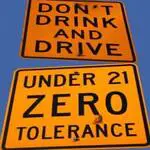 Virginia Code § 18.2-266.1 establishes a separate offense involving a person younger than 21 who operates a motor vehicle after illegally consuming alcohol and has a qualifying chemical-test alcohol concentration of at least 0.02 but less than 0.08. This is a Class 1 misdemeanor. The current statute provides for a one-year driver’s-license forfeiture and a mandatory minimum $500 fine or 50 hours of community service. Restricted driving privileges may be available, subject to statutory requirements that include ignition-interlock provisions. The charge differs from ordinary underage possession or consumption under § 4.1-305 and from DUI/DWI under § 18.2-266. When alcohol-related allegations involve driving, the defense must examine the particular statute, chemical testing, evidence of vehicle operation, and applicable license consequences.
Alcohol on Public School Grounds
Virginia Code § 4.1-309 regulates certain possession, drinking, and serving of alcohol on public elementary and secondary school grounds.
The statute contains different provisions depending on the timing, location, and alleged conduct, as well as specified exceptions.
A violation is generally classified as a Class 2 misdemeanor.
The defense should examine the exact location, circumstances, and statutory exception before determining whether the Commonwealth can establish the charge.
Evidence and Defenses in Hanover County Alcohol Cases
 The defense of an underage alcohol or related alcohol violation depends on the statute charged, what the Commonwealth must prove, and the evidence available. An allegation involving possession may raise different factual issues from a charge involving consumption, false identification, furnishing alcohol to minors, or unlawful sales. The defense may involve disputed knowledge, possession, age, identity, intent, statutory exceptions, police encounters, or the sufficiency of the Commonwealth’s evidence.
Possession and Knowledge
When alcohol is found in a shared vehicle, room, residence, cooler, bag, or other location, the defense may examine whether the accused actually possessed or controlled it.
Being near an alcoholic beverage does not automatically establish that a particular person knowingly possessed it.
Consumption Evidence
The Commonwealth may rely on admissions, officer observations, odor of alcohol, witness testimony, recordings, and other evidence when alleging underage consumption.
The defense should examine exactly what the evidence establishes and whether the prosecution can prove the particular statutory violation.
Age and Identification
Age can be a central statutory element in underage possession, furnishing-alcohol, prohibited-sale, and fake-identification cases.
The accused person’s age, the recipient’s age, identification documents, and circumstances surrounding an alleged transaction may become important.
Statements and Admissions
Statements concerning drinking, purchasing alcohol, ownership, age, or use of identification can become significant prosecution evidence.
Body-camera recordings, recorded interviews, police reports, and witness testimony should be compared to determine what was said and the circumstances in which statements were obtained.
Police Stops, Searches and Seizures
Hanover County alcohol investigations may involve traffic stops, encounters at parties, police entry into residences, searches of vehicles or bags, and requests for identification.
Potential issues include:
- Whether the encounter was consensual or a detention
- Whether officers had a lawful basis for the stop
- Whether police lawfully entered a private location
- Whether consent to search was given voluntarily
- The scope of any consent
- Whether a vehicle, bag, or container was lawfully searched
- Whether statements were lawfully obtained
- What police body-camera footage shows
- Whether evidence resulted from an unlawful search or seizure
The recovery of alcohol or identification does not automatically establish that the police encounter was lawful.
A suppression issue depends on the actual facts, constitutional protections, and legal basis asserted for the police conduct.
Common Defense Issues
Potential defenses and evidentiary issues may include:
- Possession not established
- Knowledge or control disputed
- Insufficient consumption evidence
- Incorrect identification of the accused
- Unlawful police detention
- Improper search or seizure
- Inaccurately reported statements
- Conflicting witness accounts
- Incomplete surveillance recordings
- Statutory exceptions
- Disputed age or identification
- Insufficient evidence of a purchase
- Disputed furnishing of alcohol
- Public-place requirement not established
- First-offender eligibility
- Failure to prove the offense beyond a reasonable doubt
The appropriate defense should be based on the actual evidence and the elements of the charged offense rather than on assumptions about the circumstances of the police encounter.
Randolph-Macon College Student Alcohol Charges in Hanover County
Randolph-Macon College is located in Ashland, within Hanover County. Students and other young adults in the area may face criminal allegations involving underage possession or consumption of alcohol, fake identification, public intoxication, furnishing alcohol to minors, or other alcohol-related offenses. These cases may arise from parties, social gatherings, businesses, traffic stops, or other encounters with law enforcement in Ashland and surrounding Hanover County communities. Our Hanover County underage possession of alcohol lawyers represent college students facing criminal charges under Virginia Code § 4.1-305 and related statutes. Important concerns may include criminal-record consequences, driver’s-license suspension, fines, community service, eligibility for first-offender dispositions, and potential effects on future educational or professional opportunities.
Criminal Charges and College Disciplinary Proceedings
A student accused of an alcohol offense may face separate questions concerning Randolph-Macon College’s student conduct procedures.
Depending on the institution’s policies and the circumstances, concerns may involve student housing, athletics, extracurricular activities, scholarships, or other educational matters.
College disciplinary proceedings are distinct from criminal prosecutions in Hanover County courts.
The result of one proceeding does not necessarily determine the result of the other.
Our attorneys focus on defending the criminal charges and evaluating the Commonwealth’s evidence, applicable statutes, court procedures, and potential criminal consequences.
Can an Underage Alcohol Conviction Be Sealed in Virginia?
Virginia’s record-sealing laws now provide a specific procedure for certain underage alcohol convictions and deferred dismissals.
It is no longer accurate to state categorically that an underage possession of alcohol conviction can never be sealed.
Virginia Code § 19.2-392.12:1 provides a petition-based sealing procedure for qualifying convictions and deferred dismissals under § 4.1-305 when the statutory requirements are satisfied and the offense occurred on or after January 1, 1986.
Under the current statute, qualifying petitioners may obtain sealing when seven years have passed since the conviction or deferred dismissal and the person has not received a disqualifying reportable conviction during that period, subject to additional statutory requirements.
The petition is filed in the appropriate Circuit Court.
This is a petition-based sealing procedure and should not be confused with automatic sealing.
Other alcohol-related criminal offenses may have different eligibility requirements. The particular charge, disposition, offense date, and criminal history should be reviewed before determining eligibility.
Hanover County Courts for Underage Alcohol and Related Charges
 Adult misdemeanor alcohol charges arising in Hanover County are generally handled in Hanover General District Court. Many underage alcohol cases begin with a Virginia Uniform Summons rather than a custodial arrest. Signing a summons is not an admission of guilt. The summons identifies the alleged offense and provides information concerning the required court appearance. Depending on the charge and procedural circumstances, the case may involve an advisement or arraignment, discovery, review of evidence, motions, discussions with the Commonwealth, trial, or consideration of an authorized deferred disposition. Juvenile alcohol cases involve different procedures and may be heard in Hanover Juvenile and Domestic Relations District Court.
Hanover County General District Court
Hanover General District Court
7530 County Complex Road
Hanover, Virginia 23069
Adult misdemeanor cases involving underage possession, consumption, fake identification, public intoxication, furnishing alcohol to minors, and other qualifying alcohol offenses are generally heard in General District Court.
The precise procedures depend on the charging document and statute.
Hanover Juvenile and Domestic Relations District Court
Hanover Juvenile and Domestic Relations District Court
7530 County Complex Road
Hanover, Virginia 23069
Qualifying alcohol allegations involving juveniles may proceed through Juvenile and Domestic Relations District Court.
Juvenile proceedings and dispositions are governed by applicable provisions of Virginia’s juvenile law.
Hanover County Circuit Court
Hanover Circuit Court
7530 County Complex Road
Hanover, Virginia 23069
Circuit Court may hear appeals from qualifying misdemeanor proceedings, petitions for record sealing, and other matters within its jurisdiction.
The court and procedure should be determined from the specific charge, disposition, or petition involved.
Virginia Uniform Summons and Court Appearance
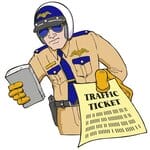 An underage alcohol charge may begin when an officer issues a Virginia Uniform Summons directing the accused to appear in court. The summons is a charging document and does not mean the accused has been convicted. The accused should review the court date, offense description, statutory citation, and any other instructions. An allegation involving a person younger than 18 may proceed under different juvenile procedures. Before the scheduled appearance, it may be important to review the evidence, applicable statutory requirements, potential defenses, and whether a first-offender disposition is available.
Underage Alcohol Defense Throughout Hanover County Communities
Our attorneys represent clients facing underage possession, consumption, fake-ID, public intoxication, furnishing-alcohol, and related charges throughout Hanover County.
Hanover includes the incorporated Town of Ashland and numerous residential, commercial, suburban, and rural communities.
Communities served include:
- Ashland
- Atlee
- Beaverdam
- Cold Harbor
- Doswell
- Elmont
- Hanover Courthouse
- Mechanicsville
- Montpelier
- Old Church
- Rockville
- Shady Grove
- South Anna
- Studley
Alcohol-related allegations may arise from traffic stops, gatherings at private residences, restaurants, stores, parking lots, college-related activities, commercial establishments, or other locations throughout Hanover County.
Cases involving Ashland and the Randolph-Macon College area may be investigated by Ashland Police or other agencies with jurisdiction, while incidents in Mechanicsville, Atlee, and surrounding communities may involve the Hanover County Sheriff’s Office or Virginia State Police.
The location of an incident can affect the investigating agency and available evidence, but the defense should focus on the precise charge, statutory requirements, police encounter, and Commonwealth’s proof.
Hanover County Underage Possession of Alcohol Case Result
Hanover County Underage Possession of Alcohol — Nolle Prosequi
Riley & Wells Attorneys-At-Law previously represented a client charged with underage possession of alcohol and public intoxication following an incident near Randolph-Macon College in Ashland, Virginia.
The allegations involved Virginia Code §§ 4.1-305 and 18.2-388.
The underage possession charge was a Class 1 misdemeanor, while public intoxication was a Class 4 misdemeanor carrying substantially different potential penalties.
Our attorneys reviewed the circumstances of the arrest, discussed the client’s goals, and evaluated the available defense and disposition options.
The case was resolved with the underage possession of alcohol allegation dropped through a nolle prosequi, while the public intoxication charge resulted in a comparatively minor fine.
Case Result: Hanover County Underage Possession of Alcohol — Nolle Prosequi.
The disposition illustrates how separate alcohol-related charges arising from the same incident may carry different penalties and be resolved differently.
Every criminal case depends on its own evidence, applicable law, and circumstances.
What to Send for a Hanover County Alcohol Case Review
The summons and available information can help identify the exact offense, statute, court date, and potential defense issues.
Helpful materials may include:
- Virginia Uniform Summons
- Arrest warrant or other charging document
- Scheduled Hanover court date
- Exact Virginia Code section
- Accused person’s age and date of birth
- Driver’s-license information
- Any identification involved
- Police or Virginia ABC paperwork
- Photographs or video recordings
- Store or restaurant receipts
- Relevant text messages
- Electronic payment information
- Names of potential witnesses
- Information about where alcohol was found
- College-related paperwork when relevant
- Information about prior alcohol dispositions
Potentially relevant photographs, videos, messages, receipts, identification documents, and other evidence should be preserved in their original form.
Do not alter or delete materials that may relate to the charge.
You do not need every document before contacting our office. The court date, exact charge, and available paperwork are useful starting points.
Hanover County Underage Possession of Alcohol Lawyer Client Review

Frequently Asked Questions About Hanover County Underage Alcohol Charges
What does Virginia Code § 4.1-305 prohibit?
Virginia Code § 4.1-305 generally prohibits certain underage possession, consumption, purchase, attempted possession, attempted consumption, and attempted purchase of alcohol. The statute also separately addresses specified uses of false identification by persons younger than 21 and contains statutory exceptions.
Is underage possession of alcohol a misdemeanor in Virginia?
Yes. A violation of Virginia Code § 4.1-305 is a Class 1 misdemeanor. The general maximum punishment is 12 months in jail and a fine of up to $2,500, with additional statutory sentencing and driver’s-license provisions.
Can I be charged with underage alcohol consumption if police never found alcohol on me?
Yes. Virginia law prohibits qualifying underage consumption separately from possession. The Commonwealth may rely on statements, officer observations, witness testimony, recordings, or other evidence. Whether the evidence establishes the particular offense depends on the circumstances.
Will my driver’s license be suspended for an underage alcohol conviction?
Under Virginia Code § 4.1-305, a person age 18 or older convicted of a violation generally faces driver’s-license suspension for not less than six months and not more than one year. Restricted driving privileges may be available when the statutory requirements are satisfied.
Can a first underage possession of alcohol charge be dismissed?
Virginia Code § 4.1-305(F) provides a deferred-disposition procedure for certain eligible adults charged under subsection A. If the court authorizes the procedure and the accused fulfills the required conditions, the proceedings are dismissed without an adjudication of guilt. The disposition is not automatic.
Can using a fake ID to purchase alcohol result in criminal charges?
Yes. Virginia Code § 4.1-305(B) prohibits certain uses or attempted uses of false identification by persons younger than 21 for purposes related to alcohol consumption or purchase. Other identification-related statutes may also apply depending on the document and alleged conduct.
Is providing alcohol to someone under 21 a crime in Virginia?
Yes. Virginia Code § 4.1-306 generally prohibits purchasing for, giving, providing, or assisting in providing alcohol to someone the accused knows or has reason to know is under 21, subject to statutory exceptions. A qualifying violation is a Class 1 misdemeanor and carries additional driver’s-license consequences.
Can an underage alcohol conviction or deferred dismissal be sealed?
Virginia Code § 19.2-392.12:1 provides a petition-based sealing procedure for qualifying convictions and deferred dismissals under § 4.1-305. Eligibility generally requires seven years since the conviction or deferred dismissal, no disqualifying reportable conviction during that period, and satisfaction of other statutory requirements.
Can Randolph-Macon College students face criminal charges and separate college discipline?
Yes. An incident involving a Randolph-Macon College student may result in criminal allegations prosecuted in Hanover County courts and separate questions under the college’s student conduct procedures. The two proceedings have different requirements and potential consequences.
Where are underage alcohol charges heard in Hanover County?
Adult misdemeanor underage alcohol charges are generally heard in Hanover General District Court. Qualifying juvenile matters may proceed in Hanover Juvenile and Domestic Relations District Court. Both courts are located at 7530 County Complex Road, Hanover, Virginia 23069.
Request a Confidential Hanover County Underage Alcohol Case Review
If you have been charged with underage possession or consumption of alcohol, use of false identification, furnishing alcohol to a minor, public intoxication, or another alcohol-related offense in Hanover County, early review can help identify the exact statute, evidence, potential penalties, and available defenses. Riley & Wells Attorneys-At-Law represents clients facing misdemeanor alcohol charges in Hanover County. Our attorneys examine possession and consumption allegations, identification evidence, police stops and searches, statements, driver’s-license consequences, first-offender eligibility, and other issues that may affect the defense. Contact our lawyers for a confidential Hanover County alcohol case review. Include the court date, exact charge, and a copy or photograph of the summons or other available paperwork.
11/10/2015 | Updated 10/31/2026