
Top Rated Newport News VA DUI / DWI Lawyers • 1500+ Reviews
 Riley & Wells Attorneys-At-Law is a Newport News VA law firm that specializes in defending clients accused of driving while intoxicated or under the influence of alcohol or drugs. Our top Newport News VA DUI / DWI lawyers possess over 60 years of combined Virginia DUI / DWI law experience and are routinely recognized for legal excellence and high ethical standards. We are a recognized “Best Law Firm” according to U.S. News & World Report. We represent clients before the Newport News Courts charged with DUI / DWI. Our attorneys have an established reputation for effectively representing clients accused of drunk driving. We have been positively reviewed more times than any other firm that defends Newport News VA DUI / DWI cases.
Put our experience to work for you – Let us review your case!
30,000+ Clients Represented
1500+ Client Reviews
60+ Years of Combined Experience
Experienced Newport News VA DUI / DWI Attorney Best Defense
 Driving Under the Influence (DUI) or Driving While Intoxicated (DWI) is a criminal offense that occurs when a person operates a motor vehicle while intoxicated with alcohol or drugs. A Newport News VA DUI / DWI arrest can be a devastating and embarrassing event. You need a non-judgmental advocate to give you straightforward legal advice about protecting your rights and interests before the Newport News Courts and presenting your best defense. You need an experienced Newport News DUI / DWI lawyer. Our top rated Newport News VA DUI / DWI Lawyers are dedicated to representing the best interests of clients. We use every resource the law allows to best protect our client. NOTE: An arrest is NOT a conviction.
Elite Newport News DUI / DWI Attorney Client Review


Driving Under The Influence Newport News VA Defense Specialists
 Our Newport News DUI / DWI defense lawyers are either members of or have been recognized by various prominent national organizations such as the National College for DUI Defense and the National Advocacy for DUI Defense. It is our experience that clients with a Newport News DUI / DWI case benefit when their lawyer specializes. We understand that an arrest for drunk driving in Newport News VA can be embarrassing and devastating. Our role is to assist you with successfully navigating an often difficult landscape, not lecture you about decisions you made leading up to the arrest. The simple fact is you are in trouble with the law and need a non-judgmental advocate to give you straight forward legal advice and quality representation.
Free Newport News DUI / DWI Consultation with Most Rated Lawyers
 It can be difficult to find the right Newport News VA DUI / DWI lawyer. There are many things that you should consider before you retain a Norfolk DUI / DWI defense attorney. Does the lawyer represent clients charged with DUI / DWI before the Newport News VA Courts? Engaging a Newport News DUI / DWI lawyer who is not familiar with the Judge who will decide your fate is usually not a wise choice. Evaluate the lawyer’s DUI / DWI legal knowledge and expertise along with reputation and accomplishments. Now is not the time to find out if your lawyer is up to the challenge. We offer a free consultation to demonstrate that we can present your best defense.
Effective Newport News VA DUI / DWI Lawyer
 Virginia DUI law is complex. And the penalties can be harsh. In fact, Virginia has some of the strictest DUI laws in the country according to a study by WalletHub. If you have been arrested for DUI / DWI in the City of Newport News, then you need to retain the best Newport News Virginia DUI / DWI lawyer possible. Our attorneys are specially trained and possess extensive experience. We can help!
City of Newport News DUI / DWI Breath Testing
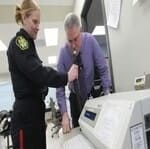 Va. Code Section 18.2-266 criminalizes the operation of a motor vehicle in the City of Newport News if a chemical test proves the driver possesses a blood alcohol concentration of 0.08 percent or more at the time of driving. It is also a violation of the Newport News DUI / DWI law for a motorist to operate a motor vehicle under the influence of illegal drugs or prescription medication. Breath Test evidence is significant to the prosecution’s DUI / DWI case but it is not required. In some cases, there is no blood test or breath test evidence. Allow us to review your case!
Newport News DUI / DWI Investigation Field Sobriety Testing
 If Newport News Police, State Police or other local law enforcement officer stops a motorist for a traffic violation and suspects that the motorist may be intoxicated, then the police officer will transition the traffic stop into a DUI / DWI investigation. Every motorist who becomes the target of a Newport News DUI / DWI investigation will typically be asked to perform field sobriety exercises. These exercises or tests are completely VOLUNTARY. A motorist is never required to perform any field sobriety exercise. NOTE: There is almost no scenario where a motorist should perform these tests
Elite Newport News DUI / DWI Attorneys by Virginia Super Lawyers
 Super Lawyers is a rating service of outstanding attorneys from over 70 practice areas including DUI / DWI who have attained the highest degree of peer recognition and professional achievement. This organization recognizes the top lawyers nationwide across a variety of practice areas and firm sizes using a patented process of independent research and peer input. Our Newport News VA DUI / DWI lawyers have been recognized by this publication since 2009. No more than five percent of the lawyers are named to this list and no more than 2.5 percent are named to the Rising Stars list. This recognition is merit based. Retain a top rated Newport News DUI / DWI attorney who has been recognized with this award.
Drunk Driving is Aggressively Enforced in the City of Newport News
 The drunk driving laws are aggressively enforced by Newport News Police and Virginia State Troopers. The state troopers usually patrol the Interstates. Newport News Police patrol the city streets. Both law enforcement agencies are on patrol for drunk driving offenders. These law enforcement agencies will frequently hold sobriety checkpoints and typically use the same protocol to investigate a Newport News DUI / DWI case, which will often include attempts to gather evidence from field sobriety testing and breath testing.
Driving Under the Influence of Alcohol Penalties
- Possible incarceration
- Ignition Interlock
- Suspension or Revocation of Driving Privileges
- Expensive fines
- Probation
- DUI education courses such as VASAP
- Significant cost increases to or loss of automobile insurance
- Loss of employment or employment opportunities
Newport News DUI / DWI Lawyer Defenses to Drunk Driving Cases
 Newport News DUI / DWI cases are complex. The success of the defense will depend on the specific circumstances of your case. We will investigate your case and look for every possible defense. It is important to remember that each Newport News DUI / DWI case is unique. The strength of the defense will depend on the evidence. Our experienced Newport News VA DUI / DWI attorneys will assess your case, identify the best defense strategies, and help you navigate the legal process. If you are facing a Newport News DUI /DWI charge, it is strongly recommended that you seek legal counsel from a top rated lawyer to protect your rights and build a strong defense. Some defenses may include the following:
- Challenging the Stop: Did the Newport News Police or State Police have a valid reason to stop your vehicle? If the initial traffic stop was unlawful, it may be possible to challenge the entire case.
- Lack of Probable Cause: To make an arrest, Newport News Police and State Troopers must have probable cause to believe you were driving under the influence or driving while intoxicated.
- Errors in Field Sobriety Tests: Field sobriety tests administered by Newport News VA authorities, such as the walk-and-turn, one-leg stand or horizontal gaze nystagmus are often used to assess impairment. These tests can be subjective and prone to errors.
- Problems with Breathalyzer Tests: Breathalyzer results conducted at the Jail can be influenced by various factors, and the device must be properly calibrated and maintained.
- Rising BAC: If your BAC was rising at the time of your arrest in Newport News VA, you may be able to argue that you were not above the legal limit while driving, even if you tested over the limit later at the police station.
- Medical Conditions: Certain medical conditions or medications can affect a person’s ability to perform field sobriety tests or can cause false positives on breath tests.
- Necessity Defense: In rare cases, a necessity defense can be employed if you can show that driving under the influence was the only reasonable option to prevent a more significant harm.
Superb Avvo Rated Newport News VA DUI / DWI Lawyers
 Legal ratings help those accused of a Newport News DUI / DWI find the best Newport News DUI / DWI lawyer. Avvo is a respected organization that assists those individuals. “Avvocato” is Italian for lawyer. Avvo is a legal directory that rates attorneys using a mathematical model on a scale of 1 (Extreme Caution) to 10 (Superb). Members of our Newport News VA DUI / DWI practice maintain a 10.0 Superb Avvo rating. Avvo collects relevant information from state bar associations, other organizations that license legal professionals and thousands of consumers to calculate its rating. The same set of standards is used on all who are evaluated. The Avvo rating is merit based. You cannot pay to improve your Avvo rating.
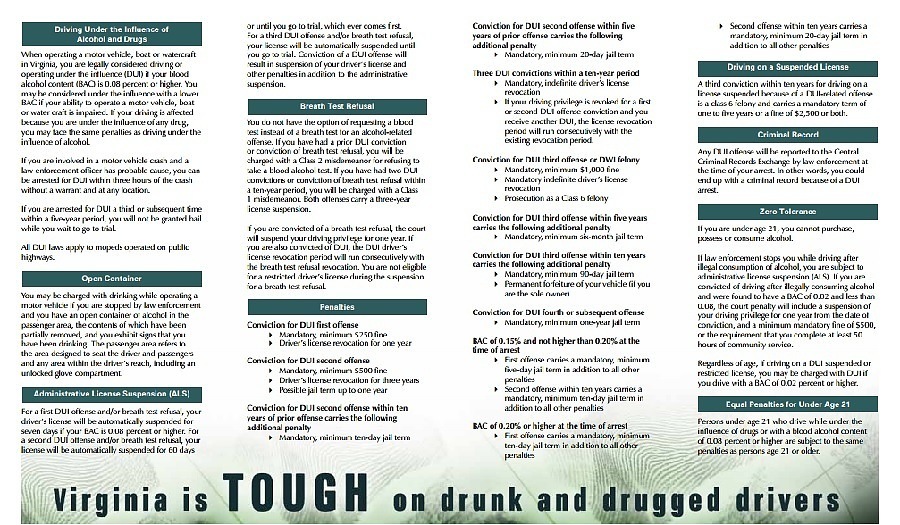
Virginia DUI Penalties (⇓DMV DUI Brochure⇓)
Let us review YOUR case. We can help!
5/22/2024
Newport News Criminal Law << Previous < > Next >>Newport News Traffic Law