
Prince William County Second Offense DUI Lawyer
 Riley & Wells Attorneys-At-Law represents clients charged with second-offense DUI and DWI in Prince William County, Virginia. A repeat DUI within 10 years can carry mandatory jail, a mandatory minimum fine, significant license consequences, ignition-interlock requirements, and increased exposure based on the driver’s prior record and alleged blood alcohol concentration. Virginia law treats a second DUI committed within less than five years differently from a second DUI committed five to 10 years after the prior offense. Our Prince William County DUI lawyers review the present charge, prior conviction record, offense dates, alleged BAC, breath or blood evidence, refusal issues, available video, and other circumstances that may affect a repeat or multiple DUI case.







Prince William Second Offense DUI Defense Guide
Prince William County DUI Defense Services
For broader statewide DUI information, see our Virginia DUI Lawyers page.
Second Offense DUI in Prince William County
A second-offense DUI in Prince William County generally involves a new charge under Virginia Code § 18.2-266 together with a qualifying prior DUI offense that falls within the applicable statutory period.
A repeat DUI case involves two related issues. The Commonwealth must prove the current DUI charge, and it must also establish the prior offense necessary to obtain enhanced second-offense punishment. The offense dates, prior conviction records, underlying statutes, alleged BAC, refusal issues, and other evidence may therefore affect the case.
Virginia law distinguishes between a second DUI committed less than five years after a prior offense and a second DUI committed five to 10 years after the prior offense. The distinction affects the mandatory minimum jail sentence.
A prior DUI does not establish that the accused committed the new offense. The evidence from the current arrest should be evaluated independently from the evidence offered to establish the prior conviction.
Second DUI Within 5 Years in Prince William County
A second DUI committed less than five years after a qualifying prior offense carries the greater mandatory minimum sentence applicable to a second DUI.
Under Virginia Code § 18.2-270, a second offense committed within less than five years carries a mandatory minimum fine of $500 and confinement in jail for not less than one month and not more than one year. Twenty days of that confinement is a mandatory minimum sentence.
The dates of the offenses are important. Whether the case falls within the less-than-five-year category depends on the applicable offense dates rather than simply how long ago the earlier court proceeding occurred.
Additional circumstances may increase the potential consequences, including an elevated BAC, an unreasonable-refusal allegation, a child passenger, an accident, or other related criminal or traffic charges.
For additional statewide information, see our Second DUI Within 5 Years in Virginia page.
Second DUI Within 10 Years in Prince William County
When a second DUI is committed five to 10 years after a qualifying prior offense, Virginia law provides a different mandatory minimum jail sentence.
Under § 18.2-270, the punishment includes a mandatory minimum fine of $500 and confinement in jail for at least one month. Ten days of that confinement is a mandatory minimum sentence.
Although the mandatory minimum jail period is lower than the mandatory minimum for a second offense committed less than five years after the prior offense, a second DUI within the five-to-10-year period remains a serious misdemeanor with significant criminal and driver’s-license consequences.
The prosecution must establish both the present DUI and the qualifying prior-offense history necessary for second-offense treatment.
For additional statewide information, see our Second DUI Within 10 Years in Virginia page.
Repeat and Multiple DUI Charges in Prince William County
The terms second DUI, repeat DUI, multiple DUI, second DWI, and DUI with a prior are often used to describe cases involving an earlier impaired-driving conviction. The terminology used informally does not determine the statutory punishment.
The legal consequences depend on the number and type of qualifying prior offenses, when the offenses were committed, and whether the Commonwealth can establish the prior convictions required by Virginia law.
For a person facing a second DUI, one of the first issues to determine is whether the prior offense falls within the less-than-five-year category or the five-to-10-year category.
A person with more than one prior DUI may face substantially different consequences. Certain third or subsequent DUI allegations may be prosecuted as felonies. For those cases, see our Prince William County Felony DUI Lawyer page once available.
Prince William County Second Offense DUI Penalties
The principal mandatory minimum punishment for a second DUI depends on how recently the prior offense occurred.
| Second DUI | Mandatory Minimum Jail | Mandatory Minimum Fine |
|---|---|---|
| Less than 5 years after prior offense | 20 days | $500 |
| 5 to 10 years after prior offense | 10 days | $500 |
These mandatory minimum provisions do not necessarily describe the full sentencing exposure. A second DUI remains a Class 1 misdemeanor, and other statutory circumstances can add further mandatory punishment.
The alleged BAC, presence of a young passenger, refusal allegations, driving status, accident circumstances, and other charges arising from the same incident may affect the overall case.
High BAC and Additional Mandatory Jail
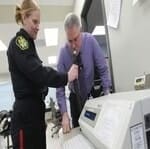 An elevated blood alcohol concentration can significantly increase the mandatory minimum punishment for a second DUI within 10 years. When the proven BAC is at least 0.15 but not more than 0.20, Virginia law imposes an additional mandatory minimum 10 days in jail. When the BAC is greater than 0.20, the additional mandatory minimum increases to 20 days. A second DUI with an elevated BAC also carries an additional mandatory minimum fine of $500. Virginia law provides that mandatory minimum punishments under § 18.2-270 are cumulative. Because these additional penalties depend on the chemical-test result, the breath or blood evidence may be especially important in a repeat-DUI case. Relevant issues may include the testing method, timing, documentation, sample handling, equipment, admissibility, and whether the reported result can be connected reliably to the accused and the alleged offense.
Prior DUI Convictions and the Lookback Period
A second-offense prosecution requires a qualifying prior DUI offense. The prior record should therefore be reviewed rather than simply assuming that an earlier impaired-driving case automatically supports the enhanced charge.
Relevant issues may include:
- The date the prior DUI offense was committed;
- The date and disposition of the prior case;
- The jurisdiction where the prior offense occurred;
- The statute or ordinance underlying the prior conviction;
- Whether an out-of-state or federal conviction qualifies under Virginia law;
- Whether the conviction documents are complete and admissible;
- Whether the accused is properly identified as the person named in the earlier record; and
- Whether the two offense dates fall within the alleged five-year or 10-year period.
Virginia law recognizes certain convictions under substantially similar laws of another state or the United States when determining prior DUI history. The language of the prior statute and the actual conviction documents may therefore matter when a prior offense occurred outside Virginia.
License Revocation and Ignition Interlock After a Second DUI
A qualifying second DUI conviction within 10 years results in a three-year revocation of Virginia driving privileges.
Restricted-driving privileges may be available in qualifying circumstances, but eligibility and restrictions depend on the applicable statutes, prior record, refusal history, court order, and other facts.
For a second or subsequent DUI, Virginia’s ignition-interlock statute requires, as a condition of a restricted license or applicable license restoration, installation of a functioning certified ignition-interlock system on each motor vehicle owned by or registered to the offender, in whole or in part, for at least 12 consecutive months without alcohol-related interlock violations.
A refusal finding, preexisting suspension or revocation, or another licensing issue may create additional consequences.
For many clients, the license consequences of a second DUI affect employment, family transportation, medical appointments, education, and other daily responsibilities. Criminal punishment and driver’s-license consequences should therefore be evaluated separately.
Evidence and Defense Issues in a Prince William Second Offense DUI Case
 A second-offense DUI case involves evidence concerning both the current arrest and the prior conviction. The present case may involve the reason for the traffic stop, operation of the vehicle, officer observations, statements, field sobriety exercises, body-camera or dash-camera footage, preliminary breath testing, evidential breath or blood testing, and refusal allegations. The prior-offense portion of the case presents different questions. Certified conviction records, prior charging documents, offense dates, statutes, identity evidence, and records obtained from another state or jurisdiction may affect whether the Commonwealth can establish second-offense treatment. The two parts of the case should be evaluated separately. Evidence that establishes a prior conviction does not prove the new DUI, and evidence supporting the new DUI does not automatically establish that the prior offense qualifies for enhanced punishment.
Challenge to the Current DUI Charge
The Commonwealth must prove the present DUI beyond a reasonable doubt. Relevant issues may involve the legal basis for the traffic stop or detention, operation of the vehicle, probable cause for arrest, officer observations, field sobriety evidence, statements, breath or blood testing, and available video.
Whether the Prior Conviction Qualifies
The prior case should be examined to determine the statute involved, jurisdiction, disposition, offense date, and whether the conviction satisfies Virginia’s requirements for use as a prior DUI offense.
Five-Year and Ten-Year Timing Issues
The offense dates can determine whether a second DUI carries a 20-day or 10-day mandatory minimum sentence. The chronology should therefore be confirmed from reliable records.
Out-of-State Prior DUI Convictions
An out-of-state offense may qualify when the foreign law satisfies Virginia’s statutory requirements. The foreign statute and conviction documents may require comparison with Virginia law.
Breath and Blood Evidence
Chemical-test issues may include timing, testing procedure, equipment, observation requirements, sample collection, laboratory testing, chain of custody, documentation, and admissibility.
High BAC Enhancements
When the Commonwealth seeks additional mandatory punishment based on an elevated BAC, it must establish the qualifying alcohol concentration through admissible and reliable evidence.
Refusal and Related Charges
An unreasonable-refusal allegation is separate from the underlying DUI charge and can create additional driver’s-license or criminal consequences depending on the prior record and type of refusal alleged. The requested test, advisements, timing, implied-consent issues, and circumstances surrounding the alleged refusal should be reviewed.
Prince William County Second Offense DUI Court Process
 Adult misdemeanor second-offense DUI charges arising in Prince William County are generally handled in Prince William County General District Court at the Judicial Center in Manassas. A case may begin with an arrest, warrant, summons, bond paperwork, and a scheduled court date. Depending on the procedural posture, early appearances may involve an advisement or arraignment, attorney-status hearing, scheduling, or another preliminary matter. Preparation may include obtaining and reviewing discovery, police reports, body-camera or dash-camera video, breath or blood evidence, field sobriety evidence, refusal information, prior DUI records, DMV information, and other material relevant to the current and prior offenses. The case may ultimately involve motions, negotiations, trial, sentencing, and, if there is a final General District Court judgment, the right to pursue an appeal to Circuit Court under the applicable procedures. The Prince William Judicial Center is located at 9311 Lee Avenue in Manassas. The court identified on the warrant, summons, bond paperwork, or other charging document should always be confirmed before the hearing.
What to Send for a Prince William Second Offense DUI Case Review
Helpful information may include:
- The current summons, warrant, or other charging document;
- The Prince William County court date;
- The alleged BAC or chemical-test result, if known;
- Breath-test or blood-test paperwork;
- Refusal paperwork, if applicable;
- Bond or release documents;
- The date and jurisdiction of the prior DUI offense;
- The prior conviction date, if known;
- A copy of the prior conviction order or other court records, if available;
- Information concerning any out-of-state prior DUI;
- Driver’s-license or DMV paperwork;
- Photographs, video, receipts, GPS information, or other timeline evidence;
- Accident information if applicable; and
- Any other documents received from police, the magistrate, prosecutor, DMV, or court.
Original documents and electronic evidence should be preserved whenever possible.
Frequently Asked Questions About Prince William Second Offense DUI
What is a second-offense DUI in Prince William County?
A second-offense DUI generally involves a new DUI charge together with a qualifying prior DUI offense that falls within the applicable statutory period. The timing of the prior offense can affect the mandatory minimum punishment.
What is the mandatory jail time for a second DUI within 5 years?
A second DUI committed less than five years after a qualifying prior offense carries at least one month of confinement, with 20 days as a mandatory minimum sentence.
What is the mandatory jail time for a second DUI within 10 years?
For a second DUI committed five to 10 years after a qualifying prior offense, Virginia law requires at least one month of confinement, with 10 days as a mandatory minimum sentence.
What is the difference between a second DUI, repeat DUI, and multiple DUI?
Those terms are often used informally to describe a DUI involving one or more prior offenses. The legal consequences depend on the number and type of qualifying prior convictions and when the offenses were committed.
How is the five-year or 10-year period calculated?
The statutory punishment provisions compare the dates when the current and prior offenses were committed. The prior records must also establish that the earlier offense legally qualifies.
Can an out-of-state DUI count as a prior offense?
Potentially. Virginia law recognizes certain convictions under substantially similar laws of another state or the United States when determining prior DUI history. The foreign statute and conviction records should be reviewed carefully.
Can the prior DUI conviction be reviewed?
Yes. Relevant issues may include whether the prior records are complete and accurate, whether the earlier offense legally qualifies, whether an out-of-state statute is substantially similar, whether the accused is properly identified, and whether the offense dates support the enhanced allegation.
What happens if the BAC was 0.15 or higher?
For a second DUI within 10 years, a BAC of at least 0.15 but not more than 0.20 carries an additional mandatory minimum 10 days in jail. A BAC greater than 0.20 carries an additional mandatory minimum 20 days. An additional mandatory minimum fine of $500 also applies.
How long is the license revocation after a second DUI?
A qualifying second DUI conviction within 10 years results in a three-year revocation of Virginia driving privileges. Restricted-driving eligibility, ignition-interlock requirements, and other conditions depend on the applicable law, prior record, and court order.
Which Prince William County court handles a second-offense DUI?
Adult misdemeanor second-offense DUI cases arising in Prince William County are generally handled in Prince William County General District Court at the Judicial Center in Manassas.
Request a Confidential Prince William Second Offense DUI Case Review
A Prince William County second-offense DUI charge should be reviewed based on both the evidence from the current arrest and the prior conviction the Commonwealth intends to use. The offense dates, alleged BAC, breath or blood evidence, refusal issues, prior court records, license status, and other available evidence may affect the repeat-offense allegation. Request a confidential case review with a Prince William County DUI lawyer.
9/18/2026