
Hanover County DUI Lawyer
 A DUI or DWI charge in Hanover County can carry serious consequences, including fines, driver’s-license suspension, mandatory alcohol education, ignition-interlock requirements, and possible jail time. Hanover County DUI cases often arise from traffic stops, accidents, or police investigations along Interstate 95, Interstate 295, Route 1, Route 301, and roads throughout Mechanicsville, Ashland, and surrounding communities. The defense may involve whether police lawfully stopped or arrested the driver, field sobriety testing, breath or blood alcohol results, alleged refusal of chemical testing, or prior DUI convictions. Our Hanover County DUI lawyers review police reports, body-camera and dash-camera footage, chemical-test evidence, witness statements, and applicable Virginia DUI laws. Riley & Wells Attorneys-At-Law represents clients charged with first-offense DUI, repeat DUI, high-BAC offenses, drug-related DUI, and refusal violations in Hanover County General District Court and Circuit Court.







Hanover County DUI / DWI Defense Guide
Hanover County Defense Services
For broader statewide guidance, see our Virginia DUI Lawyer page.
DUI / DWI Charges in Hanover County
 Virginia Code § 18.2-266 prohibits driving or operating a motor vehicle while intoxicated or under the influence of alcohol or drugs under several separate statutory theories. A driver may be prosecuted based on a qualifying blood alcohol concentration of 0.08 or greater, impairment from alcohol, impairment from drugs, or a combination of alcohol and drugs. A Hanover County DUI charge may involve a traffic stop, motor vehicle accident, roadside investigation, sobriety checkpoint, or another encounter with law enforcement. The Commonwealth must establish the elements of the particular DUI allegation, and an arrest does not automatically establish guilt. Our Hanover County DUI lawyers review the circumstances of the stop, evidence of vehicle operation, police observations, field sobriety exercises, chemical testing, and statements attributed to the accused.
Hanover County DUI Investigations and Enforcement
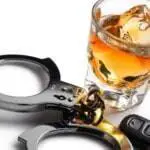 DUI investigations in Hanover County may involve the Hanover County Sheriff’s Office, Virginia State Police, Ashland Police Department, or another law-enforcement agency with jurisdiction over the incident. Virginia State Police patrol major interstate corridors, including Interstate 95 and Interstate 295. Other DUI investigations may occur along Route 1, Route 301, Route 33, Route 360, and roads throughout Mechanicsville, Ashland, Atlee, and surrounding Hanover County communities. Evidence may include an officer’s observations, driving behavior, a reported traffic violation, body-camera footage, dash-camera recordings, witness statements, roadside exercises, and breath or blood testing.
Hanover County DUI Sobriety Checkpoints
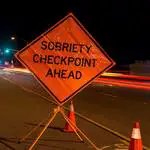 A DUI sobriety checkpoint permits law enforcement to stop vehicles under certain constitutional and procedural conditions. The legality of a checkpoint may depend on advance planning, supervisory authorization, neutral vehicle-selection procedures, and how the operation was conducted. A driver arrested following a Hanover County DUI checkpoint may have potential issues involving the checkpoint plan, detention, observations of impairment, probable cause for arrest, and subsequent chemical testing. The existence of a checkpoint does not automatically establish that every stop and arrest conducted there was lawful.
Field Sobriety Testing in Hanover County DUI Investigations
 When a Hanover County deputy sheriff or state trooper suspects impaired driving, the officer may request roadside field sobriety exercises. These exercises are intended to help officers evaluate possible impairment and gather evidence supporting a DUI arrest. The officer may consider the driver’s performance, driving behavior, physical appearance, statements, and other observations when determining whether probable cause exists for an arrest. How the exercises were explained, demonstrated, and administered can become important when evaluating the reliability of the officer’s conclusions.
Common standardized field sobriety tests include:
- Horizontal Gaze Nystagmus (HGN)
- Walk-and-Turn
- One-Leg Stand
These exercises do not directly measure blood alcohol concentration. Roadside field sobriety exercises are generally voluntary and are different from post-arrest chemical testing under Virginia’s implied consent law.
Challenging Field Sobriety Test Evidence
Field sobriety test results may be affected by circumstances unrelated to intoxication, including:
- Uneven pavement or road surfaces
- Poor lighting
- Rain, wind, or cold temperatures
- Improper testing instructions
- Physical injuries
- Balance or mobility limitations
- Medical conditions
- Footwear
- Fatigue or anxiety
- Officer administration errors
Our attorneys examine how the exercises were administered, whether standardized procedures were followed, and whether police video supports the officer’s written observations.
A driver may perform poorly on a roadside exercise for reasons unrelated to alcohol or drug impairment.
For more information about the administration, reliability, and legal significance of these exercises, see our Virginia Field Sobriety Testing page.
Breath and Blood Testing in Hanover County DUI Cases
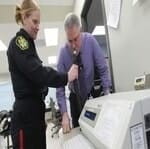 Breath or blood test evidence may be central to a Hanover County DUI prosecution. Virginia Code § 18.2-266 permits prosecution based on a qualifying alcohol concentration of 0.08 or greater as indicated by an authorized chemical test. The statute also permits DUI convictions based on other evidence of impairment, even without a chemical-test result. A reported BAC of 0.08 or higher does not eliminate potential defenses. The testing process, reliability of the result, admissibility of evidence, and circumstances of vehicle operation may remain important.
Breath Testing Evidence
Issues involving evidentiary breath testing may include:
- Whether the breath-testing equipment was properly maintained
- Whether the operator was appropriately certified
- Whether required observation and testing procedures were followed
- Whether the breath-test documentation is complete
- Whether the reported result is reliable and admissible
- Whether the timing of the test matters
- Whether medical or other factors affected the result
A roadside preliminary breath test serves a different purpose from an evidentiary breath test administered after arrest. The two should not be treated as interchangeable.
Blood Testing and Drug-Related DUI
Blood testing may be used when drugs are suspected, when breath testing is unavailable, or when the circumstances require other chemical evidence.
The defense may examine the blood collection procedure, chain of custody, laboratory methods, toxicology findings, storage conditions, and interpretation of the results.
A positive drug result does not automatically resolve every issue concerning impairment, vehicle operation, or the applicable statutory theory.
For a more detailed discussion of evidentiary breath testing, testing procedures, and potential challenges to chemical-test results, see our Virginia DUI Breath Testing page.
Virginia DUI / DWI Penalties and Driver’s-License Consequences
 Virginia DUI penalties depend on whether the case involves a first offense, prior DUI convictions, an elevated blood alcohol concentration, or another statutory enhancement. A first or second DUI conviction is ordinarily a Class 1 misdemeanor, while certain third and subsequent offenses are felonies. Virginia Code § 18.2-270 establishes mandatory minimum fines and jail terms for qualifying DUI convictions. Virginia Code § 18.2-271 addresses driver’s-license forfeiture and revocation.
| DUI Offense | Potential Statutory Consequences |
|---|---|
| First DUI | Class 1 misdemeanor; mandatory minimum $250 fine; generally one-year driver’s-license forfeiture; possible jail time |
| First DUI with BAC 0.15–0.20 | Additional mandatory minimum five days in jail |
| First DUI with BAC greater than 0.20 | Additional mandatory minimum ten days in jail |
| Second DUI within less than five years | Mandatory minimum 20 days in jail and $500 fine; generally three-year driver’s-license revocation |
| Second DUI within five to ten years | Mandatory minimum ten days in jail and $500 fine; generally three-year driver’s-license revocation |
| Third DUI within ten years | Class 6 felony; mandatory minimum 90 days in jail, or six months if all three offenses occurred within five years |
These are general statutory consequences. Additional mandatory minimum sentences may apply when an elevated BAC, a qualifying prior conviction, a passenger age 17 or younger, or another enhancement is established.
High BAC and Repeat DUI Charges
An elevated BAC can significantly increase the mandatory jail exposure in a Hanover County DUI case.
Under § 18.2-270, a BAC of at least 0.15 but not more than 0.20 carries different sentencing consequences from a BAC greater than 0.20.
Second-offense DUI penalties also depend on the timing of the prior conviction and current offense. Certain qualifying out-of-state convictions may count as prior offenses.
The defense should review the Commonwealth’s proof of prior convictions, exact offense dates, chemical-test results, and sentencing enhancements before determining the potential mandatory minimum punishment.
Other Consequences of a DUI Conviction
In addition to fines, incarceration, and loss of driving privileges, a Hanover County DUI conviction may involve:
- Virginia Alcohol Safety Action Program
- Ignition-interlock requirements
- Probation or supervision
- Court costs
- Restricted-license conditions
- Alcohol or substance-abuse treatment
- Increased automobile insurance premiums
- Employment consequences
- Commercial driving restrictions
- Professional licensing concerns
The particular consequences depend on the charge, conviction, prior record, and applicable statutory requirements.
Hanover County DUI Lawyer Defenses
 The appropriate defense in a Hanover County DUI case depends on the circumstances of the investigation and the evidence the Commonwealth intends to present. Our attorneys review the legality of the traffic stop, probable cause for arrest, field sobriety testing, chemical-test procedures, evidence of impairment, and whether the prosecution can prove the required elements beyond a reasonable doubt. Even when a driver believes the evidence is unfavorable, there may be legal or factual issues that warrant investigation.
Potential defense issues include:
- Challenging the Traffic Stop: Whether the Hanover County deputy sheriff or state trooper had a lawful basis to stop the vehicle.
- Insufficient Probable Cause: Whether the officer had sufficient evidence to arrest the accused for DUI.
- Field Sobriety Test Problems: Whether roadside exercises were properly administered and whether medical, environmental, or physical factors affected performance.
- Breath-Test Reliability: Whether the testing equipment, operator, observation period, and procedures complied with applicable requirements.
- Blood-Test Evidence: Whether collection, storage, laboratory testing, chain of custody, and interpretation of blood evidence were reliable.
- Rising Blood Alcohol Concentration: Whether the timing of drinking, driving, and testing affects the significance of a later BAC result.
- Medical Conditions and Medications: Whether medical or other non-impairment factors explain the observations or testing results.
- Operation of the Vehicle: Whether the Commonwealth can establish that the accused drove or operated the vehicle within the meaning of Virginia law.
- Witness and Video Evidence: Whether police recordings or independent witnesses support or contradict the officer’s account.
- Prior-Offense and Sentencing Issues: Whether the Commonwealth can establish the alleged prior DUI convictions, statutory timing, and qualifying enhancements.
The availability and strength of a defense depend on the specific facts. No particular defense applies automatically to every Hanover County DUI prosecution.
Virginia Implied Consent and Refusal Charges in Hanover County
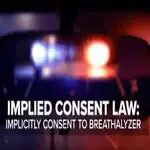 Virginia’s implied consent law generally requires qualifying drivers arrested for DUI to submit to applicable post-arrest chemical testing under the circumstances specified by Virginia Code § 18.2-268.2. The law is different from the rules governing voluntary roadside field sobriety exercises. A Hanover County driver accused of unreasonable refusal may face a separate proceeding and loss of driving privileges even when the underlying DUI allegation is contested.
First-Offense Refusal
Under Virginia Code § 18.2-268.3, a first unreasonable refusal of a qualifying post-arrest breath test is a civil offense carrying a one-year driver’s-license suspension.
A first unreasonable refusal of a required blood test is also a civil offense carrying a one-year suspension.
These consequences are separate from certain other administrative and criminal license consequences that may arise from the DUI investigation.
Subsequent Refusal and Prior DUI Convictions
The penalties become more serious when a driver has a qualifying prior DUI or refusal adjudication within ten years.
A subsequent unreasonable refusal of a breath test under the statutory conditions may constitute a Class 1 misdemeanor and carry a three-year license revocation.
A qualifying subsequent unreasonable refusal of a blood test remains a civil offense under the current statute but may carry a three-year revocation.
The precise distinction between breath and blood refusal matters. These allegations should not be treated as carrying identical criminal penalties.
Defending an Unreasonable Refusal Charge
Relevant issues may include:
- Whether the underlying arrest satisfied the applicable requirements
- Whether the implied-consent statute applied
- Whether the officer properly advised the accused
- Whether the accused actually refused testing
- Whether the alleged refusal was unreasonable
- Whether medical or other circumstances affected the testing process
- Whether a prior conviction legally qualifies for enhanced penalties
- What body-camera or other recordings show
A refusal allegation must be evaluated separately from the underlying Hanover County DUI charge.
VASAP and Ignition Interlock After a Hanover County DUI Conviction
Virginia Alcohol Safety Action Program
 The Virginia Alcohol Safety Action Program (VASAP) provides assessment, education, monitoring, and treatment-related services for individuals convicted of DUI. Under Virginia Code § 18.2-271.1, a person convicted of DUI is generally required to enter and successfully complete an approved alcohol safety action program, subject to limited statutory exceptions. Depending on the assessment and court order, participation may involve alcohol education, substance-abuse treatment, drug or alcohol testing, compliance monitoring, and other program requirements. Program participation may sometimes be transferred to another approved location for individuals who live outside Hanover County.
Ignition Interlock Requirements
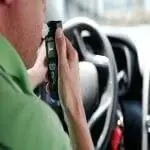 An ignition-interlock device requires a driver to provide a qualifying breath sample before starting a vehicle and performs additional monitoring during operation. Virginia Code § 18.2-270.1 establishes ignition-interlock requirements for specified DUI convictions, restricted driving privileges, and restoration proceedings. For qualifying first-offense DUI convictions, the applicable restricted-license provisions generally require an ignition-interlock period of at least twelve consecutive months without alcohol-related violations. Under specified conditions, a court may authorize a minimum six-month interlock period with additional driving restrictions. Repeat offenses and certain other circumstances may require installation on every vehicle owned by or registered to the offender. Ignition-interlock violations can also produce separate legal consequences, including possible criminal charges under the applicable statutory provisions.
Underage DUI and Driving After Illegally Consuming Alcohol
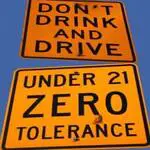 Virginia Code § 18.2-266.1 creates a separate offense for drivers younger than 21 who operate a motor vehicle after illegally consuming alcohol and have a qualifying chemical-test alcohol concentration of at least 0.02 but less than 0.08. This offense is sometimes called “baby DUI,” although it is legally different from a DUI prosecution under § 18.2-266. A violation is a Class 1 misdemeanor and carries a one-year driver’s-license forfeiture together with a mandatory minimum $500 fine or 50 hours of community service. Restricted driving privileges may be available under applicable statutory conditions. A Hanover County underage driving-after-consumption case should be analyzed according to the specific statute charged, chemical-test evidence, vehicle-operation evidence, and applicable license consequences.
Hanover County DUI Court Process
 Most adult misdemeanor DUI charges arising in Hanover County are initially heard in Hanover County General District Court. Depending on the circumstances, a DUI case may involve an arraignment or advisement, review of discovery, pretrial motions, negotiations with the Commonwealth, trial, and sentencing if a conviction occurs. Felony DUI charges generally begin in General District Court for preliminary proceedings and may proceed to Hanover County Circuit Court. Circuit Court also hears qualifying appeals from General District Court convictions.
Hanover County General District Court
7530 County Complex Road
Hanover, Virginia 23069
The court handles adult misdemeanor DUI and related traffic or criminal matters within its jurisdiction.
The summons or warrant should be reviewed to determine the exact charge, scheduled hearing date, and required appearance.
Hanover County Circuit Court
7530 County Complex Road
Hanover, Virginia 23069
Circuit Court handles qualifying felony DUI proceedings, misdemeanor appeals, and other matters within its jurisdiction.
What Happens After a Hanover County DUI Arrest?
The sequence of events depends on the charges and circumstances, but a case may involve:
- Arrest and issuance of court paperwork
- Administrative driver’s-license consequences when applicable
- Review of police reports and available recordings
- Examination of breath, blood, or toxicology evidence
- Identification of legal and evidentiary issues
- Pretrial motions or discussions with the Commonwealth
- Trial or another authorized disposition
- Sentencing and applicable license or program requirements if convicted
Our attorneys review the particular allegations and evidence before determining the appropriate defense strategy.
DUI / DWI Defense Throughout Hanover County Communities
Our attorneys represent clients charged with DUI / DWI throughout Hanover County, including cases arising from interstate traffic stops, local roads, motor vehicle accidents, and other police investigations.
Hanover County includes the Town of Ashland and numerous suburban, residential, commercial, and rural communities.
- Ashland
- Atlee
- Beaverdam
- Cold Harbor
- Doswell
- Elmont
- Hanover Courthouse
- Mechanicsville
- Montpelier
- Old Church
- Rockville
- Shady Grove
- South Anna
- Studley
DUI charges may arise along Interstate 95, Interstate 295, Route 1, Route 301, Route 33, Route 360, or other Hanover County roads. Regardless of where an investigation begins, the defense should focus on the actual charge, the officer’s observations, the legality of the stop and arrest, and the Commonwealth’s evidence.
Hanover County DUI / DWI Case Results
Hanover County DUI Reduced to Reckless Driving — Refusal Dropped
Our Hanover County DUI lawyers represented a client arrested for DUI following a motor vehicle accident investigated by the Hanover County Sheriff’s Office. A deputy recovered marijuana during the investigation, and the client did not provide a breath sample. The resulting allegations included DUI, refusal, and marijuana possession. After reviewing the evidence and preparing for trial, our attorneys negotiated a resolution in which the DUI charge was reduced to reckless driving, the refusal allegation was nolle prosequi, and the marijuana possession charge was dismissed. The client also avoided a jail sentence.
Hanover County Second-Offense DUI Reduced — No Active Jail
Our Hanover County DUI attorneys represented a client arrested by Virginia State Police after a vehicle left the roadway following a wedding and became stuck in a ditch.
The client had a prior DUI conviction, and a subsequent breath test produced a reported BAC of 0.20.
The prosecution involved potential mandatory minimum jail exposure based on the alleged second offense and elevated BAC.
After examining the circumstances and presenting the defense, our attorneys obtained a reduction to a lesser offense, and the court imposed no active jail sentence.
These results are examples of prior Hanover County cases. Every case depends on its own evidence, applicable law, and circumstances, and prior results do not guarantee a particular outcome.
What to Send for a Hanover County DUI Case Review
Helpful information may include:
- Virginia Uniform Summons
- Arrest warrant or charging document
- Scheduled Hanover court date
- Exact charge and Virginia Code section
- Driver’s-license information
- Breath-test certificate, if available
- Blood-test paperwork, if available
- Administrative license-suspension paperwork
- Refusal-related paperwork
- Police or accident reports
- Photographs or video
- Names of potential witnesses
- Information about prior DUI convictions
- Medical information relevant to testing
- Receipts or other timeline evidence
- Relevant employment or license concerns
Any potentially relevant photographs, recordings, messages, receipts, or other evidence should be preserved in their original form.
You do not need every document before contacting our office. The court date, exact charge, and available paperwork are useful starting points.
Hanover County DUI Lawyer Client Review

Frequently Asked Questions About Hanover County DUI / DWI Charges
What court handles DUI / DWI charges in Hanover County?
Most adult misdemeanor DUI charges in Hanover County are initially heard in Hanover County General District Court at 7530 County Complex Road, Hanover, Virginia 23069. Qualifying felony DUI proceedings and misdemeanor appeals may be heard in Hanover County Circuit Court.
Does a Hanover County DUI arrest automatically mean a conviction?
No. A DUI arrest is not a conviction. The Commonwealth must prove the elements of the charged offense. The outcome depends on the evidence, legal issues, and circumstances of the case.
What are the penalties for a first DUI in Virginia?
A first DUI is generally a Class 1 misdemeanor carrying a mandatory minimum $250 fine and a one-year driver’s-license forfeiture. Jail may be imposed, and elevated BAC levels can trigger mandatory minimum jail sentences. VASAP and ignition-interlock requirements may also apply.
Can a Hanover County DUI case be reduced to reckless driving?
Sometimes. Whether a DUI allegation can be reduced to reckless driving or another offense depends on the evidence, legal issues, negotiations, and the court’s determination. A reduction is not automatic or guaranteed.
Are roadside field sobriety tests required in Virginia?
Roadside field sobriety exercises are generally voluntary. They are different from qualifying post-arrest chemical testing under Virginia’s implied consent law. Police observations and any exercises performed may still become evidence in the DUI investigation.
Can breath or blood test results be challenged in Hanover County?
Yes. Breath or blood evidence may raise issues involving testing procedures, equipment maintenance, operator qualifications, observation periods, timing, chain of custody, laboratory procedures, and the reliability or admissibility of the result.
What happens if I refuse a breath or blood test after a DUI arrest?
Virginia Code § 18.2-268.3 provides separate penalties for unreasonable refusal of required post-arrest chemical testing. A first qualifying refusal is generally a civil offense carrying a one-year license suspension. Certain subsequent breath-test refusals may be criminal misdemeanors, while blood-test refusal penalties are separately defined by statute.
Will I need an ignition interlock after a Hanover County DUI conviction?
Ignition-interlock requirements depend on the type of DUI conviction, whether restricted driving privileges are sought, prior offenses, and applicable provisions of Virginia Code § 18.2-270.1. Many DUI convictions involve mandatory interlock conditions for restricted driving privileges.
Can a person under 21 be charged with DUI after drinking alcohol?
Yes. Virginia Code § 18.2-266.1 separately prohibits qualifying operation of a vehicle after illegally consuming alcohol by someone younger than 21 with a chemical-test alcohol concentration of at least 0.02 but less than 0.08. A person under 21 may also face an ordinary DUI charge under § 18.2-266 when its elements are established.
Why does early case review matter in a Hanover County DUI case?
Early review can help identify the exact charge, court date, police evidence, field sobriety testing, chemical-test procedures, license consequences, and potential defenses. It also allows the accused to preserve potentially relevant recordings, documents, and other information before the scheduled court appearance.
Request a Confidential Hanover County DUI Case Review
If you have been charged with DUI / DWI in Hanover County, our lawyers can review the traffic stop, arrest, field sobriety testing, breath or blood evidence, refusal allegations, and potential penalties. Contact our attorneys for a confidential case review and provide your Hanover court date, exact charge, and available paperwork.
11/10/2015 | Updated 10/31/2026