
Fauquier County VA DUI / DWI Lawyer
 Riley & Wells Attorneys-At-Law represents clients charged with DUI / DWI throughout Fauquier County, Virginia. Our attorneys defend first and repeat DUI offenses involving alcohol, drugs, prescription medications, elevated blood alcohol concentrations, and related breath or blood test refusal allegations. The prosecution’s case may rely on the traffic stop, evidence of driving or operation, officer observations, field sobriety exercises, breath testing, blood testing and statements made during the investigation. Our attorneys review the charging documents, police evidence, test records, prior history and possible consequences before advising clients about defenses, court procedure, license issues and practical next steps.







Fauquier County DUI / DWI Defense Guide
Fauquier County Defense Services
For broader statewide information, see our Virginia DUI Lawyers page.
Fauquier County VA DUI and DWI Defense Lawyers
Our attorneys represent Virginia residents and out-of-state motorists charged with DUI and DWI offenses throughout Fauquier County. Our Fauquier County DUI lawyers defend first-offense DUI, repeat DUI, elevated blood alcohol allegations, drug-related DUI, breath and blood test refusal matters, and other impaired-driving charges.
A DUI investigation may begin with a traffic stop, accident, sobriety checkpoint, disabled vehicle, or another encounter involving law enforcement. The prosecution may rely on driving observations, statements, physical appearance, field sobriety exercises, preliminary breath testing, chemical testing, video recordings, and other evidence.
A DUI arrest can affect driving privileges before the criminal case is resolved. A conviction may expose a driver to fines, incarceration, license consequences, VASAP requirements, ignition interlock, and other statutory penalties. Our attorneys examine the exact statutory charge, legal basis for the stop or detention, probable cause for arrest, chemical testing procedures, prior record, and potential consequences.
An arrest is not a conviction. The Commonwealth must prove the required elements of the charged offense beyond a reasonable doubt through admissible evidence. Our attorneys evaluate the circumstances of each case before determining which factual, evidentiary, constitutional, and procedural defenses may be available.
Virginia DUI and DWI Charges Under Code Section 18.2-266
 Virginia Code § 18.2-266 prohibits driving or operating a motor vehicle under several alternative statutory circumstances involving alcohol, drugs, or a combination of substances. A DUI prosecution may involve an alleged blood alcohol concentration of 0.08 or more, evidence of impairment, specified drug concentrations, or another statutory theory.
Continue Reading
The Commonwealth may attempt to establish a DUI violation through one or more applicable statutory provisions.
A prosecution may allege that the accused:
- Drove or operated with a blood alcohol concentration of 0.08 or more, or an equivalent qualifying breath alcohol result.
- Drove or operated while under the influence of alcohol.
- Drove or operated while under the influence of drugs to a degree that impaired the ability to operate safely.
- Drove or operated while under the combined influence of alcohol and drugs to a degree that impaired the ability to operate safely.
- Drove or operated with certain specified drugs in the blood at or above statutory concentrations.
A chemical result below 0.08 does not necessarily prevent an alcohol-related DUI prosecution under another statutory theory.
Likewise, the absence of a breath or blood test does not automatically require dismissal. The Commonwealth may rely on witness testimony, driving behavior, officer observations, statements, recordings, or other admissible evidence.
The exact statutory allegation and available evidence determine the appropriate defense analysis.
Driving or Operation of a Motor Vehicle
A Virginia DUI prosecution requires proof that the accused drove or operated a motor vehicle within the meaning of the applicable statute.
Operation may become disputed when the vehicle was parked, disabled, involved in an accident, or discovered without an officer having observed the driving.
Evidence concerning driving or operation may include:
- The location of the vehicle
- Whether the engine was running
- The position and condition of the vehicle
- Possession and location of the keys
- Statements attributed to the accused
- Witness observations
- Body-camera recordings
- Dashboard-camera recordings
- Surveillance recordings
- Accident evidence
- Electronic or location records
- The timeline of alleged operation
The Commonwealth must establish the applicable legal definition of driving or operation through admissible evidence.
Our attorneys examine whether the circumstances and evidence establish the elements required by Virginia law.
Alcohol, Illegal Drugs and Prescription Medication
A Fauquier County DUI charge may involve alcohol, illegal drugs, prescription medication, over-the-counter medication, or a combination of substances.
Lawful possession or authorized use of medication does not automatically determine whether the Commonwealth can establish a DUI violation.
Drug-related prosecutions may involve blood toxicology results, dosage information, medical records, officer observations, driving behavior, witness testimony, and expert interpretation of laboratory evidence.
Depending on the statutory theory, the presence of a substance and evidence of impairment may raise different legal and scientific questions.
The defense may examine the precise substance, concentration, timing, reported behavior, medical information, and statutory requirements.
Fauquier County DUI Traffic Stops and Criminal Investigations
A DUI investigation in Fauquier County may begin when an officer observes an alleged moving violation, unusual driving behavior, an accident, a disabled vehicle, or conduct at a sobriety checkpoint.
The defense should evaluate the legal justification for the initial encounter, the duration and scope of detention, and the evidence supporting any subsequent arrest.
Investigations may involve:
- Driving observations
- The stated reason for the traffic stop
- Vehicle operation evidence
- Statements attributed to the driver
- Physical appearance and speech
- Odor attributed to alcohol or drugs
- Field sobriety exercises
- Preliminary breath testing
- Body-camera recordings
- Dashboard-camera recordings
- Witness accounts
- Accident and roadway evidence
Police reports should be compared with available recordings, dispatch information, photographs, witness statements, and other evidence.
Legal Basis for a DUI Traffic Stop
A traffic stop generally must be supported by an applicable legal justification.
An officer may report observing speeding, lane violations, reckless driving, equipment violations, or other conduct before initiating a stop.
A DUI investigation may also arise following an accident or another encounter involving a vehicle.
Potential defense questions include:
- The stated reason for the stop
- The officer’s observations beforehand
- Roadway signs and lane markings
- Traffic conditions
- The precise location of the encounter
- Available video recordings
- Dispatch information
- Statements made by the driver
- The duration of detention
- The progression of the investigation
- The basis for extending detention
- Whether applicable legal requirements were followed
A defense may involve challenging the original stop, an unlawful extension of detention, or the admissibility of evidence obtained during the encounter.
Probable Cause for a Fauquier County DUI Arrest
A warrantless DUI arrest must be supported by probable cause under applicable law.
Probable cause may involve the officer’s observations, statements, driving behavior, accident evidence, field sobriety performance, preliminary breath analysis, and other circumstances known at the time of arrest.
Our attorneys examine the sequence of the investigation and compare the stated grounds for arrest with available recordings, witness accounts, reports, and physical evidence.
Important issues may include:
- Whether driving or operation was observed or otherwise established
- What the officer knew before making the arrest
- Whether field sobriety exercises were properly administered
- Whether medical or physical conditions affected observations
- Whether the preliminary breath test was lawfully obtained and used
- Whether the reported facts are consistent with available video
- Whether probable cause existed at the time of arrest
When probable cause is disputed, the defense may examine whether a motion challenging the arrest or resulting evidence is supported by the circumstances.
The available remedy depends on the applicable law and the particular evidence involved.
Fauquier County Law Enforcement and DUI Investigations
DUI investigations in Fauquier County may involve the Fauquier County Sheriff’s Office, Virginia State Police, town police departments, or another authorized agency.
The investigating agency may affect which reports, recordings, dispatch materials, testing documents, and witness information need to be identified.
Our attorneys examine the officer’s observations, investigative methods, chronology of events, and evidence supporting the charge.
Fauquier County DUI Enforcement Along Highways and Local Roads
DUI investigations in Fauquier County may arise along Interstate 66, U.S. Route 15, Route 17 (Marsh Road), and Route 29 (James Madison Highway). These major highways carry commuters, commercial traffic, and motorists traveling through the county. Traffic stops, accident investigations, disabled vehicles, and reports from other motorists may lead to DUI investigations involving alcohol, drugs, or a combination of substances.
DUI cases may also originate on Route 28 (Catlett Road), Vint Hill Road, Midland Road, Germantown Road, and connecting streets serving Bealeton, Midland, Catlett, and New Baltimore. Other county routes include U.S. Route 50, Route 55, and Route 211, along with rural roads connecting Marshall, The Plains, Remington, and surrounding communities. Roadway conditions, lighting, intersections, traffic patterns, shoulders, and testing surfaces may become relevant when evaluating an officer’s observations and roadside sobriety exercises.
The location of an alleged DUI offense can affect which law-enforcement agency conducted the investigation, which court has jurisdiction, and what evidence may be available. Our attorneys review the legal basis for the traffic stop, the circumstances of any detention or arrest, field sobriety testing conditions, statements, available recordings, and breath or blood test evidence. DUI investigations by the Fauquier County Sheriff’s Office, Virginia State Police, or other authorized agencies must be evaluated according to the specific facts and applicable Virginia law.
Field Sobriety Testing in Fauquier County DUI Cases
 Officers investigating suspected impairment may request roadside exercises such as the horizontal gaze nystagmus test, walk-and-turn test, or one-leg-stand test. These exercises are frequently used during DUI investigations, but their evidentiary significance depends on the manner in which they were administered and the circumstances surrounding the testing.
Continue Reading
Instructions, demonstrations, surface conditions, lighting, traffic, weather, footwear, physical limitations, medical conditions, and communication difficulties may affect performance.
Body-camera recordings may help establish the instructions provided, how the exercises were performed, and whether the officer’s report accurately describes the encounter.
A person may perform poorly on an exercise for reasons unrelated to alcohol or drug impairment.
The defense should compare the officer’s observations with recorded evidence and the circumstances of the investigation.
For additional statewide information, see our Virginia DUI field sobriety testing page.
Evaluating Field Sobriety Test Evidence
A review of roadside testing may address:
- Instructions given by the officer
- Whether exercises were demonstrated
- Whether the driver understood the instructions
- The testing surface and slope
- Lighting and visibility
- Weather and traffic conditions
- Medical or physical limitations
- Injuries or balance difficulties
- Footwear and clothing
- Fatigue or other relevant conditions
- Statements made during testing
- Whether reports match available video
The defense may also examine how the officer interpreted the results and whether those observations contributed to probable cause for arrest.
Preliminary Roadside Breath Testing
Virginia Code § 18.2-267 governs preliminary breath analysis during a DUI investigation.
A person stopped and suspected of a qualifying DUI offense has the statutory right to refuse preliminary roadside breath analysis.
The refusal to permit that preliminary analysis is not evidence in the underlying DUI prosecution.
The numerical result of the preliminary test is not admissible to prove guilt of the DUI offense.
Preliminary testing may nevertheless be relevant to an officer’s probable-cause determination when the applicable statutory requirements are satisfied.
The roadside preliminary test is distinct from evidential breath or blood testing governed by Virginia’s post-arrest implied-consent statutes.
Breath and Blood Testing in Fauquier County DUI Cases
 Chemical testing following a DUI arrest is different from preliminary roadside breath analysis. Virginia’s implied-consent statutes govern breath and blood testing when the applicable statutory conditions are satisfied.
Continue Reading
An alcohol-related DUI prosecution may involve evidential breath testing, while drug-related cases frequently involve blood testing.
Other circumstances may affect which testing method is authorized or available.
A reported chemical result should be evaluated together with the timing of the alleged driving, the arrest, the collection of the sample, and the legal authority for testing.
Testing procedures, equipment, operator qualifications, laboratory records, sample identification, and chain-of-custody documentation may become important issues.
Our attorneys review whether the Commonwealth can establish the statutory foundation for admission of the chemical evidence and whether the reported results are reliable.
For additional statewide information, see our Virginia DUI breath and blood testing page.
Evidential Breath Testing
The Commonwealth may offer a certificate reporting a breath alcohol result.
The defense should examine whether the test was administered using approved equipment by a qualified operator and whether applicable statutory and administrative requirements were satisfied.
A breath-test review may involve:
- The time of driving, arrest, and testing
- The required observation period
- The testing instrument
- Equipment approval and maintenance records
- Operator qualifications
- The testing sequence
- Reported sample results
- Error messages or interrupted tests
- Medical or physiological issues
- Potential mouth-alcohol concerns
- The certificate and supporting records
- Compliance with applicable procedures
A reported breath alcohol concentration should be considered together with the timing of the test and the circumstances of the investigation.
Blood Testing and Toxicology Evidence
Blood testing may be used in drug-related DUI investigations or other circumstances authorized by Virginia law.
The resulting evidence may include collection records, laboratory analysis, chain-of-custody documentation, and certificates issued by the Virginia Department of Forensic Science.
A blood-test review may address:
- Legal authority for collection
- Qualifications of the person drawing blood
- Collection procedures
- Sample identification
- Sealing and storage
- Transportation of the sample
- Chain of custody
- Laboratory methods
- Reported concentrations
- Timing of alleged driving
- Scientific or procedural issues
- The applicable statutory theory
Drug-related prosecutions may involve questions concerning the particular substance, concentration, dosage, prescription history, medical conditions, and evidence of impairment.
The defense should determine what the laboratory result establishes and whether the Commonwealth can satisfy the charged statutory provision.
Virginia Implied Consent and DUI Test Refusal Allegations
 Virginia Code §§ 18.2-268.2 and 18.2-268.3 govern implied consent and unreasonable refusal following qualifying DUI arrests. A refusal allegation is separate from the underlying DUI prosecution and may result in additional consequences affecting driving privileges.
Continue Reading
Implied consent generally applies when a person operates a motor vehicle on a Virginia highway and is arrested for a qualifying offense within the applicable statutory period.
Whether breath testing, blood testing, or another authorized procedure applies depends on the circumstances and governing law.
The defense may examine whether the statute applied, whether the arrest was lawful, the timing of events, the test requested, the advisements given, and whether an unreasonable refusal occurred.
In some circumstances, law enforcement may obtain a warrant authorizing collection of a blood sample.
The warrant, supporting affidavit, collection procedure, and laboratory records may then require examination.
A refusal case must be distinguished from a person’s statutory right to refuse preliminary roadside breath analysis before arrest.
For more information, see our Virginia DUI breath test refusal page.
First and Subsequent Breath Test Refusals
A first unreasonable refusal of post-arrest breath testing is generally a civil offense resulting in a one-year suspension of driving privileges.
A qualifying subsequent unreasonable breath refusal within the statutory 10-year period may be prosecuted as a Class 1 misdemeanor and may result in a three-year loss of driving privileges.
Prior DUI convictions and prior refusal findings may affect the classification and consequences.
Blood-test refusal provisions are addressed separately under Virginia law and should not be assumed to carry identical criminal penalties.
The exact statutory subsection, prior history, and procedural circumstances must be reviewed.
Evidence in a Fauquier County Refusal Case
Relevant issues may include:
- Whether implied consent applied
- The time between driving and arrest
- Probable cause for arrest
- Whether breath or blood was requested
- The statutory advisement
- The driver’s response
- Medical inability to provide a sample
- Communication difficulties
- Officer reports and recordings
- Qualifying prior convictions or findings
The defense should evaluate the actual statements, conduct, testing circumstances, and statutory requirements before determining whether the refusal allegation can be established.
Fauquier County DUI and DWI Penalties
 A first violation of Virginia Code § 18.2-266 is generally a Class 1 misdemeanor carrying a mandatory minimum fine of $250. The possible punishment depends on the charged offense, prior convictions, reported blood alcohol concentration, additional aggravating circumstances, and applicable statutory requirements.
Continue Reading
A DUI conviction may result in fines, incarceration, loss of driving privileges, ignition-interlock requirements, VASAP participation, probation conditions, and other consequences.
Potential penalties may include:
- Jail or prison exposure
- Mandatory minimum confinement
- Fines and court costs
- License suspension or revocation
- Administrative license suspension
- Probation conditions
- VASAP participation
- Ignition-interlock requirements
- Alcohol monitoring
- Restricted driving conditions
- Employment and insurance consequences
- Commercial driving consequences
The maximum statutory punishment is not necessarily the sentence imposed in an individual case.
Mandatory minimum penalties and other sentencing requirements must be evaluated according to the specific charge and circumstances.
For additional statewide information, see our Virginia DUI penalties page.
First-Offense DUI in Fauquier County
A first DUI offense generally carries the misdemeanor classification and minimum fine established by Virginia Code § 18.2-270.
Additional requirements may involve license revocation, VASAP, ignition interlock, restricted driving privileges, and other statutory consequences.
A first-offense prosecution may involve disputed operation, traffic-stop issues, field sobriety evidence, chemical testing, or other factual and legal questions.
Our attorneys examine the entire investigation and evidence supporting the alleged offense.
Elevated Blood Alcohol Concentration
Virginia law imposes additional mandatory minimum confinement for specified elevated blood alcohol results.
For a first offense:
- A qualifying blood alcohol concentration of at least 0.15 but not more than 0.20 carries an additional mandatory minimum five days of confinement.
- A qualifying blood alcohol concentration greater than 0.20 carries an additional mandatory minimum 10 days of confinement.
Additional enhanced punishment may apply to repeat offenses involving elevated blood alcohol concentrations.
The reported chemical result, testing procedures, admissibility requirements, and applicable statutory provisions should be examined carefully.
For further information, see our Virginia High BAC DUI page.
Second-Offense and Repeat DUI Charges
A prior qualifying DUI conviction may affect the classification, mandatory minimum punishment, license revocation, and ignition-interlock requirements.
A second DUI offense within 10 years generally carries increased mandatory punishment.
A third qualifying DUI offense committed within 10 years is generally prosecuted as a Class 6 felony, with additional mandatory penalties depending on the statutory circumstances.
The Commonwealth must establish the qualifying prior convictions required for enhanced punishment.
Our attorneys examine the prior record, statutory timing requirements, charging documents, and evidence supporting the allegations.
DUI with a Minor Passenger
Virginia Code § 18.2-270 establishes additional penalties for DUI committed while transporting a person 17 years of age or younger.
The statute provides for an additional fine and mandatory minimum confinement when the required elements are established.
The precise charge, passenger’s age, applicable statutory provisions, and supporting evidence should be reviewed.
Fauquier County DUI License Suspension, VASAP and Ignition Interlock
A DUI arrest or conviction may affect driving privileges before and after trial.
The available relief and required conditions depend on the alleged offense, chemical test result, refusal allegation, prior record, and final disposition.
An administrative suspension may occur following a qualifying DUI arrest.
A conviction may result in an additional period of suspension or revocation under Virginia law.
Administrative and Court-Ordered License Suspensions
A first DUI conviction generally results in a one-year loss of driving privileges, subject to applicable statutory provisions and potential restricted driving relief.
License-related issues may include:
- Administrative suspension after arrest
- Suspension following conviction
- Revocation following conviction
- Additional refusal-related suspension
- Restricted-license eligibility
- Permitted driving purposes
- Applicable court orders
- DMV reinstatement requirements
Administrative suspension documents, court orders, and DMV requirements should be reviewed rather than assuming every suspension or revocation follows the same rules.
For additional information, see our Virginia DUI license suspension page.
Virginia Alcohol Safety Action Program
 VASAP is the Virginia Alcohol Safety Action Program. Participation is generally required following a qualifying DUI conviction and may also arise through other applicable court or licensing requirements.
Continue Reading
The program may involve screening, education, treatment referrals, monitoring, and compliance obligations.
VASAP may coordinate ignition-interlock requirements and report compliance information as authorized by law.
Failure to enroll, participate, complete required services, or comply with monitoring conditions may affect probation, restricted driving privileges, or license restoration.
The precise requirements depend on the conviction, statutory provisions, program rules, and applicable court orders.
Ignition Interlock and Restricted Driving Privileges
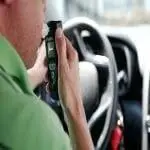 An ignition-interlock system connects a vehicle’s ignition to a breath-testing device. The system may prevent the vehicle from starting when the measured alcohol concentration exceeds the permitted level and may require additional testing while the vehicle is operating.
Continue Reading
Virginia DUI law establishes ignition-interlock and restricted driving requirements in qualifying cases.
Eligibility, installation requirements, permitted driving purposes, monitoring, and compliance conditions depend on the applicable statutes and court orders.
A person should not assume that restricted driving privileges will be available or that ignition-interlock requirements can be avoided.
Violating an interlock order or operating contrary to restricted-license terms may create additional criminal or licensing consequences.
Our attorneys evaluate the applicable requirements according to the particular charge, prior record, and potential disposition.
Additional DUI Matters in Fauquier County
Drivers Younger Than 21
 Virginia Code § 18.2-266.1 addresses driving after illegally consuming alcohol by persons younger than 21. A qualifying alcohol concentration of at least 0.02 but less than 0.08 may support a separate underage alcohol-driving charge under that statute.
Continue Reading
A violation is a Class 1 misdemeanor.
The required punishment includes a one-year loss of driving privileges and either a mandatory minimum $500 fine or a mandatory minimum 50 hours of community service.
Restricted-license and ignition-interlock provisions may also apply.
An underage alcohol-driving allegation is different from an ordinary DUI charge under § 18.2-266.
The charging document, chemical-test allegation, and applicable statute should be reviewed to determine the exact offense and potential consequences.
DUI Sobriety Checkpoints
 Some Fauquier County DUI investigations begin at sobriety checkpoints rather than after an observed moving violation. A checkpoint may involve brief contact with selected vehicles followed by additional investigation when an officer reports signs of impairment or another violation.
Continue Reading
A checkpoint case may raise questions concerning authorization, supervisory planning, vehicle-selection procedures, signs and warnings, and the scope of the initial encounter.
The basis for extending detention or conducting a further DUI investigation may also require examination.
Written checkpoint plans, operational records, officer assignments, recordings, and testimony may be relevant.
The defense should evaluate whether the checkpoint and subsequent investigation complied with applicable constitutional and statutory requirements.
Out-of-State Drivers Charged with DUI
An out-of-state motorist charged with DUI in Fauquier County faces a Virginia criminal prosecution and possible restrictions on the privilege to drive in Virginia.
A conviction may also be reported to the driver’s home-state licensing authority.
The home state determines the additional effect on the person’s home-state license or driving record under its applicable laws.
Living outside Virginia does not automatically excuse a required court appearance or compliance with court orders.
Administrative suspension, restricted driving privileges, VASAP, ignition interlock, and home-state licensing consequences may require special attention.
For additional statewide information, see our Virginia DUI information for out-of-state drivers.
Commercial Drivers and CDL Consequences
Commercial drivers charged with DUI may face consequences beyond the ordinary criminal penalties.
Federal and Virginia commercial-driver licensing laws may impose disqualification periods, reporting requirements, and restrictions on operating commercial motor vehicles.
An alcohol-related driving offense may affect a commercial driver’s employment even when the underlying allegation arose in a personal vehicle.
A restricted driving privilege does not automatically authorize operation of a commercial motor vehicle.
The precise charge, licensing status, prior history, and applicable CDL provisions should be reviewed.
Fauquier County DUI Defense Strategy and Evidence
 No single defense strategy applies to every Fauquier County DUI prosecution. The appropriate approach depends on the statutory charge, evidence of driving or operation, legal basis for the traffic stop, probable cause for arrest, field sobriety testing, chemical evidence, and prior record.
Continue Reading
Some cases involve constitutional challenges to the stop, detention, arrest, search, or testing procedures.
Other cases may involve disputes concerning driving or operation, witness credibility, field sobriety evidence, chemical testing, or the sufficiency of the Commonwealth’s proof.
A defense may also involve examination of statutory penalties, license consequences, potential mitigation, and available dispositions.
Our attorneys evaluate the evidence and circumstances before determining the appropriate course of action.
Possible outcomes depend on the applicable law, admissible evidence, prosecutorial decisions, and court rulings. No particular result can be guaranteed.
Issues Requiring Review in a DUI Defense
Potential issues include:
- Whether driving or operation can be proven
- The legal basis for the stop
- The scope and duration of detention
- Probable cause for arrest
- Accuracy of officer observations
- Field sobriety instructions and results
- Medical or physical explanations
- Roadside testing conditions
- Preliminary breath testing
- Evidential breath testing procedures
- Blood collection and laboratory records
- Timing of alcohol consumption and testing
- Drug identification and impairment evidence
- Admissibility of statements and certificates
- Qualifying prior convictions
- Mitigation and sentencing considerations
The significance of each issue depends on the specific allegations, evidence, and applicable Virginia law.
Evidence in a Fauquier County DUI Case
DUI evidence should be identified and preserved as early as practical.
Some recordings, dispatch records, business surveillance footage, and electronic information may not remain available indefinitely.
Potential evidence includes:
- Body-camera recordings
- Dashboard-camera recordings
- Dispatch records
- Emergency-call recordings
- Officer reports and notes
- Accident reports
- Photographs
- Witness statements
- Preliminary breath-test records
- Evidential breath-test certificates
- Breath-testing documentation
- Blood collection records
- Laboratory reports
- Chain-of-custody documents
- Medical and prescription records
- Receipts and location information
- Surveillance recordings
- Other electronic evidence
The defense should evaluate whether the evidence is reliable, admissible, and sufficient to establish the charged offense beyond a reasonable doubt.
Officer Testimony and Video Recordings
Police reports and testimony may describe driving behavior, statements, physical appearance, roadside exercises, and other circumstances.
Available body-camera or dashboard-camera footage may help establish what occurred.
The defense may compare the officer’s testimony and written observations with the recordings and other evidence.
Material differences may require additional factual or legal evaluation.
Timing and Chemical Testing Evidence
The timing of the alleged driving, stop, arrest, and chemical test may be important in a DUI prosecution.
Depending on the circumstances, the defense may examine alcohol consumption, testing procedures, sample collection, laboratory findings, and the relationship between the reported result and the alleged statutory violation.
Chemical testing evidence must be evaluated according to the applicable statutory and scientific requirements.
Fauquier County DUI Courts and Criminal Proceedings
 Most adult misdemeanor DUI and qualifying refusal cases arising in Fauquier County are heard in Fauquier General District Court. Felony DUI proceedings may begin with a preliminary hearing in General District Court before proceeding to Fauquier Circuit Court. The exact court, charge, hearing date, and required appearance should be confirmed from the summons, warrant, bond paperwork, or official court notice.
Fauquier General District Court
6 Court Street
Warrenton, VA 20186
Fauquier General District Court handles most adult misdemeanor DUI prosecutions and qualifying refusal proceedings.
Proceedings may involve arraignment or advisement, attorney appearance, evidence review, pretrial motions, negotiations, trial, and sentencing when applicable.
Fauquier Circuit Court
Courtroom entrance:
40 Culpeper Street
Warrenton, VA 20186
Clerk’s Office:
29 Ashby Street
Warrenton, VA 20186
Fauquier Circuit Court handles felony DUI prosecutions and qualifying appeals from General District Court.
Proceedings may involve indictment, arraignment, discovery, pretrial motions, trial, sentencing, or appellate review as authorized by law.
Fauquier Juvenile and Domestic Relations District Court
14 Main Street
Warrenton, VA 20186
Fauquier Juvenile and Domestic Relations District Court handles qualifying juvenile matters, including certain alcohol-related driving allegations involving juveniles.
Most adult misdemeanor DUI prosecutions proceed in General District Court instead.
Stages of a Fauquier County DUI Case
Depending on the charges and circumstances, a DUI prosecution may involve:
- Traffic stop or accident investigation
- Roadside DUI investigation
- Field sobriety testing
- Preliminary breath testing
- Arrest and bond determination
- Administrative license suspension
- Evidential breath or blood testing
- Arraignment or attorney appearance
- Discovery and evidence review
- Pretrial motions
- Negotiations when appropriate
- Bench or jury trial as applicable
- Sentencing if convicted
- Restricted driving and VASAP issues
- Possible appeal
Not every DUI case involves every stage.
A defendant should comply with court appearance requirements, bond conditions, administrative suspension orders, and other applicable legal obligations while the case is pending.
For additional information about Virginia court procedures, see our Virginia DUI court process page.
What to Send for a Fauquier County DUI Case Review
Complete documents and a clear timeline can help identify the charge, assigned court, testing history, license issues, and approaching deadlines.
Useful materials may include:
- The complete summons or warrant
- Bond and release paperwork
- Administrative suspension documents
- Refusal summons or warrant
- Court date and assigned court
- Current driving record
- Prior DUI or refusal records
- Accident reports
- Photographs and recordings
- Medical and prescription information
- Witness names and contact information
- Receipts and electronic communications
- Location records
- A written timeline of the incident
Relevant documents, messages, photographs, recordings, and other evidence should be preserved in their original form.
Providing accurate information about the charge, arrest, chemical testing, and upcoming court proceedings can help our attorneys identify the legal issues requiring attention.
Fauquier County DUI / DWI Lawyer Client Review

Fauquier County DUI / DWI Lawyer Frequently Asked Questions
Is DUI or DWI a criminal offense in Fauquier County?
Yes. A violation of Virginia Code § 18.2-266 is a criminal offense. A first or second offense is generally prosecuted as a misdemeanor, while certain repeat offenses may be felonies.
Are DUI and DWI different charges in Virginia?
The terms DUI and DWI are commonly used interchangeably in Virginia to describe impaired-driving charges prosecuted under Virginia Code § 18.2-266.
What must the Commonwealth prove in a Virginia DUI case?
The Commonwealth must establish that the accused drove or operated a motor vehicle and violated at least one applicable provision of Virginia Code § 18.2-266 beyond a reasonable doubt through admissible evidence.
Can a DUI charge be prosecuted without a breath or blood test?
Yes. The Commonwealth may attempt to prove impairment through officer observations, driving behavior, witness statements, field sobriety exercises, recordings, and other admissible evidence even without a qualifying chemical-test result.
Can a driver refuse the preliminary roadside breath test?
Virginia Code § 18.2-267 gives a person stopped and suspected of DUI the right to refuse preliminary roadside breath analysis. The failure to permit that preliminary analysis is not evidence in the DUI prosecution.
What happens if a driver refuses chemical testing after arrest?
An unreasonable refusal following a qualifying arrest may result in a separate proceeding and additional license consequences. The classification and penalties depend on whether breath or blood was requested, the person’s prior history, and the applicable statutory provision.
Can prescription medication result in a DUI charge?
Yes. Virginia law addresses impairment involving alcohol, drugs, or a combination of substances. Lawful possession of prescription medication does not automatically resolve an allegation of impairment. The statutory charge, dosage, timing, laboratory evidence, and other circumstances should be reviewed.
What are the penalties for a first Virginia DUI conviction?
A first DUI offense is generally a Class 1 misdemeanor with a mandatory minimum fine of $250, loss of driving privileges, and other statutory requirements. Elevated blood alcohol results and additional aggravating circumstances may result in mandatory confinement or other enhanced punishment.
Where are Fauquier County DUI cases heard?
Most adult misdemeanor DUI and qualifying refusal cases arising in Fauquier County are heard in Fauquier General District Court at 6 Court Street, Warrenton, VA 20186. Felony DUI cases may proceed in Fauquier Circuit Court, with the courtroom entrance at 40 Culpeper Street, Warrenton, VA 20186. The assigned court should be confirmed from the charging documents.
Can a Fauquier County DUI charge be reduced or dismissed?
A DUI charge may be dismissed, amended, or otherwise resolved depending on the facts, applicable law, admissible evidence, prosecutorial decisions, and court rulings. No particular result can be guaranteed.
What should I provide for a Fauquier County DUI case review?
Provide the summons or warrant, bond paperwork, administrative suspension or refusal documents, court information, driving record, prior DUI history, available recordings, accident materials, medical information, and a written timeline of the incident. Preserve potentially important evidence in its original form.
Request a Confidential Fauquier County DUI / DWI Case Review
A DUI or DWI charge in Fauquier County can affect driving privileges, employment, insurance, freedom, and other important interests. Our attorneys evaluate the traffic stop, arrest, field sobriety evidence, breath or blood testing, prior record, and possible consequences when preparing a defense. Contact our attorneys to request a confidential Fauquier County DUI / DWI case review.
10/17/2024 | Updated 11/7/2026f