
Fauquier County VA Reckless Driving Lawyer
 Riley & Wells Attorneys-At-Law represents Virginia residents, out-of-state motorists and commercial drivers charged with reckless driving in Fauquier County, Virginia. Reckless driving is generally a Class 1 misdemeanor under Virginia law and may involve excessive speed, accidents, unsafe passing, loss of vehicle control or other driving conduct. Our attorneys review the summons, statute charged, alleged speed or conduct, officer observations, available recordings, driving record and possible defenses. We also advise clients about court procedures, appearance requirements, potential criminal and licensing consequences, mitigation and practical next steps before the scheduled hearing.







Fauquier County Reckless Driving Defense Guide
Fauquier County Defense Services
For broader statewide guidance, review our Virginia Reckless Driving Lawyer page.
Reckless Driving Is a Criminal Charge in Fauquier County VA
 Reckless driving in Fauquier County is not simply a more expensive speeding ticket. Most Virginia reckless driving offenses are Class 1 misdemeanors, and a conviction may create criminal, licensing, insurance, employment, and other consequences beyond an ordinary traffic infraction.
Continue Reading
Virginia has numerous reckless driving statutes covering excessive speed, unsafe vehicle operation, loss of control, accidents, passing violations, racing, failure to move over for certain stationary vehicles, and other driving conduct.
The exact Virginia Code section identified on the summons determines what the Commonwealth must prove.
A reckless driving by speed prosecution presents different evidence and legal issues from a charge involving an accident, unsafe passing, vehicle control, or driving too fast for conditions.
The Commonwealth must establish every element of the particular offense beyond a reasonable doubt.
A summons does not establish guilt, and a driver should not assume that a criminal conviction is unavoidable.
Our attorneys represent Virginia residents, out-of-state motorists, and commercial drivers facing reckless driving charges in Fauquier County.
We evaluate the summons, alleged speed or conduct, investigating agency, driving history, available recordings, statutory requirements, and possible defenses before determining how the case should be prepared.
Depending on the circumstances, a case may involve contested evidence, pretrial motions, negotiations, mitigation, or trial.
The appropriate defense depends on the actual allegation rather than a standard preparation plan applied to every reckless driving charge.
Virginia Reckless Driving Statutes
Virginia law recognizes multiple types of reckless driving. The statute charged determines the prohibited conduct and the evidence required to establish the offense.
Common reckless driving provisions include:
- § 46.2-852 — General reckless driving
- § 46.2-853 — Improper control or faulty brakes
- § 46.2-854 — Passing on a grade or curve
- § 46.2-855 — Obstructed view or control
- § 46.2-856 — Passing two vehicles abreast
- § 46.2-857 — Driving two vehicles abreast
- § 46.2-858 — Passing at a railroad crossing
- § 46.2-859 — Passing a stopped school bus
- § 46.2-860 — Failure to give proper signals
- § 46.2-861 — Driving too fast for conditions
- § 46.2-861.1 — Certain Move Over violations
- § 46.2-862 — Reckless driving by speed
- § 46.2-863 — Failure to yield right-of-way
- § 46.2-864 — Reckless driving on parking lots
- § 46.2-865 — Racing
- § 46.2-866 — Aiding or abetting a race
Not every allegation involving unsafe driving is prosecuted under the same statute.
Some cases depend on speed measurements, while others involve officer observations, witness testimony, accident evidence, roadway conditions, vehicle-control allegations, or other facts.
The specific statutory elements should be identified before evaluating the prosecution’s evidence.
Reckless Driving Charges and Criminal Consequences
Most reckless driving offenses carry the potential penalties applicable to Class 1 misdemeanors, including up to 12 months in jail and a fine of up to $2,500.
A conviction may also affect Virginia DMV records, driving privileges, automobile insurance, commercial licensing, employment, professional credentials, or other matters.
The maximum punishment is not imposed in every case.
The actual consequences depend on the statute, alleged speed or conduct, driving history, prior convictions, accident circumstances, injuries, and other relevant factors.
Some reckless driving offenses involving serious aggravating circumstances may be prosecuted as felonies.
Fauquier County Reckless Driving by Speed
 Virginia Code § 46.2-862 permits a reckless driving charge when a driver operates a motor vehicle at least 20 miles per hour above the applicable maximum speed limit or faster than 85 miles per hour regardless of the posted limit. Either statutory threshold may support a criminal reckless driving charge.
Continue Reading
A reckless driving by speed summons may look similar to an ordinary speeding ticket, but the potential consequences are substantially different.
The Commonwealth must establish the charged speed through admissible evidence satisfying the applicable legal requirements.
The alleged speed, posted limit, officer’s observations, measuring equipment, vehicle identification, and surrounding circumstances may affect the defense.
Reckless driving by speed allegations may arise on Interstate 66, Routes 15, 17, 29, and other Fauquier County roads.
The exact location matters because the posted limit, roadway configuration, investigating agency, and available evidence may differ.
A defendant should not assume that the speed written on the summons establishes the final legal outcome.
Our attorneys evaluate the statute, measurement method, equipment documentation, driver identification, available video, and other evidence before advising clients about the charge.
Virginia Reckless Driving Speed Thresholds
Under § 46.2-862, a motorist may be charged with reckless driving by speed for:
- Driving at least 20 miles per hour above the applicable maximum speed limit; or
- Driving faster than 85 miles per hour regardless of the applicable maximum speed limit.
These are alternative statutory thresholds.
Examples include:
- 75 mph in a 55-mph zone may qualify because the speed is 20 mph above the limit.
- 80 mph in a 60-mph zone may qualify because the speed is 20 mph above the limit.
- 86 mph in a 70-mph zone may qualify because the speed exceeds 85 mph.
Driving exactly 85 mph does not satisfy the second threshold, although it may satisfy the 20-mph-over provision depending on the applicable speed limit.
The alleged numerical speed is important, but it is not the only consideration in evaluating the charge.
Speed Measurement and Vehicle Identification
Reckless driving by speed prosecutions may involve radar, lidar, pacing, or another legally recognized method of determining vehicle speed.
The defense may examine whether the officer identified the correct vehicle, whether the measuring equipment was operated properly, and whether the supporting evidence satisfies statutory requirements.
Relevant issues may include:
- The officer’s training and experience
- Identification of the measured vehicle
- The officer’s visual speed estimate
- Radar or lidar operation
- Equipment accuracy and testing records
- Radar tuning fork documentation
- The officer’s position and line of sight
- The posted speed limit
- Surrounding vehicles and traffic
- The accuracy of a pacing speedometer
- The distance and duration of a pace
- Available video recordings
A driver’s disagreement with an officer’s reported speed does not automatically establish that a measurement was inaccurate.
Conversely, a radar, lidar, or pacing result should be evaluated according to the actual evidence and applicable legal requirements.
Driver Improvement and Reckless Driving Mitigation
Completion of an approved driver improvement clinic or other appropriate traffic-safety program may be relevant to a reckless driving case.
Depending on the charge, record, and circumstances, a course may demonstrate corrective action and may be considered during negotiations or sentencing.
Other mitigation materials may include:
- A favorable driving record
- Speedometer calibration evidence
- Documentation of an appropriate driving course
- Community service, when relevant
- Employment or professional driving information
- Commercial licensing concerns
- Evidence of mechanical or emergency circumstances
- Other information relevant to the particular allegation
Completion of a course or submission of mitigation documents does not automatically require dismissal or reduction.
The timing and usefulness of these steps should be evaluated according to the case.
Other Reckless Driving Charges in Fauquier County VA
Reckless driving is not limited to excessive speed. Virginia law addresses several forms of allegedly dangerous driving conduct, and each provision contains its own legal requirements.
The following offenses present different factual and evidentiary issues.
General Reckless Driving Under Virginia Code § 46.2-852
Virginia Code § 46.2-852 addresses driving recklessly or at a speed or in a manner that endangers life, limb, or property.
A charge under this provision may arise from alleged unsafe passing, improper vehicle control, dangerous maneuvers, accidents, or other driving conduct.
The fact that an officer considers a particular driving maneuver undesirable does not automatically establish criminal reckless driving.
The Commonwealth must prove the prohibited conduct under the applicable legal standard.
Relevant evidence may include officer testimony, witness observations, photographs, roadway configuration, traffic conditions, available video, and the circumstances of the alleged driving.
Failure to Maintain Control or Faulty Brakes
Virginia Code § 46.2-853 addresses operating a vehicle that is not under proper control or that has inadequate or improperly adjusted brakes.
These allegations may arise following a collision, loss-of-control incident, or other police investigation.
The defense may examine whether the evidence establishes the statutory violation rather than merely showing that an accident occurred.
Relevant circumstances may include:
- Roadway and weather conditions
- Visibility and traffic
- Mechanical problems
- Brake condition and maintenance evidence
- Officer observations
- Witness statements
- Vehicle damage and physical evidence
- Available photographs or recordings
The prosecution must establish the applicable statutory elements through admissible evidence.
Driving Too Fast for Conditions
Virginia Code § 46.2-861 applies when a driver exceeds a reasonable speed under the circumstances and traffic conditions existing at the time, regardless of the posted maximum speed limit.
A driver may therefore face this charge even when traveling below the posted limit.
Relevant circumstances may include rain, snow, fog, darkness, roadway curves, traffic congestion, stopped vehicles, reduced visibility, or other conditions.
The defense should examine the actual speed, roadway conditions, available recordings, witness accounts, and the officer’s observations.
A conclusion that a driver was traveling too fast for conditions must be evaluated under the statute and the available evidence.
Failure to Move Over for Stationary Vehicles
 Virginia Code § 46.2-861.1 requires motorists approaching certain stationary vehicles displaying qualifying warning lights or signals to change lanes when reasonable and safe or otherwise proceed cautiously at a safe speed under the statute’s conditions. A violation involving the vehicles and warning equipment specified in subsection A constitutes reckless driving, while a violation under subsection B is a traffic infraction.
Continue Reading
The statute addresses qualifying situations on highways having at least four lanes, including at least two intended for traffic proceeding in the same direction as the approaching vehicle.
When changing lanes would be unreasonable or unsafe, the law requires the driver to proceed with due caution at a safe speed for highway conditions.
Important considerations may include:
- The type of stationary vehicle involved
- The warning lights or signals displayed
- The number and direction of travel lanes
- Whether a nonadjacent lane was available
- Whether a lane change was reasonable and safe
- Traffic volume and surrounding vehicles
- The driver’s speed and actions
- Visibility and roadway configuration
- Officer observations and available recordings
Subsection D provides that § 46.2-861.1 does not apply in highway work zones as defined by Virginia law.
Other traffic or reckless driving statutes may apply to conduct occurring in a work zone, depending on the circumstances.
The exact statutory subsection and alleged facts should be reviewed before determining whether a Move Over allegation constitutes reckless driving.
Passing a Stopped School Bus
Virginia Code § 46.2-859 addresses passing a stopped school bus under circumstances prohibited by the statute.
These prosecutions may involve the position and operation of the bus, whether passengers were being taken on or discharged, warning signals, direction of travel, and applicable statutory exceptions.
A school-bus passing allegation may require review of:
- The location and position of the bus
- The roadway configuration
- Whether the highway was divided
- Warning equipment and signals
- The approaching vehicle’s direction of travel
- Identification of the driver
- Bus-camera or other video evidence
- Witness and officer observations
The statute provides exceptions in certain divided-highway circumstances and when a driver acts under qualifying directions from authorized personnel.
The defense should evaluate whether the Commonwealth can establish every required element.
Racing and Exhibition Driving
Virginia law also addresses racing, aiding or abetting racing, and other prohibited driving conduct.
These allegations may involve additional driver’s-license consequences, vehicle-related penalties, and enhanced criminal exposure in certain circumstances.
The prosecution may rely on officer observations, witness statements, video recordings, alleged communications between drivers, and the circumstances surrounding the vehicles.
A charge based on racing or related conduct should be evaluated under the particular statute rather than treated as an ordinary excessive-speed allegation.
Fauquier County Reckless Driving Penalties and DMV Consequences
Most Virginia reckless driving offenses are Class 1 misdemeanors carrying a maximum punishment of 12 months in jail, a fine of up to $2,500, or both.
The court may also impose other legally authorized consequences depending on the particular charge.
Potential consequences include:
- Jail or a suspended jail sentence
- A fine and court costs
- A criminal misdemeanor conviction
- Virginia DMV demerit points
- Possible driver’s-license suspension
- Driver improvement requirements
- Automobile insurance consequences
- Employment or professional concerns
- Commercial-driver consequences
- Home-state licensing consequences
- Military or security-clearance concerns
- Consequences in future traffic cases
These are possible consequences, not automatic penalties imposed in every case.
The sentence and other consequences depend on the statute, alleged speed or conduct, driving history, evidence, accident circumstances, and other relevant factors.
Jail Exposure in a Reckless Driving Case
Reckless driving carries potential incarceration because it is ordinarily a criminal misdemeanor rather than an ordinary traffic infraction.
Jail becomes a greater concern in cases involving very high speeds, serious accidents, dangerous conduct, prior convictions, or other aggravating circumstances.
A high alleged speed does not automatically establish that jail will be imposed.
The court must consider the charge, applicable law, evidence, circumstances, and legally relevant sentencing factors.
A defendant who may face incarceration should carefully review court appearance requirements and legal rights before the hearing.
Virginia DMV Points and Driving Record
Many reckless driving convictions result in six Virginia DMV demerit points.
The exact point treatment depends on the offense of conviction, and certain reckless driving provisions may receive different DMV treatment.
Demerit points ordinarily remain active for two years from the offense date.
Many reckless driving convictions remain on the Virginia DMV driving record for 11 years.
The period that demerit points remain active is different from the period that the conviction appears on the driving record.
Insurance companies use their own underwriting practices, so the financial consequences of a conviction are not determined solely by DMV demerit points.
License Suspension and Intelligent Speed Assistance
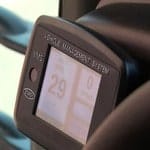 Virginia Code § 46.2-393 authorizes courts to suspend driving privileges for certain reckless driving convictions under §§ 46.2-853 through 46.2-864. For qualifying convictions under § 46.2-861 or § 46.2-862, the court may order participation in Virginia’s Intelligent Speed Assistance Program as an alternative to license suspension.
Continue Reading
A qualifying license suspension under § 46.2-393 may be imposed for a period of not less than 60 days and not more than six months.
A restricted license may be available in appropriate circumstances, subject to statutory requirements and the court’s written order.
Effective July 1, 2026, Virginia’s Intelligent Speed Assistance provisions permit qualifying enrollment for a period of 60 days to six months as an alternative to suspension.
The program uses technology intended to limit vehicle speed according to the applicable speed limit and monitor compliance.
Under § 46.2-393(C), when a person is convicted under § 46.2-862 and found to have driven faster than 100 miles per hour, the court must order enrollment unless it instead orders license suspension under the statute.
Participation may involve installation, maintenance, monitoring, fees, and other program obligations.
Enrollment does not eliminate the underlying conviction or all other potential penalties.
Neither a restricted license under the applicable provisions nor enrollment in Intelligent Speed Assistance authorizes operation of a commercial motor vehicle.
Eligibility and requirements should be evaluated according to the actual conviction and court order.
Commercial Driver’s License Consequences
Commercial drivers may face consequences beyond the ordinary Virginia sentence following a reckless driving conviction.
Federal and state CDL requirements, employer policies, reporting obligations, licensing restrictions, and possible disqualification provisions may affect commercial driving privileges.
Consequences may arise even when an offense occurred while operating a personal vehicle.
A CDL holder should disclose commercial licensing status and provide the relevant driving history before deciding how to respond to a reckless driving charge.
Fauquier County Reckless Driving Court Process and Summons
 Most adult misdemeanor reckless driving prosecutions arising in Fauquier County are initially heard in Fauquier General District Court. A reckless driving case may involve an arraignment, trial, motions, negotiated resolution, sentencing, or appeal depending on the charge and procedural circumstances.
Continue Reading
The Virginia Uniform Summons or warrant identifies the court and scheduled hearing.
The Commonwealth must establish the required statutory elements through admissible evidence.
A defendant may contest the charge, challenge evidence, present witnesses, raise legal objections, and pursue other available defenses.
Certain cases may involve negotiations with the Commonwealth’s Attorney or requests for a legally authorized amended charge.
The court’s procedures and the defendant’s appearance requirements depend on the allegation, possible punishment, and circumstances.
An attorney may request that personal appearance be waived in an appropriate case, but a waiver is not automatic.
A defendant should never assume that hiring counsel excuses attendance unless the court permits it.
Fauquier General District Court
Fauquier General District Court
6 Court Street
Warrenton, VA 20186
Fauquier General District Court is part of Virginia’s 20th Judicial District.
The court generally handles adult misdemeanor reckless driving prosecutions and preliminary proceedings involving qualifying felony allegations.
A case may involve an arraignment, advisement of rights, trial, contested motion, negotiated disposition, or sentencing when applicable.
The summons or official court notice should be used to confirm the assigned date, time, and appearance instructions.
Fauquier Circuit Court
Fauquier Circuit Court
Courtroom entrance:
40 Culpeper Street
Warrenton, VA 20186
Clerk’s Office:
29 Ashby Street
Warrenton, VA 20186
Fauquier Circuit Court hears qualifying appeals from General District Court and felony criminal matters within its jurisdiction.
A defendant convicted of reckless driving in General District Court generally has the right to appeal to Circuit Court for a new trial, subject to applicable deadlines and procedural requirements.
The Circuit Court proceeding is separate from the original General District Court trial.
Fauquier Juvenile and Domestic Relations District Court
14 Main Street
Warrenton, VA 20186
Fauquier Juvenile and Domestic Relations District Court handles qualifying juvenile matters, including certain reckless driving allegations involving juveniles.
Most adult misdemeanor reckless driving cases proceed in General District Court.
Virginia Uniform Summons for Reckless Driving
 A Virginia Uniform Summons is commonly issued after a reckless driving traffic stop or accident investigation. Although motorists frequently call the document a ticket, it serves as notice of a criminal charge when reckless driving is alleged.
Continue Reading
Signing a summons generally does not constitute an admission of guilt.
The summons ordinarily identifies the charged statute, alleged conduct, investigating officer, assigned court, hearing date, and other information.
Reckless driving should not be treated as an ordinary prepayable speeding ticket.
Important information to review includes:
- The exact Virginia Code section
- The alleged speed and posted limit
- The location of the alleged offense
- The court and courthouse address
- The scheduled hearing date and time
- The issuing officer and agency
- Whether an accident occurred
- Whether other charges are pending
- Whether personal appearance is required
- The driver’s licensing status
The document should be preserved and reviewed before the scheduled hearing.
Do You Need a Lawyer for Reckless Driving in Fauquier County?
A person charged with reckless driving has the right to appear without an attorney.
However, reckless driving is ordinarily a criminal misdemeanor involving potential incarceration, fines, license consequences, DMV points, and a criminal court record.
The rules of evidence and court procedure apply to contested reckless driving prosecutions.
Legal representation may be particularly important when:
- The alleged speed is substantially above the posted limit
- The charge involves a very high speed
- An accident, injury, or death is alleged
- The driver has prior traffic or criminal convictions
- Incarceration is a possible sentencing concern
- The defendant holds a commercial driver’s license
- Professional licensing or employment may be affected
- The driver lives outside Virginia
- The evidence presents disputed legal or factual issues
Our attorneys evaluate the circumstances before recommending an appropriate defense and preparation strategy.
Evidence and Defense Issues in Fauquier County Reckless Driving Cases
The Commonwealth must prove the elements of the specific reckless driving statute beyond a reasonable doubt.
A charge based on speed measurement requires different proof from one based on an accident, unsafe passing, improper vehicle control, or general recklessness.
Relevant defense issues may include:
- Whether the traffic stop was lawful
- Identification of the driver and vehicle
- Whether the charged statute applies
- Radar, lidar, or pacing reliability
- Speed-measurement calibration records
- Police testimony and observations
- Body-camera and dashboard-camera video
- Witness credibility and consistency
- Accident causation and physical evidence
- Roadway, traffic, and weather conditions
- Mechanical or emergency circumstances
- Whether the degree of culpability was slight
The appropriate defense depends on the actual charge and evidence.
Radar, Lidar and Pacing Evidence
Virginia Code § 46.2-882 governs specified speed-measurement methods and the admissibility of qualifying accuracy documentation.
The statute addresses radar, laser speed determination devices, certain microcomputer devices, and associated calibration evidence.
For covered equipment other than qualifying photo speed monitoring devices, calibration or testing is generally not valid for longer than six months.
The defense may examine:
- Equipment type and identification
- Officer training and operation
- Vehicle identification
- Testing and calibration dates
- Calibration certificate contents
- Radar tuning fork documentation
- Lidar accuracy testing
- Line of sight and measurement distance
- Traffic and nearby vehicles
- Pacing vehicle speedometer accuracy
- Distance and duration of a pace
- Admissibility of supporting evidence
The existence of a calibration certificate does not necessarily resolve every issue involving vehicle identification, equipment operation, or the charged speed.
Likewise, a question about calibration does not automatically establish that the charge must be dismissed.
The evidence must be evaluated under the applicable statute and evidentiary requirements.
Driver’s Speedometer Calibration
A vehicle’s speedometer may display a speed different from the vehicle’s actual speed.
A properly documented calibration can help establish whether the speedometer was inaccurate and the amount and direction of the discrepancy.
Virginia Code § 46.2-942 requires the court to receive a qualifying sworn calibration report in a prosecution for exceeding a maximum speed limit.
The report must be considered in determining guilt or innocence and in fixing punishment.
A significant discrepancy may be relevant to the driver’s knowledge, conduct, and degree of culpability.
For example, evidence that a speedometer displayed a materially lower speed than the vehicle’s actual speed may be relevant when evaluating the circumstances of the alleged violation.
However, speedometer calibration does not automatically require dismissal or reduction.
The effect depends on the calibration results, charged statute, evidence, and circumstances of the particular case.
Police Testimony and Video Evidence
A reckless driving prosecution may depend substantially on the testimony of a Virginia State Police trooper, sheriff’s deputy, or another authorized law-enforcement officer.
The officer may describe speed measurements, driving conduct, passing, lane changes, vehicle control, an accident, or another alleged statutory violation.
Body-camera and dashboard-camera recordings may provide information concerning the stop, officer observations, driver statements, surrounding traffic, and roadway conditions.
The defense may compare testimony, written reports, video, witness statements, and other evidence to identify inconsistencies or legal issues.
The available evidence depends on the investigating agency and circumstances.
Accident-Related Reckless Driving Charges
 A traffic accident may lead to a reckless driving charge even when the investigating officer did not personally witness the driver’s conduct. The occurrence of an accident does not, by itself, establish that the driver committed criminal reckless driving.
Continue Reading
An accident may result in allegations under the general reckless driving statute, failure to maintain control statute, driving too fast for conditions statute, or another provision.
The Commonwealth must prove the elements of the charged offense rather than relying exclusively on the occurrence of a collision.
An investigating officer may rely on driver statements, witness accounts, vehicle damage, roadway evidence, photographs, and available recordings.
Relevant defense considerations may include whether the officer witnessed the alleged conduct, whether the evidence establishes how the accident occurred, and whether the prohibited statutory conduct can be proven.
A case review may involve:
- Police accident reports and diagrams
- Driver and passenger statements
- Independent witness testimony
- Vehicle damage and final positions
- Skid marks and physical evidence
- Traffic signals and road signs
- Intersection and lane configuration
- Weather and visibility
- Mechanical or emergency explanations
- Photographs and electronic recordings
Our attorneys evaluate whether the evidence establishes the charged reckless driving offense.
This page concerns criminal and traffic defense arising from accidents, not civil personal-injury claims or accident-compensation matters.
Reduction of Reckless Driving to Improper Driving
Virginia Code § 46.2-869 permits a court or jury to find a defendant charged with reckless driving not guilty of reckless driving but guilty of improper driving when the degree of culpability is slight.
The Commonwealth’s Attorney may also reduce a reckless driving charge to improper driving at any time before the court’s decision and must notify the court of that change.
These are distinct procedures.
Improper Driving as a Judicial Finding
Under § 46.2-869, the factfinder may determine after considering the evidence that the defendant is not guilty of reckless driving but is guilty of improper driving because the degree of culpability is slight.
A judicial improper-driving finding does not require the court first to enter a reckless driving conviction.
The court may consider the Commonwealth’s evidence and the defense evidence before determining the proper verdict.
The legal and factual basis for the finding matters.
A defendant may present evidence concerning the alleged speed, roadway conditions, driver conduct, speedometer accuracy, or other circumstances relevant to culpability.
The existence of a prima facie prosecution case does not eliminate the court’s obligation to consider admissible defense evidence before reaching its ultimate verdict.
Speedometer Calibration and Slight Culpability
A significant and properly documented speedometer discrepancy may be relevant to whether the degree of culpability is slight in a reckless driving by speed case.
A qualifying sworn calibration report is evidence the court must consider under § 46.2-942 when determining guilt or innocence and punishment in a prosecution for exceeding a maximum speed limit.
Depending on the results and other evidence, a calibration may support an argument concerning the driver’s knowledge, perception of speed, or degree of culpability.
The defense should explain how the calibration results relate to the actual allegations rather than simply submitting the report without analysis.
The court is not automatically required to reduce a reckless driving charge because a calibration reveals an error.
Improper Driving Penalties and DMV Points
Improper driving is a traffic infraction rather than a criminal misdemeanor.
The maximum statutory fine under § 46.2-869 is $500.
Virginia DMV generally assigns three demerit points following an improper-driving conviction, and the conviction ordinarily remains on the Virginia driving record for three years.
A reduction from reckless driving to improper driving may therefore substantially change the criminal and licensing consequences.
However, a reduction is not automatic.
The evidence, degree of culpability, prosecutor’s position, and court proceedings determine what outcomes may be legally available.
Fauquier County Reckless Driving Roads and Enforcement
 Reckless driving allegations in Fauquier County may arise from enforcement along Interstate 66, U.S. Routes 15, 17, and 29, and other county roads. The precise location can affect the applicable speed limit, roadway configuration, investigating agency, officer observations, and available evidence.
Continue Reading
Interstate 66 crosses northern Fauquier County near Marshall and The Plains and carries motorists traveling between Northern Virginia and the Shenandoah Valley.
U.S. Routes 15, 17, and 29 serve important regional and local traffic corridors.
Other significant routes include Virginia Routes 28 and 55 and U.S. Route 211.
Reckless driving charges along these roads may involve excessive speed, passing conduct, following traffic, vehicle control, accidents, or other statutory allegations.
The exact road, direction of travel, posted speed limit, officer location, traffic conditions, and roadway design may affect how the case is evaluated.
A speed-based prosecution may require examination of radar, lidar, pacing, equipment records, and vehicle identification.
An allegation involving an accident or unsafe maneuver may instead depend on witness statements, video recordings, physical evidence, visibility, lane markings, and the particular statutory elements.
Traffic enforcement may involve Virginia State Police, the Fauquier County Sheriff’s Office, the Remington Police Department, or another agency acting within its authority.
The agency identified on the summons may help determine which reports, recordings, calibration records, or other evidence may be available.
Our attorneys examine the precise location and circumstances of the alleged offense rather than making assumptions based on a particular highway.
Out-of-State and Commercial Drivers Charged with Reckless Driving
Out-of-State Drivers
A driver who lives outside Virginia may contest a reckless driving charge arising in Fauquier County.
A Virginia reckless driving conviction may be reported to the driver’s home-state licensing authority, which determines how the reported offense affects driving privileges, the driving record, points, or other consequences under its laws.
Out-of-state motorists should consider:
- The scheduled Virginia court date
- Whether personal appearance is required
- Potential home-state license consequences
- Automobile insurance effects
- Employment or professional concerns
- The consequences of a criminal misdemeanor conviction
In appropriate circumstances, an attorney may request a waiver of personal appearance.
Whether the court permits that request depends on the charge, alleged conduct, possible punishment, judge, and other circumstances.
A driver should not assume attendance is excused unless authorized.
Commercial Drivers
A reckless driving conviction may create consequences beyond the Virginia sentence for a commercial driver.
Federal and state CDL requirements, employer reporting obligations, safety policies, and insurance standards may affect commercial driving privileges or employment.
The exact charge, licensing status, driving history, and possible disposition should be evaluated before entering a plea.
A CDL holder should provide the complete summons, CDL class and endorsements, driving record, employer requirements, and relevant prior traffic history.
Fauquier County Reckless Driving Lawyer Client Review

What to Send Before Your Fauquier County Reckless Driving Court Date
Complete and readable documents can help our attorneys evaluate the exact reckless driving allegation, scheduled hearing, available evidence, and possible defense issues.
Helpful information includes:
- The complete Virginia Uniform Summons
- The exact Virginia Code section charged
- The court date and hearing time
- The road or location of the offense
- The alleged speed and posted limit
- A current driving record
- Prior traffic or criminal convictions
- Speedometer calibration, if relevant
- Driver improvement documentation
- Photographs or video recordings
- Police or accident reports, if available
- Witness names and contact information
- Medical or emergency information, if relevant
- Commercial driving or employment concerns
- Out-of-state licensing information
- A written account of the incident
You do not need every document before contacting our attorneys.
The summons, exact charge, court date, and basic circumstances are the most important starting points.
Original photographs, recordings, communications, and other potentially relevant evidence should be preserved.
Fauquier County Reckless Driving Lawyer Frequently Asked Questions
Is reckless driving a criminal offense in Fauquier County?
Yes. Most Virginia reckless driving offenses are Class 1 misdemeanors rather than ordinary traffic infractions. A conviction may result in a criminal record, fines, DMV points, possible license suspension, and potential incarceration.
What speed qualifies as reckless driving in Fauquier County VA?
Virginia Code § 46.2-862 permits a reckless driving charge for driving at least 20 miles per hour above the applicable maximum speed limit or faster than 85 miles per hour regardless of the posted limit. The Commonwealth must prove the charged speed through admissible evidence.
Where are Fauquier County reckless driving cases heard?
Most adult misdemeanor reckless driving prosecutions arising in Fauquier County are heard in Fauquier General District Court at 6 Court Street, Warrenton, VA 20186. Qualifying appeals may proceed to Fauquier Circuit Court. The court identified on the summons controls the scheduled appearance.
Do I have to appear in Fauquier County court for reckless driving?
Reckless driving is a criminal charge, and a defendant should appear unless the court permits otherwise. In appropriate cases, an attorney may request a waiver of personal appearance. A waiver is not automatic and depends on the charge, alleged speed or conduct, possible punishment, and court requirements.
Can a Fauquier County reckless driving conviction result in jail?
Yes. Most reckless driving offenses are Class 1 misdemeanors carrying a maximum of 12 months in jail and a fine of up to $2,500, either or both. Jail is not imposed in every case. The actual consequences depend on the charged statute, evidence, driving history, and circumstances.
How many Virginia DMV points does reckless driving carry?
Many reckless driving convictions result in six Virginia DMV demerit points and generally remain on the driving record for 11 years. The exact point assignment depends on the statute of conviction. Demerit points ordinarily remain active for two years from the offense date.
Can speedometer calibration help a reckless driving case?
Yes, when a qualifying calibration documents a relevant discrepancy between the vehicle’s indicated speed and actual speed. Virginia Code § 46.2-942 requires the court to consider a qualifying sworn calibration report when determining guilt or innocence and punishment in a prosecution for exceeding a maximum speed limit. Calibration does not automatically require dismissal or reduction.
Can reckless driving be reduced to improper driving?
Possibly. Virginia Code § 46.2-869 permits a court or jury to find a defendant not guilty of reckless driving but guilty of improper driving when the degree of culpability is slight. The Commonwealth’s Attorney may also reduce the charge before the court’s decision. Improper driving is a traffic infraction with a maximum fine of $500.
What is Virginia’s Intelligent Speed Assistance Program?
Effective July 1, 2026, Virginia law authorizes Intelligent Speed Assistance in qualifying cases as an alternative to license suspension. For certain reckless driving convictions under §§ 46.2-861 and 46.2-862, a court may order enrollment for 60 days to six months. A qualifying conviction involving a finding of more than 100 mph requires enrollment unless the court instead orders license suspension under the applicable statute.
Can an accident alone prove reckless driving?
No. The occurrence of an accident does not, by itself, establish criminal reckless driving. The Commonwealth must prove the elements of the charged statute through admissible evidence. The investigation may involve witness testimony, vehicle damage, roadway conditions, photographs, and recordings.
Is every Move Over violation reckless driving?
No. Virginia Code § 46.2-861.1 distinguishes reckless driving under subsection A from traffic infractions under subsection B. The classification depends on the statutory requirements and circumstances. Subsection D excludes highway work zones as defined by Virginia law.
Can an out-of-state driver contest a Fauquier County reckless driving charge?
Yes. An out-of-state motorist may contest the charge and retain a Virginia attorney. In some cases, counsel may request a waiver of personal appearance. A conviction may affect the driver’s home-state licensing record, insurance, employment, or commercial driving privileges.
What should I provide to a Fauquier County reckless driving lawyer?
Helpful materials include the complete summons, current driving record, alleged speed and posted limit if applicable, road location, court date, photographs, videos, witness information, relevant calibration records, accident reports, commercial-driver documents, and completed mitigation materials.
Request a Confidential Fauquier County Reckless Driving Case Review
A reckless driving charge in Fauquier County may expose a driver to a criminal conviction, fines, jail, license suspension, DMV points, insurance consequences, and other effects. Our attorneys evaluate the charged statute, alleged speed or conduct, officer testimony, available evidence, driving history, and possible defenses. We represent Virginia residents, out-of-state motorists, and commercial drivers facing reckless driving allegations in Fauquier County. Request a confidential Fauquier County reckless driving case review.
10/18/2024 | Updated 11/7/2026