
Alleghany County VA Speeding Ticket Lawyer
 Riley & Wells Attorneys-At-Law defends drivers charged with speeding violations in Alleghany County, Virginia. Our Alleghany County speeding ticket lawyers represent Virginia residents and out-of-state motorists accused of ordinary speeding, excessive speed, and related traffic offenses. Speeding tickets frequently arise along Interstate 64, U.S. Routes 60 and 220, Virginia Routes 18, 42 and 159, and other Alleghany County roads. An ordinary speeding conviction may result in fines, court costs, Virginia DMV demerit points, increased automobile insurance costs, and driving-record consequences. Higher-speed allegations may be prosecuted as criminal reckless driving under Virginia law. Our attorneys review the Virginia Uniform Summons, alleged speed, posted speed limit, driving history, officer’s evidence, RADAR or LIDAR measurements, calibration records, court appearance requirements, and possible defenses before recommending a strategy. Whether you live in Alleghany County or received a speeding ticket while traveling through Virginia, our lawyers can evaluate your case and explain your legal options before your court date.







Alleghany County Speeding Ticket Defense Guide
| Speeding Ticket Defense | Speeding vs. Reckless |
| Alleghany Traffic Court | RADAR & LIDAR Evidence |
| Speedometer Calibration | Roads & Communities |
| Out-of-State Drivers | Frequently Asked Questions |
Alleghany County Defense Services
For broader statewide speeding ticket defense, see our Virginia Speeding Ticket Lawyer page.
Alleghany County VA Speeding Ticket Defense
 A speeding ticket in Alleghany County may seem like a minor traffic matter, but the possible consequences depend on the alleged speed, posted speed limit, driver’s record, license status, and other circumstances. Our Alleghany County speeding ticket lawyers defend motorists charged with speeding violations on Interstate 64, U.S. Routes 60 and 220, Virginia Routes 18, 42 and 159, and other roads throughout the county. An ordinary speeding conviction may result in fines, court costs, Virginia DMV demerit points, increased automobile insurance premiums, and other driving-record consequences. Motorists who hold commercial driver’s licenses or rely on driving for employment may have additional concerns. Out-of-state drivers should also consider whether a Virginia speeding conviction may affect their home-state license, driving record, or insurance. Our attorneys review the Virginia Uniform Summons, officer’s allegations, posted speed limit, method of speed measurement, calibration evidence, driving history, and possible defenses before recommending a strategy. Some speeding tickets may be contested based on the evidence. Others may involve mitigation, driver improvement, a possible reduction, or another legally authorized disposition. The appropriate approach depends on the exact charge and the circumstances of the alleged violation. Our attorneys represent Virginia residents and out-of-state motorists charged with speeding throughout Alleghany County, including Clifton Forge, Iron Gate, Callaghan, Low Moor, Selma, and surrounding communities.
Ordinary Speeding vs. Reckless Driving by Speed in Alleghany County
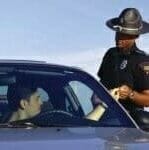 Not every Alleghany County speeding allegation is charged under the same Virginia statute. Ordinary speeding generally constitutes a traffic infraction rather than a criminal offense. A conviction may result in fines, court costs, DMV demerit points, and insurance consequences. Reckless driving by speed is different. Virginia Code § 46.2-862 provides that a motorist may be charged with criminal reckless driving for driving 20 miles per hour or more above the applicable maximum speed limit or for driving faster than 85 miles per hour regardless of the posted speed limit. For example, a motorist accused of traveling 75 mph in a 55 mph zone meets the statutory 20-over threshold. A driver accused of traveling 86 mph in a 70 mph zone exceeds the statutory 85 mph threshold. The two thresholds are independent. A driver does not have to satisfy both to be charged with reckless driving. Virginia generally classifies reckless driving as a Class 1 misdemeanor. A conviction can carry more serious consequences than an ordinary speeding infraction, including a criminal record, possible incarceration, driver’s-license suspension, and other penalties. A driver should examine the exact Virginia Code section on the summons rather than assume that every citation involving speed is an ordinary traffic ticket. Our Alleghany County speeding ticket lawyers review the alleged speed, posted limit, officer’s evidence, and other circumstances to determine the nature of the charge and possible defense options.
Speeding on 70 MPH Interstate Highways
Portions of Interstate 64 in Alleghany County have posted speed limits of 70 mph.
However, drivers should not assume that every interstate segment, interchange, construction area, or connecting roadway has the same speed limit.
Where the applicable speed limit is 70 mph, driving 86 mph exceeds the absolute reckless-driving threshold under Virginia Code § 46.2-862, even though the difference is only 16 mph.
Driving 90 mph in a 70 mph zone also meets the separate 20-over threshold.
Speed-limit reductions, highway work zones, roadway signs, mountain grades, and the precise location of the alleged offense may become important in determining the applicable charge.
Motorists traveling through Alleghany County on Interstate 64 should understand that a Virginia speeding summons may involve either an ordinary traffic infraction or a misdemeanor criminal allegation.
Alleghany County General District Court Speeding Cases
 Most adult Alleghany County speeding tickets are heard in Alleghany County General District Court. Traffic proceedings may involve the issuing officer’s testimony, alleged speed, posted speed limit, speed-measurement evidence, driving history, mitigation documents, and the judge’s evaluation of the applicable law. The Commonwealth must establish the elements of the charged traffic violation under the appropriate legal standard. Some cases may involve a contested trial or evidentiary challenge. Others may be resolved through an authorized reduction, amendment, mitigation, or another disposition. Drivers appearing without counsel may not understand which evidence can be challenged, what documentation may be useful, or what consequences could follow a conviction. Our Alleghany County speeding ticket lawyers review the charge, court date, driving record, possible defenses, mitigation, and court appearance requirements before advising about representation. A qualifying conviction in General District Court may be appealed to Circuit Court under Virginia law, subject to applicable procedures and deadlines.
Alleghany County General District Court
Alleghany County Courthouse
266 West Main Street
Covington, Virginia 24426
Alleghany County General District Court is part of Virginia’s 25th Judicial District.
The court operates as a combined General District and Juvenile and Domestic Relations District Court.
Drivers should confirm the exact court date, courtroom, charge, and appearance requirements on the Virginia Uniform Summons or other official court paperwork.
Some ordinary speeding tickets may be eligible for prepayment. Other cases may require a court appearance or additional consideration because of the offense and circumstances.
In certain speeding cases, an attorney may be permitted to appear without requiring the driver’s personal attendance.
Whether that is possible depends on the charge, court requirements, and the particular circumstances. A driver should never assume that an appearance is excused without proper authorization.
Speeding Ticket Trials and Court Procedures
An Alleghany County speeding trial is an adversarial court proceeding in which the parties may present evidence, examine witnesses, and raise applicable legal arguments.
The issuing officer commonly presents testimony concerning the alleged violation, the vehicle involved, posted speed limit, and method used to determine speed.
Depending on the charge and proceedings, a Commonwealth’s Attorney may participate.
The defense may examine the officer’s testimony, calibration records, speed-measurement evidence, roadway conditions, and whether the applicable legal requirements have been established.
The judge evaluates the admissible evidence and determines the appropriate disposition under Virginia law.
Some speeding cases involve disputed factual or technical issues. Others may involve consideration of the driver’s history, mitigation evidence, or an authorized alternative disposition.
Our Alleghany County speeding ticket lawyers review the circumstances before determining whether to contest the allegation, request an appropriate reduction, or pursue another legally available option.
Virginia Uniform Summons for Alleghany County Speeding Tickets
 A Virginia Uniform Summons is the legal document commonly issued during an Alleghany County speeding traffic stop. Motorists frequently refer to the summons as a speeding ticket or citation. The summons generally identifies the alleged offense, applicable Virginia Code section, assigned court, court date, issuing law-enforcement officer, and other information concerning the allegation. In a speeding case, the document may also identify the alleged speed and applicable posted speed limit. Signing a Virginia Uniform Summons ordinarily acknowledges receipt of the document rather than admitting guilt. A summons may be issued for ordinary speeding, reckless driving by speed, or another traffic offense depending on the facts and statute charged. Our Alleghany County speeding ticket lawyers examine the summons to identify the exact allegation, possible consequences, court requirements, and available defense options.
Should You Prepay an Alleghany County Speeding Ticket?
Some Virginia speeding infractions are eligible for prepayment without appearing in court.
However, prepaying an eligible traffic ticket generally constitutes a guilty disposition rather than simply paying a bill.
The resulting conviction may be reported to DMV and may affect demerit points, automobile insurance, employment, or an out-of-state driving record.
Not every traffic offense may be prepaid.
Criminal reckless-driving charges are not ordinary prepayable speeding infractions.
Before prepaying an Alleghany County speeding ticket, a motorist should understand the exact offense, possible DMV consequences, insurance implications, and whether contesting the allegation or requesting another disposition may be appropriate.
Alleghany County Speeding Enforcement: Roads and Communities
 Alleghany County is located in Virginia’s Alleghany Highlands and includes incorporated towns, residential communities, smaller mountain settlements, commercial corridors, and rural roads. Speeding enforcement may occur on Interstate 64, U.S. Routes 60 and 220, state highways, secondary roads, residential streets, and routes connecting the county’s communities. The precise location of an alleged speeding offense may affect the applicable speed limit, roadway conditions, method of measurement, officer jurisdiction, and available evidence. An Alleghany County speeding ticket defense should consider the location of the stop, posted signs, traffic conditions, surrounding vehicles, mountain grades, visibility, and any available recordings. Our attorneys represent motorists charged with speeding throughout Alleghany County, including drivers traveling through the county on Interstate 64.
Interstate 64 Speeding Tickets in Alleghany County
Interstate 64 is the principal east-west transportation corridor through Alleghany County and connects the region with West Virginia and other parts of Virginia.
The highway carries local residents, commuters, commercial trucks, students, tourists, and motorists traveling between states.
Speeding tickets along Interstate 64 may involve RADAR, LIDAR, pacing, or another legally recognized method of determining speed.
Portions of Interstate 64 have posted speed limits of 70 mph, but the applicable speed limit must be determined from the exact location of the alleged offense.
The highway passes through mountainous terrain where grades, curves, weather conditions, commercial truck traffic, and construction may affect driving conditions.
Changes in posted speed limits, traffic volume, highway configuration, work zones, and the location of the speed measurement may be relevant.
Speeding allegations may also arise near interstate exits, entrances, or interchanges serving Alleghany County communities.
Our Alleghany County speeding ticket lawyers review the alleged speed, applicable limit, exact location, speed-measurement evidence, and other circumstances before recommending a defense strategy.
U.S. Route 60 Speeding Tickets in Alleghany County
U.S. Route 60 is an important east-west highway connecting Alleghany County communities, commercial areas, rural settlements, and surrounding mountain regions.
The highway serves residents, commuters, commercial vehicles, and travelers using connecting roads and Interstate 64.
Speeding allegations along U.S. Route 60 may involve RADAR, LIDAR, officer pacing, or other traffic enforcement activity.
The posted speed limit, intersection configuration, roadway curves, visibility, mountain grades, and surrounding traffic conditions may affect the evidence.
Speeding tickets may also arise where speed limits change between residential, commercial, and rural areas.
Our Alleghany County speeding ticket lawyers review the specific location of the alleged violation, officer’s observations, speed-measurement method, and applicable law before advising how to proceed.
U.S. Route 220 Speeding Tickets in Alleghany County
U.S. Route 220 serves important transportation and commercial corridors in Alleghany County, including roads associated with Clifton Forge and nearby communities.
The highway carries passenger vehicles, commercial traffic, local commuters, and motorists traveling between surrounding areas.
Speeding enforcement may involve posted-limit violations, excessive-speed allegations, intersections, roadway curves, and changes in traffic conditions.
RADAR or LIDAR measurements, pacing evidence, officer observations, and roadway signs may be relevant depending on the allegation.
The defense may examine the alleged speed, posted limit, precise location, officer’s evidence, calibration records, and surrounding circumstances.
Virginia Routes 18, 42 and 159
Virginia Route 18 serves areas associated with the Potts Creek corridor in southern Alleghany County.
Virginia Route 42 serves portions of the county’s eastern mountain and rural transportation network.
Virginia Route 159, also known as Dunlap Creek Road, connects the Callaghan area with communities in southwestern Alleghany County.
Speeding allegations along these routes may involve changing speed limits, curves, narrow roadways, mountain grades, passing restrictions, and limited visibility.
Traffic enforcement may also occur on connecting secondary highways and roads serving rural settlements.
The appropriate defense depends on the precise charge, posted speed limit, method of measurement, and available evidence.
Alleghany County Towns and Communities
Alleghany County includes the incorporated towns of Clifton Forge and Iron Gate, along with established residential communities and smaller settlements.
Our attorneys represent drivers charged with speeding offenses in and around the following areas:
- Clifton Forge
- Iron Gate
- Callaghan
- Mallow
- Low Moor
- Selma
- Cliftondale Park
Clifton Forge is an important residential, commercial, and transportation center in Alleghany County. Speeding allegations may arise on roads serving its neighborhoods, businesses, U.S. Route 60, U.S. Route 220, and surrounding highways.
Iron Gate is an incorporated town in eastern Alleghany County. Traffic enforcement may involve roads connecting the town with surrounding transportation corridors.
Callaghan is an established western Alleghany County community near Interstate 64, U.S. Route 60, and Virginia Route 159.
Mallow is associated with the Interstate 64 and U.S. Route 60 transportation corridors.
Low Moor and Selma are established communities served by Interstate 64 and nearby local roads.
Cliftondale Park is located near Clifton Forge in eastern Alleghany County.
Traffic offenses arising in these communities generally proceed through Alleghany County’s court system when the alleged violation occurred within the county’s jurisdiction.
The applicable defense depends on the particular violation and evidence rather than the name of the community.
Additional Alleghany County Communities
Alleghany County also contains smaller mountain communities, rural settlements, and areas served by state and secondary highways.
Additional locations include:
- Nicelytown
- Longdale Furnace
- Crows
- Hematite
- Moss Run
- Jordan Mines
- Boiling Spring
Nicelytown and Longdale Furnace are established communities associated with eastern Alleghany County and connecting rural highways.
Crows, Hematite, and Moss Run are smaller communities associated with the Dunlap Creek and Virginia Route 159 corridor.
Jordan Mines and Boiling Spring are associated with the Potts Creek and Virginia Route 18 areas.
Speeding cases in these communities may involve rural highways, mountain roads, agricultural traffic, changing speed limits, curves, intersections, and other roadway conditions.
The location of an alleged offense may affect the applicable speed limit, officer observations, and available evidence.
Our attorneys represent motorists charged throughout these areas, including smaller rural communities as well as the major highway corridors.
RADAR, LIDAR and Speed Evidence in Alleghany County
Speed-measurement evidence is central to many Alleghany County speeding prosecutions.
Virginia Code § 46.2-882 addresses legally recognized methods of determining vehicle speed and the admissibility of certain equipment accuracy and calibration records.
Law-enforcement officers may rely on RADAR, LIDAR, pacing, or other legally recognized evidence to establish an alleged speeding violation.
An Alleghany County speeding ticket lawyer may examine whether the correct vehicle was identified, whether the measurement was reliable, whether the device was properly tested, and whether the evidence satisfies applicable statutory requirements.
RADAR and LIDAR cases may involve calibration certificates, equipment testing, officer observations, operating procedures, traffic conditions, and the location of the measurement.
Under § 46.2-882, calibration or testing of covered speed-measurement devices other than photo speed monitoring devices is not valid for longer than six months.
When pacing is used, relevant issues may include the patrol vehicle’s speedometer accuracy, distance between vehicles, duration of the observation, and surrounding traffic.
The defense may also examine whether the officer’s observations, recordings, and testimony are consistent with the alleged speed.
A speed-measurement issue does not automatically result in dismissal. The significance depends on the charge, statutory requirements, available records, and facts of the case.
Our Alleghany County speeding ticket lawyers evaluate the method of measurement and supporting evidence before advising about a possible challenge.
Identifying the Correct Vehicle in a Speeding Case
A speeding prosecution requires sufficient evidence connecting the alleged violation to the accused motorist.
Where several vehicles are traveling near one another, the defense may examine the officer’s position, traffic density, distance, instrument operation, and the circumstances of the speed measurement.
This issue may arise on Interstate 64, where motorists often travel among passenger vehicles and commercial trucks.
Video recordings, officer testimony, lane position, vehicle descriptions, and other evidence may be relevant.
The reliability of a particular measurement depends on the specific equipment and conditions rather than a general assumption that every RADAR or LIDAR reading is accurate or inaccurate.
Speedometer Calibration for Alleghany County Speeding Tickets
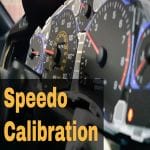 A speedometer calibration may be useful in some Alleghany County speeding cases, particularly when the vehicle’s speedometer does not accurately reflect its actual speed. A speedometer calibration is a specialized test that measures whether the vehicle’s speedometer displays the correct speed. The resulting report may show whether the speedometer is accurate or whether it displays a speed higher or lower than the vehicle’s actual speed. Virginia Code § 46.2-942 provides for the admissibility of a sworn speedometer calibration report in qualifying prosecutions for exceeding the speed limit. The statute requires the court to receive and consider qualifying calibration evidence in determining guilt or innocence and fixing punishment. The report may be particularly relevant when the alleged speed is close to a statutory threshold or when an inaccurate speedometer may have affected the driver’s understanding of the vehicle’s speed. However, calibration evidence does not automatically establish innocence, require dismissal, or guarantee a reduction. The importance of calibration depends on the alleged offense, actual results, form of the report, other evidence, and applicable law. Our Alleghany County speeding ticket lawyers can advise whether obtaining a calibration report would be appropriate before trial.
Out-of-State Drivers With Alleghany County Speeding Tickets
Alleghany County is located along Interstate 64 near Virginia’s border with West Virginia.
Its highway corridors carry motorists traveling between Virginia, West Virginia, and other states.
Out-of-state drivers may receive speeding tickets while traveling through the Interstate 64 corridor or on other Alleghany County roads.
Our attorneys represent motorists from West Virginia, Ohio, Kentucky, Tennessee, North Carolina, Maryland, Pennsylvania, New Jersey, New York, South Carolina, Georgia, and other states.
A Virginia speeding conviction may be reported to the driver’s home licensing state.
The home state may apply its own laws concerning demerit points, driving-record consequences, license status, and other requirements.
Automobile insurance companies may also consider the conviction when evaluating premiums.
Commercial drivers and motorists whose employment depends on maintaining a favorable driving record may face additional concerns.
An out-of-state motorist should not assume that an Alleghany County speeding ticket will remain an isolated Virginia matter.
In some speeding cases, an attorney may be permitted to appear in court without requiring the client’s personal attendance.
Whether that is possible depends on the charge, court, circumstances, and applicable appearance requirements.
Our Alleghany County speeding ticket lawyers review the summons, driving history, license status, and court requirements before recommending a strategy.
Possible Outcomes and DMV Consequences of Alleghany County Speeding Tickets
The possible outcome of an Alleghany County speeding case depends on the alleged speed, posted speed limit, driver’s record, officer’s evidence, mitigation, and applicable Virginia law.
Some speeding cases may be dismissed when the evidence does not establish the alleged offense.
Other cases may involve a reduction to a lower speed, an amendment to another legally appropriate violation, or another authorized disposition.
A conviction may result in a fine, court costs, DMV demerit points, increased insurance costs, and additional consequences.
Virginia DMV assigns different demerit point values depending on the particular speeding offense.
Generally, speeding 1 to 9 mph above the posted limit carries three demerit points.
Speeding 10 to 19 mph above the posted limit generally carries four demerit points.
A qualifying speeding conviction for 20 mph or more above the posted speed limit may carry six demerit points, although such speeds may also be prosecuted as criminal reckless driving under Virginia law.
Demerit points generally remain valid for two years from the offense date. The conviction itself may remain on the Virginia driving record for a longer period.
The defense should consider both the immediate court disposition and the possible driving-record, insurance, and employment consequences.
Possible outcomes or consequences include:
- Dismissal when legally supported
- Reduction to a lower speed
- Reduction to a qualifying nonmoving violation
- Other authorized amendment or disposition
- Fine and court costs
- Virginia DMV demerit points
- Driver improvement requirements
- Increased insurance premiums
- Driver’s-license consequences
- Employment-related driving concerns
- Commercial driver’s-license consequences
- Home-state licensing consequences
No particular result is guaranteed. The available options depend on the evidence, applicable statutes, and circumstances of the individual case.
Driver Improvement and Mitigation for Alleghany County Speeding Tickets
A Virginia driver improvement course may be relevant to certain Alleghany County speeding cases.
Approved driver improvement clinics provide instruction concerning traffic laws, safe driving, and defensive-driving practices.
Depending on the offense and circumstances, completion of an appropriate course may be considered as mitigation or as part of another legally authorized disposition.
Virginia DMV-approved driver improvement clinics are generally eight-hour programs.
Completion of a driver improvement course does not automatically require a judge to dismiss or reduce a speeding ticket.
A favorable driving record, appropriate speedometer calibration, and other relevant documents may also be useful in certain cases.
The appropriate preparation depends on the exact allegation, driving history, evidence, and potential consequences.
Our Alleghany County speeding ticket lawyers can advise whether driver improvement, calibration, or other mitigation should be considered before court.
What to Send Before Your Alleghany County Speeding Ticket Court Date
 Before recommending a strategy, our attorneys review the summons, alleged speed, driving history, available evidence, and court requirements. An accurate account of the traffic stop may also help identify potential factual or legal issues. Photographs, recordings, and electronic evidence should be preserved in their original form.
Helpful materials may include:
- A copy of the speeding ticket or summons
- The exact Virginia Code section
- The court date and assigned court
- The alleged speed and posted speed limit
- A current driving record
- Speedometer calibration, if obtained
- Driver improvement certificate, if completed
- Photographs or dashcam recordings
- Witness names and contact information
- Insurance information when relevant
- Commercial driver’s-license status
- Any relevant prior traffic history
Alleghany County Speeding Ticket Lawyer Client Reviews

Frequently Asked Questions About Alleghany County Speeding Tickets
These answers address common questions concerning Alleghany County speeding tickets, Virginia reckless-driving thresholds, Interstate 64, traffic court, speed-measurement evidence, DMV consequences, and out-of-state motorists.
Do I need a lawyer for an Alleghany County VA speeding ticket?
The answer depends on the alleged speed, driving record, charge, driver’s-license status, and possible consequences. Some speeding tickets carry relatively limited penalties, while others may create significant DMV, insurance, employment, or criminal traffic concerns. An Alleghany County speeding ticket lawyer can review the evidence and available options before court.
When does speeding become reckless driving in Alleghany County?
Under Virginia Code § 46.2-862, a driver may be charged with reckless driving for traveling 20 mph or more above the applicable maximum speed limit or faster than 85 mph regardless of the posted limit. Reckless driving is generally a criminal misdemeanor rather than an ordinary speeding infraction.
Where are Alleghany County speeding tickets heard?
Most adult Alleghany County speeding ticket cases are heard in Alleghany County General District Court at 266 West Main Street, Covington, Virginia 24426. The summons should identify the assigned court and scheduled hearing date.
Can an Alleghany County speeding ticket lawyer appear in court for me?
In some cases, an attorney may be permitted to represent a driver without requiring the driver’s personal appearance. Whether that is possible depends on the charge, court requirements, and circumstances. A driver should not assume an appearance is excused without appropriate authorization.
Should I prepay my Alleghany County speeding ticket?
Not necessarily. Prepaying an eligible speeding ticket generally results in a guilty disposition and may create DMV points, insurance consequences, and other effects. Criminal reckless-driving charges cannot be treated as ordinary prepayable speeding infractions. The charge and possible consequences should be reviewed before deciding how to respond.
Can an Alleghany County speeding ticket be reduced or dismissed?
Some speeding tickets may be dismissed, reduced to a lower speed, amended, or resolved through another legally authorized disposition depending on the evidence, alleged speed, driving history, mitigation, prosecutorial decisions, and court rulings. No particular outcome is guaranteed.
Can RADAR or LIDAR evidence be challenged in Alleghany County?
Potentially. Speed-measurement evidence may raise questions involving equipment calibration, testing records, device operation, officer observations, identification of the correct vehicle, and statutory compliance. Whether a challenge is available depends on the facts and supporting evidence.
Can speedometer calibration help with an Alleghany County speeding ticket?
A sworn speedometer calibration report may be relevant under Virginia Code § 46.2-942. The court must consider qualifying calibration evidence in determining guilt or innocence and punishment. Calibration does not automatically establish a defense or require dismissal.
How many DMV demerit points does an Alleghany County speeding ticket carry?
Virginia DMV generally assigns three points for speeding 1 to 9 mph above the posted limit and four points for speeding 10 to 19 mph above the limit. Certain higher-speed violations carry six points. The exact assignment depends on the conviction and DMV classification.
Are Interstate 64 speeding tickets in Alleghany County serious?
Some Interstate 64 speeding tickets are ordinary traffic infractions, while higher-speed allegations may be prosecuted as criminal reckless driving. The consequences depend on the exact charge, alleged speed, driving record, officer’s evidence, and possible licensing or insurance effects. Out-of-state drivers should also consider consequences in their home state.
Can driver improvement help with an Alleghany County speeding ticket?
Potentially. A qualifying driver improvement course may be useful as mitigation or as part of an authorized disposition. Completing a course does not automatically guarantee dismissal or reduction. The appropriate approach depends on the offense, driving record, court, and circumstances.
Will an Alleghany County speeding ticket affect an out-of-state license?
A Virginia speeding conviction may be reported to the driver’s home licensing state. The consequences depend on the home state’s laws, the particular offense, reporting arrangements, and the driver’s record. Insurance, commercial driving, or employment consequences may also apply.
What should I send to an Alleghany County speeding ticket lawyer before court?
Useful materials include the speeding summons, court date, alleged speed, posted limit, driving record, speedometer calibration if obtained, driver improvement certificate if completed, dashcam recordings, photographs, witness information, commercial driver status, and relevant prior traffic history.
Alleghany County Speeding Ticket Lawyer Case Review
If you have received a speeding ticket in Alleghany County, our attorneys can review the summons, alleged speed, posted speed limit, officer’s evidence, driving history, and possible consequences. We represent Virginia residents and out-of-state motorists charged with speeding on Interstate 64, U.S. Routes 60 and 220, Virginia Routes 18, 42 and 159, and other county roads. Our lawyers can evaluate whether to challenge the speed evidence, pursue a legally authorized reduction, prepare mitigation, obtain calibration evidence, or take other appropriate steps before court. Our attorneys represent clients throughout Alleghany County, including Clifton Forge, Iron Gate, Callaghan, Low Moor, Selma, Mallow, Cliftondale Park, and surrounding communities. Contact us for a confidential Alleghany County speeding ticket case review.
9/2/2021 | Updated 10/21/2026