Fairfax County VA Lawyers for Criminal & Traffic Defense

Best Law Firm 2025 Riley & Wells Attorneys-at-LawRiley & Wells Attorneys-At-Law represents clients in Fairfax County Virginia in criminal and traffic matters, including DUI / DWI, reckless driving, speeding tickets, misdemeanor charges, felony cases, and other serious traffic offenses. Fairfax County law enforcement and local courts take these charges seriously, and early decisions can affect your record, license, and future. This page is designed to help you understand the types of cases we handle in Fairfax County, the local court structure, and the next steps that may matter most after an arrest, summons, or investigation.

Bad Things Can Happen To Good People.
Experienced attorneys. Case review available.
30,000+ Clients Represented  |  1,500+ Five-Star Reviews  |  60+ Years Combined Experience

Fairfax County Criminal & Traffic Defense Services

Riley & Wells Attorneys-At-Law represents clients in Fairfax County Virginia in a wide range of criminal and traffic matters, including misdemeanor and felony charges, DUI / DWI, reckless driving, speeding tickets, and other serious traffic offenses. Many people begin on this Fairfax County page because they are not yet sure which type of lawyer they need or what kind of case they are actually facing. Use the Fairfax defense links below to navigate to the practice area that best fits your situation.

Fairfax County Courts and Local Enforcement

Fairfax County Courts and Local EnforcementFairfax County is one of the busiest jurisdictions in Northern Virginia, and local courts handle a steady volume of criminal and traffic cases. Charges often arise from heavily traveled roads, active police enforcement, and court procedures that move quickly. A Fairfax case may involve issues that are less common in smaller jurisdictions, especially when the charge involves high speed, an accident, alcohol, or a prior record.

Not every case is handled in the same court. Many traffic and misdemeanor matters are often heard in the General District Court, while more serious cases may involve the Circuit Court. Juvenile and family-related matters may be handled in the Juvenile and Domestic Relations District Court. Understanding which court is involved is an important first step in understanding what happens next.

It also helps to understand the practical side of a Fairfax court date, including where to go, when to arrive, what paperwork to review in advance, and what issues may matter most before appearing in court.

Fairfax Court Pages

Court Process and Practical Questions

The Fairfax Court Process

Fairfax criminal and traffic cases are handled through a structured, evidence-driven process in which the Commonwealth must prove the charge. Even when the paperwork looks straightforward, outcomes can turn on how evidence was gathered, what an officer testifies to, and whether legal issues can be raised before trial. Understanding the court process and preparing early can make a meaningful difference in how a Fairfax case is resolved.

Virginia Uniform Summons: What Your “Ticket” Means

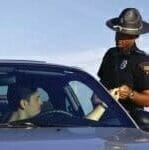
Many Fairfax traffic and misdemeanor cases begin with a Virginia Uniform Summons issued during a traffic stop or police encounter. A summons is a legal notice that you are charged with an offense and must respond as directed. Signing the summons is not an admission of guilt. It is an acknowledgement that you received notice of the charge and the court date, often in General District Court. Before paying a ticket or entering a plea, it is important to understand exactly what you are charged with and what options are available.

Out-of-State Drivers

Many Fairfax cases involve drivers traveling through Northern Virginia on I-66, I-495, Route 50, Route 28, Route 29, and other major commuter corridors. If you live out of state, do not ignore the summons and do not assume paying it is the easiest solution. Payment can be treated as a guilty plea, and missing a court date can create additional consequences. Reviewing the charge and understanding the court requirements before the court date is important.

Fairfax County, Fairfax City, Vienna, and Herndon

Fairfax County is one of the largest jurisdictions in Northern Virginia. The City of Fairfax is the county seat but is also an independent city. Depending on where a charge arises, a case may be handled in Fairfax County, Fairfax City, the Vienna Division, or the Herndon Division. Because these courts and divisions are closely connected but legally distinct, it is important to confirm exactly where your case is pending before deciding how to proceed.

Fairfax Roads and Enforcement Corridors

Fairfax Roads and Enforcement CorridorsTraffic enforcement is common across Fairfax County on major commuter routes such as I-66, I-495, I-95, Route 50, Route 29, Route 28, and the Fairfax County Parkway. Drivers also encounter stops on busy local corridors tied to Tysons, Merrifield, Centreville, Chantilly, Reston, Herndon, Springfield, Annandale, Lorton, and Fairfax itself, as well as routes connecting to Dulles Airport and the Dulles corridor. Because Fairfax County has dense commuter traffic, multiple high-volume road systems, and overlapping local and state enforcement, a stop that starts as “just a ticket” can quickly become a much more serious problem when the allegation is reckless driving, DUI / DWI, driving on a suspended license, or a misdemeanor tied to the stop.

Major Fairfax enforcement corridors include: I-66, I-495, I-95, Route 50, Route 29, Route 28, and the Fairfax County Parkway.

Law Enforcement Agencies in Fairfax

Many Fairfax traffic and criminal cases involve the Fairfax County Police Department, with additional enforcement on major highways by the Virginia State Police. Depending on where a stop occurs, a case may also involve local police activity tied to the City of Fairfax, Vienna, or Herndon. Because multiple agencies may be working the same road network, it is important to confirm exactly where the stop occurred, which officer issued the charge, and which court will hear the case.

Fairfax Criminal Defense Library

If your Fairfax matter is criminal—or became criminal after a traffic stop—use the sections below to quickly find the charge or issue that best matches your situation. If you do not see your exact allegation, start with our Fairfax criminal defense lawyer page and we will help you sort out what you are actually facing.

How a Fairfax Lawyer Builds a Defense Strategy

A strong defense is rarely about one dramatic argument—it is usually a structured process focused on what the Commonwealth can prove, what evidence can be challenged, and what mitigation actually helps in the Fairfax courts. We start by reviewing the summons or warrant, the officer’s allegations, any available video, and the timing issues that often shape motions, negotiations, and trial strategy. In traffic-related criminal cases, that may include examining how the stop occurred, what was observed, and whether the charge can be reduced when appropriate. In other criminal cases, it means closely reviewing probable cause, search-and-seizure issues, witness reliability, and any statements attributed to you. We also help clients prepare mitigation the right way—driving record context, program completion, employment impact, restitution issues, and other factors that may influence the outcome.

Frequently Asked Questions About Fairfax Criminal and Traffic Charges

Clients charged in Fairfax County often have urgent questions about what the charge means, whether they must appear in court, what penalties they face, and what can be done to protect their record. The answers depend on the specific allegation, the court involved, the facts of the stop or arrest, and the client’s prior record. The Fairfax FAQs below address common questions involving criminal charges, DUI / DWI, reckless driving, speeding tickets, and other traffic offenses.

Do I have to go to court for a Fairfax traffic or criminal charge?

That depends on the type of charge and the court handling the case. Some traffic matters may be prepaid, while others require a court appearance. Criminal charges generally require more careful review before any decision is made. Before paying a ticket or missing a court date, it is wise to confirm exactly what you are charged with and what the court requires.

What does a Virginia Uniform Summons mean in Fairfax?

A Virginia Uniform Summons is a legal notice that you have been charged with an offense and must respond as directed on the paperwork. It may involve a traffic infraction or a criminal misdemeanor. Signing the summons is not an admission of guilt. It is simply an acknowledgement that you received notice of the charge and the court date.

Can a Fairfax speeding ticket or reckless driving charge affect my record?

Yes. Depending on the charge, a traffic case can affect your driving record, insurance costs, license status, and in some situations even create criminal consequences. Reckless driving in particular can carry much more serious exposure than an ordinary traffic infraction, which is why it is important to understand exactly how the charge is classified.

What should I do if I was charged with DUI / DWI in Fairfax County?

You should take the charge seriously and review the facts as early as possible. DUI / DWI cases often involve issues related to the stop, field observations, testing, and prior record. Early review can help identify what evidence may matter most and what steps should be taken before the court date.

What if I live out of state and was charged in Fairfax?

Out-of-state drivers are frequently charged in Fairfax County on major commuter routes. Do not assume that paying the ticket is the best option or that missing court will solve the problem. Depending on the charge, a guilty finding or missed appearance can create additional consequences. An early review can help clarify what is required and what options may be available.

Can a Fairfax criminal charge be reduced or dismissed?

That depends on the exact charge, the available evidence, the client’s record, and the facts of the case. Some matters may present opportunities to challenge the proof, negotiate a reduction, or develop mitigation that improves the result. The best approach depends on the specific circumstances, which is why case-specific review matters.

Why Clients Retain Our Team For Representation in Fairfax County

Clients hire Riley & Wells because they want experienced Virginia defense attorneys who focus on criminal and traffic law and who understand what is at stake when a charge is pending in Fairfax County. A conviction can affect much more than a fine or court appearance. Depending on the case, the consequences may include license suspension, increased insurance costs, employment issues, security-clearance concerns, professional licensing problems, or damage to a person’s record.

Our firm is recognized as a “Best Law Firm” by U.S. News & World Report for superior legal ability and ethical standards, and we have earned more positive reviews than any other law firm representing clients in Fairfax criminal and traffic matters. We work to give clients straightforward guidance, identify realistic defense options, and pursue outcomes that protect both the immediate case and the long-term consequences that can follow a charge.

Contact Our Fairfax County Lawyers for a Case Review

Virginia Super Lawyers 2025 Riley & Wells Attorneys-At-LawIf you are facing a criminal or traffic charge in Fairfax County, it helps to have an experienced Virginia defense lawyer review the facts as early as possible. Riley & Wells Attorneys-At-Law represents clients charged with criminal offenses, DUI / DWI, reckless driving, speeding tickets, and other serious traffic matters in Fairfax and the surrounding area. A confidential case review can help you understand what you are charged with, what the likely risks are, and what practical steps may help protect your record, your license, and your future.

We can help! Let us review YOUR case!

3/31/2022 | Updated 3/28/2026