
Fairfax County Reckless Driving Lawyer
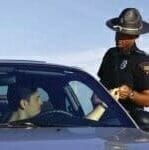 A reckless driving charge in Fairfax County, Virginia, is a criminal offense—not simply a traffic ticket. A conviction can result in a permanent criminal record, fines, demerit points, driver’s license consequences, and, in more serious cases, possible jail time. Many Fairfax reckless driving cases arise from stops on I-66, I-495 (the Capital Beltway), I-95, and other heavily enforced commuter corridors where speed limits change quickly and traffic conditions are closely monitored. These cases are generally heard in the Fairfax County General District Court. Depending on the allegation, the prosecution may rely on radar or laser readings, pacing, observations of driving behavior, video evidence, witness testimony, or evidence concerning an accident.
 Understanding the local court process and the evidence that may be used against you is an important first step before your court date. Riley & Wells Attorneys-At-Law defend Virginia residents and out-of-state drivers charged with reckless driving throughout Fairfax County and Northern Virginia. A Fairfax reckless driving attorney from our firm can evaluate the method of enforcement, the surrounding traffic conditions, the officer’s evidence, and any facts that may support a defense or reduction. Our lawyers have more than 60 years of combined trial experience handling criminal traffic and misdemeanor cases. We develop the defense strategy around the facts of the individual charge and how the evidence is likely to be presented in Fairfax court.







Fairfax Reckless Driving Page Guide
Fairfax Defense Services
- Fairfax County VA Overview
- Fairfax County VA Traffic Lawyer
- Fairfax County VA Speeding Ticket Lawyer
- Fairfax County VA DUI / DWI Lawyer
- Fairfax County VA Criminal Defense Lawyer
For broader statewide guidance, see our Virginia Reckless Driving Lawyer page.
Fairfax Reckless Driving Lawyer Reviews

What Happens After a Fairfax Reckless Driving Summons?
 A Virginia Uniform Summons is the document normally issued after a Fairfax County reckless driving stop. Drivers often refer to the summons as a ticket, but reckless driving is prosecuted as a criminal misdemeanor rather than an ordinary traffic infraction. Signing the summons is not an admission of guilt. It generally confirms receipt of the document and the obligation to respond to the charge. The summons identifies the alleged offense, the court where the case is pending, and the scheduled court date. A Fairfax reckless driving lawyer can examine the specific statute charged, the method of enforcement, the evidence available to the prosecution, and any facts that may support a defense, reduction, or mitigation presentation. The Commonwealth must prove the charged offense beyond a reasonable doubt. Depending on the allegation, the evidence may include:
- Radar, lidar, or another speed-measurement method
- Pacing by the officer’s vehicle
- Testimony concerning speed, traffic, weather, or roadway conditions
- Observations of weaving, passing, racing, or other driving behavior
- Body-camera, cruiser-camera, or other video evidence
- Accident evidence, photographs, diagrams, or witness testimony
- Calibration and testing certificates
Fairfax County Courts for Reckless Driving Cases
 Adult reckless driving charges issued in Fairfax County are generally heard in the Fairfax County General District Court. The Fairfax County court system also operates court divisions in Herndon and Vienna. Fairfax City General District Court is a separate court, even though it is located within the same general metropolitan area. Drivers should carefully examine the summons rather than assuming where the case will be heard. The document should identify the court, address, date, and time assigned to the case. Most reckless driving cases begin in General District Court and are decided by a judge. A defendant convicted in General District Court generally has the right to appeal the case to Circuit Court, where the matter is heard again under the applicable rules and procedures. Court location matters because docket procedures, scheduling, required appearances, and the presentation of evidence may differ depending on where the charge is pending.
Types of Reckless Driving Charges in Fairfax County
Virginia law contains multiple forms of reckless driving. Although reckless driving by speed is one of the most common charges in Fairfax County, a driver may also be charged because of alleged driving behavior, an accident, defective vehicle equipment, racing, passing a school bus, or another specific statutory violation.
Reckless Driving by Speed in Fairfax County
 Reckless driving by speed is one of the most frequently charged forms of reckless driving in Fairfax County. These cases commonly arise on heavily traveled roads such as I-66, I-95, I-495, Fairfax County Parkway, Route 28, Route 50, and Route 7, where speed may be measured by radar, lidar, or pacing. A charge under this section is different from an ordinary speeding ticket. For more detailed information about these cases, see our Fairfax County Reckless Driving by Speed Lawyer page. The prosecution must establish the alleged speed and satisfy the legal requirements for admitting the speed evidence. The defense may examine the officer’s method of measurement, testing records, calibration documents, location of the stop, posted speed limit, vehicle identification, and other surrounding circumstances.
Under Virginia Code § 46.2-862, a person may be charged with reckless driving for driving:
- 20 miles per hour or more above the applicable maximum speed limit; or
- More than 85 miles per hour regardless of the applicable speed limit.
General Reckless Driving
Virginia Code § 46.2-852 prohibits operating a vehicle recklessly or at a speed or in a manner that endangers life, limb, or property. A charge under the general statute may arise from allegations involving unsafe passing, loss of control, weaving, aggressive maneuvers, or other driving behavior.
The prosecution must prove more than the mere occurrence of an unusual event. The evidence must establish conduct that satisfies the elements of the statute charged.
Reckless Driving After an Accident
 Fairfax accident cases may result in charges under Virginia Code § 46.2-852 or § 46.2-853, which addresses a vehicle allegedly not under proper control or equipped with inadequate or improperly adjusted brakes. The mere occurrence of an accident does not automatically establish reckless driving. The prosecution must prove the charged offense. Questions may arise concerning how the accident occurred, whether witnesses observed the driving behavior, whether road or weather conditions contributed, and whether the available physical evidence supports the officer’s conclusion.
Other Reckless Driving Offenses
- Driving too fast for traffic or highway conditions
- Driving a vehicle not under proper control
- Operating a vehicle with inadequate or improperly adjusted brakes
- Passing on the crest of a hill or on a curve
- Passing two vehicles abreast
- Driving two vehicles abreast
- Passing at a railroad crossing
- Passing a stopped school bus
- Failing to give a proper signal
- Failing to yield when entering a highway
- Reckless driving on a parking lot or similar property
- Racing or exhibition driving
- Aiding or abetting a race
- Certain Move Over Law violations
Racing and Exhibition Driving
Racing and exhibition-driving allegations are among the most serious reckless driving charges. Depending on the circumstances, a conviction may result in significant license consequences, incarceration, and, in cases involving serious injury or death, felony exposure. A person accused of aiding or abetting an unlawful race may also face criminal charges.
Passing a Stopped School Bus
Virginia law requires drivers to stop for a school bus under circumstances defined by statute. The prosecution must establish that the legal requirements applied and that the defendant committed the alleged violation. Relevant issues may include the location of the bus, activation of warning equipment, roadway configuration, direction of travel, visibility, and identification of the vehicle.
Virginia Move Over Law
Virginia Code § 46.2-861.1 requires drivers approaching certain stationary vehicles displaying designated warning lights to change lanes when reasonable and safe or proceed with due caution at a safe speed. A violation involving certain emergency vehicles is classified as reckless driving. Other stationary-vehicle violations may be treated as traffic infractions.
Fairfax County Reckless Driving Enforcement Corridors
Reckless driving charges in Fairfax County frequently arise on interstate highways, commuter routes, parkways, and major arterial roads. These corridors combine high traffic volume, changing speed limits, complex interchanges, express lanes, construction zones, and regular traffic enforcement.
I-66 Reckless Driving Enforcement
Interstate 66 is a major Northern Virginia commuter corridor with Inside-the-Beltway and Outside-the-Beltway segments. Charges may arise near Vienna, Nutley Street, Route 123, Route 50, Centreville, Route 28, express-lane entrances, and areas where speed limits or traffic patterns change.
Evidence may involve radar, lidar, pacing, lane-change observations, or allegations concerning speed and surrounding traffic conditions.
I-495 Capital Beltway Enforcement
The Fairfax portion of I-495 passes through or near Tysons, McLean, Dunn Loring, Annandale, Springfield, Franconia, and other heavily traveled areas. Enforcement may occur near the Springfield Interchange, Route 7, the Dulles Toll Road, express lanes, work zones, and merging areas.
I-95 Reckless Driving Enforcement
Interstate 95 passes through the southeastern portion of Fairfax County near Lorton, Newington, Springfield, Franconia, and the approaches to the Springfield Interchange. Traffic congestion, downhill grades, merging traffic, express lanes, and changing roadway conditions may all become relevant to a reckless driving case.
Fairfax County Parkway and Other Local Roads
Reckless driving and speeding charges may also arise on:
- Fairfax County Parkway / Route 286
- Leesburg Pike / Route 7
- Chain Bridge Road and Dolley Madison Boulevard / Route 123
- Little River Turnpike / Route 236
- Braddock Road
- Ox Road
- Richmond Highway / U.S. Route 1
- Georgetown Pike / Route 193
- Gallows Road
- Backlick Road
- Route 50
- Route 29
- Route 28
- Dulles Toll Road / Route 267
Penalties for Reckless Driving in Fairfax County
Most Virginia reckless driving offenses are classified as Class 1 misdemeanors. The potential statutory consequences include:
- Up to 12 months in jail
- A fine of up to $2,500
- Possible suspension of driving privileges
- Six Virginia DMV demerit points for most reckless driving convictions
- An 11-year entry on the Virginia DMV driving record for most reckless driving offenses
- A criminal misdemeanor conviction
- Possible automobile-insurance consequences
- Possible employment or professional-licensing consequences
- Possible security-clearance or background-check concerns
- Consequences imposed by another state for a nonresident driver
The maximum statutory punishment does not mean that every conviction results in jail, the maximum fine, or a license suspension. The outcome depends on the offense charged, alleged speed or conduct, prior driving history, evidence, aggravating circumstances, mitigation, and the court’s decision.
When Jail May Become a Greater Concern
Potential incarceration generally becomes a more significant concern when the case involves an extremely high alleged speed, dangerous driving behavior, a serious accident, racing, an unfavorable driving history, failure to comply with prior court orders, or other aggravating circumstances.
The court may schedule an arraignment in a case where incarceration is being considered. At an arraignment, the defendant is advised of the charge and the right to legal representation.
Felony Reckless Driving
Most reckless driving charges are misdemeanors. Certain unusual circumstances can elevate the offense to a felony, including qualifying cases involving a driver whose license was suspended or revoked for a moving violation and whose reckless driving caused a death. Racing or exhibition-driving cases resulting in serious bodily injury or death may also result in felony charges under the applicable statutes.
Intelligent Speed Assistance Program
 Virginia’s Intelligent Speed Assistance Program became relevant to certain reckless driving dispositions beginning in 2026. For qualifying convictions under Virginia Code §§ 46.2-861 or 46.2-862, a court may, for good cause and instead of suspending the driver’s license, require enrollment in the program for a specified period. When a person is convicted under § 46.2-862 and found to have driven more than 100 miles per hour, the court must order enrollment unless it instead orders a license suspension. The applicable statute and facts of the case should be reviewed carefully before advising a driver about this program.
Evidence and Defenses in Fairfax Reckless Driving Cases
 The available defenses depend on the statute charged and the evidence supporting the allegation. A defense that applies to a speed case may not apply to an accident, racing, school-bus, or driving-conduct case. A careful defense review begins with the summons, the specific reckless driving statute, the officer’s observations, and the method used to establish the alleged violation. The prosecution must prove every element of the charged offense beyond a reasonable doubt, and questions may arise concerning the accuracy, reliability, admissibility, or interpretation of the evidence. Even when the evidence supports some traffic violation, the facts may support a reduction, mitigation, or a different resolution rather than a reckless driving conviction.
Radar and Lidar Evidence
Speed-measurement cases may require review of the equipment used, the officer’s training and operation of the device, testing and calibration documents, the location of the vehicle, traffic conditions, target identification, and whether the evidence satisfies Virginia law.
Pacing Evidence
When an officer determines speed by pacing another vehicle, relevant questions may include the distance and duration of the pace, traffic conditions, whether the distance between the vehicles remained consistent, and the accuracy of the police vehicle’s speedometer.
Speedometer Calibration
 A vehicle speedometer calibration may be relevant when the vehicle’s speedometer was inaccurate. Virginia Code § 46.2-942 permits the court to receive a qualifying sworn calibration report as evidence in a prosecution involving an alleged speed violation. A calibration is not automatically helpful in every case. The timing, result, admissibility, and strategic value of the calibration should be considered before relying on it.
Traffic, Weather, and Roadway Conditions
Cases involving alleged driving too fast for conditions may depend on traffic flow, weather, visibility, road design, congestion, construction, curves, intersections, pedestrian activity, and other circumstances existing at the time.
Accident Evidence
An accident does not by itself establish reckless driving. Relevant evidence may include photographs, vehicle damage, witness accounts, roadway markings, event-data-recorder information, video, weather, sight distance, mechanical condition, and whether the prosecution can establish how the accident occurred.
Identification and Witness Evidence
The prosecution must establish that the accused committed the charged act. Identification may become disputed when an officer did not personally observe the driving, several people were near the vehicle, witnesses provide conflicting accounts, or the case depends heavily on circumstantial evidence.
Mitigation
Even when the evidence supports some traffic violation, mitigation may affect whether the charge is reduced or how the court resolves the case. Depending on the circumstances, relevant mitigation may include:
- A favorable driving record
- Completion of an appropriate driver-improvement course
- A helpful speedometer calibration
- Community service or other corrective action
- Evidence concerning employment, licensing, military service, or security-clearance consequences
- Evidence addressing an emergency or unusual circumstance
- Repair records when vehicle condition is relevant
Drivers should consult counsel before assuming which mitigation steps will help. A course, calibration, or other document that is useful in one case may be unnecessary or strategically unhelpful in another.
Improper Driving and Other Possible Reductions
 Virginia Code § 46.2-869 permits a court to find a person charged with reckless driving guilty of improper driving when the degree of culpability is slight. A Commonwealth’s Attorney may also reduce a reckless driving charge to improper driving before the court’s decision. Improper driving is a traffic infraction rather than a criminal misdemeanor and is punishable by a fine of up to $500. Whether the evidence supports an improper-driving disposition depends on the facts of the case. Other possible outcomes may include amendment to a different traffic infraction, reduction of the alleged speed, dismissal, acquittal, or conviction of the original charge. No particular outcome can be guaranteed.
Preparing for a Fairfax Reckless Driving Court Date
Preparation should begin with a review of the summons, statute charged, alleged speed or conduct, court location, appearance date, and available evidence. Depending on the case, useful documents may include:
- The front and back of the summons
- A current Virginia or home-state driving record
- Photographs or video of the road or relevant location
- Dash-camera or other recorded evidence
- Vehicle repair and inspection records
- Witness names and contact information
- Employment, military, licensing, or security-clearance documentation
- A speedometer-calibration report when appropriate
- A driver-improvement certificate when appropriate
A driver should not wait until the court date to begin collecting evidence. Video may be overwritten, witnesses may become difficult to locate, road conditions may change, and records can take time to obtain.
Driver Improvement Programs
A driver-improvement course may sometimes be used as mitigation. Virginia offers approved programs in different formats and durations. Whether a driver should complete a course before court depends on the charge, driving history, court, and defense strategy.
Completing a course does not guarantee dismissal or reduction. Drivers should obtain advice before assuming that a particular course will produce a specific result.
Out-of-State Drivers Charged in Fairfax County
 Fairfax County’s interstate and commuter corridors produce reckless driving charges involving drivers licensed in many other states. A Virginia conviction may be reported to the driver’s home state, where the licensing agency may apply its own laws and administrative rules. An insurance carrier may also consider the conviction. In some cases, an attorney may ask the court to permit representation without the driver’s personal appearance. Whether an appearance may be waived depends on the court, the charge, the alleged conduct, the possibility of incarceration, and the judge’s decision. An out-of-state driver should not assume that hiring a lawyer automatically excuses attendance. For more information, see our guide for out-of-state drivers charged with reckless driving in Virginia.
Why Clients Retain Us for Fairfax Reckless Driving Defense
- More than 60 years of combined Virginia criminal and traffic trial experience
- Regular representation of clients in Fairfax County courts
- Representation of Virginia residents and out-of-state drivers
- Experience with speed, accident, racing, school-bus, Move Over, and driving-conduct cases
- Review of technical evidence, calibration records, officer testimony, and mitigation
- Individual defense strategies based on the charge and available evidence
Every reckless driving case presents different facts. The defense should be developed around the statute charged, how the evidence was obtained, what the prosecution can prove, the driver’s history, and the potential consequences of a conviction.
Representative Fairfax County Reckless Driving Case Result
Past results do not guarantee a similar outcome in another case. Results depend on the evidence, charge, driving history, court, and circumstances presented.
Reckless Driving Reduced to Defective Equipment
 In a representative case, a criminal misdemeanor reckless driving charge was reduced to defective equipment, a substantially less serious non-moving traffic disposition. The result illustrates how preparation, mitigation, the evidence, and the circumstances of the individual case may affect the final resolution.
To review additional representative outcomes, visit our Virginia criminal and traffic case results page.
Fairfax County Reckless Driving – Frequently Asked Questions
What speed is considered reckless driving in Fairfax County?
A driver may be charged under Virginia Code § 46.2-862 for traveling 20 miles per hour or more above the applicable speed limit or more than 85 miles per hour regardless of the applicable speed limit.
Is reckless driving in Fairfax County a criminal offense?
Yes. Most reckless driving offenses are Class 1 misdemeanors rather than ordinary traffic infractions. A conviction can create a criminal record and result in fines, DMV points, license consequences, and, in aggravated cases, incarceration.
Will I have to appear in Fairfax reckless driving court?
Many defendants are required to appear. In some cases, a lawyer may ask the court to permit representation without the defendant’s personal appearance. Whether that is allowed depends on the charge, facts, court procedures, and judge.
Can a Fairfax reckless driving charge be reduced?
It may be possible, but a reduction is never automatic. Relevant factors may include the alleged speed or conduct, driving record, strength of the evidence, mitigation, and how the case is presented.
What is the difference between reckless driving and improper driving?
Reckless driving is generally a criminal misdemeanor. Improper driving under Virginia Code § 46.2-869 is a traffic infraction that may be considered when the degree of culpability is slight.
Does a Fairfax reckless driving charge automatically mean jail?
No. Jail is legally possible for a Class 1 misdemeanor, but many cases are resolved without incarceration. The risk depends on the alleged speed or conduct, driving history, aggravating circumstances, and the court’s decision.
How long does reckless driving remain on a Virginia driving record?
Virginia DMV lists most reckless driving convictions as six-point violations that remain on the driving record for 11 years. The active demerit points generally remain for a shorter period.
Can reckless driving affect employment or a security clearance?
It can. Because reckless driving is a criminal offense, a conviction may appear in certain background checks and may create concerns for government employees, contractors, military personnel, licensed professionals, or positions involving driving responsibilities.
Should I obtain a speedometer calibration?
A calibration may help in some speed cases, particularly when the speedometer was inaccurate. It is not automatically useful in every case. The result and defense strategy should be considered before relying on the calibration.
Should I complete a driver-improvement course before court?
A course may provide useful mitigation in some cases, but it does not guarantee a favorable result. The appropriate timing and type of course may depend on the charge, record, and defense strategy.
Can an out-of-state driver avoid returning to Virginia for court?
Sometimes an attorney may be allowed to appear for an out-of-state driver, but this is not automatic. The court may require the driver to attend based on the charge, alleged speed or conduct, and possibility of incarceration or license consequences.
Fairfax Reckless Driving Case Review
Every reckless driving charge depends on the statute, evidence, driver’s history, court location, and surrounding circumstances. Our attorneys represent Virginia residents and out-of-state drivers charged with reckless driving in Fairfax County.
Request a Fairfax Reckless Driving Case Review
3/31/2022 | Updated 7/26/2026