
Fredericksburg VA DUI / DWI Lawyer
 Fredericksburg DUI and DWI charges can carry serious consequences, including license suspension, ignition interlock requirements, fines, possible jail exposure, and a permanent criminal record. Riley & Wells Attorneys-At-Law represent clients in Fredericksburg VA charged with driving under the influence of alcohol or drugs and focus on practical, case-specific defense strategy. Many DUI cases turn on details such as why the stop occurred, what the officer observed, how field sobriety tests were handled, whether breath or blood testing procedures were followed, and whether the prosecution can prove the charge beyond a reasonable doubt. If you are facing a Fredericksburg DUI or DWI charge, it helps to review the stop, the evidence, and the court process early.







Fredericksburg VA DUI and DWI Defense Guide
Fredericksburg VA Defense Services
For statewide representation information, see our Virginia DUI Lawyers page.
Fredericksburg VA DUI and DWI Defense Lawyers
 Our attorneys represent Virginia residents and out-of-state drivers facing DUI and DWI charges in Fredericksburg, Virginia. Our Fredericksburg DUI lawyers defend first-offense DUI, repeat DUI, elevated blood alcohol concentration allegations, drug-related DUI, breath and blood test refusal charges, and other impaired driving offenses.
Continue Reading
DUI investigations may begin with traffic stops, accidents, checkpoints, disabled vehicles, or other encounters along U.S. Route 1, Virginia Route 3, Route 2, city streets, or the regional I-95 corridor. Our attorneys represent clients charged with offenses arising within Fredericksburg City, including Downtown Fredericksburg, College Heights, Mayfield, and surrounding city neighborhoods.
A DUI investigation may involve observations of driving behavior, statements, physical appearance, roadside exercises, preliminary breath analysis, chemical testing, and video evidence. The defense requires examination of the exact statutory charge, the legal basis for the stop or detention, probable cause for arrest, chemical testing procedures, and potential consequences.
An arrest is not a conviction. The Commonwealth must prove the required elements beyond a reasonable doubt through admissible evidence.
Virginia DUI and DWI Charges Under Code Section 18.2-266
Virginia Code § 18.2-266 prohibits driving or operating a motor vehicle under several alternative statutory circumstances involving alcohol, drugs, or a combination of substances.
A DUI prosecution may involve allegations that the accused:
- Drove or operated a motor vehicle with a blood alcohol concentration of 0.08 or more, or an equivalent qualifying breath alcohol result.
- Drove or operated while under the influence of alcohol.
- Drove or operated while under the influence of drugs to a degree that impaired the ability to operate safely.
- Drove or operated while under the combined influence of alcohol and drugs to a degree that impaired the ability to operate safely.
- Drove or operated with certain specified drugs in the blood at or above the statutory concentrations.
The Commonwealth must establish driving or operation and a violation of at least one applicable statutory provision.
A chemical result below 0.08 does not necessarily prevent an alcohol-related DUI prosecution under another statutory theory.
The particular charge, evidence, and circumstances determine the appropriate defense.
Driving or Operation of a Motor Vehicle
A Virginia DUI prosecution requires proof that the accused drove or operated a motor vehicle within the meaning of the statute.
Operation may become disputed when a vehicle was parked, disabled, involved in an accident, or discovered without an officer having observed the driving.
Relevant evidence may include:
- The location of the vehicle
- Whether the engine was running
- The position and condition of the vehicle
- Possession and location of the keys
- Statements attributed to the accused
- Witness observations
- Body-camera recordings
- Dashboard-camera recordings
- Surveillance recordings
- Electronic or location records
- Accident evidence
- The timeline of the alleged operation
The Commonwealth must establish the applicable legal definition of driving or operation through admissible evidence.
Our Fredericksburg DUI defense attorneys evaluate the circumstances of the alleged operation and whether the evidence satisfies Virginia law.
Alcohol, Drugs and Combined Influence
A Fredericksburg DUI charge may involve alcohol, illegal drugs, prescription medications, over-the-counter medications, or a combination of substances.
Lawful possession or authorized use of medication does not automatically determine whether the Commonwealth can establish a DUI violation.
Drug-related cases may involve blood testing, toxicology reports, medical records, officer observations, witness testimony, and the effects attributed to a particular substance.
Depending on the statutory theory, the presence of a substance and evidence of impaired driving may raise different legal and scientific questions.
Our attorneys examine the actual statutory allegation, laboratory evidence, officer observations, medical information, and circumstances of the arrest.
Fredericksburg DUI Traffic Stops and Criminal Investigations
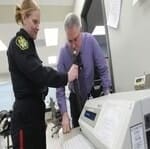 A DUI investigation in Fredericksburg may begin when a police officer observes an alleged traffic violation, unusual driving behavior, an accident, a disabled vehicle, or conduct at a checkpoint. The investigating officer may consider driving observations, statements, physical appearance, the odor of alcohol, field sobriety exercises, a preliminary breath result, or other circumstances.
Continue Reading
The defense should evaluate whether the officer had a lawful basis for the initial stop or detention and whether the investigation complied with constitutional and statutory requirements.
Police reports should be compared with body-camera recordings, dashboard-camera recordings, dispatch information, witness accounts, and physical evidence.
Differences involving the location of the stop, driving behavior, timing, lighting, weather, road conditions, statements, or testing procedures may affect the reliability and admissibility of evidence.
Legal Basis for a DUI Traffic Stop
A traffic stop generally must be supported by an applicable legal justification.
A Fredericksburg DUI investigation may begin with allegations involving speeding, lane violations, reckless driving, equipment violations, or other observed conduct.
A DUI investigation may also arise after an accident or when an officer encounters a vehicle under different circumstances.
Relevant considerations include:
- The stated reason for the stop
- The location of the encounter
- Officer observations before the stop
- Roadway signs and lane markings
- Traffic conditions
- Statements made by the driver
- Body-camera recordings
- Dashboard-camera recordings
- Dispatch information
- The duration of detention
- The progression of the investigation
- Whether additional detention was lawful
A defense may involve challenging the legal basis for the stop, the scope of detention, or the admissibility of evidence obtained during the investigation.
Fredericksburg Police Department and Virginia State Police DUI Investigations
DUI investigations in Fredericksburg may involve the Fredericksburg Police Department, Virginia State Police, or another authorized law-enforcement agency.
Officers may investigate suspected impaired driving during traffic stops, accident responses, checkpoint operations, or other encounters.
The investigating agency may affect which reports, recordings, dispatch records, testing documents, and witness information need to be identified.
Our attorneys examine the officer’s observations, the chronology of the investigation, the circumstances of arrest, and the evidence supporting the charge.
Field Sobriety Testing in Fredericksburg DUI Cases
 An officer investigating suspected impairment may request roadside exercises such as the horizontal gaze nystagmus test, walk-and-turn test, or one-leg-stand test. These exercises are frequently used during DUI investigations, but their evidentiary significance depends on the manner in which they were administered and the circumstances surrounding the testing.
Continue Reading
Instructions, demonstrations, surface conditions, lighting, traffic, weather, footwear, physical limitations, medical conditions, and communication difficulties may affect performance.
Body-camera recordings may help establish what instructions were given, how the exercises were performed, and whether the officer’s written report accurately describes the encounter.
Our attorneys compare the recorded observations with the circumstances of the investigation and the requirements applicable to the particular evidence.
For additional statewide information, review our Virginia DUI field sobriety testing guide.
Evaluating Field Sobriety Test Evidence
A review of roadside testing may address:
- Instructions provided by the officer
- Whether the exercises were demonstrated
- Whether the driver understood the instructions
- The testing surface and slope
- Lighting and visibility
- Weather and traffic conditions
- Medical or physical limitations
- Injuries or balance difficulties
- Footwear and clothing
- Fatigue or other relevant conditions
- Statements during testing
- Whether the report matches available video
The defense may also examine how the officer interpreted the results and whether the observations contributed to probable cause for arrest.
Preliminary Roadside Breath Testing
Virginia Code § 18.2-267 governs preliminary breath analysis used during a DUI investigation before arrest.
This roadside test is intended to provide a preliminary estimate of alcohol concentration and may be relevant to the officer’s probable cause determination.
A person stopped and suspected of DUI has the statutory right to refuse preliminary roadside breath analysis.
Under the statute, the refusal to permit this preliminary analysis is not evidence in the DUI prosecution.
The result of the preliminary roadside breath test is not itself admissible to prove guilt of the underlying DUI offense.
The preliminary roadside test is distinct from evidential breath or blood testing governed by Virginia’s implied consent statutes following a qualifying arrest.
Probable Cause for a Fredericksburg DUI Arrest
A warrantless DUI arrest must be supported by probable cause under applicable law.
The probable cause determination may involve driving observations, an accident, statements, physical appearance, field sobriety performance, a preliminary breath result, and other circumstances known to the officer at the time of arrest.
The defense may compare the stated reasons for arrest with video recordings, witness accounts, police reports, and the sequence of events.
Relevant considerations may include:
- The officer’s observations before the stop
- Whether driving or operation was observed
- The driver’s statements and conduct
- Field sobriety instructions and performance
- Physical observations attributed to impairment
- Preliminary breath testing, if performed
- Witness and accident evidence
- The timing of the arrest
If the arrest was not supported by probable cause, the admissibility of evidence obtained afterward may require additional legal analysis.
The outcome of a suppression issue depends on the applicable law and circumstances of the case.
Breath and Blood Testing in Fredericksburg VA DUI Cases
Chemical testing after arrest is different from preliminary roadside breath analysis.
Virginia’s implied consent statutes govern breath and blood testing when the applicable statutory conditions are satisfied.
An alcohol-related DUI investigation may involve evidential breath testing, while drug-related cases frequently involve blood testing.
Other circumstances may affect which testing method is authorized or available.
Our attorneys evaluate the legal authority for testing, timing, advisements, equipment, operator qualifications, collection procedures, laboratory records, and admissibility requirements.
For additional information, review our Virginia DUI breath and blood testing guide.
Evidential Breath Testing
The prosecution may offer a certificate reporting a breath alcohol result.
The defense should examine whether the test was administered using approved equipment by a qualified operator and whether applicable procedures were followed.
Potential issues include:
- The time of driving, arrest, and testing
- The required observation period
- The instrument used for analysis
- Equipment approval and maintenance records
- The operator’s qualifications
- The testing sequence and reported samples
- Error messages or interrupted tests
- Statements and observations at the testing location
- The certificate and supporting documentation
The prosecution must satisfy the applicable evidentiary requirements for admission of the chemical test result.
A reported result should be evaluated together with the timing and circumstances of the investigation.
Blood Testing and Toxicology Evidence
Blood testing may be used in drug-related DUI investigations or other circumstances authorized by Virginia law.
The resulting evidence may include blood collection records, laboratory analysis, chain-of-custody documentation, and certificates issued by the Virginia Department of Forensic Science.
A blood test review may address:
- Legal authority for collection
- Qualifications of the person drawing blood
- Collection procedures
- Sample identification
- Sealing and storage
- Transportation of the sample
- Chain of custody
- Laboratory methods
- Reported alcohol or drug concentrations
- Timing of the alleged driving
- Potential scientific or procedural issues
- The applicable statutory theory
In drug-related DUI prosecutions, the precise substance, concentration, statutory provision, and evidence of impairment may be important.
Our attorneys examine the relevant records and whether the Commonwealth can establish the charged offense through admissible evidence.
Fredericksburg Breath or Blood Test Refusal Charges
Virginia Code §§ 18.2-268.2 and 18.2-268.3 govern implied consent and unreasonable refusal following qualifying DUI arrests.
A refusal allegation is separate from the underlying DUI prosecution and may create additional consequences affecting driving privileges.
The classification and possible punishment depend on whether a breath or blood sample was requested, the applicable statutory subsection, and the person’s prior history.
The defense may examine whether implied consent applied, the circumstances and timing of the arrest, whether the statutory advisement was properly given, and whether an unreasonable refusal actually occurred.
For additional statewide information, review our Virginia DUI breath test refusal page.
Evidence in a Fredericksburg Refusal Case
Relevant issues may include:
- Whether implied consent applied
- The time between the alleged offense and arrest
- Probable cause for arrest
- Whether breath or blood was requested
- The statutory advisement
- The driver’s response
- Medical inability to provide a sample
- Communication or comprehension issues
- Prior DUI or refusal findings
- Officer reports and recordings
A first unreasonable refusal of a breath test is generally a civil offense resulting in a one-year suspension of driving privileges.
A qualifying subsequent unreasonable breath refusal within the statutory 10-year period may be prosecuted as a Class 1 misdemeanor and may result in a three-year loss of driving privileges.
Blood refusal provisions are addressed separately under Virginia law.
These consequences are distinct from those associated with refusing a preliminary roadside breath test before arrest.
Fredericksburg VA DUI and DWI Penalties
A first violation of Virginia Code § 18.2-266 is generally a Class 1 misdemeanor with a mandatory minimum fine of $250.
The possible punishment depends on the statutory charge, criminal history, reported blood alcohol concentration, additional aggravating circumstances, and applicable sentencing requirements.
A Fredericksburg DUI conviction may result in consequences involving incarceration, fines, driving privileges, ignition interlock, alcohol safety programs, and other legal requirements.
Potential consequences include:
- Jail or prison exposure
- Mandatory minimum confinement
- Fines and court costs
- License suspension or revocation
- Administrative license suspension
- Probation conditions
- VASAP participation
- Ignition interlock requirements
- Alcohol monitoring
- Restricted driving conditions
- Insurance consequences
- Employment consequences
- Commercial driving consequences
- Criminal record consequences
The maximum statutory punishment is not necessarily the sentence imposed in an individual case.
Mandatory minimum penalties and other statutory requirements must be evaluated according to the specific charge and circumstances.
For additional statewide information, review our Virginia DUI penalties guide.
First-Offense DUI in Fredericksburg
A first DUI offense generally carries the classification and minimum fine established by Virginia Code § 18.2-270.
Additional requirements may involve license revocation, VASAP, ignition interlock, restricted driving privileges, and other statutory consequences.
A first-offense prosecution may involve disputed operation, traffic stop issues, field sobriety evidence, chemical testing, or other factual and legal questions.
Our attorneys examine the entire investigation and the evidence supporting the alleged offense.
Elevated Blood Alcohol Concentration
Virginia law imposes additional mandatory minimum confinement for specified elevated blood alcohol results.
For a first offense:
- A qualifying blood alcohol concentration of at least 0.15 but not more than 0.20 carries an additional mandatory minimum five days of confinement.
- A qualifying blood alcohol concentration greater than 0.20 carries an additional mandatory minimum 10 days of confinement.
Additional enhanced punishment may apply to repeat offenses involving elevated blood alcohol concentrations.
The reported chemical result, testing procedures, admissibility requirements, and applicable statutory provisions should be examined carefully.
For additional information, see our Virginia High BAC DUI page.
Second-Offense and Repeat DUI Charges
A prior qualifying DUI conviction may affect the classification, mandatory minimum punishment, license revocation, and ignition interlock requirements.
A second DUI offense within 10 years generally carries increased mandatory penalties.
A third qualifying DUI offense committed within 10 years is generally prosecuted as a Class 6 felony, with additional mandatory punishment depending on the statutory circumstances.
The prosecution must establish the qualifying prior convictions required for enhanced punishment.
Our attorneys review the prior record, statutory timing requirements, charging documents, and available evidence.
DUI with a Minor Passenger
Virginia Code § 18.2-270 establishes additional penalties for DUI committed while transporting a person 17 years of age or younger.
The statute provides for an additional fine and mandatory minimum confinement when the required elements are established.
Our attorneys evaluate the applicable statutory allegations, supporting evidence, and potential enhanced punishment.
Fredericksburg DUI License Suspension, VASAP and Ignition Interlock
A DUI arrest or conviction in Fredericksburg may affect driving privileges before and after trial.
The available relief and required conditions depend on the charge, chemical test result, refusal allegation, prior record, and final disposition.
An administrative suspension may occur following a qualifying arrest.
A DUI conviction may result in additional suspension or revocation under Virginia law.
A first DUI conviction generally results in a one-year loss of driving privileges, subject to applicable statutory provisions and potential restricted driving relief.
Virginia law also establishes requirements concerning alcohol safety programs and ignition interlock devices.
For additional statewide information, review our Virginia DUI license suspension guide.
Administrative and Court-Ordered License Suspensions
License issues may include:
- Administrative suspension after arrest
- Suspension following conviction
- Revocation following conviction
- Additional refusal-related suspension
- Eligibility for restricted driving privileges
- Permitted driving purposes
- Applicable court orders
- DMV reinstatement requirements
The defendant should examine any administrative suspension documents, court orders, and DMV requirements rather than assuming that all suspension periods or restrictions are identical.
Virginia Alcohol Safety Action Program
VASAP is the Virginia Alcohol Safety Action Program.
Participation may be required following a qualifying DUI conviction or as part of other applicable court and licensing requirements.
The program may involve screening, education, treatment referrals, monitoring, and compliance obligations.
The precise requirements depend on the statute, disposition, and applicable court orders.
Ignition Interlock and Restricted Driving Privileges
Virginia DUI law establishes ignition interlock and restricted driving requirements in qualifying cases.
Eligibility, installation requirements, permitted driving purposes, monitoring, and compliance conditions depend on the applicable statutes and orders.
A person should not assume that restricted driving privileges will be available or that ignition interlock requirements can be avoided.
Our attorneys evaluate these issues according to the particular charge, prior history, and possible disposition.
Fredericksburg VA DUI Enforcement on I-95 and Local Roads
 DUI charges in Fredericksburg may arise on Emancipation Highway (U.S. Route 1), Virginia Route 3, Blue and Gray Parkway, Lafayette Boulevard, and other city streets. Interstate 95 serves the surrounding region, but the precise location of an alleged offense determines whether the case belongs in Fredericksburg or a neighboring court jurisdiction.
Continue Reading
DUI investigations may begin after a traffic stop, accident, sobriety checkpoint, disabled-vehicle encounter, or report of suspected impaired driving.
Our Fredericksburg DUI lawyers examine the legal basis for police contact, officer observations, evidence of driving or operation, roadside testing conditions, statements, available recordings, and chemical testing.
The investigating agency and location identified in the charging documents help determine which court and evidence may be relevant.
Interstate 95 DUI Cases Near Fredericksburg
Interstate 95 connects the Fredericksburg region with Northern Virginia and Richmond. The interstate passes through neighboring Stafford County and Spotsylvania County rather than Fredericksburg City.
Virginia State Police may investigate suspected impaired driving following traffic stops, collisions, or other encounters along this corridor.
A DUI case may require examining the precise offense location, reason for the stop, officer observations, field sobriety testing, chemical evidence, and court identified on the summons or warrant.
Emancipation Highway, U.S. Route 1 and Virginia Route 3
Emancipation Highway (U.S. Route 1) and Virginia Route 3, including Plank Road and William Street, are principal traffic corridors serving Fredericksburg.
DUI investigations along these roads may involve traffic violations, accidents, officer observations, or other police encounters.
Our attorneys review the circumstances of the stop or arrest, available video recordings, roadway conditions, statements, and the administration of field sobriety tests.
Blue and Gray Parkway, Lafayette Boulevard and Local Streets
Blue and Gray Parkway, Lafayette Boulevard, Route 2 / U.S. Route 17 Business, and connecting streets serve residential, commercial, and downtown areas of Fredericksburg.
DUI allegations may also arise along Princess Anne Street, Caroline Street, Dixon Street, and other local roads.
The defense may examine the alleged driving conduct, traffic conditions, lighting, roadside testing environment, officer testimony, and available recordings.
Fredericksburg VA DUI Defense Throughout the City
 Our Fredericksburg DUI lawyers represent individuals charged with impaired driving throughout the independent City of Fredericksburg, including downtown streets, residential areas, and roads surrounding the University of Mary Washington. DUI investigations may involve alcohol, prescription medications, other drugs, traffic accidents, or allegations arising from the operation of a motor vehicle.
Continue Reading
The location of an alleged DUI offense may affect court jurisdiction, the investigating law-enforcement agency, available witnesses, video evidence, and roadway conditions.
Our attorneys evaluate the charged statute, circumstances of the investigation, field sobriety exercises, breath or blood testing, and other admissible evidence.
The Commonwealth must prove the elements of the particular DUI offense beyond a reasonable doubt. An arrest or allegation does not establish guilt.
Fredericksburg VA DUI Courts and Criminal Proceedings
 Most adult misdemeanor DUI and refusal cases arising within Fredericksburg City are heard in Fredericksburg General District Court. A felony DUI prosecution may begin with a preliminary hearing in General District Court before proceeding to Fredericksburg Circuit Court.
Continue Reading
Circuit Court also hears qualifying appeals from General District Court.
The summons, warrant, bond papers, or official court notice should identify the assigned court, charge, hearing date, and required appearance.
Our Fredericksburg DUI defense attorneys examine those documents alongside the available evidence and testing records.
For additional statewide information, review our Virginia DUI court process guide.
Fredericksburg General District Court
701 Princess Anne Street, Suite 200
Fredericksburg, VA 22401
Phone: (540) 372-1043
Fredericksburg General District Court handles most adult misdemeanor DUI and qualifying refusal proceedings involving alleged offenses within city jurisdiction.
A case may involve arraignment, attorney appearance, pretrial motions, evidence review, negotiations, trial, and sentencing when applicable.
Fredericksburg Circuit Court
701 Princess Anne Street, Suite 100
Fredericksburg, VA 22401
Phone: (540) 372-1066
Fredericksburg Circuit Court handles felony DUI prosecutions and qualifying appeals from General District Court.
Proceedings may involve indictment, arraignment, discovery, pretrial motions, trial, sentencing, or appellate review as authorized by law.
Fredericksburg Juvenile and Domestic Relations District Court
615 Princess Anne Street, Suite 100
Fredericksburg, VA 22401
Phone: (540) 372-1072
Fredericksburg Juvenile and Domestic Relations District Court handles qualifying juvenile cases, including certain alcohol-related driving matters involving juveniles.
Most adult DUI misdemeanor prosecutions proceed in General District Court instead.
Stages of a Fredericksburg DUI Case
Depending on the charges and circumstances, a Fredericksburg DUI case may involve:
- Traffic stop or accident investigation
- Roadside DUI investigation
- Field sobriety testing
- Preliminary breath testing
- Arrest and bond determination
- Administrative license suspension
- Evidential breath or blood testing
- Arraignment or attorney appearance
- Discovery and evidence review
- Pretrial motions
- Negotiations when appropriate
- Bench or jury trial as applicable
- Sentencing if convicted
- Restricted driving and VASAP issues
- Possible appeal
Not every DUI case involves every stage.
A defendant should comply with court appearance requirements, bond conditions, administrative suspension orders, and other applicable legal obligations while the case is pending.
Fredericksburg VA DUI Defense Strategy
No single defense strategy applies to every DUI prosecution.
The appropriate approach depends on the statutory theory, operation evidence, reason for the traffic stop, officer observations, field sobriety testing, probable cause, chemical testing, prior record, and admissibility of the prosecution’s evidence.
Some cases involve a constitutional challenge to the stop, detention, arrest, or testing.
Other cases may involve disputes concerning driving or operation, witness credibility, field sobriety testing, chemical evidence, or the reliability of the prosecution’s proof.
A defense may also require consideration of statutory penalties, licensing consequences, and mitigation.
Our attorneys evaluate the evidence and circumstances before determining the appropriate course of action.
Possible outcomes depend on the law, admissible evidence, prosecutorial decisions, and court rulings. No particular result can be guaranteed.
Issues Requiring Review in a Fredericksburg DUI Defense
Potential issues include:
- Whether driving or operation can be proved
- The legal basis for the stop
- The scope and duration of detention
- Probable cause for arrest
- Accuracy of the officer’s report
- Field sobriety instructions and observations
- Medical or physical explanations
- Roadside testing conditions
- Preliminary breath test evidence
- Evidential breath testing procedures
- Blood collection and laboratory records
- Timing of alcohol consumption and testing
- Drug identification and impairment evidence
- Admissibility of statements and certificates
- Qualifying prior convictions
- Mitigation and sentencing considerations
The significance of each issue depends on the particular allegations and evidence.
Evidence in a Fredericksburg VA DUI Case
Evidence should be identified and preserved as early as practical.
Some video recordings, dispatch records, business surveillance footage, and electronic information may not remain available indefinitely.
The prosecution may rely on witness testimony, officer observations, chemical testing, statements, physical evidence, and recordings.
Potential evidence includes:
- Body-camera recordings
- Dashboard-camera recordings
- Dispatch records
- 911 recordings
- Officer reports and notes
- Accident reports
- Photographs
- Witness statements
- Preliminary breath test records
- Evidential breath test certificates
- Breath testing documentation
- Blood collection records
- Laboratory reports
- Chain-of-custody documents
- Medical and prescription records
- Receipts and location information
- Surveillance recordings
- Other electronic evidence
The defense should evaluate whether evidence is reliable, admissible, and sufficient to establish the charged offense beyond a reasonable doubt.
Officer Testimony and Video Recordings
Police reports and testimony may describe driving behavior, statements, physical appearance, roadside exercises, and other circumstances.
Available body-camera or dashboard-camera footage may help establish what actually occurred.
The defense may compare the officer’s testimony and written observations with the recordings and other evidence.
Discrepancies may require additional factual or legal evaluation.
Timing and Chemical Testing Evidence
The timing of the alleged driving, traffic stop, arrest, and chemical test may be important in a DUI prosecution.
Chemical testing evidence should be evaluated according to the applicable statutory provisions and scientific requirements.
Depending on the circumstances, the defense may examine testing procedures, sample collection, laboratory results, and the relationship between the reported result and the statutory allegation.
Out-of-State Drivers Charged with DUI in Fredericksburg
 An out-of-state motorist charged with DUI in Fredericksburg faces a Virginia criminal prosecution and possible restrictions on the privilege to drive in Virginia. A conviction may also be reported to the driver’s home-state licensing authority.
Continue Reading
The home state determines the additional effect on the person’s home-state license or driving record under its applicable laws.
An out-of-state defendant should not assume that living outside Virginia eliminates the requirement to appear in court or comply with applicable orders.
Court appearance requirements, administrative suspension, restricted driving privileges, VASAP participation, and ignition interlock obligations may require special consideration when the defendant lives in another state.
Our attorneys evaluate the particular charge, court requirements, driving record, testing evidence, and potential licensing consequences.
For additional statewide information, review our Virginia DUI guide for out-of-state drivers.
Fredericksburg VA DUI Lawyer Client Review

What to Send for a Fredericksburg DUI Case Review
Complete documents and a clear timeline can help identify the charge, assigned court, testing history, license issues, and approaching deadlines.
Useful materials include:
- The complete summons or warrant
- Bond and release paperwork
- Administrative suspension documents
- Refusal summons or warrant
- Court date and assigned court
- Current driving record
- Prior DUI or refusal records
- Accident reports
- Photographs and recordings
- Medical and prescription information
- Witness names and contact information
- Receipts and electronic communications
- Location records
- A written timeline of the incident
Relevant documents, messages, photographs, recordings, and other evidence should be preserved in their original form.
Fredericksburg VA DUI and DWI Lawyer Frequently Asked Questions
Is DUI or DWI a criminal charge in Fredericksburg?
Yes. A violation of Virginia Code § 18.2-266 is a criminal offense. A first or second offense is generally prosecuted as a misdemeanor, while certain repeat offenses may be felonies.
Where are Fredericksburg DUI cases heard?
Most adult misdemeanor DUI and refusal cases arising in Fredericksburg City are heard in Fredericksburg General District Court at 701 Princess Anne Street, Suite 200, Fredericksburg, Virginia. Felony proceedings may continue in Fredericksburg Circuit Court.
What must the Commonwealth prove in a Virginia DUI case?
The Commonwealth must establish that the accused drove or operated a motor vehicle and violated at least one applicable provision of Virginia Code § 18.2-266 beyond a reasonable doubt through admissible evidence.
Can a Fredericksburg DUI investigation begin on I-95, Route 1 or Route 3?
Yes. DUI investigations may begin during traffic stops, accident investigations, or other police encounters on U.S. Route 1, Virginia Route 3, Route 2 / U.S. 17 Business, local Fredericksburg streets, and Interstate 95 in the surrounding region. The reason for the stop and circumstances of the investigation may be important to the defense.
Can a DUI charge involve prescription medication or illegal drugs?
Yes. Virginia law addresses impairment involving alcohol, drugs, or a combination of substances. The applicable statutory theory determines the required elements and relevant evidence.
What is the difference between a roadside breath test and testing after arrest?
Preliminary roadside breath analysis under Virginia Code § 18.2-267 is used during the investigation and probable cause determination. Chemical testing after arrest is governed by Virginia’s implied consent statutes and involves different requirements and consequences.
Can a driver refuse the preliminary roadside breath test?
Virginia Code § 18.2-267 gives a person stopped and suspected of DUI the right to refuse preliminary roadside breath analysis. The failure to permit that preliminary analysis is not evidence in the DUI prosecution.
What happens if a driver refuses chemical testing after arrest?
An unreasonable refusal following a qualifying arrest may result in a separate refusal proceeding and additional license consequences. The classification and penalties depend on whether breath or blood was requested, prior history, and the applicable statutory provision.
What are the penalties for a first Virginia DUI conviction?
A first DUI offense is generally a Class 1 misdemeanor with a mandatory minimum fine of $250, loss of driving privileges, and other statutory requirements. Elevated blood alcohol results and other aggravating circumstances may result in additional mandatory punishment.
Can a Fredericksburg DUI charge affect driving privileges?
Yes. A DUI arrest or conviction may result in administrative suspension, court-ordered suspension or revocation, restricted driving requirements, VASAP participation, and ignition interlock obligations.
Can a Fredericksburg DUI charge be reduced or dismissed?
A DUI charge may be dismissed, amended, or otherwise resolved depending on the facts, applicable law, admissible evidence, prosecutorial decisions, and court rulings. No particular result can be guaranteed.
What should I provide for a Fredericksburg DUI case review?
Provide the summons or warrant, bond paperwork, administrative suspension or refusal documents, court information, driving record, prior DUI history, available recordings, accident materials, medical information, and a written timeline of the incident.
Request a Confidential Fredericksburg VA DUI Case Review
A DUI or DWI charge in Fredericksburg can affect your freedom, driving privileges, employment, insurance, and other important interests. Our attorneys evaluate the traffic stop, arrest, field sobriety evidence, breath or blood testing, prior record, and possible consequences when preparing a defense. Contact our attorneys to request a confidential Fredericksburg VA DUI case review.
1/27/2025 | Updated 11/7/2026