
Experienced Greensville County VA Traffic Lawyer • 1500+ Client Reviews
 Riley & Wells Attorneys-At-Law is an established local law firm that is dedicated to defending clients in the Greensville County VA Courts who have been accused of violating a traffic law. Our Greensville County Traffic Attorneys have accumulated over 60 years of combined traffic law experience during their careers and are routinely recognized by the legal community for excellence in legal ability and ethical standards. Our office is located 2 blocks from the courthouse. CAUTION: A Greensville County VA traffic ticket conviction will on average increase the automobile insurance premium by 73% or $1,046 EACH YEAR according to Insurance.com
Top Rated Lawyers That Will Present Your Best Defense


Best Traffic Law Defense Attorneys in Greensville VA
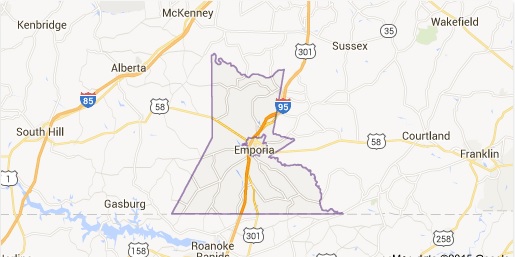 Greensville County is the southern most county in Virginia along the Interstate 95 corridor. This highway generates a high volume of traffic on any given day. Other major highways in this 297 square mile county include: Route 58, Route 301, Route 139 & Route 186. State Troopers and Greensville Deputy Sheriffs have a long history of aggressively patrolling the county and strictly enforcing the traffic laws. In fact, a motorist can be convicted of Reckless Driving for driving as little as 16 miles per hour over the limit on Interstate 95 pursuant to Va Code 46.2-862. Retain a top rated Greensville County reckless driving lawyer if you find yourself in this situation.
Traffic Court Defense Attorneys for Greensville County Cases
 Virginia law classifies various driving behaviors as traffic violations. A conviction for any traffic violation can severely jeopardize your freedom, your career, and your driving record. In Virginia, convictions are permanent, will remain on the driving record for several years, and cannot be expunged. Do not miss an opportunity to defend yourself. We will examine your Greensville County traffic case in detail and deploy various proven trial strategies during our representation to secure the best possible outcome under the law. You can benefit from our experience. Let us review your case.
Interstate 95 Traffic Law Defense Attorney For Greensville County VA
 Interstate 95 is a major interstate that handles millions of drivers every year. This interstate passes right through Greensville County VA. There are over 13 miles of I-95 in Greensville County. I-95 connects with various major intersections including: Route 629 at Skippers, Route 301, and Route 614. State Troopers and the Greensville County Sheriff’s Office patrol this stretch of highway on a daily basis. Traffic Law enforcement is serious business for these law enforcement agencies. We can help! Contact us about your Greensville County traffic case. We will present the best defense.
Penalties for Virginia Traffic Law Violations
-
Maximum fine of $2,500
-
Loss of driving privileges
-
Moving violation demerit points
- Employment issues
- Incarceration
- Increased automobile insurance premiums
Free Greensville County VA Traffic Law Consultation
 Some folks think they do not need a lawyer for their Greensville County VA traffic ticket. The biggest issues with representing yourself in court are making it to Court on the trial date along with the lack of experience & legal knowledge. The average person typically does not understand the best course of action to defend a particular case. Experienced traffic law attorneys know the best tactics and options for obtaining the best results. Our lawyers spend hours in the Greensville County Courts every week and are familiar with the habits of the different judges and the law enforcement officers who make the arrests and issue the reckless driving tickets.
Successful Greensville County Traffic Lawyer Case Review
Experienced Traffic Lawyers Defending Greensville County VA Violations
- Handheld cellphone use while driving
- Drive revoked 18.2-272
- Commercial Driver’s License Violations
- License Restoration
- Reckless Driving
- Driving on a Suspended or Revoked Driver’s License
-
Habitual Offender
- DUI
-
Eluding the Police
-
Hit & Run-Leaving the Scene of an Accident
-
Driving Without a Valid License
- Driving Without Automobile Insurance
- Failure to “Move Over” or Yield to Stationary Emergency Vehicle
- Aggressive Driving
- Out Of State Drivers
- Speeding Ticket
- Accidents
- Moving Violations
Virginia Uniform Summons Traffic Ticket Issued by Greensville Police
 A Virginia Uniform Summons is the legal document issued by Greensville County VA law enforcement officers during a traffic stop. Most people refer to this document as either a traffic ticket or traffic citation. The summons serves as legal notice for the alleged traffic violation. Signing the summons is not an admission of guilt. The summons advises you that a trial date has been set in Greensville County VA General District Court. A law enforcement officer can also issue a summons for criminal offenses such as reckless driving and other misdemeanor offenses. Allow us to review your traffic summons. We can develop a defense strategy for your Greensville VA traffic violation case even if you think you are guilty.
Greensville County Traffic Lawyers DUI and Refusal Nolle Prosequi
 Our Greensville County traffic lawyers represented a client who was involved in an accident. He was arrested for DUI at the scene of the accident. At the station, our client provided numerous breath samples for the Breath Test machine to analyze. For unknown reasons, the machine would not completely analyze our client’s breath and produce a result. We presented our theory of the case to the Commonwealth Attorney and convinced her to drop or nolle prosequi both allegations against our client because there was insufficient evidence to prove the charges beyond a reasonable doubt.
CAUTION: If you simply pay the Virginia Uniform Summons, then you will be found guilty of the allegation. It is also important that you actually read the Virginia Uniform Summons before you do anything.
Exceptional Traffic Lawyers in Greensville County Virginia
 Traffic violations are issued on a Virginia Uniform Summons. This summons is the legal document issued by law enforcement officers during a traffic stop. The summons serves as legal notice for the alleged violation. Signing the summons is not an admission of guilt. The summons advises you of the date and time and location of your hearing. Most people refer to this document as either a traffic ticket or citation. A police officer can also issue a summons for criminal misdemeanor offenses such as reckless driving. In some cases, the motorist will plead guilty by paying traffic ticket in advance of the trial. Do not do this until you consult an attorney! Allow us to review your summons.
Greensville County VA Traffic Attorney Defends Route 58 Cases
 Route 58 is an east–west U.S. Highway that runs for 508 miles from Harrogate, Tennessee to Virginia Beach, Virginia. Route 58 enters Greensville County from the county line with Brunswick County which is just west of Route 606. This highway runs for approximately 11 miles passing briefly through The City of Emporia before finally exiting Greensville and entering Southampton County near the Emporia Greensville Regional Airport. The Greensville County Sheriff’s Office and State Police aggressively patrol this highway and strictly enforce the traffic laws.
60+ Years of Combined Success Defending Traffic Violation Cases
 Experience, integrity and a track record of success are some of the key factors clients should look for before engaging a lawyer for a traffic violation. Our Greensville County VA traffic attorneys possess over 60 years of combined years of trial experience. We take the time to listen and understand your case. Riley & Wells Attorneys-At-Law specializes in traffic law. Our lawyers will represent your best interests. Retain a professional if you have been accused with a traffic ticket violation in Greensville County VA. We fight for our clients to secure the best outcome. Our lawyers have earned the respect of the Greensville VA judges.
Holding Cell Phone While Driving is a Traffic Violation
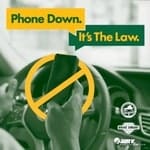 Virginia is a Hands Free Driving State. Virginia law prohibits having a phone or handheld personal communication device in your hand while driving pursuant to Va. Code §46.2-818.2. The law does not require that the driver was doing anything in particular on the phone or device like texting to prove a violation. This offense is a moving violation demerit point offense. A conviction will post to the driving record. However, there are defenses and exceptions. This law does not apply if lawfully parked or stopped, if reporting an emergency, if using an amateur or citizens band radio or operating an emergency vehicle.
Greensville VA has a Reputation for Aggressive Traffic Enforcement
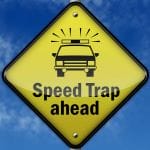 Greensville County is in elite company among small Virginia jurisdictions that rely on traffic fines and court costs. Many refer to this area as a speed trap. A speed trap is an area of the road that police officers heavily monitor to catch people speeding. Technically defined as an area of road where police officers hide in order to detect vehicles exceeding a speed limit. According to a study by Governing magazine, fines are 7.3% of the county’s budget. Needless to say, Greensville aggressively enforces the traffic laws. However, the Town of Eastville on the Eastern Shore in Northampton County relies more on traffic fines for revenue, with an astounding 72% of its budget coming from traffic fines and forfeitures.
Contact us today for a free evaluation of YOUR case!
11/10/2015 | Updated 10/22/2023
Greensville Criminal Law<< Previous < > Next >> Greensville Reckless Driving