
Hopewell VA Reckless Driving Lawyer
 Riley & Wells Attorneys-At-Law represents Virginia and out-of-state drivers charged with reckless driving in Hopewell. Most of our Hopewell reckless driving cases arise from alleged speeding on Interstate 295, where driving more than 85 mph or at least 20 mph above the applicable speed limit may result in a Class 1 misdemeanor charge rather than an ordinary speeding ticket. Our attorneys regularly defend I-295 reckless driving cases in Hopewell General District Court, including allegations based on radar, lidar, pacing, and other speed-measuring evidence. We review the summons, alleged speed, posted limit, officer’s identification of the vehicle, calibration records, driving history, and other facts that may affect the defense or possible disposition. A conviction may result in jail, a fine, suspension of driving privileges, six Virginia DMV demerit points, an 11-year driving-record entry, and a criminal court record. At speeds above 100 mph, the case may also involve Virginia’s Intelligent Speed Assistance requirements unless the court instead suspends the driver’s license.







Hopewell Reckless Driving Defense Guide
Hopewell Defense Service
For broader statewide guidance, review our Virginia reckless driving lawyer page.
I-295 Reckless Driving Enforcement in Hopewell
 Interstate 295 passes through a short section of the City of Hopewell that has long been associated with frequent speed enforcement. Some motorists refer to this portion of the highway as the “Million Dollar Mile” because of the volume of traffic cases historically generated along the corridor. I-295 is a major bypass route carrying commuters, commercial vehicles, and interstate travelers around the Richmond metropolitan area. Many drivers charged in Hopewell are simply traveling through Virginia and do not realize that a high-speed allegation may be prosecuted as a criminal misdemeanor until they review the statute listed on the summons. Where the posted limit is 70 mph, an alleged speed of 86 mph may be charged as reckless driving even though the driver is only 16 mph above the limit. Cases involving speeds approaching or exceeding 100 mph may also create greater concern about jail, license suspension, and other enhanced consequences. I-295 cases may involve stationary or moving radar, lidar, pacing, vehicle identification, traffic surrounding the accused vehicle, the officer’s viewing position, and calibration or accuracy documentation. Those issues should be evaluated according to the particular method used to determine speed.
Other Hopewell Reckless Driving Enforcement Areas
Although Interstate 295 produces much of Hopewell’s reckless-driving business, charges may also arise on Route 10, Route 36, local streets, and roads serving industrial, freight, and military-related traffic.
- Route 10: James River Drive and Elm Street carry local, commercial, and commuter traffic through changing speed zones and intersections.
- Route 36: Hatcher Memorial Highway connects Hopewell with Fort Gregg-Adams and surrounding areas and includes sections with varying traffic patterns and speed limits.
- Industrial and freight corridors: Roads serving manufacturing, shipping, and warehouse facilities may involve substantial commercial and commuter traffic.
Hopewell Reckless Driving by Speed
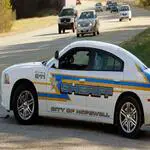 Reckless driving by speed is the most frequently charged reckless-driving offense in Hopewell. Unlike an ordinary speeding ticket, the charge is a criminal misdemeanor and is not determined solely by the number of miles per hour above the posted speed limit. These cases commonly arise on Interstate 295, where the posted speed limit is often 70 mph and many drivers are traveling through the area from another part of Virginia or another state. Virginia law establishes two separate speed thresholds, and satisfying either one may support a reckless-driving charge.
Virginia Code § 46.2-862 makes it reckless driving to operate a motor vehicle:
- At least 20 miles per hour above the applicable maximum speed limit; or
- At more than 85 miles per hour regardless of the applicable maximum speed limit.
This means that an allegation of 86 mph in a 70-mph zone may be charged as reckless driving even though the driver is only 16 mph above the limit. The summons should be reviewed carefully to determine whether the officer charged ordinary speeding or criminal reckless driving under § 46.2-862.
The alleged speed is important, but it is not the only issue that may affect the case. The court may also consider the reliability of the speed evidence, the driver’s record, traffic and weather conditions, the reason for driving, corrective measures, and other aggravating or mitigating circumstances.
Common I-295 Speed Allegations
- 86 mph in a 70-mph zone
- 90 mph in a 70-mph zone
- 95 mph in a 70-mph zone
- 99 mph in a 70-mph zone
- 100 mph in a 70-mph zone
- More than 100 mph in a 70-mph zone
The potential outcome cannot be determined from the alleged speed alone. Two cases involving the same speed may have different evidence, driving records, vehicle-identification issues, mitigating circumstances, and possible dispositions.
Virginia Uniform Summons and Hopewell Court Process
 Reckless driving cases arising in Hopewell are generally heard in the Hopewell General District Court. The scheduled proceeding may be an arraignment or trial depending on the alleged speed, possible jail exposure, and manner in which the case was placed on the court docket. Reckless driving is not a prepayable traffic offense. A driver should not attempt to resolve the case as though it were an ordinary speeding ticket or assume that payment of a fine will end the matter without a court proceeding. The court process may involve officer testimony, speed-measuring evidence, calibration certificates, cross-examination, defense evidence, legal arguments, negotiation, and a decision by the judge. The Commonwealth must prove every element of the charged offense beyond a reasonable doubt.
Virginia Uniform Summons
 A Virginia Uniform Summons is the legal document commonly issued following an I-295 traffic stop. Motorists often refer to it as a ticket or citation, but it serves as formal notice of the criminal reckless-driving charge and the obligation to respond in court. Signing the summons is not an admission of guilt. The signature generally acknowledges receipt of the document and the obligation to appear as directed. The summons should identify the charged statute, alleged speed or conduct, officer, court date, and location of the hearing. A driver should confirm that the summons lists § 46.2-862 when the charge is reckless driving by speed. Other reckless-driving statutes require proof of different conduct and may raise different defenses.
Arraignment and Jail Exposure
A case involving an extremely high speed or other aggravating circumstances may be scheduled for arraignment. At arraignment, the judge may advise the defendant that jail is a possible punishment and address the right to legal representation.
Scheduling a case for arraignment does not establish guilt or guarantee incarceration. It does indicate that the possibility of jail should be taken seriously and that the driver should understand the procedural requirements before the next hearing.
Personal Appearance
A person charged with reckless driving is generally required to appear unless the court permits otherwise. In an appropriate out-of-state case, an attorney may ask the court to waive the client’s personal appearance.
A waiver is not automatic. The decision may depend on the alleged speed, possible jail exposure, judge, evidence, driving record, procedural status, and whether the court needs the defendant present.
Radar, Lidar, Pacing, and Speed Evidence
The Commonwealth must present legally sufficient evidence connecting the alleged speed to the vehicle identified on the summons. The type of evidence depends on how the officer claims the speed was determined.
Virginia law recognizes radar, laser speed-determination devices commonly called lidar, qualifying microcomputer devices, aircraft-based measurement, and authorized photo speed-monitoring devices. Police may also use pacing evidence based on the speedometer of a law-enforcement vehicle.
Speed-Evidence Issues
- The officer’s training and operation of the device
- Stationary versus moving radar
- Testing and calibration of radar or lidar
- Accuracy of tuning forks or testing methods
- Identification of the measured vehicle
- The officer’s line of sight
- Traffic surrounding the accused vehicle
- Distance between the officer and vehicle
- Weather and roadway conditions
- The posted speed limit
- The distance and duration of a pace
- Accuracy of the police vehicle’s speedometer
- Body-camera or dash-camera recordings
- Statements made during the traffic stop
- Admissibility of calibration certificates
- Whether the evidence proves the alleged speed
Radar Evidence
Radar measures speed by transmitting a signal and calculating the change in frequency after the signal reflects from a moving object. Relevant questions may include whether the officer tested the unit, whether the calibration documentation was current, whether other vehicles were present, and how the officer associated the reading with the accused vehicle.
Lidar Evidence
Lidar uses a narrow laser beam to calculate speed based on changes in distance over a short period. The evidence may involve the officer’s aiming point, distance, line of sight, operation of the device, calibration records, and identification of the targeted vehicle.
Pacing Evidence
In a pacing case, an officer follows or travels near the accused vehicle and uses the police cruiser’s speedometer to estimate speed. The evidence may depend on whether the officer maintained a consistent distance, the length and duration of the pace, whether the police vehicle was accelerating, and whether the cruiser’s speedometer was properly calibrated.
Calibration Certificates
Virginia Code § 46.2-882 permits qualifying certificates to establish the calibration or accuracy of radar, lidar, police speedometers, tuning forks, and other recognized speed-determination equipment. Calibration or testing of most devices is valid for no longer than six months.
The certificate should identify the equipment or testing method, when calibration occurred, and who performed it. Whether a particular certificate satisfies the evidentiary requirements depends on its contents and connection to the device used in the case.
Speedometer Calibration and Case Preparation
Speedometer Calibration
A vehicle speedometer may display a speed different from the vehicle’s actual speed. A calibration test compares the speed shown to the driver with the vehicle’s measured speed and documents any difference.
Under Virginia Code § 46.2-942, qualifying evidence that the accused vehicle’s speedometer was calibrated and inaccurate must be considered by the court when determining guilt or innocence and punishment.
A calibration may be helpful when it demonstrates that the speedometer displayed a speed lower than the vehicle’s actual speed. It is not automatically favorable. A report may show that the speedometer was accurate or that the displayed speed was higher than the actual speed.
The testing facility, sworn documentation, date, vehicle-identification information, method, and results should be reviewed before deciding whether to present the report in court.
Driver Improvement and Mitigating Evidence
Depending on the case, a driver may consider obtaining a current driving record, completing an approved driver improvement clinic, completing a reckless or aggressive driving course, documenting an emergency, repairing a vehicle issue, or gathering other relevant information.
Corrective action may provide mitigating evidence, but it does not guarantee dismissal or reduction. The appropriate preparation depends on the alleged speed, driving history, commercial-license status, evidence, and circumstances of the case.
How a Reckless Driving Case Is Evaluated
A complete review may include:
- The exact statute listed on the summons
- The alleged and posted speeds
- The officer’s speed-measuring method
- Calibration and accuracy documentation
- The driver’s Virginia or home-state record
- Prior traffic or reckless-driving convictions
- Road, traffic, and weather conditions
- Possible vehicle-identification issues
- Statements made during the stop
- Available video or electronic evidence
- Possible jail or license exposure
- Employment or security-clearance concerns
Hopewell Reckless Driving Penalties and DMV Points
 Most Virginia reckless-driving offenses are Class 1 misdemeanors. The maximum authorized misdemeanor punishment includes up to 12 months in jail and a fine of up to $2,500.
A reckless-driving conviction may also result in suspension of driving privileges, court costs, driver improvement requirements, six Virginia DMV demerit points, an 11-year driving-record entry, and a criminal court record.
Possible Consequences
- Up to 12 months in jail
- A fine of up to $2,500
- Possible suspension of driving privileges
- Six Virginia DMV demerit points
- An 11-year Virginia driving-record entry
- A criminal court record
- Court costs
- Driver improvement requirements
- Possible insurance consequences
- Possible employment consequences
- Possible security-clearance consequences
- Possible commercial-license consequences
The maximum punishment is not imposed in every case. The actual outcome depends on the speed, statute, driving record, prior convictions, traffic conditions, conduct during the stop, possible danger to other motorists, and other aggravating or mitigating facts.
Jail Exposure at High Speeds
Most people charged with reckless driving are not automatically sentenced to jail. The risk can increase when the alleged speed is extremely high, the driver has prior offenses, the case involves dangerous conduct, or other aggravating circumstances exist.
An allegation above 100 mph may receive especially serious attention. The judge may consider both the number of miles per hour above the limit and the absolute speed of the vehicle.
Six Virginia DMV Demerit Points
 Virginia DMV does not assign demerit points merely because a summons was issued. After a conviction is reported, DMV generally assigns six demerit points for reckless driving. The demerit points remain valid for two years from the offense date, while the reckless-driving conviction normally remains on the Virginia driving record for 11 years. The point-expiration date is therefore different from the date the conviction is removed from the record. Insurance-company points are separate from Virginia DMV points. An insurer may use its own underwriting standards when evaluating a reckless-driving conviction.
Criminal Record Sealing
Traditional expungement is generally unavailable after a reckless-driving conviction. Under Virginia’s current record-sealing law, some misdemeanor convictions may qualify for petition-based sealing after satisfaction of the applicable waiting period and other statutory requirements.
Eligibility depends on the particular offense, criminal history, number of prior convictions, statutory exclusions, manifest-injustice requirement, and other conditions. A reckless-driving conviction should not be described categorically as incapable of ever being sealed.
Intelligent Speed Assistance and Improper Driving
Intelligent Speed Assistance Program
For a conviction under Virginia Code § 46.2-861 or § 46.2-862, the court may, for good cause and as an alternative to suspending the driver’s license, require enrollment in Virginia’s Intelligent Speed Assistance Program for not less than 60 days and not more than six months.
If a person is convicted under § 46.2-862 and found to have driven more than 100 mph, the court must order enrollment in the program unless it instead suspends the driver’s license.
The system is designed to limit vehicle speed and monitor compliance. Enrollment does not permit the operation of a commercial motor vehicle. Tampering with, bypassing, or attempting to circumvent the system may result in a separate criminal charge, and noncompliance may lead to license suspension.
Reduction to Improper Driving
 Virginia Code § 46.2-869 permits the court or jury to find a person not guilty of reckless driving but guilty of improper driving when the degree of culpability is slight. The Commonwealth’s Attorney may also reduce the charge to improper driving before the court’s decision. Improper driving is a traffic infraction rather than a criminal misdemeanor. It carries a maximum fine of $500, is generally treated as a three-point DMV violation, and normally remains on the Virginia driving record for three years. A reduction is not automatic. Whether improper driving is available or appropriate depends on the evidence, degree of culpability, alleged speed, driving record, and circumstances of the case.
Out-of-State Drivers
 Many drivers charged with reckless driving in Hopewell live outside Virginia and were traveling on Interstate 295 when stopped. An out-of-state driver remains subject to Virginia law and must resolve the charge in the Hopewell court identified on the summons. A Virginia conviction may be reported to the driver’s home licensing state. The home state may apply its own point system, suspension rules, record-retention requirements, and other consequences. The effect cannot necessarily be determined solely from Virginia DMV’s treatment of the conviction.
Waiver of Personal Appearance
In an appropriate case, an attorney may ask the Hopewell court to waive an out-of-state client’s personal appearance. The decision belongs to the court and may depend on the alleged speed, possible jail exposure, driving record, judge, evidence, and status of the case.
Hiring an attorney does not automatically excuse a driver from court. The client should not miss the scheduled appearance unless the court has granted a waiver or counsel has confirmed that personal attendance is unnecessary.
Other Hopewell Reckless Driving Charges
Although most Hopewell reckless-driving cases involve speed on Interstate 295, Virginia law defines numerous other forms of reckless driving. Each statute has different elements, and the Commonwealth must prove the particular conduct charged.
Virginia Reckless Driving Statutes
- § 46.2-852 – General reckless driving
- § 46.2-853 – Failure to maintain control or faulty brakes
- § 46.2-854 – Passing on a grade or curve
- § 46.2-855 – Obstructed view or impaired control
- § 46.2-856 – Passing two vehicles abreast
- § 46.2-857 – Driving two vehicles abreast
- § 46.2-858 – Passing at a railroad crossing
- § 46.2-859 – Passing a stopped school bus
- § 46.2-860 – Failure to give proper signals
- § 46.2-861 – Driving too fast for conditions
- § 46.2-861.1 – Failure to move over or proceed safely
- § 46.2-862 – Reckless driving by speed
- § 46.2-863 – Failure to yield right-of-way
- § 46.2-864 – Reckless driving on parking lots
- § 46.2-865 – Racing or exhibition driving
- § 46.2-866 – Aiding or abetting a race
Reckless Driving After a Traffic Accident
 Virginia Code §§ 46.2-852 and 46.2-853 are frequently charged following traffic accidents. Section 46.2-852 addresses driving recklessly or in a manner that endangers life, limb, or property. Section 46.2-853 addresses operating a vehicle that is not under proper control or has inadequate or improperly adjusted brakes. The mere occurrence of an accident does not automatically prove reckless driving. The prosecution must present evidence establishing the prohibited conduct. An investigating officer who did not witness the collision may rely on driver statements, witness testimony, vehicle damage, road evidence, video, or accident reconstruction. Some cases involve insufficient evidence to establish how the crash occurred. Others may involve negligence or slight culpability that does not rise to the level necessary for a reckless-driving conviction.
Failure to Move Over or Proceed Safely
 Virginia Code § 46.2-861.1 requires drivers approaching certain stationary vehicles displaying qualifying warning lights to move into a lane not adjacent to the stationary vehicle when the lane change is reasonable and safe. When a lane change would be unreasonable or unsafe, the driver must proceed with due caution and maintain a safe speed for highway conditions. A violation involving certain emergency, law-enforcement, or qualifying vehicles is reckless driving. A violation involving other categories of stationary vehicles may be classified as a traffic infraction. Traffic, available lanes, visibility, the type of stationary vehicle, activated lights, the driver’s speed, and whether a lane change could be safely completed may all matter.
Passing a Stopped School Bus
 Virginia Code § 46.2-859 requires a driver to stop when approaching a qualifying school bus that is stopped to take on or discharge children, elderly individuals, or individuals with mental or physical disabilities. The driver must remain stopped until those individuals are clear and the bus begins moving. The roadway configuration, location of the bus, operation of the required warning equipment, identity of the vehicle, statutory exceptions, and witness evidence may be important. A driver generally need not stop when the bus is on the opposite roadway of a divided highway separated by a physical barrier or unpaved area. Virginia also provides a separate civil enforcement process involving certain school-bus camera evidence. The exact statute and form of process should therefore be reviewed.
Racing and Exhibition Driving
 Racing and exhibition driving are among the most serious forms of reckless driving. Virginia law prohibits racing between vehicles and certain exhibition-driving conduct on highways, driveways, and premises open to the public. Related statutes also address aiding or abetting a race, injury or death resulting from racing, vehicle impoundment or forfeiture, and substantial suspension of driving privileges. Some racing offenses become felonies when the conduct causes serious bodily injury or death to another person.
Hopewell Reckless Driving Case Results
Every case depends on its own facts, evidence, legal issues, driving record, judge, and circumstances. Prior results do not guarantee a similar outcome in another case.
Reckless Driving 111/70 – Reduced to a Traffic Infraction
 Our Hopewell reckless-driving lawyers represented a client stopped on Interstate 295 and charged under Virginia Code § 46.2-862 based on an allegation of 111 mph in a 70-mph zone.
The client was concerned about possible incarceration, a misdemeanor conviction, and the effect on a security clearance. The attorneys prepared and presented the case to the Hopewell court.
The client was not convicted of reckless driving. The criminal charge was reduced to a traffic infraction.
View the Hopewell 111/70 case result
Reckless Driving 99/70 – Not Guilty
 Our attorneys represented a driver accused of reckless driving by speed based on an allegation of 99 mph in a 70-mph zone. The Hopewell court found the client not guilty.
View the Hopewell 99/70 court record
Hopewell Reckless Driving FAQ
What speed is reckless driving on I-295 in Hopewell?
Virginia Code § 46.2-862 defines reckless driving by speed as driving at least 20 mph above the applicable maximum speed limit or more than 85 mph regardless of the applicable limit. Where the limit is 70 mph, driving 86 mph may be charged as reckless driving.
Is reckless driving a criminal offense in Virginia?
Yes. Most Virginia reckless-driving violations are Class 1 misdemeanors. Reckless driving is not an ordinary traffic infraction, even when the charge is based only on speed.
Can I prepay a Hopewell reckless driving ticket?
No. Virginia does not permit prepayment of a reckless-driving charge. The driver must address the case through the court process and should follow the appearance instructions on the summons unless the court permits otherwise.
Do I have to appear in Hopewell court?
Personal appearance is generally required unless the court permits otherwise. In an appropriate out-of-state case, an attorney may request a waiver, but retaining counsel does not automatically excuse the driver from attending.
How do police measure speed on I-295?
Speed may be determined through radar, lidar, pacing, or another legally recognized method. The officer’s testimony, vehicle identification, line of sight, traffic conditions, calibration evidence, and operation of the equipment may all matter.
Can a speedometer calibration help a reckless driving case?
A calibration may help when it shows that the vehicle’s speedometer displayed a speed lower than the vehicle’s actual speed. Virginia law requires the court to consider a qualifying calibration report when determining guilt or innocence and punishment. The usefulness of the report depends on its results and documentation.
Can reckless driving be reduced to improper driving?
Virginia Code § 46.2-869 permits a court or jury to find a person not guilty of reckless driving but guilty of improper driving when culpability is slight. The Commonwealth’s Attorney may also reduce the charge before the court’s decision. A reduction is not automatic.
Can a Hopewell reckless driving conviction result in jail?
Yes. Most reckless-driving offenses are Class 1 misdemeanors carrying a maximum of 12 months in jail. Jail is not imposed in every case, but the risk may increase with extreme speed, prior convictions, dangerous conduct, or other aggravating circumstances.
What is Intelligent Speed Assistance?
For certain convictions under §§ 46.2-861 or 46.2-862, the court may require enrollment in the Intelligent Speed Assistance Program instead of suspending the license. For a § 46.2-862 conviction involving more than 100 mph, enrollment is mandatory unless the court instead suspends the license.
Can a reckless driving conviction be sealed in Virginia?
Traditional expungement is generally unavailable after a conviction. Some misdemeanor reckless-driving convictions may qualify for petition-based criminal record sealing under Virginia law. Eligibility depends on the offense, criminal history, waiting period, manifest-injustice requirement, and other statutory conditions.
Can a Hopewell conviction affect an out-of-state driver?
Yes. Virginia may report the conviction to the driver’s home licensing state. The home state may apply its own point, suspension, driving-record, insurance, and commercial-license rules.
Talk to a Hopewell Reckless Driving Lawyer
A Hopewell reckless-driving charge should be evaluated based on the exact statute, alleged speed or conduct, enforcement method, driving record, court date, and possible criminal and licensing consequences. I-295 cases involving extreme speed require particular attention to the speed evidence, possible jail exposure, license consequences, and Intelligent Speed Assistance law.
Riley & Wells Attorneys-At-Law represents Virginia residents and out-of-state motorists charged with reckless driving in Hopewell General District Court.
Request a confidential Hopewell reckless driving case review.
9/27/2013 | Updated 7/22/2026