
King George County VA DUI DWI Lawyer | 1500+ Reviews
 Riley & Wells Attorneys-At-Law represents clients charged with DUI and DWI offenses in King George County, Virginia. These criminal cases may involve allegations of driving or operating a vehicle after consuming alcohol, drugs, prescription medication or a combination of substances. The evidence may include officer observations, driving conduct, field sobriety testing, breath or blood testing, statements, accident evidence and body camera or dashboard camera recordings. Our attorneys review the basis for the traffic stop or police contact, operation of the vehicle, probable cause for arrest, testing procedures, prior record and possible consequences before advising clients about defenses, court procedure and practical preparation. An arrest is not a conviction, and the Commonwealth must prove the charged offense.







King George County DUI Defense Guide
King George County Defense Services
- King George County Overview
- King George County Traffic Lawyer
- King George County Reckless Driving Lawyer
- King George County Speeding Ticket Lawyer
- King George County Criminal Defense Lawyer
For broader statewide representation information, see our Virginia DUI Lawyers page.
King George County DUI and DWI Charges
 A Virginia DUI or DWI charge is a criminal allegation involving the operation of a motor vehicle while under the influence of alcohol, drugs or a combination of substances. A case may arise from a traffic stop, accident, checkpoint, report from another motorist or contact with a parked vehicle. The investigation may involve officer observations, statements attributed to the driver, field sobriety exercises, a roadside preliminary breath test, an evidentiary breath test, a blood test or other evidence concerning operation and impairment. An arrest is not a conviction. The Commonwealth must prove the required elements of the charged offense. The evidence and legal issues should be evaluated before conclusions are reached about the strength of the case. An initial DUI case review may consider:
- The exact charge and Virginia Code section
- The reason for the traffic stop or police contact
- The identity of the alleged driver
- Officer observations and statements
- Field sobriety test conditions
- Preliminary breath test information
- Evidentiary breath or blood test results
- Body camera and dashboard camera recordings
- Medical conditions and medications
- Prior DUI or refusal history
- License and employment consequences
- Possible defenses and mitigation
Virginia DUI Law
 Virginia Code § 18.2-266 prohibits driving or operating a motor vehicle while under the influence of alcohol, while under the influence of drugs to a degree that impairs the ability to drive safely or while under the combined influence of alcohol and drugs. The statute also prohibits driving or operating with a blood alcohol concentration of 0.08 percent or more as shown by a qualifying chemical test. Certain specified concentrations of cocaine, methamphetamine, phencyclidine and methylenedioxymethamphetamine may also support a charge under the statute. A chemical test result is not the only method the Commonwealth may use to prosecute a DUI case. A prosecution may rely on observations, statements, driving conduct, physical appearance, field sobriety testing and other evidence of impairment. Issues that may affect the application of the DUI statute include:
- Whether the accused person drove or operated the vehicle
- Whether the alleged operation occurred within Virginia
- Whether alcohol, drugs or both were involved
- Whether the evidence proves impairment
- Whether a chemical test was properly obtained and admitted
- Whether the Commonwealth can connect the test result to the alleged operation
DUI Traffic Stops and Arrests
 A DUI investigation may begin when an officer observes an alleged traffic violation, unusual driving behavior, an accident or another circumstance suggesting that a driver may be impaired. Police contact may also arise at a checkpoint or after a report from a witness. The legality of a traffic stop may depend on the specific observations available to the officer before the vehicle was stopped. The reason stated by the officer should be compared with body camera recordings, dashboard camera recordings, dispatch information and other evidence. During the investigation, an officer may observe speech, balance, coordination, appearance, odor, driving conduct and the driver’s responses to questions. Those observations should be evaluated in light of the surrounding circumstances and any alternative explanations. Before making an arrest, the officer must have probable cause to believe that an offense occurred. The probable cause determination may involve:
- The reason for the initial stop
- Driving behavior
- An accident or vehicle condition
- Statements attributed to the driver
- Odor and physical observations
- Open containers or other physical evidence
- Field sobriety test performance
- Preliminary breath test information
- Witness statements
- Body camera recordings
- Medical or physical explanations
- The total circumstances known to the officer
Field Sobriety Testing
 Field sobriety exercises are roadside investigative tools used by officers to gather observations about coordination, balance, attention and the ability to follow instructions. They are not the same as the chemical breath or blood testing addressed by Virginia’s implied consent law. Common exercises include horizontal gaze nystagmus, the walk and turn exercise and the one leg stand exercise. Officers may also use counting, alphabet or finger dexterity exercises that are not part of the three standardized exercises. Performance may be affected by factors unrelated to alcohol or drug impairment. Age, injuries, medical conditions, footwear, road surface, weather, lighting, traffic, nervousness and the clarity of the instructions may affect what occurs during roadside testing. A review of field sobriety evidence may consider:
- Which exercises were requested
- Whether the instructions were complete and accurate
- Whether the officer demonstrated the exercise
- The condition and slope of the testing surface
- Weather, lighting and traffic conditions
- Footwear, injuries and medical conditions
- Whether the officer recorded the entire investigation
- Whether the written report matches the available video
DUI Breath and Blood Testing
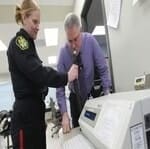 A DUI case may include a roadside preliminary breath test, an evidentiary breath test administered after arrest or a blood sample analyzed for alcohol or drugs. These forms of testing serve different purposes and are governed by different legal and evidentiary requirements. Breath test evidence may involve the identity and certification of the operator, observation procedures, the condition of the testing equipment, test records, required procedures and whether the result can be connected to the alleged time of driving. Blood testing may involve sample collection, labeling, storage, transportation, laboratory analysis and chain of custody. Drug related cases may also require evaluation of whether the substance and reported concentration establish impairment under the applicable law. Potential testing issues may include:
- The legal basis for obtaining the sample
- The time between driving and testing
- The identity of the person tested
- The procedures used to collect the sample
- Operator qualifications and certifications
- Equipment and test records
- Sample labeling and storage
- Transportation and chain of custody
- Laboratory procedures
- Medical conditions or substances that may affect testing
- The reliability and admissibility of the result
- The relationship between the result and the time of driving
Virginia Breath or Blood Test Refusal
Virginia’s implied consent law may apply when a person operates a motor vehicle on a highway and is arrested within the statutory time period for DUI or another qualifying offense. Depending on the alleged basis for the DUI charge, the law may require a breath sample, blood sample or both.
An unreasonable refusal allegation is separate from the underlying DUI charge. A first refusal violation is generally a civil offense that may result in a one year loss of driving privileges. A later refusal involving a qualifying prior DUI or refusal history may carry more serious consequences.
Refusal issues may include:
- Whether the implied consent statute applied
- Whether the arrest occurred within the required time
- Whether the officer properly advised the accused person
- Whether the requested test was authorized by law
- Whether the person actually refused
- Whether the alleged refusal was unreasonable
- Whether a medical or communication issue affected the response
- Whether a prior offense changes the classification or penalty
The refusal charge, officer advisement form, recordings and circumstances surrounding the requested test should be reviewed together.
DUI Penalties and License Consequences
A first violation of Virginia Code § 18.2-266 is generally a Class 1 misdemeanor with a mandatory minimum fine of $250. A conviction may also result in incarceration, probation, court costs, completion of the Virginia Alcohol Safety Action Program and restrictions on driving privileges.
For a first DUI conviction, Virginia law generally provides for a one year loss of driving privileges. Eligibility for restricted driving privileges and ignition interlock requirements depends on the conviction, record, circumstances and court order.
Additional mandatory jail may apply when a qualifying chemical test shows an elevated blood alcohol concentration. Prior DUI convictions, an accident involving injury, transporting a minor or other aggravating circumstances may increase the possible punishment.
Possible consequences may include:
- Jail or a suspended jail sentence
- A mandatory minimum fine
- Additional fines and court costs
- Probation
- Virginia Alcohol Safety Action Program requirements
- Ignition interlock requirements
- Loss of driving privileges
- Restricted driving conditions
- Vehicle related consequences in some felony cases
- Employment and professional licensing concerns
- Security clearance consequences
- Effects on future DUI allegations
The exact consequences should be evaluated using the charged offense, alleged blood alcohol concentration, prior record and facts of the case.
Second and Subsequent DUI Offenses
Virginia law increases the potential punishment when a person has a qualifying prior DUI conviction. The date of the prior offense, the date of the current allegation and whether the prior conviction is substantially similar to Virginia DUI law may be important.
A second DUI offense within 10 years may carry mandatory jail, an increased mandatory minimum fine and a longer loss of driving privileges. The mandatory jail period may depend on whether the prior offense occurred within five years or between five and 10 years before the current offense.
A third DUI offense committed within 10 years may be prosecuted as a Class 6 felony. The possible mandatory minimum punishment depends in part on whether the three offenses occurred within five years or within 10 years.
A prior offense review may examine:
- The court and jurisdiction of the prior conviction
- The statute under which the person was convicted
- The offense and conviction dates
- Whether the prior statute is substantially similar
- Whether the identity of the accused person can be established
- Whether the prior record supports the alleged enhancement
Restricted Driving and Ignition Interlock
A DUI conviction may result in the loss of driving privileges. Depending on the circumstances, a court may have authority to grant restricted driving privileges for approved purposes and subject to specific conditions.
Restricted privileges are not automatic. The authorized purposes, duration, geographic limits, vehicle requirements and ignition interlock conditions depend on the applicable law and court order.
Issues may include:
- Travel to and from employment
- Travel required during employment
- Medical care
- Virginia Alcohol Safety Action Program participation
- Ignition interlock installation and compliance
- Transportation of minor children
- Other purposes authorized by Virginia law
A restricted license order should be reviewed carefully before driving. Operating outside the terms of the order may create an additional criminal charge.
King George County DUI Court and Law Enforcement
 Adult misdemeanor DUI charges in King George County are generally heard in General District Court. The court listed on the summons, warrant or other charging document controls where the case begins and when the accused person must appear. An appeal from a final General District Court conviction may be heard in Circuit Court. Felony DUI allegations may begin with preliminary proceedings in General District Court before proceeding to Circuit Court. King George County DUI investigations may involve the King George County Sheriff’s Office, Virginia State Police or another agency with authority at the location of the alleged offense. Cases may arise on Route 3, U.S. Route 301, Route 205, Route 206 and other roads throughout the county. The court, hearing date, appearance instructions and suite number should be confirmed from the official charging document before court.
General District Court
10446 Government Center Boulevard
Suite 105
King George, Virginia 22485
Circuit Court
10446 Government Center Boulevard
Suite 271
King George, Virginia 22485
DUI Evidence and Defense Issues
 The strength of a DUI case depends on the evidence, how the investigation was conducted and whether the Commonwealth can prove every required element. No single defense applies to every case. The defense should compare officer testimony and written reports with body camera recordings, dashboard camera recordings, dispatch records, photographs, testing documents and other available evidence. Medical conditions, injuries, fatigue, anxiety, prescribed medication, road conditions and other circumstances may provide explanations for observations that an officer attributed to impairment. The appropriate defense may involve challenging a stop, arrest, statement, test result or required element of the offense. Other cases may involve negotiation, mitigation or preparation for trial. Potential issues may include:
- Whether the accused person drove or operated the vehicle
- The legal basis for the traffic stop
- The duration and scope of the detention
- Probable cause for arrest
- Statements and constitutional protections
- Field sobriety test administration
- Breath or blood test procedures
- Timing and reliability of chemical testing
- Medical and physical explanations
- Witness credibility
- Video evidence and report inconsistencies
- Whether the evidence proves impairment beyond a reasonable doubt
King George County DUI Client Reviews

What to Send for a DUI Case Review
Complete and readable documents help identify the charge, court date, alleged test result and possible defense issues. Useful materials may include:
- The summons, warrant or charging document
- Bond and release paperwork
- The court notice and hearing date
- The current driving record
- Prior DUI or refusal records
- The administrative license suspension form
- Breath or blood test documents
- Refusal advisement paperwork
- Accident reports and photographs
- Body camera or dashboard camera recordings
- Medical and prescription information
- A written account of the incident
King George County DUI and DWI FAQs
Is there a difference between DUI and DWI in Virginia?
The terms DUI and DWI are commonly used to describe an allegation of driving or operating a motor vehicle while under the influence of alcohol, drugs or both. Virginia prosecutions are commonly brought under Virginia Code § 18.2-266.
Is a first DUI a criminal charge in Virginia?
Yes. A first violation of Virginia Code § 18.2-266 is generally a Class 1 misdemeanor rather than an ordinary traffic infraction.
Can a person be charged with DUI without a 0.08 test result?
Yes. The Commonwealth may attempt to prove impairment through officer observations, driving conduct, statements, field sobriety testing and other evidence even when there is no chemical test result of 0.08 percent or more.
What field sobriety tests are commonly used?
Common exercises include horizontal gaze nystagmus, the walk and turn exercise and the one leg stand exercise. Officers may also request other coordination or divided attention exercises.
Is a roadside breath test the same as the evidentiary breath test?
No. A roadside preliminary breath test is used during the investigation. An evidentiary breath test is generally administered after arrest and is subject to separate statutory and evidentiary requirements.
Can a blood test be used in a Virginia DUI case?
Yes. Blood testing may be used in alcohol or drug related cases when authorized by Virginia law. Collection, labeling, storage, transportation, laboratory analysis and chain of custody may be important.
What is a Virginia refusal charge?
A refusal allegation may arise when a person accused of a qualifying DUI offense unreasonably refuses a breath or blood test required by Virginia’s implied consent law. The classification and consequences depend on the circumstances and prior record.
What are the possible penalties for a first DUI?
A first DUI is generally a Class 1 misdemeanor with a mandatory minimum fine, loss of driving privileges and Virginia Alcohol Safety Action Program requirements. Jail, ignition interlock and other conditions may also apply depending on the facts.
How does a prior DUI affect a new charge?
A qualifying prior DUI may increase the mandatory punishment, extend the loss of driving privileges and affect whether a later offense is prosecuted as a misdemeanor or felony.
Where are King George County DUI cases heard?
Adult misdemeanor DUI cases are generally heard in King George County General District Court at 10446 Government Center Boulevard, Suite 105, King George, Virginia.
Do I have to appear in court for a DUI charge?
A DUI is a criminal charge, and personal appearance is generally required. The accused person should follow the instructions on the summons, warrant and bond documents unless the court orders otherwise.
What should I provide for a King George County DUI case review?
Provide the complete charging document, bond paperwork, court notice, driving record, administrative suspension form, breath or blood test documents, refusal paperwork, photographs, videos, medical information and a written account of the incident.
Request a Confidential King George County DUI Case Review
 A DUI charge may involve time sensitive court dates, license consequences, testing records and evidence that should be preserved. Reviewing the summons, warrant, investigation, chemical testing, driving record and possible consequences can help identify the legal issues before court.
Request a confidential DUI case review for a charge pending in King George County, Virginia.
7/1/2024 | Updated 7/31/2026