
Norfolk VA Traffic Lawyer
 A traffic charge in Norfolk can affect your driving record, automobile insurance, employment, and ability to drive. Depending on the offense, a conviction may also result in fines, DMV demerit points, license suspension, or possible jail. Riley & Wells Attorneys-At-Law represents Virginia and out-of-state drivers charged with traffic offenses in the Norfolk General District Court. Our Norfolk traffic lawyers review the summons, the specific Virginia Code section, the officer’s observations, available recordings, the driver’s record, and other evidence that may support a defense, reduction, or favorable resolution. We defend speeding tickets, reckless driving, driving on a suspended or revoked license, no operator’s license, hit and run, accident-related traffic charges, cellphone violations, and other Virginia traffic offenses. Every case requires an individualized evaluation of what the Commonwealth must prove and the consequences that matter most to the driver.







Norfolk Traffic Defense Guide
Norfolk Defense Services
- Norfolk VA Overview
- Norfolk VA DUI / DWI Lawyer
- Norfolk VA Reckless Driving Lawyer
- Norfolk VA Speeding Ticket Lawyer
- Norfolk VA Criminal Defense Lawyer
For broader statewide information about Virginia traffic offenses, court procedures, DMV consequences, and defense strategies, review our Virginia traffic lawyer guide.
Traffic Offenses We Defend in Norfolk
 Virginia traffic offenses range from prepayable infractions to criminal misdemeanors and felonies. The precise charge listed on the summons determines what the Commonwealth must prove, whether the driver must appear in court, and the possible consequences of a conviction. Similar-sounding charges can involve different Virginia Code sections, elements, defenses, DMV treatment, and sentencing exposure. The below list is not exhaustive. The front and back of the summons, the exact statutory citation, and any related arrest or release documents should be reviewed before deciding how to respond to the charge. Our Norfolk traffic lawyers represent drivers charged with offenses involving:
- Speeding Tickets
- Reckless Driving
- Aggressive Driving
- Driving on a Suspended License
- Driving on a Revoked License
- No Valid Driver’s License
- Driving After a DUI Revocation
- Hit and Run
- Eluding Police
- Racing
- Improper Driving
- Improper Passing
- Improper Turn
- Following Too Closely
- Unsafe Lane Change
- Failure to Yield
- Failure to Obey a Highway Sign
- Failure to Move Over
- Failure to Yield to an Emergency Vehicle
- Passing a Stopped School Bus
- Handheld Cellphone Violations
- Commercial Driver Violations
- Vehicle Registration Violations
- Vehicle Inspection Violations
- No Automobile Insurance
- Traffic Charges After a Collision
- Out-of-State Driver Cases
- Restoration of Driving Privileges
Understanding a Virginia Uniform Summons
 A Virginia Uniform Summons is the charging document commonly issued by Norfolk police officers and Virginia State Troopers during a traffic stop. Drivers often call the summons a ticket or citation, but the document may charge either a traffic infraction or a criminal offense. Signing the summons is not an admission of guilt. It generally acknowledges receipt and the obligation to appear or otherwise respond as directed. Prepaying a traffic charge should not be confused with obtaining a dismissal because payment ordinarily results in a conviction being entered. The summons ordinarily identifies:
- The alleged offense and Virginia Code section
- The date, time, and location of the alleged violation
- The driver and vehicle information recorded by the officer
- The scheduled court date and hearing time
- The issuing officer and law-enforcement agency
- Whether the charge is designated as prepayable
How a Norfolk Traffic Case Is Evaluated
 A traffic defense begins with the specific statute charged and the evidence the officer intends to present. A speeding case requires a different analysis from a suspended-license allegation, accident-related summons, cellphone charge, reckless-driving prosecution, or hit-and-run case. The defense must also consider the driver’s record, employment, licensing state, and the practical consequences of each potential disposition. The appropriate strategy may involve contesting an element of the offense, challenging the reliability or admissibility of evidence, disputing the officer’s interpretation of events, correcting an underlying licensing problem, or presenting circumstances supporting a dismissal or reduction. A complete case review may include:
- The summons, warrant, and applicable Virginia Code section
- The officer’s observations and anticipated testimony
- The location and asserted reason for the traffic stop
- Body-camera and dashboard-camera recordings
- Radar, lidar, pacing, or speedometer evidence
- Calibration and accuracy documentation
- Witness statements and collision evidence
- Photographs, diagrams, and surveillance recordings
- The driver’s Virginia or out-of-state record
- Notice and knowledge evidence in suspended-license cases
- Vehicle registration, inspection, repair, and insurance records
- Commercial-license, employment, and security-clearance concerns
- Evidence supporting mitigation or a reduced disposition
Criminal Traffic Charges and Traffic Infractions
Not every Norfolk traffic case is a minor ticket. Virginia law classifies certain driving offenses as criminal misdemeanors or felonies, while other violations are prosecuted as traffic infractions.
Criminal traffic charges may include reckless driving, DUI / DWI, driving on a suspended or revoked license, hit and run, racing, eluding police, and certain repeat licensing offenses. Depending on the charge, a conviction may expose the driver to jail, probation, license suspension, vehicle impoundment, or a criminal record.
A traffic infraction does not ordinarily create a criminal conviction, but it may still result in fines, DMV demerit points, insurance consequences, driver-improvement requirements, or administrative action against the driver’s license.
The statutory classification—not the informal description written or spoken by the officer—determines the legal seriousness of the case.
Norfolk Roads and Traffic Enforcement Areas
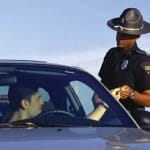 Norfolk contains major interstate, military, port, airport, bridge, and tunnel transportation corridors. Virginia State Police commonly enforce traffic laws on the interstates, while Norfolk Police investigate violations on city streets and other roads within the City of Norfolk. The roadway, posted speed limit, lane configuration, traffic congestion, officer location, and alleged driving behavior may all become important when evaluating a Norfolk traffic charge. Interstate cases frequently involve speeding, reckless driving, unsafe lane changes, following too closely, failure to move over, and driving on a suspended or revoked license. Urban-road cases may also involve traffic signals, turns, pedestrians, school buses, cellphone allegations, and licensing violations. Frequently traveled roads and corridors include:
- Interstate 64
- Interstate 264
- Interstate 564
- Hampton Boulevard
- Granby Street
- Church Street
- Tidewater Drive
- Military Highway
- Virginia Beach Boulevard
- Norview Avenue
- Chesapeake Boulevard
- Little Creek Road
- Downtown Tunnel Approaches
- Hampton Roads Bridge-Tunnel Approaches
- Berkley Bridge Area
- Naval Station Norfolk Approaches
I-64, I-264, and I-564 Norfolk Traffic Charges
 Interstate 64, Interstate 264, and Interstate 564 carry commuter, military, commercial, airport, and regional traffic through Norfolk. These highways include tunnels, bridges, merge areas, changing traffic patterns, congestion, and locations where traffic may rapidly slow or accelerate. The fact that a charge was issued on an interstate does not determine guilt. The Commonwealth must still prove the elements of the particular traffic infraction or criminal offense using admissible evidence. An interstate traffic case may require review of:
- The officer’s location and view of the accused vehicle
- The posted speed limit and any nearby speed-limit transition
- The identity of the vehicle within surrounding traffic
- Radar, lidar, pacing, or other speed evidence
- Lane changes, merging traffic, and roadway configuration
- Traffic congestion and emergency braking
- Body-camera and dashboard-camera recordings
- Any collision, witness statement, or physical evidence
Traffic Charges Issued After a Norfolk Accident
 Riley & Wells represents drivers charged with traffic and criminal offenses following Norfolk automobile accidents. We do not represent people pursuing personal-injury or automobile-accident compensation claims. Following a collision, an officer may issue a summons or obtain a warrant for reckless driving, following too closely, unsafe lane change, failure to yield, failure to maintain control, hit and run, or another traffic offense. The investigating officer often arrives after the event and relies on statements, witnesses, vehicle damage, roadway evidence, photographs, and other information gathered at the scene. The summons, accident report, photographs, insurance information, recordings, repair records, and witness contact information should be preserved for review.
A collision does not automatically prove that a traffic offense occurred. A defense may require consideration of:
- Whether the officer personally witnessed the alleged conduct
- Whether witness accounts are consistent and reliable
- Whether physical evidence supports the officer’s conclusion
- Whether the accused made an admissible statement
- Whether another driver contributed to the incident
- Whether roadway, weather, visibility, or mechanical conditions were involved
- Whether the evidence establishes every element of the charged offense
Out-of-State Drivers Charged in Norfolk
 Norfolk traffic cases frequently involve nonresident drivers traveling through Hampton Roads for military service, business, school, tourism, port activity, airport travel, or ordinary interstate transportation. A driver may be prosecuted in Virginia even though the license and vehicle were issued or registered in another state. A Virginia conviction may be reported to the driver’s home licensing jurisdiction. The home state determines whether it assigns points, imposes restrictions, or takes another administrative action. Automobile insurance, employment, and commercial-license consequences may also need to be evaluated. Whether the driver must personally return to Norfolk depends on the exact charge, the procedural posture, and the court’s requirements. A lawyer may request that an appearance be excused in an appropriate case, but a waiver should never be assumed before the court permits it.
DMV, Insurance, License, and Employment Consequences
A Norfolk traffic conviction may have consequences beyond the fine imposed by the judge. The potential impact depends on the offense, the driver’s prior record, the licensing jurisdiction, and whether the driver holds a commercial license or depends on driving for employment.
Possible consequences may include:
- Virginia DMV demerit points
- A conviction on the driving record
- License suspension or revocation
- Restricted-license conditions
- DMV monitoring or probation
- Automobile-insurance increases
- Loss or nonrenewal of insurance
- Commercial driver consequences
- Employment consequences
- Military consequences
- Security-clearance concerns
- Out-of-state licensing action
- Driver-improvement requirements
- Vehicle impoundment in qualifying cases
- Possible jail for criminal traffic offenses
- Additional consequences for later offenses
A reduced or amended charge may still carry DMV, insurance, licensing, or employment consequences. Those effects should be considered before deciding whether to prepay, plead guilty, accept a reduction, or proceed to trial.
Driver Improvement and Traffic Case Mitigation
Mitigation may help explain why a dismissal, reduction, or less severe disposition is appropriate. The useful preparation depends on the precise charge, driving record, alleged conduct, and the expectations of the court.
A driver should not automatically complete a course or obtain a particular document before the case is reviewed. Potential mitigation may include:
- A current certified driving record
- An appropriate driver-improvement course
- A speedometer calibration
- Proof that a license, registration, inspection, or insurance issue was corrected
- Vehicle inspection or repair records
- Employment, military, or security-clearance documentation
- Community service or other proactive measures
- Evidence concerning an emergency or unusual circumstance
Completing the wrong program or taking unnecessary steps may provide little benefit. The evidence and potential disposition should be considered before deciding what preparation is appropriate.
Handheld Cellphone Violations in Norfolk
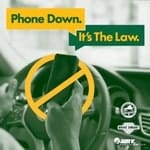 Virginia Code § 46.2-818.2 generally prohibits a person from holding a handheld personal communications device while driving a moving motor vehicle on a Virginia highway. The prosecution does not necessarily need to prove that the driver was texting, making a telephone call, or using a particular application. The statute contains exceptions, including circumstances involving a lawfully parked or stopped vehicle, emergency reporting, emergency personnel, and certain amateur or citizens band radio equipment. The defense may depend on whether the vehicle was moving, what the officer actually observed, and whether an exception applies. A first violation is a traffic infraction. The court may also have limited authority to order completion of a driver-improvement clinic in lieu of a conviction for a qualifying first violation.
Restoration of Virginia Driving Privileges
 Some Virginia suspensions end after the driver completes the suspension period and satisfies DMV reinstatement requirements. Other revocations may require a petition and hearing in a Virginia circuit court before full or restricted driving privileges can be restored. The correct process depends on why the privilege was suspended or revoked, the terms of the original court orders, the driver’s residence, completion of required programs, proof of financial responsibility, and the current DMV compliance record. An old Virginia suspension or revocation may also continue to affect a driver who now lives in another state through the National Driver Register. A restoration review may require examination of prior conviction orders, DMV records, VASAP documentation, ignition-interlock compliance, proof of insurance, unpaid costs, and other outstanding conditions before a petition is filed.
Norfolk Traffic Court
 Most Norfolk traffic infractions and misdemeanor traffic charges begin in the Norfolk General District Court. The summons, warrant, recognizance, or other charging document identifies the scheduled hearing date, time, and nature of the proceeding. The procedure depends on the classification of the charge and whether the matter is scheduled for arraignment, attorney review, trial, or another hearing. The court may consider officer testimony, witness testimony, documentary evidence, recordings, legal arguments, and mitigation. The Norfolk General District Court is located at 150 Saint Paul’s Boulevard, Room 3202, Norfolk, Virginia 23510. Drivers should rely on their summons and official court information to confirm the correct date, time, and courtroom.
- Traffic infractions: Some offenses may be prepayable, although prepayment ordinarily results in a conviction.
- Criminal traffic charges: Reckless driving, suspended-license charges, hit and run, DUI, and other misdemeanors or felonies may require personal appearance unless the court permits otherwise.
- Arraignment: The court may advise the accused of the charge, potential punishment, right to counsel, and future hearing date.
- Trial: The Commonwealth must prove the charged offense using admissible evidence and the applicable burden of proof.
- Appeal: A qualifying General District Court conviction may be appealed to the Norfolk Circuit Court within the applicable deadline.
Selected Norfolk Traffic Case Results
Felony Hit and Run Charge — Dismissed
Our Norfolk traffic lawyers represented a driver charged with felony hit and run after a collision involving a pedestrian. The client explained that she did not realize the vehicle had struck a person and circled the block before returning to the location. The defense focused on whether the Commonwealth could prove the knowledge and intent required for the charged offense. The judge agreed with the defense argument and dismissed the case.
Reckless Driving by Speed — Dismissed
 Our Norfolk traffic attorney represented a North Carolina driver charged with reckless driving by speed after a Virginia State Trooper alleged that she drove 80 miles per hour in a 55-mile-per-hour zone. Radar evidence was used to support the charge. The client was not required to return to Norfolk for trial. After the defense presented the relevant evidence and arguments, the judge dismissed the reckless-driving charge. Prior results depend on the specific facts and law involved and do not guarantee a similar outcome in another case.
Norfolk Traffic Lawyer Client Reviews
Client reviews provide insight into communication, preparation, responsiveness, and the experience of working with a law firm during a Norfolk traffic case.

Frequently Asked Questions About Norfolk Traffic Charges
What does a Norfolk traffic lawyer help with?
A Norfolk traffic lawyer may represent drivers charged with speeding, reckless driving, suspended-license offenses, hit and run, cellphone violations, accident-related traffic charges, commercial-driver offenses, and other traffic violations. The lawyer can review the charge, evidence, court procedure, possible consequences, defenses, and mitigation.
Where are Norfolk traffic cases heard?
Most Norfolk traffic infractions and misdemeanor traffic charges begin in the Norfolk General District Court at 150 Saint Paul’s Boulevard. The summons should identify the hearing date, time, and court division.
Do I have to appear in court for a Norfolk traffic charge?
It depends on the exact charge, the instructions on the summons, and whether the court excuses the driver’s appearance. Some traffic infractions may be prepayable, while criminal traffic charges generally require an appearance unless the court permits counsel to appear without the driver.
Does signing a Virginia Uniform Summons mean I am guilty?
No. Signing a summons generally acknowledges receipt and the obligation to appear or otherwise respond as directed. It is not an admission of guilt.
Can a Norfolk traffic conviction affect my insurance?
Yes. A traffic conviction may affect the driving record, DMV demerit points, and automobile-insurance costs. The impact depends on the offense, the driver’s history, the insurance company, and the final disposition.
Can an officer issue a traffic charge after an accident the officer did not witness?
Yes. An officer may issue a summons after considering driver statements, witness accounts, vehicle damage, photographs, physical evidence, and the scene. The Commonwealth must still prove every element of the charged offense in court.
Can an out-of-state driver hire a Norfolk traffic lawyer?
Yes. Norfolk traffic cases frequently involve nonresident drivers traveling on Interstate 64, Interstate 264, Interstate 564, or other Hampton Roads roads. Counsel can review whether the driver must return to Virginia and how a conviction may affect the home-state driving record.
Should I complete driver improvement before court?
A driver-improvement course may help in some cases, but the appropriate course and timing depend on the charge, driving record, evidence, and court. The case should be reviewed before the driver independently completes a program.
Norfolk Traffic Case Review
A Norfolk traffic charge should be evaluated based on the exact offense, evidence, driving record, licensing state, and the consequences that matter most to the driver. Early review can help determine whether a personal court appearance is required and what evidence or preparation may be useful.
Our attorneys represent Virginia and out-of-state drivers charged with traffic infractions, criminal traffic offenses, and accident-related traffic violations in the City of Norfolk.
Request a confidential Norfolk traffic case review and include a clear copy of the front and back of the summons, the court date, and the state that issued your driver’s license.
5/17/2024 | Updated 7/24/2026