
York County VA Reckless Driving Lawyer
 Riley & Wells Attorneys-At-Law represents drivers charged with reckless driving in York County VA. Reckless driving is a criminal offense under Virginia law rather than an ordinary traffic ticket. Cases may involve excessive speed, alleged unsafe driving conduct, accidents, loss of vehicle control, passing violations, or other conduct charged under Virginia’s reckless driving laws. A reckless driving conviction can result in a criminal record, DMV demerit points, fines, possible loss of driving privileges, and, depending on the circumstances, possible jail time. Our attorneys review the exact statute charged, alleged speed or driving conduct, location of the stop or incident, driving record, available evidence, and potential consequences before recommending how the case should be approached.







York County Reckless Driving Defense Guide
| Defense Services | Reckless Driving Charges |
| Reckless by Speed | Penalties & Consequences |
| Evidence & Defenses | Court Process |
| Communities & Roads | Reckless Driving FAQs |
York County Defense Services
For broader statewide guidance, see our Virginia Reckless Driving Lawyer page.
What Happens After a York County Reckless Driving Summons?
 A Virginia Uniform Summons issued for reckless driving is a criminal charging document rather than an ordinary speeding ticket. Signing the summons is generally not an admission of guilt. It acknowledges receipt of the document and the obligation to respond according to its instructions. The summons should identify the specific Virginia Code section charged, court, hearing date, and alleged conduct or speed. A reckless driving case should be evaluated according to that statute, the method of enforcement, the driver’s record, the location of the stop or incident, available evidence, and possible consequences. The Commonwealth must prove the charged offense beyond a reasonable doubt. Depending on the allegation, evidence may include radar or lidar readings, pacing, officer observations, roadway conditions, video recordings, accident evidence, witnesses, calibration records, or other information. A driver should preserve the complete summons and begin identifying relevant evidence before the court date. Photographs, video, GPS information, witness information, and other evidence may become more difficult to obtain as time passes.
Types of Reckless Driving Charges in York County
Virginia law contains multiple forms of reckless driving. Reckless driving by speed is one of the most common, but a driver may also be charged based on the manner of driving, an accident, vehicle control, passing conduct, racing, or another specific statutory provision.
Reckless Driving by Speed
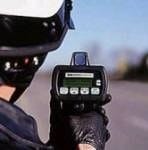 Virginia Code § 46.2-862 provides that a driver may be convicted of reckless driving for driving 20 miles per hour or more above the applicable maximum speed limit or for driving faster than 85 miles per hour regardless of the applicable speed limit. That means a speed of 86 mph or higher may qualify as reckless driving even where the driver is not 20 mph above the posted limit. A speed exactly 20 mph above the applicable limit may also satisfy the statute. Reckless driving by speed differs from an ordinary speeding infraction because it is prosecuted as a criminal offense. The prosecution must establish the alleged speed and satisfy the evidentiary requirements applicable to the method used to measure it. Relevant issues may include the posted speed limit, officer location, target identification, radar or lidar operation, calibration and testing records, pacing evidence, traffic conditions, and whether the prosecution can properly establish the alleged speed.
General Reckless Driving
Virginia Code § 46.2-852 prohibits driving recklessly or at a speed or in a manner that endangers life, limb, or property. These allegations may involve weaving, unsafe passing, loss of vehicle control, aggressive maneuvers, or other driving behavior.
The fact that an officer believes driving was unsafe does not eliminate the Commonwealth’s burden to prove the elements of the statute. The surrounding traffic, road conditions, witnesses, video evidence, and actual manner of operation may become important.
Reckless Driving After an Accident
An automobile accident does not automatically establish reckless driving. Accident-related reckless driving allegations may depend on how the collision occurred, whether anyone actually observed the driving before impact, roadway and weather conditions, vehicle damage, photographs, video, witness testimony, and physical evidence at the scene.
In some cases, an investigating officer arrives after the collision and reconstructs what occurred from statements and physical evidence rather than personal observation. The evidence supporting that conclusion should be examined carefully.
Other Reckless Driving Offenses
Virginia’s reckless-driving statutes also address particular forms of driving conduct. Depending on the circumstances, allegations may involve:
- Driving too fast for traffic or highway conditions
- Failure to maintain proper control of a vehicle
- Inadequate or improperly adjusted brakes
- Passing on the crest of a hill or curve
- Passing at a railroad crossing
- Passing two vehicles abreast
- Driving two vehicles abreast
- Passing a stopped school bus
- Failure to yield when entering a highway
- Reckless driving on certain parking lots or similar property
- Racing or exhibition driving
- Certain Move Over Law violations
The particular statute printed on the summons matters because different reckless-driving offenses require different elements of proof.
York County Reckless Driving Penalties and Consequences
Most Virginia reckless-driving offenses are Class 1 misdemeanors. A Class 1 misdemeanor can carry:
- Up to 12 months in jail
- A fine of up to $2,500
- A criminal misdemeanor conviction
- Possible suspension of driving privileges
- Six Virginia DMV demerit points for many reckless-driving convictions
- An 11-year entry on the Virginia DMV driving record for many reckless-driving offenses
- Possible automobile-insurance consequences
- Possible employment, licensing, military, or security-clearance concerns
- Possible consequences imposed by another state for a nonresident driver
The statutory maximum does not mean that every reckless-driving conviction results in jail, a $2,500 fine, or suspension of driving privileges. The actual result depends on the statute, alleged speed or conduct, driving record, evidence, aggravating circumstances, mitigation, and court ruling.
When Jail May Become a Greater Concern
Potential incarceration may become a more significant issue in cases involving particularly high alleged speeds, dangerous driving behavior, racing, serious accidents, an unfavorable driving history, prior court-related problems, or other aggravating circumstances.
The possibility of incarceration may also affect court procedure and the importance of understanding the right to counsel before proceeding.
Possible Driver’s License Suspension
For convictions under Virginia’s reckless-driving statutes, the court may suspend driving privileges for a period of not less than 60 days and not more than six months.
The effect of a suspension can be particularly significant for commercial drivers, people whose employment requires driving, and out-of-state motorists.
Felony Reckless Driving
Most reckless-driving charges are misdemeanors. Virginia law provides felony treatment in certain unusual circumstances, including a qualifying case in which a person’s license was suspended or revoked for a moving violation and reckless driving was the sole and proximate cause of another person’s death.
Racing and exhibition-driving statutes may also carry substantially greater consequences when serious bodily injury or death results.
Intelligent Speed Assistance Program
Virginia’s Intelligent Speed Assistance Program became relevant to certain reckless-driving dispositions in 2026. For qualifying convictions under Virginia Code §§ 46.2-861 or 46.2-862, a court may, for good cause and as an alternative to suspending the driver’s license, require enrollment in the program for a period of 60 days to six months.
For a conviction under § 46.2-862 in which the driver is found to have been traveling faster than 100 mph, the court must order enrollment in the program unless it instead orders suspension of the driver’s license.
The particular charge, alleged speed, license status, and court disposition should be reviewed before determining whether this provision applies.
Evidence and Defenses in a York County Reckless Driving Case
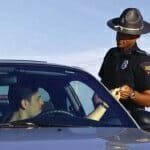 The available defense depends on the specific reckless-driving statute and the evidence supporting the charge. A defense to reckless driving by speed may be very different from a defense involving an accident, alleged loss of control, passing violation, racing allegation, or other driving conduct. The defense should begin with the summons, statute charged, officer’s observations, enforcement method, driving history, location, and evidence the Commonwealth intends to use. Questions may arise concerning accuracy, reliability, admissibility, interpretation, or whether the evidence establishes every required element beyond a reasonable doubt.
Radar and Lidar Evidence
A reckless-by-speed case involving radar or lidar may require review of the equipment used, testing or calibration documentation, officer operation of the device, target identification, traffic conditions, location of the vehicle, and whether the evidence satisfies Virginia’s legal requirements.
Pacing Evidence
When an officer determines speed by pacing another vehicle, relevant issues may include the distance and duration of the pace, whether the distance between the vehicles remained consistent, traffic conditions, and the accuracy of the police vehicle’s speedometer.
Speedometer Calibration
A vehicle speedometer calibration may be relevant when the vehicle’s speedometer was inaccurate. Virginia law permits a qualifying sworn speedometer-calibration report to be received as evidence in a prosecution involving alleged speed.
A calibration is not automatically helpful in every case. The result, timing, admissibility, and strategic value should be considered before relying on it.
Traffic, Weather and Roadway Conditions
Cases involving alleged reckless driving based on conditions or manner of operation may depend on traffic volume, weather, visibility, road design, curves, intersections, construction, congestion, pedestrian activity, and other circumstances existing at the time.
Accident, Identification and Witness Evidence
An accident does not by itself prove reckless driving. Relevant evidence may include photographs, vehicle damage, roadway markings, event-data information, video, witnesses, mechanical condition, sight distance, and evidence concerning how the collision occurred.
Identification can also become important where the officer did not personally observe the driving, multiple people were associated with the vehicle, or witnesses provide conflicting accounts.
Improper Driving, Reductions and Mitigation
Improper Driving
Virginia Code § 46.2-869 permits a court trying a reckless-driving case to find a driver not guilty of reckless driving but guilty of improper driving when the degree of culpability is slight. The Commonwealth’s Attorney may also reduce a reckless-driving charge to improper driving before the court’s decision.
Improper driving is a traffic infraction rather than a criminal misdemeanor and is punishable by a fine of no more than $500.
Whether improper driving is legally or factually appropriate depends on the circumstances. Other possible case outcomes may include an amendment to another traffic offense, reduction of the alleged speed, dismissal, acquittal, or conviction of the original reckless-driving charge. No particular result can be guaranteed.
Mitigation
Even when the evidence supports some traffic violation, mitigation may affect how the case is evaluated or resolved. Depending on the circumstances, potentially relevant material may include:
- A favorable driving record
- An appropriate driver-improvement course
- A useful speedometer calibration
- Community service or other corrective action
- Employment or professional-license consequences
- Military or security-clearance concerns
- Evidence concerning an emergency or unusual circumstance
- Repair records when vehicle condition is relevant
A driver should not assume that a course, calibration, or other mitigation step will help every case. Preparation should be based on the particular charge, evidence, driving record, and defense strategy.
York County Reckless Driving Court Process
 Adult reckless-driving charges are generally heard in the York County General District Court. The summons should identify the exact court date, charge, and appearance information.
York County General District Court
300 Ballard Street
Yorktown, Virginia 23690
A reckless-driving case may involve:
- A traffic stop or accident investigation
- Issuance of a Virginia Uniform Summons
- Review of the reckless-driving statute charged
- Review of the driver’s record
- Collection of relevant evidence
- Pretrial preparation and mitigation when appropriate
- Presentation of testimony and evidence
- Legal arguments concerning the charge
- A finding and sentencing if applicable
- Appeal when appropriate
Preparation should begin with review of the summons, statute charged, alleged speed or conduct, court date, driving record, and available evidence rather than waiting until the scheduled hearing.
Reckless Driving Across York County Communities and Roads
 Reckless-driving charges arise throughout York County. The U.S. Census Bureau identifies Yorktown and Bethel Manor as Census-designated places within the county. Other recognized communities and areas include Tabb, Grafton, Seaford, Dare, Dandy, Lackey, Bruton, Lightfoot, Skimino, and surrounding parts of York County. I-64 and U.S. Route 17 / George Washington Memorial Highway are two of the county’s major traffic corridors. Route 134, Route 171, Route 238, and other connecting roads also serve communities throughout York County. The location of a reckless-driving allegation can be important. Posted speed limits, roadway signs, lane configuration, traffic density, curves, intersections, officer position, sight distance, and surrounding conditions may affect the evidence. In reckless-by-speed cases, the location may affect the manner in which radar, lidar, pacing, or another speed-measurement method was used. In driving-conduct or accident cases, the road design, nearby witnesses, businesses, residences, video recordings, and physical evidence may become important. Drivers should preserve the location identified on the summons and any photographs, recordings, GPS information, or other evidence concerning the roadway and circumstances of the stop or incident.
Out-of-State Drivers Charged With Reckless Driving in York County
 York County’s location along I-64 and other major travel routes results in reckless-driving charges involving drivers licensed in other states. A Virginia reckless-driving charge remains a criminal matter even when the driver does not live in Virginia. A Virginia conviction may be reported to the driver’s home-state licensing authority. That state determines how the conviction affects the driver’s record or privileges under its own law. An insurance company may also separately consider the conviction. In some cases, an attorney may request that the court permit representation without the driver’s personal appearance. Whether an appearance may be waived depends on the charge, alleged conduct or speed, possibility of incarceration, court requirements, and the judge’s decision. Hiring an attorney does not automatically excuse attendance. An out-of-state driver should preserve the complete summons and obtain a current home-state driving record when appropriate.
York County Reckless Driving Client Reviews

What to Send for a York County Reckless Driving Case Review
Useful materials depend on whether the case involves speed, alleged driving conduct, an accident, or another reckless-driving provision.
Consider providing:
- The front and back of the summons
- The alleged speed and posted speed limit
- The court date and hearing information
- A current Virginia or home-state driving record
- Photographs or video of the road or location
- Dashboard-camera or other recordings
- Witness names and contact information
- Vehicle, GPS, or electronic information
- Accident or vehicle-repair records when relevant
- Employment, licensing, military, or security-clearance concerns
A speedometer calibration or driver-improvement certificate may be useful in an appropriate case, but a driver should not assume either step is necessary before the specific charge and circumstances have been reviewed.
York County Reckless Driving Lawyer FAQs
Is reckless driving a criminal offense in Virginia?
Yes. Most Virginia reckless-driving offenses are Class 1 misdemeanors rather than ordinary traffic infractions. A conviction can therefore create criminal as well as driving-record consequences.
What speed is considered reckless driving in Virginia?
Virginia Code § 46.2-862 provides that a person may be convicted of reckless driving for driving 20 miles per hour or more above the applicable maximum speed limit or for driving faster than 85 miles per hour regardless of the applicable speed limit.
Is 86 mph automatically within Virginia’s reckless-driving-by-speed statute?
Yes. Driving faster than 85 mph satisfies the speed threshold in Virginia Code § 46.2-862 regardless of the applicable maximum speed limit, although the Commonwealth must still prove the charged offense and supporting evidence.
Can driving exactly 20 mph over the speed limit be reckless driving?
Yes. Virginia’s reckless-driving-by-speed statute applies when a driver is traveling 20 miles per hour or more above the applicable maximum speed limit.
What are the possible penalties for reckless driving?
Most reckless-driving offenses are Class 1 misdemeanors, which can carry up to 12 months in jail and a fine of up to $2,500. A court may also suspend driving privileges in qualifying cases. Many reckless-driving convictions carry six Virginia DMV demerit points and remain on the DMV driving record for 11 years.
Does a reckless-driving charge automatically mean I will go to jail?
No. The statutory maximum does not mean every reckless-driving conviction results in jail. The significance of incarceration depends on the alleged speed or conduct, driving history, aggravating circumstances, evidence, mitigation, and the court’s decision.
Can reckless driving be reduced to improper driving?
Virginia Code § 46.2-869 permits a court to find a person charged with reckless driving guilty of improper driving when the degree of culpability is slight. The Commonwealth’s Attorney may also reduce a reckless-driving charge to improper driving before the court’s decision. Whether that disposition is appropriate depends on the particular facts.
What evidence matters in a reckless-driving-by-speed case?
Relevant evidence may include radar or lidar records, pacing evidence, testing and calibration documents, officer testimony, the posted speed limit, target identification, traffic conditions, roadway location, dashboard or body-camera video, vehicle information, and other evidence concerning the alleged speed.
Should I obtain a speedometer calibration before court?
A speedometer calibration may be useful in some speed cases, and Virginia law permits qualifying calibration reports to be considered as evidence. It is not automatically helpful in every case, so the result and strategic value should be considered before relying on it.
Should I complete a driver-improvement course before court?
A driver-improvement course may sometimes be useful as mitigation, but completing one does not guarantee dismissal or reduction. Whether a course is appropriate depends on the charge, driving record, circumstances, and defense strategy.
Are I-64 and Route 17 common roads for York County reckless-driving cases?
Yes. I-64 and U.S. Route 17 are major traffic corridors through York County and are common locations for speed-related and other traffic enforcement. The exact location may affect the posted limit, officer position, speed-measurement evidence, road conditions, and other issues in the case.
Can an out-of-state driver avoid returning to Virginia for a reckless-driving court date?
In some cases, an attorney may request that the court permit representation without the driver’s personal appearance. Whether an appearance may be waived depends on the charge, alleged conduct or speed, possibility of incarceration, court requirements, and the judge’s decision. A driver should not assume attendance is excused unless the court permits it.
What should I send for a York County reckless-driving case review?
Useful materials may include the complete summons, alleged speed and posted speed limit, court date, driving record, photographs or video of the road, dashboard-camera recordings, witness information, vehicle or GPS information, accident records when applicable, and information concerning employment, licensing, military service, or security-clearance consequences.
York County Reckless Driving Case Review
If you have been charged with reckless driving in York County, reviewing the summons, statute charged, alleged speed or driving conduct, driving record, available evidence, and possible consequences can help identify the legal and practical issues before court. Contact us for a confidential case review with a reckless driving lawyer.
2/9/2022 | Updated 9/29/2026