
Yorktown VA DUI/DWI Lawyer
 Riley & Wells Attorneys-At-Law represents clients charged with DUI / DWI offenses who have court dates in Yorktown VA, including alcohol-related DUI, drug-related DUI, refusal allegations, and other criminal traffic charges arising from the same incident. A DUI / DWI case can involve criminal penalties, loss of driving privileges, ignition interlock requirements, fines, possible jail, and other consequences affecting employment, insurance, licensing, and a person’s record. Our attorneys review the reason for the stop or police encounter, driving behavior, officer observations, field sobriety exercises, breath or blood testing, statements, video evidence, prior record, license status, and other circumstances before recommending how the case should be approached.







Yorktown DUI/DWI Defense Guide
| Defense Services | DUI/DWI Defense |
| DUI Charges & Penalties | Court Process |
| Evidence & Testing | License, Refusal & Interlock |
| Yorktown Roads | DUI/DWI FAQs |
Yorktown Defense Services
For broader statewide guidance, see our Virginia DUI / DWI Lawyer page.
DUI/DWI Defense in Yorktown VA
 A DUI / DWI charge with a court date in Yorktown can involve criminal penalties, loss of driving privileges, ignition interlock requirements, fines, possible jail, and other consequences affecting employment, insurance, licensing, and a person’s record. Some DUI investigations begin with an ordinary traffic stop. Others arise after an accident, a sobriety checkpoint, an encounter with a stopped or parked vehicle, or an investigation involving blood testing. The circumstances leading to the police encounter can be as important as the ultimate breath or blood result.
A Yorktown DUI defense review may include:
- The legal basis for the traffic stop or police encounter
- Whether the accused was driving or operating the vehicle
- Driving behavior observed before the stop
- Statements attributed to the driver
- Officer observations concerning appearance, speech, balance, or coordination
- Field sobriety exercises
- Preliminary breath-test evidence
- Evidentiary breath or blood testing
- Body-camera or dash-camera recordings
- Accident evidence when applicable
- Prior DUI history and license status
- Refusal or other charges arising from the same incident
The defense strategy should be developed around the evidence and circumstances of the individual case rather than an assumption that every DUI investigation is the same.
First-Offense, Second-Offense and Felony DUI Charges
Virginia Code § 18.2-266 prohibits several forms of driving or operating a motor vehicle while intoxicated or impaired. A DUI allegation may be based on a blood alcohol concentration of 0.08 percent or more, alcohol impairment, drug impairment, the combined influence of alcohol and drugs, or certain statutorily specified concentrations of particular drugs.
The exact charge, prior record, alleged BAC, substances involved, accident circumstances, refusal allegation, and other charges can significantly affect the possible consequences.
First-Offense DUI
A first violation of Virginia Code § 18.2-266 is generally a Class 1 misdemeanor. Virginia law provides a mandatory minimum fine of $250.
A first DUI conviction generally results in loss of the privilege to drive in Virginia for one year. Virginia law also generally requires participation in an alcohol safety action program following conviction, subject to the applicable statutory provisions.
Elevated BAC results can create additional mandatory jail consequences. A qualifying BAC of at least 0.15 but not more than 0.20 carries an additional mandatory minimum five days in jail. A qualifying BAC greater than 0.20 carries an additional mandatory minimum 10 days.
Second-Offense DUI
A second DUI offense within 10 years carries increased mandatory penalties.
A second offense committed within less than five years of the prior offense carries a mandatory minimum $500 fine and confinement from one month to one year, with 20 days of mandatory minimum jail time.
A second offense committed within five to 10 years of the prior offense carries a mandatory minimum $500 fine and confinement of at least one month, with 10 days of mandatory minimum jail time.
A second DUI conviction within 10 years generally results in a three-year loss of driving privileges. Elevated BAC provisions can add further mandatory jail time.
Felony and Subsequent DUI Charges
A third DUI offense committed within a 10-year period is generally a Class 6 felony. The sentence includes a mandatory minimum 90 days of confinement, or six months when the three qualifying offenses occurred within five years, as well as a mandatory minimum $1,000 fine.
Other DUI-related conduct involving serious injury or death may result in separate felony charges with substantially greater consequences.
DUI With a Minor Passenger
A DUI conviction committed while transporting a person 17 years of age or younger carries additional punishment under Virginia law, including an additional fine and a mandatory minimum five-day period of confinement.
Yorktown DUI Penalties and License Consequences
A DUI conviction can result in consequences imposed through the criminal court as well as separate licensing consequences. Depending on the charge and history, those consequences may include:
- Jail or other confinement
- Fines and court costs
- License suspension or revocation
- Virginia Alcohol Safety Action Program participation
- Ignition interlock requirements
- Restricted-driving conditions
- Probation
- Automobile-insurance consequences
- Employment or professional-licensing concerns
- Commercial driver’s license consequences
- Military or security-clearance concerns
- Home-state consequences for drivers licensed outside Virginia
The potential penalty range depends on more than whether the charge is labeled DUI. Prior convictions, elevated BAC, refusal, an accident, a minor passenger, license status, drugs, multiple substances, and related criminal or traffic allegations may all affect the case.
DUI Court Process for Cases Heard in Yorktown
 Most misdemeanor DUI / DWI charges with court dates at the Ballard Street court complex are heard in the General District Court. A person may naturally think of the matter as a Yorktown DUI case because the courthouse is physically located in Yorktown, even though the formal court name is the York County General District Court.
General District Court
300 Ballard Street
Yorktown, Virginia 23690
A DUI case may involve:
- A traffic stop, accident, checkpoint, or other police encounter
- Field sobriety and preliminary breath-test investigation
- Arrest and charging documents
- Administrative license suspension
- Arraignment or advisement when applicable
- Review of discovery and other evidence
- Pretrial motions when appropriate
- Trial
- Sentencing if convicted
- Appeal to Circuit Court when applicable
Certain felony DUI matters may begin in General District Court with a preliminary hearing before proceeding to Circuit Court. The exact procedure depends on the charge and procedural posture of the case.
Evidence and Testing in Yorktown DUI Cases
 The strength of a DUI case can depend on much more than the numerical result of a breath or blood test. The investigation should be reviewed from the initial stop or police encounter through the arrest, chemical testing, and handling of the evidence. Relevant evidence may include the basis for the stop, driving behavior, body-camera or dash-camera video, statements, officer observations, field sobriety exercises, preliminary breath testing, evidentiary breath testing, blood testing, medical information, chain of custody, and evidence establishing who was operating the vehicle.
Traffic Stop and Probable Cause
A DUI investigation may begin with alleged speeding, weaving, a lane violation, equipment issue, accident, or another observed circumstance. Other investigations may begin when an officer approaches a stopped or parked vehicle.
The circumstances of the encounter may raise questions concerning the legal basis for the stop or detention and whether sufficient evidence existed to arrest the driver for DUI.
Field Sobriety Exercises
 Field sobriety exercises may include horizontal gaze nystagmus, the walk-and-turn, the one-leg stand, or other tasks requested during a DUI investigation. Their significance may depend on how the exercises were explained, demonstrated, performed, observed, and documented. Road surface, grade, lighting, weather, traffic, footwear, age, injuries, medical limitations, nervousness, and officer instructions may affect performance. Body-camera or cruiser-camera video can be particularly important when comparing an officer’s description with what was actually recorded.
Preliminary Breath Test
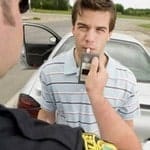 A preliminary breath test may be offered during a roadside DUI investigation before arrest. It is different from an evidentiary breath test performed after arrest. The preliminary test is used as part of the officer’s investigation and probable-cause analysis. A review may consider when the test was offered, how it was administered, what result was obtained, and what other evidence the officer relied upon when deciding whether to make an arrest.
Evidentiary Breath Testing
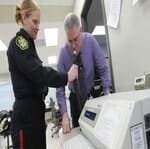 Post-arrest breath-test evidence may become an important part of an alcohol-related DUI prosecution. Virginia’s implied-consent law applies when the statutory requirements are satisfied, including a qualifying arrest within three hours of the alleged offense. Breath evidence may raise issues involving timing, operation of the testing equipment, required procedures, observation of the accused, identification of the sample, documentation, and whether the evidence is admissible and accurately reflects the driver’s condition while operating the vehicle.
Blood Testing and Laboratory Evidence
Blood evidence may be involved in drug-related DUI cases, certain alcohol-related investigations, accidents involving medical treatment, or other circumstances.
Potential issues may include the legal basis for obtaining the blood, collection procedures, chain of custody, storage, laboratory testing, identification of the sample, substances detected, concentration, timing, medical evidence, and whether the results establish impairment at the time of driving.
Operation, Statements and Video Evidence
The Commonwealth must establish that the accused drove or operated the vehicle as required by the applicable law. Operation can become a significant issue when an officer did not personally observe the vehicle being driven or when the investigation begins after an accident or with a stationary vehicle.
Statements attributed to the driver may also become important. Body-camera, dash-camera, surveillance video, witness testimony, vehicle information, and other evidence may confirm or contradict portions of the investigation.
Administrative Suspension, Refusal, Ignition Interlock and Restricted Driving
Administrative License Suspension After a DUI Arrest
Virginia law provides for immediate administrative suspension in qualifying DUI and refusal cases. For a first offense, the administrative suspension is generally seven days. A person charged with a second offense faces a 60-day administrative suspension, subject to the statutory provisions governing expiration at trial. A third or subsequent charge can result in administrative suspension until the date and time of trial.
The administrative suspension is separate from the additional license suspension or revocation that may result from a DUI conviction.
Virginia Implied Consent and Unreasonable Refusal
 Virginia’s implied-consent law generally applies to a person who operates a motor vehicle on a Virginia highway and is arrested for a qualifying DUI offense within three hours of the alleged offense. A refusal allegation is legally separate from the underlying DUI charge. A first unreasonable refusal of a required breath or blood test is generally a civil offense carrying a one-year loss of driving privileges in addition to the applicable administrative suspension. Repeat refusal allegations can carry greater consequences, and a qualifying repeat unreasonable refusal of a breath test can be prosecuted as a Class 1 misdemeanor. The circumstances of the requested test, prior record, warnings and advisement, statutory procedures, and basis for the arrest may all require review.
Ignition Interlock
Ignition interlock may be required as part of restricted-driving privileges or as a consequence of a DUI conviction. Current Virginia law contains different interlock provisions depending on the particular subsection of the DUI statute, whether the offense is a first or subsequent conviction, and the form of restricted driving privileges ordered by the court.
The device measures breath alcohol and restricts operation of a vehicle that does not comply with the applicable interlock requirements. Installation, monitoring, reporting, and compliance requirements can continue for a substantial period.
Restricted Driving Privileges and VASAP
Virginia law generally requires a person convicted of DUI to enter and successfully complete an alcohol safety action program, subject to the applicable statutory provisions.
Some drivers may qualify for restricted driving privileges. Depending on the offense, record, and court order, restricted privileges may involve ignition interlock and other limitations governing the person’s driving.
Administrative suspension, post-conviction license loss, refusal, VASAP, ignition interlock, and restricted-driving privileges operate under separate statutory provisions and should be evaluated individually.
Drug-Related DUI Charges in Yorktown
Virginia DUI law is not limited to alcohol. A person may be charged based on an allegation involving illegal drugs, prescription medication, over-the-counter medication, another intoxicant, or a combination of alcohol and drugs.
Drug-related DUI cases may involve:
- Officer observations and driving behavior
- Statements concerning medication or drug use
- Field sobriety exercises
- Blood-test results
- Prescription or medical information
- Body-camera recordings
- Laboratory analysis and chain of custody
- Evidence concerning the alleged effects of a particular substance
The presence of a substance in a blood sample does not necessarily resolve every question in a drug-related DUI case. The particular statutory provision, concentration when relevant, timing, evidence of impairment, medical circumstances, and reliability of the laboratory evidence may all require review.
DUI Accidents and Sobriety Checkpoints in the Yorktown Area
 Not every DUI investigation associated with Yorktown begins with an officer observing a moving traffic violation. Some cases arise after an accident, while others begin at a sobriety checkpoint or another police encounter. In an accident case, the investigating officer may arrive after the vehicles have stopped. Issues may include who was driving, when alcohol or another substance was consumed, witness statements, vehicle positions, surveillance or dashboard video, medical treatment, blood testing, and the relationship between the accident and the alleged impairment. A DUI case arising from a checkpoint may require review of the circumstances surrounding the checkpoint, how vehicles were selected, the officer’s observations, the transition from the initial encounter to a DUI investigation, and the evidence used to establish probable cause for an arrest.
DUI Cases on Roads in the Yorktown Area
 DUI investigations resulting in court dates in Yorktown may arise on major roads serving the community as well as on smaller streets near the courthouse, Historic Yorktown, residential areas, businesses, restaurants, and visitor destinations. U.S. Route 17 / George Washington Memorial Highway is a major traffic corridor serving the Yorktown area. Route 238 / Old Williamsburg Road, Goosley Road, Cook Road, Ballard Street, and other connecting roads carry residents, employees, visitors, and motorists traveling to destinations in and around Yorktown. I-64 is a major regional route across the Virginia Peninsula and may also generate DUI cases with court dates at the Ballard Street court complex.
The precise location of a DUI investigation can affect the evidence. Relevant considerations may include:
- The reason and location for the initial traffic stop
- Road design, lane markings, intersections, curves, and lighting
- The surface and conditions where field sobriety exercises were performed
- Nearby businesses or residences with surveillance video
- Witnesses who observed the driving or events before the police encounter
- The location of an accident or disabled vehicle
- Body-camera or cruiser-camera recordings
- Medical treatment and blood collection following an accident when applicable
Historic Yorktown and waterfront areas may present different roadway, pedestrian, parking, lighting, and traffic conditions from larger highways. Identifying the precise location of the stop, accident, checkpoint, or other police encounter can therefore be important when evaluating the evidence.
Out-of-State Drivers With Yorktown DUI Court Dates
 A person does not have to hold a Virginia driver’s license to face a Virginia DUI charge or Virginia driving-privilege consequences. An out-of-state driver with a court date in Yorktown should consider both the Virginia criminal case and the possible response of the driver’s home-state licensing authority. A DUI conviction, refusal finding, Virginia suspension, or failure to appear may be reported outside Virginia and may affect licensing, insurance, or employment under another state’s rules. DUI cases generally involve more significant appearance and sentencing issues than ordinary traffic infractions. An out-of-state driver should not assume that hiring an attorney automatically excuses personal attendance. The charging documents, court requirements, possible penalties, and home-state consequences should be reviewed before the court date.
Commercial and Professional Drivers Charged With DUI
A DUI charge can create additional concerns for a commercial or professional driver. CDL consequences are governed by rules that can differ from those affecting an ordinary driver’s license.
Employment policies, employer reporting requirements, commercial-driving disqualification, insurance eligibility, professional licensing, and security-clearance issues may also be important. A driver who holds a CDL or drives professionally should identify that status at the beginning of the case review.
Yorktown DUI/DWI Client Reviews

What to Send for a Yorktown DUI Case Review
Useful materials depend on the circumstances of the arrest, but may include:
- The summons, warrant, or other charging documents
- The court date and hearing information
- Administrative suspension paperwork
- Breath-test or blood-test paperwork
- A current Virginia or home-state driving record
- Any refusal paperwork
- Accident reports, photographs, or video
- Witness names and contact information
- Relevant medical or prescription information
- Body-camera or dash-camera footage if already obtained
- Information about prior DUI or DWI cases
- CDL, employment, licensing, military, or security-clearance concerns
Yorktown DUI/DWI Lawyer FAQs
Is DUI a criminal offense in Virginia?
Yes. A first violation of Virginia Code § 18.2-266 is generally a Class 1 misdemeanor. Repeat DUI offenses and certain other DUI-related conduct can carry substantially greater penalties, including felony treatment in qualifying cases.
What is the legal BAC limit for DUI in Virginia?
Virginia Code § 18.2-266 prohibits driving or operating a motor vehicle with a blood alcohol concentration of 0.08 percent or more by weight by volume or 0.08 grams or more per 210 liters of breath as established by a qualifying chemical test. Virginia law also permits DUI prosecution based on impairment even when the case does not depend on a BAC of 0.08 or greater.
Can I be convicted of DUI with a BAC below 0.08?
Potentially, yes. Virginia law separately prohibits driving or operating while under the influence of alcohol and includes other provisions involving drugs and combined alcohol-and-drug impairment. A DUI prosecution therefore does not always depend on a BAC result of 0.08 or higher.
What court handles DUI cases with court dates in Yorktown?
Most misdemeanor DUI cases with court dates at the Ballard Street court complex are heard in York General District Court at 300 Ballard Street, Yorktown, Virginia 23690. Certain felony matters may begin in General District Court before proceeding to Circuit Court.
Why does my paperwork say York if the courthouse is in Yorktown?
York General District Court is the formal name of the court, while the courthouse is physically located in Yorktown. This is why a person may think of the matter as a Yorktown DUI case even though the charging paperwork uses the formal York court name.
What happens to my license immediately after a DUI arrest?
Virginia law provides for immediate administrative suspension in qualifying DUI and refusal cases. A first-offense administrative suspension is generally seven days. A second-offense charge can result in a 60-day suspension, and a third or subsequent charge can result in suspension until trial. These administrative consequences are separate from any license loss imposed after conviction.
How long can I lose my license after a first DUI conviction?
A first DUI conviction under Virginia Code § 18.2-266 generally results in loss of the privilege to drive in Virginia for one year, subject to the statutes governing restricted driving privileges and related requirements.
Will I have to participate in VASAP after a DUI conviction?
Virginia law generally requires a person convicted of DUI to enter and successfully complete an alcohol safety action program, subject to the applicable statutory provisions.
Will I have to install an ignition interlock?
Ignition interlock requirements depend on the particular DUI conviction, whether the case involves alcohol or drugs, the driver’s prior record, license status, and the restricted-driving order entered by the court. Interlock is commonly required as part of restricted driving following an alcohol-related DUI conviction.
What happens if I refuse a breath or blood test?
A refusal allegation is separate from the underlying DUI charge. A first unreasonable refusal of a required breath or blood test is generally a civil offense carrying a one-year loss of driving privileges in addition to the applicable administrative suspension. Repeat refusal allegations can carry greater consequences, and a qualifying repeat unreasonable refusal of a breath test can be prosecuted as a Class 1 misdemeanor.
What is the difference between a roadside breath test and an evidentiary breath test?
A preliminary roadside breath test may be offered during the DUI investigation before arrest and is used as part of the probable-cause investigation. An evidentiary breath test is a post-arrest chemical test governed by separate statutory procedures and may be offered as evidence concerning blood alcohol concentration.
Can field sobriety evidence be challenged?
The significance of field sobriety exercises depends on how they were explained, demonstrated, performed, observed, and documented. Road surface, lighting, weather, footwear, age, injuries, medical conditions, nervousness, officer instructions, and video evidence may all be relevant when evaluating the results.
What happens if my BAC is 0.15 or higher?
For a first DUI offense, a qualifying BAC of at least 0.15 but not more than 0.20 carries an additional mandatory minimum five days in jail. A qualifying BAC greater than 0.20 carries an additional mandatory minimum 10 days. Repeat offenses can carry additional enhanced penalties.
Can someone be charged with DUI based on drugs or prescription medication?
Yes. Virginia DUI law includes impairment caused by drugs, medications, other intoxicants, combinations of drugs, and the combined influence of alcohol and drugs. Drug-related cases often involve blood testing, laboratory evidence, officer observations, medical information, and evidence concerning actual impairment.
Can an out-of-state driver face home-state consequences after a Virginia DUI?
Yes. Virginia can impose consequences on the person’s privilege to drive in Virginia, and the disposition may also be reported to the driver’s home-state licensing authority. The home state determines any additional consequences under its own laws.
What should I send for a Yorktown DUI case review?
Useful materials may include the charging documents, court date, administrative suspension paperwork, breath or blood test records, refusal documents, driving record, accident report, photographs or video, witness information, relevant medical or prescription information, prior DUI history, and information concerning CDL, employment, licensing, military, or security-clearance concerns.
Yorktown DUI/DWI Case Review
If you have been charged with DUI / DWI and have a court date in Yorktown, reviewing the charge, traffic stop or police encounter, field sobriety evidence, breath or blood testing, license status, prior record, video evidence, and possible consequences can help identify the legal and practical issues before court. Contact us for a confidential case review with a Yorktown DUI / DWI lawyer.
6/4/2024 | Updated 9/29/2026