
Yorktown VA Traffic Lawyer
 Riley & Wells Attorneys-At-Law represents drivers facing traffic charges with court dates in Yorktown VA, including speeding, reckless driving, DUI / DWI, suspended or revoked license offenses, accident-related charges, and other moving violations. A traffic case may involve more than a fine. Depending on the offense, a conviction can affect DMV demerit points, driving privileges, insurance, employment, or create a criminal record. Our attorneys review the summons, alleged driving conduct, location of the stop or accident, driving record, available evidence, and possible consequences before recommending how the case should be approached.







Yorktown Traffic Defense Guide
| Defense Services | Traffic Violations |
| Uniform Summons | Evidence & DMV |
| Traffic Court Process | Yorktown Roads |
| Out-of-State Drivers | Traffic FAQs |
Yorktown Defense Services
For broader statewide guidance, see our Virginia Traffic Lawyer page.
Traffic Defense Representation for Cases Heard in Yorktown
 Drivers often search for a Yorktown traffic lawyer because a Virginia Uniform Summons or other court paperwork directs them to a court date at the Ballard Street court complex. Our attorneys represent drivers facing traffic infractions as well as misdemeanor and felony motor-vehicle charges. A traffic defense begins with the exact Virginia Code section charged, the alleged driving conduct, location of the stop or accident, driving record, available evidence, and possible consequences of a conviction. Those factors may affect whether the charge should be contested, what additional evidence should be obtained, and what options may be available in court. Our attorneys represent local residents, visitors, commercial drivers, military personnel, college students, and drivers from other states who receive traffic charges resulting in court dates in Yorktown. Detailed information about speeding, reckless driving, and DUI / DWI is available through the dedicated Defense Services pages above.
Traffic Violations We Defend
Virginia traffic law includes offenses ranging from ordinary moving violations to misdemeanor and felony traffic charges. The classification, elements, possible penalties, DMV consequences, and defense issues depend on the exact statute charged.
Our traffic practice includes matters involving:
|
|
Some of these matters are traffic infractions. Others are criminal offenses that can expose a driver to consequences beyond a fine or DMV points. The summons, warrant, or other charging document should be reviewed to determine exactly what offense has been alleged.
Virginia Uniform Summons and Prepayment
 A Virginia Uniform Summons is commonly issued during a traffic stop. It identifies the alleged offense and ordinarily lists the court, hearing date, time, and other information necessary to respond to the charge. Signing a Virginia Uniform Summons is generally not an admission of guilt. The signature acknowledges receipt of the document and the obligation to respond as required. Certain qualifying traffic infractions may be prepaid. Under Virginia law, tendering payment for a qualifying prepayable traffic infraction waives the court hearing and constitutes entry of a guilty plea. Prepayment therefore should not be viewed simply as paying a bill. Before prepaying a summons, a driver should consider the exact charge, DMV consequences, existing driving record, employment or commercial-license issues, insurance concerns, and whether there may be a reason to contest the allegation or seek another disposition. Criminal traffic charges should not be treated like ordinary prepayable traffic infractions.
Suspended, Revoked and License-Related Traffic Cases
License-related cases may involve a suspended or revoked driver’s license, no valid operator’s license, violations of restricted driving privileges, or other issues concerning a person’s authority to drive.
The legal issues can depend on why the license was suspended or revoked, whether notice or knowledge must be established, the driver’s prior history, and the statute charged. Relevant records may include a Virginia DMV transcript or home-state driving record, prior court orders, suspension notices, reinstatement documents, and proof that outstanding requirements have been satisfied.
Correcting a license or DMV issue after receiving a summons does not automatically resolve a pending charge, but the driver’s current status and efforts to address the underlying problem may be relevant to how the case is handled.
Commercial drivers may face additional concerns because traffic convictions can affect employment and commercial driving privileges.
Evidence in a Yorktown Traffic Case
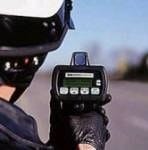 The evidence necessary to evaluate a traffic charge depends on the alleged offense. Some cases depend primarily on an officer’s observations and testimony. Others involve speed-measurement equipment, roadway signs, accident evidence, video recordings, witnesses, vehicle information, or electronic data.
Relevant evidence may include:
- Officer observations and testimony
- Radar, lidar, or pacing evidence
- Speed-measurement calibration records
- Body-camera and dashboard-camera recordings
- Photographs and video recordings
- Road signs and posted speed limits
- Lane configuration and roadway design
- Accident reports and vehicle damage
- Witness statements
- Driving records
- Vehicle, GPS, or electronic information when relevant
- Weather, visibility, and traffic conditions when relevant
A traffic stop, accident, or issuance of a summons does not by itself establish every element of the charged offense. The evidence should be evaluated according to the particular Virginia law involved.
Virginia DMV Demerit Points and Driving Records
Virginia DMV assigns demerit points after convictions for many moving violations. Depending on the particular offense, a conviction may carry three, four, or six demerit points.
Demerit points remain active for two years from the date of the offense. The conviction itself may remain on the driving record for a different period depending on the particular violation.
Virginia drivers may also accumulate safe-driving points. The practical impact of a new conviction therefore depends in part on the driver’s existing record and any other recent traffic violations.
Insurance companies separately determine how a conviction affects premiums or underwriting. Insurance-company points and Virginia DMV demerit points are not the same system.
For drivers licensed outside Virginia, the effect of a Virginia conviction on the home-state driving record is determined by the licensing authority in that state.
Traffic Accidents and Accident-Related Charges
 A motor-vehicle accident may result in allegations involving reckless driving, following too closely, failure to yield, improper lane changes, hit and run, or another traffic offense. The occurrence of an accident does not by itself establish that a driver violated a particular traffic law. The investigating officer may not have personally witnessed the collision. Evidence may instead come from statements made by the drivers, passengers or other witnesses, vehicle damage, photographs, roadway evidence, surveillance recordings, body-camera video, electronic information, and the physical location of the vehicles after the crash. Accident-related traffic cases should be evaluated by comparing that evidence with the elements of the particular offense charged.
Driver Improvement and Traffic Case Mitigation
A Virginia driver improvement clinic is intended to provide instruction concerning safe driving practices. Depending on the case, a driver’s record, voluntary completion of an appropriate clinic, or completion ordered by a court may become relevant.
A driver should not assume that completing a course will automatically result in dismissal or reduction of a traffic charge. Whether driver improvement is helpful depends on the offense, driving record, circumstances of the case, and how the matter is handled in court.
When driver improvement is being considered as part of case preparation, it may be useful to determine the appropriate course and timing before enrolling.
Traffic Court Process for Cases Heard in Yorktown
 Most adult traffic cases associated with a court date in Yorktown are heard in the General District Court. The courthouse is located at the Ballard Street court complex. A person may naturally refer to the matter as a Yorktown traffic case because the court is physically located there, even though the formal court name is the York County General District Court.
General District Court
300 Ballard Street
Yorktown, Virginia 23690
A traffic case may involve:
- A traffic stop or accident investigation
- Issuance of a Virginia Uniform Summons
- Review of the exact statutory charge
- Review of the driver’s record
- Collection of relevant evidence
- Pretrial preparation and discussions when appropriate
- Presentation of evidence in court
- Legal arguments concerning the charge
- A finding or other disposition
- Sentencing or appeal when applicable
The procedure depends on whether the charge is an ordinary traffic infraction, misdemeanor traffic offense, felony allegation, or another motor-vehicle matter. The summons should be reviewed to confirm the exact court date and charge rather than assuming that every traffic case follows the same procedure.
Traffic Stops and Roads in the Yorktown Area
 Traffic cases associated with Yorktown may arise on major roads serving the community as well as on smaller streets and intersections closer to the courthouse, Historic Yorktown, residential areas, businesses, and the waterfront. U.S. Route 17 / George Washington Memorial Highway is a major north-south traffic corridor used by drivers traveling to and from the area. Route 238 / Old Williamsburg Road, Goosley Road, Cook Road, Ballard Street, and other connecting roads also carry local residents, visitors, employees, and drivers traveling to destinations in and around Yorktown. The precise location of a traffic stop or accident may affect the posted speed limit, roadway signs, lane configuration, visibility, traffic volume, officer position, and availability of nearby witnesses or recordings. For speed-related allegations, the location may also be relevant to how radar, lidar, pacing, or another speed-measurement method was used. Historic and waterfront areas can present different traffic conditions from larger highways, including intersections, pedestrians, parking activity, lower-speed roads, and visitor traffic. The particular location should therefore be considered as part of the evidence rather than simply treating every traffic charge the same way.
Out-of-State Drivers with Court Dates in Yorktown
 Visitors and drivers passing through the Virginia Peninsula may receive a Virginia traffic summons that requires a court appearance in Yorktown. Living outside Virginia does not prevent a driver from contesting the charge. If a conviction occurs, the disposition may be reported to the driver’s home-state licensing authority. The home state determines how the Virginia conviction affects that person’s record or driving privileges. Whether a driver must personally return to Yorktown depends on the charge and court requirements. In an appropriate case, an attorney may request that the client’s personal appearance be waived, but the driver should not assume that an appearance has been excused unless the court allows it. An out-of-state driver seeking review should preserve the complete summons, confirm the court date, and obtain a current home-state driving record when appropriate.
Yorktown Hit and Run Case Result
Riley & Wells represented a driver charged with felony hit and run after a collision involving a pedestrian near a crosswalk. The defense presented evidence and argument concerning what the driver observed, the circumstances of the collision, and the driver’s conduct following the incident. The court dismissed the charge.
Past case results depend on the facts and circumstances of the individual case and do not guarantee a similar result in another matter.
Yorktown Traffic Defense Client Reviews

What to Send for a Yorktown Traffic Case Review
A complete summons and accurate information about the driver and alleged offense can help identify the issues that should be considered before court.
Useful materials may include:
- The complete Virginia Uniform Summons
- The court date and hearing information
- A current driving record
- Photographs of the roadway or location
- Police or accident reports already available
- Dashboard-camera or other video recordings
- Witness names and contact information
- Vehicle or GPS information when relevant
- Documents concerning a suspended or revoked license
- A written description of the stop or incident
Original photographs, video, GPS information, electronic records, and other potential evidence should be preserved without unnecessary editing or alteration.
Yorktown Traffic Lawyer FAQs
Where are traffic cases with a court date in Yorktown heard?
Most adult traffic cases with court dates at the Ballard Street court complex are heard in York General District Court at 300 Ballard Street, Yorktown, Virginia 23690. The summons should identify the exact court, hearing date, and charge.
Why does my summons say York if my court date is in Yorktown?
York General District Court is the formal name of the court, while the courthouse itself is located in Yorktown. This is why a driver may think of the matter as a Yorktown traffic case even though the summons uses the formal York court name.
What is a Virginia Uniform Summons?
A Virginia Uniform Summons is a charging document commonly issued during a traffic stop. It identifies the alleged violation and ordinarily provides information about the court date and location. Signing the summons is generally not an admission of guilt.
Can I prepay a traffic ticket?
Certain qualifying traffic infractions may be prepaid. Tendering payment for a qualifying prepayable traffic infraction waives the court hearing and constitutes entry of a guilty plea, so the consequences should be considered before deciding to prepay.
Is reckless driving a criminal charge in Virginia?
Yes. Reckless driving is a criminal offense rather than an ordinary traffic infraction. The allegation may be based on excessive speed or another form of driving conduct prohibited by Virginia law.
Can speeding become reckless driving?
Yes. Virginia law allows certain excessive-speed allegations to be charged as reckless driving instead of ordinary speeding. Reckless driving may also be charged based on the manner in which a vehicle was allegedly operated.
How do Virginia DMV demerit points work?
Virginia DMV assigns three, four, or six demerit points to many moving-violation convictions depending on the offense. Demerit points remain active for two years from the date of the offense, while the conviction itself may remain on the driving record for a different period.
What evidence may matter in a traffic case?
Relevant evidence may include officer testimony, radar or lidar records, calibration documents, body-camera or dashboard-camera video, photographs, roadway signs, accident evidence, witness statements, driving records, vehicle information, GPS data, and other evidence related to the particular charge.
Can driver improvement help with a traffic case?
It may be relevant in some cases, but completing a driver improvement clinic does not automatically result in dismissal or reduction of a charge. Whether it is useful depends on the offense, driving record, circumstances, and how the case is handled in court.
Can an out-of-state driver contest a traffic charge with a court date in Yorktown?
Yes. An out-of-state driver may contest a Virginia traffic charge. If a conviction occurs, the disposition may be reported to the driver’s home-state licensing authority, which determines how the conviction affects the driver’s record or privileges.
Can a traffic lawyer request that I not appear personally in court?
In some cases, an attorney may request that a client’s personal appearance be waived. Whether that is permitted depends on the charge and court requirements, and a driver should not assume that an appearance has been excused unless the court allows it.
What should I send for a Yorktown traffic case review?
Useful materials include the complete summons, court date, current driving record, photographs or video, accident reports when applicable, witness information, documents concerning license status, vehicle or GPS information, and a written description of the stop or incident.
Yorktown Traffic Defense Case Review
If you have a traffic court date in Yorktown, reviewing the exact charge, summons, driving record, available evidence, and possible consequences can help identify the legal and practical issues before court. Contact us for a confidential case review with a traffic lawyer.
2/10/2022 | Updated 9/29/2026