Roanoke VA Reckless Driving Lawyer
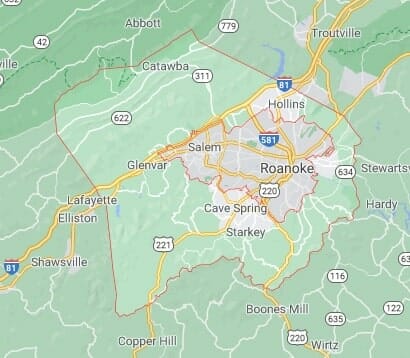
Riley & Wells Attorneys-At-Law represents drivers charged with reckless driving in both the independent City of Roanoke and Roanoke County, Virginia. Our Roanoke reckless driving lawyers defend allegations involving excessive speed, accidents, loss of vehicle control, driving too fast for conditions, unsafe passing, and other conduct charged under Virginia’s reckless-driving statutes. Roanoke City and Roanoke County are separate jurisdictions with different courts and courthouse locations. The place where the alleged offense occurred ordinarily determines whether the case is filed in Roanoke City or Roanoke County, so the court and locality printed on the Virginia Uniform Summons should be reviewed carefully. Reckless driving is a criminal traffic charge rather than an ordinary traffic infraction and is generally prosecuted as a Class 1 misdemeanor. We review the summons, alleged speed or driving conduct, officer’s evidence, speed-measurement method, driving record, roadway conditions, available recordings, and possible defenses or mitigation to determine how the case should be handled.
Roanoke Reckless Driving Defense Guide
Roanoke Defense Services
For broader statewide guidance, see our Virginia Reckless Driving Lawyer page.
Roanoke City and Roanoke County Reckless Driving Cases
Our Roanoke reckless driving practice covers both the independent City of Roanoke and Roanoke County. Although the city and county are part of the same broader Roanoke Valley, they are separate jurisdictions with different courts, law-enforcement agencies, prosecutors, and courthouse locations.
The location of the alleged offense ordinarily determines whether the charge is filed in Roanoke City or Roanoke County. A Roanoke mailing address, nearby business, or general description of the “Roanoke area” may not identify the correct jurisdiction.
The Virginia Uniform Summons should be reviewed for:
- The court name and courthouse address
- The locality identified on the summons
- The location of the alleged offense
- The alleged speed and posted speed limit
- The issuing law-enforcement agency
- The Virginia Code section charged
- The hearing date and appearance instructions
- Whether an accident or related charge is alleged
Confirming the correct jurisdiction helps determine where the driver must appear, which court will hear the charge, and which local officials are involved.
Reckless Driving Is a Criminal Charge in Virginia
Reckless driving is not simply a more expensive speeding ticket. Most Virginia reckless driving offenses are Class 1 misdemeanors, and a conviction creates a criminal traffic record in addition to Virginia DMV consequences.
The Commonwealth must prove the elements of the particular reckless driving statute printed on the summons. A case based on excessive speed presents different factual and evidentiary issues from a charge involving an accident, loss of control, unsafe passing, racing, or driving too fast for conditions.
A case review may address:
- The exact reckless driving statute charged
- The alleged speed or driving conduct
- The identity and observations of the officer
- The location, road design, weather, and traffic
- Radar, lidar, pacing, or accident evidence
- Body-camera and dashboard-camera recordings
- The driver’s record and license status
- Possible defenses, mitigation, and lesser offenses
Roanoke Reckless Driving by Speed
Virginia Code § 46.2-862 permits a reckless driving by speed charge when a person drives a motor vehicle on a Virginia highway at least 20 miles per hour above the applicable maximum speed limit or faster than 85 miles per hour regardless of the applicable speed limit. Either part of the statute may support the charge. For example, 76 miles per hour in a 55-mile-per-hour zone may qualify because it is at least 20 miles per hour above the limit. A speed of 86 miles per hour may qualify because it exceeds 85 miles per hour even when it is fewer than 20 miles per hour above the posted limit. The defense should examine more than the numerical speed written on the summons. Relevant questions may include:
- How the officer identified the targeted vehicle
- Whether radar, lidar, or pacing was used
- The officer’s visual speed estimate
- The distance and angle of measurement
- Surrounding vehicles and traffic conditions
- The posted speed limit at the location
- Equipment calibration and testing records
- The accuracy of the police vehicle’s speedometer
- Available body-camera or dashboard-camera video
- The driver’s statements during the stop
- The driving record and prior traffic history
- Mitigation completed before court
Other Virginia Reckless Driving Charges
Excessive speed is only one form of reckless driving. Virginia has multiple statutes covering particular forms of driving conduct, and the Commonwealth must prove the elements of the statute actually charged.
Reckless driving allegations may involve:
- § 46.2-852 — General reckless driving
- § 46.2-853 — Failure to maintain control or faulty brakes
- § 46.2-854 — Passing on a grade or curve
- § 46.2-855 — Obstructed view or impaired control
- § 46.2-856 — Passing two vehicles abreast
- § 46.2-857 — Driving two abreast in one lane
- § 46.2-858 — Passing at a railroad crossing
- § 46.2-859 — Passing a stopped school bus
- § 46.2-860 — Failing to give proper signals
- § 46.2-861 — Driving too fast for conditions
- § 46.2-862 — Reckless driving by speed
- § 46.2-863 — Failure to yield right-of-way
- § 46.2-864 — Reckless driving on certain parking areas
- §§ 46.2-865 through 46.2-867 — Racing and related conduct
Driving Too Fast for Conditions
Virginia Code § 46.2-861 applies when a driver allegedly exceeds a reasonable speed under the traffic and highway conditions existing at the time, regardless of the posted speed limit. A person may therefore be charged even when the vehicle was traveling below the numerical speed limit.
Relevant conditions may include rain, snow, fog, darkness, curves, road construction, traffic congestion, reduced visibility, stopped traffic, or another temporary hazard. The actual conditions and available video should be compared with the officer’s description.
Racing and Exhibition Driving
Racing and exhibition-driving allegations can carry enhanced license consequences and may become felony offenses when the conduct causes serious bodily injury or death. A driver may also face allegations based on aiding, abetting, blocking traffic, or permitting a vehicle to be used for prohibited conduct.
Because the applicable penalties differ from an ordinary misdemeanor reckless driving case, the precise subsection and alleged conduct should be identified from the summons or warrant.
Roanoke Reckless Driving Penalties and DMV Consequences
Most reckless driving convictions are Class 1 misdemeanors. The authorized maximum punishment for a Class 1 misdemeanor is 12 months in jail, a fine of up to $2,500, or both, although the sentence in an individual case depends on the facts, driving record, statute charged, prosecutor, and court.
Potential consequences may include:
- Jail or a suspended jail sentence
- A fine and court costs
- A criminal misdemeanor conviction
- Virginia DMV demerit points
- A court-ordered license suspension
- Driver-improvement or community-service requirements
- Automobile-insurance consequences
- Employment or professional concerns
- Commercial-driver consequences
- Home-state consequences for nonresident drivers
- Military or security-clearance concerns
- Increased exposure in future traffic cases
Virginia DMV Points and Driving Record
Virginia DMV generally treats misdemeanor or felony reckless driving as a six-demerit-point violation. Most reckless driving convictions remain on a Virginia DMV driving record for 11 years, while the demerit points ordinarily remain active for two years from the offense date.
The effect on an individual driver also depends on other recent convictions and the existing point balance. Additional DMV action may result from accumulating multiple violations within the applicable time periods.
License Suspension and Intelligent Speed Assistance
For convictions under Virginia Code §§ 46.2-853 through 46.2-864, the court may suspend the driver’s license or Virginia driving privilege for a period of 60 days to six months. A restricted license may be available in appropriate circumstances, subject to the written court order and statutory limitations.
For convictions under § 46.2-861 or § 46.2-862, the court may require participation in Virginia’s Intelligent Speed Assistance Program for 60 days to six months as an alternative to license suspension. The program uses technology that limits the vehicle based on the applicable speed limit and generally requires installation on vehicles owned or operated by the participant.
When a person is convicted under § 46.2-862 and found to have driven faster than 100 miles per hour, the court must order participation in the program unless the court instead orders license suspension. Enrollment does not permit the operation of a commercial motor vehicle.
Roanoke Reckless Driving Court Process
Most adult misdemeanor reckless driving cases are heard in the General District Court for the jurisdiction where the alleged offense occurred. Roanoke City cases are generally heard at the city courthouse located at 315 West Church Avenue S.W. in Roanoke, while Roanoke County cases are generally heard at the county courthouse located at 305 East Main Street in Salem. The Roanoke County courthouse is physically located in the independent City of Salem, but a charge filed in Roanoke County remains a county case. The court name, courthouse address, hearing date, and appearance instructions printed on the summons should be followed carefully. Personal appearance requirements depend on the charge, alleged speed or conduct, court, and circumstances. A driver should not assume that attendance has been waived unless the court has authorized the waiver. A reckless driving case may involve:
- An arraignment or advisement of rights in a more serious case
- Review of the summons and driving record
- Evidence and discovery requests
- Preparation of calibration or accident evidence
- Negotiations concerning the pending charge
- A bench trial in General District Court
- Sentencing if a conviction is entered
- An appeal to Circuit Court when authorized
Virginia Uniform Summons for Reckless Driving
A Virginia Uniform Summons is commonly issued after a reckless driving traffic stop or accident investigation. Although motorists frequently call the document a “ticket,” the summons may charge a criminal misdemeanor rather than an ordinary traffic infraction.
Signing the summons is generally not an admission of guilt. The signature ordinarily confirms the driver’s promise to appear or otherwise respond according to the instructions on the document.
The summons should be reviewed for:
- The exact Virginia Code section
- The alleged speed and posted speed limit
- The description and location of the alleged conduct
- The court and courthouse address
- The hearing date and time
- The officer and law-enforcement agency
- Whether an accident or related charge is alleged
- Whether personal appearance is required
Reckless driving should not be prepaid as though it were an ordinary speeding ticket. The charge, criminal consequences, court requirements, and available defenses should be understood before the court date.
Radar, Lidar and Pacing Evidence
A reckless driving by speed allegation may involve radar, lidar, pacing, a police-vehicle speedometer, or another method authorized by Virginia law. Each method presents different issues involving vehicle identification, equipment accuracy, officer operation, surrounding traffic, and measurement conditions.
Virginia Code § 46.2-882 addresses certificates showing the calibration or accuracy of radar, lidar, police-vehicle speedometers, tuning forks, and other speed-determination equipment. Except for qualifying photo-monitoring devices, calibration or testing is generally not valid for longer than six months.
Relevant issues may include:
- The officer’s training and experience
- The identity of the targeted vehicle
- The officer’s visual speed estimate
- The distance and angle of measurement
- The presence of other vehicles
- The officer’s position and visibility
- The type of speed-measurement device
- The calibration certificate
- The date and method of equipment testing
- The accuracy of any pacing speedometer
- The duration and distance of a pace
- Available body-camera or in-car video
Driver’s Speedometer Calibration
A vehicle speedometer calibration may show whether the speedometer displayed a speed different from the vehicle’s actual speed. Virginia law permits a qualifying sworn calibration report to be considered in determining guilt or innocence and punishment.
A calibration does not automatically produce a dismissal or reduction. Its significance depends on the direction and amount of the error, the alleged speed, the statute charged, the contents of the report, and the remaining evidence.
Accident-Related Reckless Driving Charges
This page concerns the criminal defense of drivers accused of reckless driving; it does not concern civil personal-injury or accident-compensation claims. An accident may lead to a summons under the general reckless driving statute, failure-to-maintain-control statute, driving-too-fast-for-conditions statute, or another provision. The occurrence of an accident does not by itself establish criminal reckless driving. The prosecution must prove the conduct required by the particular statute rather than relying only on the fact that a collision occurred. Possible issues may include accident causation, conflicting witness accounts, insufficient proof of the driver’s conduct, an unavoidable emergency, mechanical failure, or evidence showing only ordinary negligence rather than criminal recklessness. An accident-case review may involve:
- The officer’s accident report and diagram
- Statements from drivers, passengers, and witnesses
- Body-camera and dashboard-camera recordings
- Vehicle damage and final resting positions
- Skid marks, debris, and roadway evidence
- Weather, visibility, and road-surface conditions
- Traffic signals, signs, and right-of-way issues
- Mechanical or medical explanations
- Whether the officer personally observed the driving
- Whether the evidence establishes how the accident occurred
Reduction to Improper Driving
Virginia Code § 46.2-869 permits a court to find a person charged with reckless driving guilty of improper driving when the degree of culpability is slight. A Commonwealth’s Attorney may also reduce the charge to improper driving before the court’s decision.
Improper driving is a traffic infraction rather than a criminal misdemeanor and carries a maximum fine of $500. Virginia DMV generally assigns three demerit points, and the conviction ordinarily remains on the driving record for three years.
A reduction is not automatic. The possibility may depend on the facts, alleged speed, driving record, accident circumstances, evidence, mitigation, prosecutor, and court.
Roanoke Reckless Driving Roads and Enforcement
Reckless driving charges throughout the Roanoke Valley may arise from interstate enforcement, commuter traffic, mountain roads, downtown streets, accidents, and changing traffic conditions. The precise offense location determines whether the charge belongs in Roanoke City, Roanoke County, Salem, or another surrounding jurisdiction.
Cases may arise on or near:
- Interstate 81
- Interstate 581
- Route 220
- Route 460
- Orange Avenue
- Williamson Road
- Franklin Road
- Electric Road
- Peters Creek Road
- Hershberger Road
- Downtown Roanoke streets
- Roads serving Vinton, Cave Spring, Hollins, and Glenvar
Traffic enforcement may involve Virginia State Police, the Roanoke Police Department, the Roanoke County Police Department, the Town of Vinton Police Department, or another agency with authority at the location.
Out-of-State, Commercial and Student Drivers
Out-of-State Drivers
A nonresident may contest a reckless driving charge in Roanoke City or Roanoke County. A Virginia conviction may be reported to the driver’s home-state licensing authority, which may impose points, suspension, or other consequences under its own laws.
An out-of-state driver should consider court attendance, home-state driving-record consequences, automobile insurance, employment, professional licensing, and commercial-driving privileges. An attorney may be able to request a waiver of personal appearance in some cases, but a waiver should not be assumed unless authorized by the court.
Commercial Drivers
A reckless driving conviction may create consequences beyond the Virginia sentence for a commercial driver. Federal and state CDL rules, employer reporting requirements, company safety policies, and insurance standards may affect continued driving privileges or employment.
Participation in the Intelligent Speed Assistance Program or operation under a restricted license does not authorize the operation of a commercial motor vehicle. A CDL holder should provide the complete summons, CDL class and endorsements, driving record, employer policies, and prior traffic history.
Roanoke-Area College Students
Students attending Hollins University, Virginia Western Community College, Virginia Tech Carilion School of Medicine, and other schools in the Roanoke Valley may face consequences involving automobile insurance, campus discipline, athletics, housing, internships, clinical placements, employment, and future professional licensing.
The location of the alleged offense determines the court rather than the school the student attends. Roanoke College is physically located in the independent City of Salem, so an offense occurring on or near that campus should not automatically be treated as a Roanoke City or Roanoke County case merely because the institution is named Roanoke College.
Evidence and Reckless Driving Defense Strategy
No single defense or preparation plan applies to every reckless driving case. The relevant issues depend on the statute, alleged speed or conduct, evidence, location, driving record, and circumstances.
Potential considerations include:
- Whether the prosecution can prove every element
- Whether the correct vehicle and driver were identified
- Whether the speed was accurately measured
- Whether calibration requirements were satisfied
- Whether a pace was conducted reliably
- Whether the applicable speed limit can be proven
- Whether video conflicts with the officer’s account
- Whether an accident proves reckless conduct
- The driver’s statements during the investigation
- Road, weather, and traffic conditions
- Mechanical or emergency explanations
- Mitigation relevant to disposition or sentencing
Possible outcomes may include dismissal, acquittal, conviction of the original charge, amendment to improper driving or another offense, or a negotiated disposition. No particular result can be guaranteed because each case depends on its own facts, evidence, law, prosecutor, and court.
Roanoke Reckless Driving Client Reviews
What to Send for a Reckless Driving Case Review
Complete and readable documents help identify the jurisdiction, charge, alleged speed or conduct, court date, and potential issues. Useful materials may include:
- Front and back of the Virginia Uniform Summons
- The current driving record
- A home-state record for a nonresident
- The alleged speed and posted speed limit
- The road and precise stop location
- Speedometer-calibration documentation
- Photographs, videos, and accident reports
- Witness names and contact information
- Commercial-driver and employer information
- Documents showing completed mitigation
- A written account of the stop or accident
- The scheduled court date
Roanoke Reckless Driving Lawyer FAQs
Does this page cover reckless driving cases in both Roanoke City and Roanoke County?
Yes. Riley & Wells Attorneys-At-Law represents drivers charged with reckless driving in both the independent City of Roanoke and Roanoke County. The two jurisdictions have separate courts and courthouse locations.
How do I know whether my case is in Roanoke City or Roanoke County?
Review the court name, courthouse address, alleged offense location, locality, and law-enforcement agency printed on the Virginia Uniform Summons. A Roanoke mailing address alone may not identify the correct jurisdiction.
Where are Roanoke reckless driving cases heard?
Roanoke City cases are generally heard at 315 West Church Avenue S.W. in Roanoke. Roanoke County cases are generally heard at 305 East Main Street in Salem. The summons identifies the court that controls.
Is reckless driving a criminal offense in Virginia?
Yes. Most Virginia reckless-driving offenses are Class 1 misdemeanors rather than ordinary traffic infractions.
When does speeding become reckless driving?
Virginia Code § 46.2-862 permits a reckless-driving charge for driving at least 20 miles per hour above the applicable maximum speed limit or faster than 85 miles per hour regardless of the applicable speed limit.
What are the maximum penalties for misdemeanor reckless driving?
A Class 1 misdemeanor may carry up to 12 months in jail, a fine of up to $2,500, or both. A reckless-driving conviction may also result in DMV points, a driving-record entry, and possible license suspension.
What is Virginia’s Intelligent Speed Assistance Program?
The program uses vehicle technology to limit speed based on the applicable posted limit. In qualifying convictions under § 46.2-861 or § 46.2-862, the court may order participation as an alternative to license suspension. A speed above 100 miles per hour under § 46.2-862 requires enrollment unless the court orders license suspension.
Can an accident alone prove reckless driving?
No. The occurrence of an accident does not by itself establish criminal reckless driving. The prosecution must prove the conduct required by the particular statute charged.
Can reckless driving be reduced to improper driving?
Possibly. Virginia law permits a finding or reduction to improper driving when the degree of culpability is slight. The result depends on the facts, evidence, driving record, prosecutor, and court.
Can radar, lidar, or pacing evidence be challenged?
The defense may examine vehicle identification, officer operation, calibration and testing records, measurement conditions, surrounding traffic, pacing distance, police-speedometer accuracy, and available video.
Can an out-of-state driver contest a Roanoke reckless driving charge?
Yes. A nonresident may contest the charge. A conviction may be reported to the home-state licensing authority and may affect the driver’s record, insurance, employment, or commercial-driving privileges.
What should I provide to a Roanoke reckless driving lawyer?
Provide the complete summons, current driving records, information about the stop or accident, photographs, videos, witness information, calibration records, commercial-driver documents, and any materials showing completed mitigation.
Contact a Roanoke Reckless Driving Lawyer
If you have been charged with reckless driving in Roanoke City or Roanoke County, reviewing the summons, alleged speed or conduct, officer’s evidence, driving record, and possible consequences can help identify the available options before court. Our attorneys represent Virginia residents and out-of-state drivers facing excessive-speed, accident-related, and other reckless driving allegations throughout the Roanoke Valley. Contact us for a confidential case evaluation.
8/25/2021 | Updated 7/26/2026