
Springfield VA Traffic Lawyer
 Our Springfield traffic attorneys represent motorists facing traffic violations and criminal driving offenses arising in Springfield, Virginia. We defend clients charged with DUI / DWI, reckless driving, speeding tickets, driving on a suspended or revoked license, accident-related offenses, and other serious traffic violations. Depending on the charge, a conviction may result in fines, DMV demerit points, increased insurance costs, loss of driving privileges, or criminal penalties. Traffic cases in Springfield may arise from stops along Interstate 95, Interstate 395, Interstate 495, Old Keene Mill Road, Backlick Road, Commerce Street, or other roads serving the community. The Springfield Interchange, also known as the Mixing Bowl, carries substantial commuter and regional traffic, while Springfield Town Center and surrounding commercial districts attract motorists who live, work, shop, and travel through the area. Our attorneys review the Virginia Uniform Summons or warrant, officer observations, available video, speed-measurement or chemical-testing evidence when applicable, the driver’s record, and the court handling the case. We evaluate the evidence and applicable Virginia law to identify potential defenses, prepare for court, and pursue an appropriate resolution based on the individual circumstances.







Springfield Traffic Defense Guide
Springfield Defense Services
- Springfield VA Criminal Defense Lawyer
- Fairfax County VA Traffic Lawyer
- Fairfax County VA DUI / DWI Lawyer
- Fairfax County VA Reckless Driving Lawyer
- Fairfax County VA Speeding Ticket Lawyer
For broader statewide guidance, see our Virginia Traffic Lawyers page.
Traffic Defense Representation in Springfield
 Traffic charges arising in Springfield range from ordinary moving violations to serious criminal traffic offenses. A case may begin with a Virginia Uniform Summons, an arrest, a traffic stop, or an accident investigation. The charge may involve speeding on Interstate 95, alleged reckless driving near the Springfield Interchange, a DUI investigation along Old Keene Mill Road, or another traffic violation on a local roadway. Our attorneys represent motorists facing traffic charges arising in Springfield, including residents, commuters, visitors, and drivers traveling through the area. We review the exact code section, summons or warrant, officer observations, driving record, speed-measurement evidence when applicable, body-camera or cruiser video, accident information, witness accounts, and other circumstances relevant to the defense. The appropriate strategy depends on the particular allegation. DUI / DWI cases involve different legal and evidentiary issues from reckless driving, ordinary speeding tickets, suspended-license offenses, and accident-related traffic charges.
Springfield Traffic Defense Client Reviews

Traffic Charges We Defend in Springfield
Traffic cases arising in Springfield may involve infractions, misdemeanors, or felony allegations. Potential consequences vary depending on the charged statute, alleged conduct, prior driving history, and other circumstances. Our attorneys represent drivers charged with:
|
|
Springfield DUI / DWI Defense
 A DUI / DWI charge arising in Springfield is a criminal matter rather than an ordinary traffic infraction. Virginia Code § 18.2-266 prohibits driving or operating a motor vehicle with a blood alcohol concentration of 0.08 percent or greater and also prohibits driving or operating while unlawfully impaired by alcohol, drugs, or a combination of substances. A Springfield DUI investigation may begin with a traffic stop on Interstate 95, Interstate 395, Interstate 495, Old Keene Mill Road, Backlick Road, or another road serving the community. An investigation may also follow a collision, a report of suspected impaired driving, or an encounter near Springfield’s shopping, restaurant, and entertainment districts. Potential defense issues include the legality of the initial stop, evidence of driving or operation, observations of impairment, statements attributed to the driver, field sobriety exercises, body-camera footage, preliminary breath testing, and the procedures used to obtain and analyze evidentiary breath or blood samples. A first DUI conviction is generally a Class 1 misdemeanor. Potential consequences can include fines, jail, loss of driving privileges, Virginia Alcohol Safety Action Program requirements, ignition interlock restrictions, and other court-imposed conditions. Additional mandatory penalties may apply depending on the blood alcohol concentration, prior qualifying convictions, refusal allegations, and other circumstances. Our attorneys examine the evidence and applicable Virginia DUI law to determine which defenses and resolutions may be available.
Springfield Reckless Driving Defense
 Virginia recognizes several distinct reckless driving offenses, each involving different statutory requirements and potential defenses. Reckless driving is generally a Class 1 misdemeanor rather than an ordinary traffic infraction. A conviction may carry criminal penalties and consequences for a driver’s license, insurance, employment, and driving record. One of the most commonly charged offenses is reckless driving by speed under Virginia Code § 46.2-862. This statute applies when a motorist allegedly drives 20 miles per hour or more above the applicable maximum speed limit or faster than 85 miles per hour regardless of the posted limit. In Springfield, reckless driving by speed allegations may arise along Interstate 95, Interstate 395, Interstate 495, or other roads carrying substantial commuter and regional traffic. A defense may involve reviewing radar or LIDAR evidence, calibration certificates, pacing evidence, vehicle identification, roadway conditions, the driver’s record, and available speedometer calibration. The appropriate defense depends on the exact charge and circumstances.
Other Reckless Driving Offenses in Virginia
Reckless driving charges are not limited to excessive speed. Virginia law also recognizes offenses involving dangerous driving behavior, vehicle control, roadway conditions, stationary emergency vehicles, and stopped school buses. The following are five other reckless driving charges that motorists may encounter in Springfield.
General Reckless Driving – Virginia Code § 46.2-852
Virginia Code § 46.2-852 prohibits driving recklessly or at a speed or in a manner that endangers the life, limb, or property of another person. This charge may arise from allegedly dangerous driving behavior, unsafe maneuvers, or an accident investigation, even when the vehicle was not exceeding the posted speed limit.
In Springfield, allegations may involve collisions or driving conduct along Old Keene Mill Road, Backlick Road, Commerce Street, or other local roads.
Potential defense issues include officer observations, witness testimony, video recordings, road conditions, vehicle movements, and whether the evidence establishes the required elements of reckless driving. An accident alone does not automatically establish guilt.
Failure to Maintain Proper Control – Virginia Code § 46.2-853
Virginia Code § 46.2-853 addresses driving a vehicle that is not under proper control or that has inadequate or improperly adjusted brakes. Charges may arise following a collision, loss-of-control incident, or allegations involving vehicle operation.
In Springfield, these cases may involve congested intersections, commercial entrances, residential streets, or commuter routes such as Old Keene Mill Road, Backlick Road, and Loisdale Road.
A defense may involve examining road conditions, mechanical evidence, photographs, accident reconstruction, witness statements, and whether the Commonwealth can establish the statutory violation.
Driving Too Fast for Conditions – Virginia Code § 46.2-861
Virginia Code § 46.2-861 makes it reckless driving to exceed a reasonable speed under the highway and traffic conditions existing at the time, regardless of the posted speed limit.
Allegations may involve rain, reduced visibility, heavy traffic, roadway hazards, or other circumstances affecting safe vehicle operation.
Interstate 95, Interstate 395, Interstate 495, and Springfield’s major commuter roads carry substantial traffic. Driving conditions may vary with congestion, weather, lane configuration, and vehicles merging near interchange ramps.
The defense may involve weather records, roadway conditions, traffic patterns, officer observations, available video, and whether the alleged speed was unreasonable under the circumstances.
Failure to Move Over for a Stationary Emergency Vehicle – Virginia Code § 46.2-861.1(A)
Virginia Code § 46.2-861.1(A) requires motorists approaching certain stationary vehicles displaying qualifying warning lights to change lanes when reasonable and safe on qualifying multilane highways, or otherwise proceed with due caution at a safe speed. A violation of subsection A constitutes reckless driving.
These allegations may arise on Interstate 95, Interstate 395, Interstate 495, or other qualifying highways serving Springfield.
Defense issues may include the type of stationary vehicle, displayed warning lights, lane availability, traffic conditions, visibility, officer observations, and whether a lane change was reasonable and safe.
Certain other move-over violations under subsection B are traffic infractions rather than criminal reckless driving offenses. The exact statutory subsection charged is therefore important when evaluating the case.
Passing a Stopped School Bus – Virginia Code § 46.2-859
Virginia Code § 46.2-859 makes unlawfully passing a stopped school bus that is loading or unloading passengers a reckless driving offense. The statute includes exceptions, including certain situations involving roadways, access roads, or driveways separated by a physical barrier or unpaved area.
These charges may arise along Old Keene Mill Road, Backlick Road, Rolling Road, and streets serving Springfield neighborhoods and schools.
Relevant defense issues may include the school bus location, roadway configuration, warning devices, visibility, identification of the driver, available video recordings, and whether a statutory exception applies.
Some stopped-school-bus violations may instead be pursued through the separate civil penalty provisions of § 46.2-844. The charging document should be reviewed to determine whether the allegation involves criminal reckless driving or a civil violation.
The particular reckless driving statute listed on the Virginia Uniform Summons is important because different offenses require different evidence and legal analysis. A speeding allegation near the Springfield Interchange presents different issues from an accident-related charge on Old Keene Mill Road or a school-bus violation in a Springfield residential neighborhood.
Our attorneys examine the applicable statute, available evidence, driving history, and circumstances of the allegation to identify potential defenses. In appropriate cases, the evidence and mitigating circumstances may support seeking an amended charge or another disposition. Such outcomes depend on the individual case and are not guaranteed.
Springfield Speeding Ticket Defense
 Speeding tickets are among the traffic violations that motorists may encounter on Interstate 95, Interstate 395, Interstate 495, Old Keene Mill Road, Backlick Road, and other roads serving Springfield. Ordinary speeding is generally a traffic infraction, but the alleged speed and applicable statute determine whether the charge carries more serious consequences. The difference between ordinary speeding and reckless driving is especially important. An allegation involving a speed at least 20 miles per hour above the applicable maximum speed limit, or faster than 85 miles per hour, may support a criminal reckless-driving charge under Virginia law. A Springfield speeding-ticket defense may require review of the posted speed limit, location of the alleged offense, officer observations, radar or LIDAR measurements, calibration records, pacing evidence, vehicle identification, and roadway conditions. Allegations near the Springfield Interchange may present different factual issues from those involving commercial entrances, neighborhood streets, or school-area traffic. Available defenses and mitigating evidence may depend on the driver’s history, the circumstances of the traffic stop, and the particular charge. In some cases, speedometer calibration, a favorable driving record, or other materials may be relevant to the disposition. Prepaying an eligible speeding ticket results in a guilty disposition. Before prepaying, motorists should consider the possible effects on their DMV record, insurance premiums, employment, and driving privileges.
Traffic Enforcement and Major Roads in Springfield
Springfield is a major suburban, commercial, and transportation community in Northern Virginia. Its location at the convergence of Interstate 95, Interstate 395, and Interstate 495 creates substantial traffic activity extending far beyond the number of people who live in the community.
The Springfield transportation network also includes established commercial districts, residential neighborhoods, commuter facilities, shopping centers, and roads serving employment and entertainment destinations.
Important roads in and around Springfield include:
- Interstate 95: A major north-south interstate carrying commuter traffic, commercial vehicles, and long-distance motorists through Springfield.
- Interstate 395: A major commuter highway connecting with Interstate 95 and Interstate 495 at the Springfield Interchange.
- Interstate 495 / Capital Beltway: A heavily traveled regional highway intersecting with Interstate 95 and Interstate 395 in Springfield.
- Old Keene Mill Road / Route 644: A principal east-west road serving Springfield’s commercial center, residential neighborhoods, and access to Interstate 95.
- Backlick Road / Route 617: An important north-south corridor serving businesses, residential neighborhoods, commuter facilities, and local traffic.
- Commerce Street: A roadway serving Springfield’s commercial district and providing connections between local streets and major highway approaches.
- Loisdale Road: A commercial and commuter corridor serving Springfield Town Center and surrounding shopping and business areas.
- Amherst Avenue: A local road serving Springfield’s commercial district and connections to nearby highways.
- Frontier Drive: A road serving Springfield shopping areas, transit facilities, and commercial destinations.
- Industrial Road: A roadway serving Springfield businesses and The St. James sports and entertainment complex.
- Rolling Road: A corridor serving Springfield residential neighborhoods and connections to Old Keene Mill Road.
- Route 289: An important commuter connection serving Springfield and the Interstate 95 corridor.
The roadway involved in a Springfield traffic case can affect the applicable speed limit, enforcement agency, available evidence, and circumstances surrounding the allegation.
A traffic stop on an interstate highway may involve radar or LIDAR measurements, lane identification, and highway conditions. A charge arising along Old Keene Mill Road or Backlick Road may involve traffic signals, intersections, turning movements, commercial entrances, or witness observations.
The Springfield Interchange and Interstate Traffic Enforcement
The Springfield Interchange, commonly known as the Mixing Bowl, is one of Northern Virginia’s most significant transportation facilities. Interstate 95, Interstate 395, and Interstate 495 converge at this complex interchange, which carries substantial commuter and regional traffic.
Motorists traveling through Springfield may encounter multiple entrance and exit ramps, merging lanes, elevated highway connections, express lanes, and changes in roadway configuration.
The interchange serves drivers traveling for employment, shopping, business, recreation, and long-distance interstate trips. Many motorists passing through Springfield do not live in the immediate community.
Traffic allegations associated with the Springfield Interchange may include:
- Reckless driving by speed
- Speeding tickets
- Following too closely
- Improper lane changes
- Unsafe merging or passing
- Failure to move over for stationary emergency vehicles
- Accident-related reckless driving
- DUI / DWI investigations
The precise highway, ramp, lane, and direction of travel may be important when evaluating an alleged violation.
A speeding allegation on Interstate 95 may involve different speed limits and roadway conditions from a charge on an Interstate 395 connector ramp or an Interstate 495 express lane.
Relevant defense evidence may include officer positioning, radar or LIDAR measurements, calibration records, pacing evidence, posted speed limits, roadway signs, lane configuration, traffic conditions, and available video recordings.
The existence of substantial traffic does not establish that any particular ramp or highway segment is an enforcement hotspot. Each case should be evaluated according to the actual charge and evidence.
Traffic Along Old Keene Mill Road and Backlick Road
Old Keene Mill Road and Backlick Road are two of Springfield’s most recognizable local traffic corridors. Their intersection is an important part of the community’s commercial and transportation network.
Old Keene Mill Road connects residential areas with Springfield Plaza, commuter facilities, businesses, and the approaches to Interstate 95.
Backlick Road carries local and commuter traffic through Springfield, connecting commercial areas, residential streets, transportation facilities, and other major roads.
Motorists traveling through these corridors may encounter:
- Signalized intersections and turning lanes
- Shopping-center entrances and exits
- Vehicles entering or leaving commuter parking facilities
- School and residential traffic
- Changes in posted speed limits
- Congestion during commuting hours
- Pedestrian crossings and bus stops
- Vehicles merging from connecting streets
Traffic charges along these roads may involve speeding, failure to yield, following too closely, improper turns, traffic-signal violations, or accidents.
An allegation near the intersection of Old Keene Mill Road and Backlick Road may require examination of signal timing, roadway markings, traffic movements, officer observations, witness statements, and any available video.
The appropriate defense depends on the statute charged and the circumstances surrounding the alleged conduct.
Traffic Around Springfield Town Center and Springfield Plaza
Springfield is a major shopping, restaurant, and entertainment destination. Its commercial centers attract motorists from throughout Northern Virginia, creating traffic beyond ordinary residential commuting.
Springfield Town Center, located at 6500 Springfield Mall, is one of the area’s best-known shopping destinations. The center includes retail stores, restaurants, and entertainment establishments.
Roads serving Springfield Town Center include Loisdale Road, Frontier Drive, Springfield Mall, and nearby connections to Interstate 95.
Springfield Plaza is another established commercial destination, located near the intersection of Old Keene Mill Road and Commerce Street. The shopping center serves local residents, employees, commuters, and visitors.
Traffic around these commercial centers may involve:
- Speeding on roads approaching shopping areas
- Following too closely in congested traffic
- Improper lane changes and passing
- Failure to yield at commercial entrances
- Traffic-light and stop-sign violations
- Accidents involving turning vehicles
- Distracted-driving allegations
- DUI investigations following traffic stops
Busy shopping periods, weekend activity, restaurant traffic, and commuting patterns can affect roadway conditions around these destinations.
A traffic allegation near Springfield Town Center or Springfield Plaza should be evaluated according to the exact roadway, traffic controls, applicable statute, officer observations, witness testimony, and available evidence.
Traffic Near The St. James Sports and Entertainment Complex
The St. James is a major sports, wellness, and entertainment destination located at 6805 Industrial Road in Springfield.
The facility attracts athletes, families, participants in sports programs, visitors attending events, and employees traveling to the complex.
Motorists reaching The St. James use Industrial Road and surrounding streets connecting to Springfield’s broader transportation network.
Unlike ordinary neighborhood traffic, travel to a major sports and entertainment facility may vary depending on scheduled events, competitions, programs, and other activities.
Traffic matters in this area may involve alleged speeding, failure to yield, improper turns, following too closely, distracted driving, or accidents near commercial entrances.
The defense of an alleged violation may require examining the roadway configuration, posted signs, traffic conditions, photographs, officer observations, available video, and witness statements.
The presence of an entertainment destination does not establish increased enforcement at any particular location, but it illustrates the importance of visitor and event-related traffic to Springfield’s transportation activity.
Springfield Commuter Facilities and Park-and-Ride Traffic
Springfield serves as an important commuter transportation center, with highway connections, public transit facilities, commuter parking, and regional rail services.
The Springfield Community Business Center Commuter Parking Garage on Old Keene Mill Road provides substantial parking capacity for commuters. A pedestrian bridge connects the garage with Springfield Plaza.
The community also includes commuter parking and transit connections along Backlick Road and other nearby routes.
These facilities attract motorists who travel through Springfield even when their homes or workplaces are located elsewhere.
Commuter-related traffic may involve:
- Vehicles entering and leaving parking facilities
- Morning and evening commuting congestion
- Turning movements near parking-garage entrances
- Pedestrian and bus activity
- Traffic-signal violations
- Following-too-closely allegations
- Accidents involving merging vehicles
Traffic cases arising near commuter facilities may require review of signs, road markings, traffic controls, vehicle movements, visibility, witness accounts, and available recordings.
A charge involving a local commuter road presents different evidentiary issues from a speeding or reckless-driving allegation on Interstate 95.
Interstate Express Lanes and Springfield Traffic Charges
The Interstate 95, Interstate 395, and Interstate 495 corridors include express-lane facilities and highway connections used by large numbers of motorists traveling through Springfield.
Express lanes and general-purpose lanes may have different entrance and exit locations, roadway configurations, lane restrictions, and posted signs.
Depending on the circumstances, an allegation may involve excessive speed, improper lane changes, failure to obey highway signs, following too closely, or other driving conduct.
Some incidents also involve toll-related issues, although toll violations are legally distinct from most moving traffic offenses.
When a traffic charge involves an express lane or interchange connection, the precise location should be reviewed carefully.
Relevant evidence may include:
- The highway and direction of travel
- The lane in which the alleged offense occurred
- The posted speed limit
- Entrance and exit ramp locations
- Officer observations and vehicle identification
- Radar, LIDAR, or pacing evidence
- Roadway signage and markings
- Available video or photographs
A motorist should not assume that an allegation arising near the Springfield Interchange is automatically established merely because an officer issued a summons.
The Commonwealth must prove the required elements of the charged offense under the applicable legal standard.
Police Jurisdiction and Springfield Traffic Stops
Fairfax County Police officers enforce traffic laws within their jurisdiction, and Virginia State Police may conduct enforcement on Interstate 95, Interstate 395, Interstate 495, and other highways.
A Springfield traffic charge may follow a routine traffic stop, speed enforcement, an accident investigation, a DUI investigation, or another encounter with law enforcement.
The officer’s observations, location of the alleged conduct, applicable statute, and available evidence determine the issues presented by the case.
A motorist may receive a summons while traveling through Springfield even if the driver resides elsewhere.
The location of the alleged offense determines the appropriate jurisdiction, rather than the driver’s home address or the community name used to describe the general area.
Distracted Driving and Other Springfield Traffic Violations
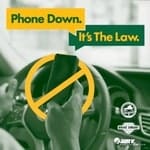 Virginia law generally prohibits a person from holding a handheld personal communications device while driving a moving motor vehicle on a highway, subject to statutory exceptions. In Springfield, additional traffic allegations may involve following too closely, improper passing, failure to yield, traffic-signal violations, failure to move over for certain stopped vehicles, lane changes, or driving conduct associated with an accident. An allegation arising near the Springfield Interchange, along Old Keene Mill Road, or at a commercial entrance should be evaluated according to the specific statute and facts. The classification of the charge matters because some violations are infractions while others may be criminal offenses. The defense may involve reviewing roadway signs, photographs, witness accounts, officer observations, crash evidence, body-camera footage, and any available video recordings.
Where Springfield Traffic Cases Are Heard
Traffic charges arising in Springfield within Fairfax County are generally heard in Fairfax County General District Court, located at 4110 Chain Bridge Road, Fairfax, Virginia 22030.
Springfield does not have a separate municipal traffic court. Most adult traffic infractions and misdemeanor driving charges arising in Springfield are handled through the General District Court.
The court handles matters including speeding tickets, reckless driving, misdemeanor DUI / DWI, driving on a suspended license, and other traffic allegations. Certain felony cases may begin with proceedings in General District Court before moving to Circuit Court.
Although the courthouse is located in Fairfax, the location of the alleged offense, rather than the defendant’s mailing address, generally determines the proper jurisdiction.
The court listed on the Virginia Uniform Summons or warrant should always be confirmed before the scheduled hearing.
Virginia Uniform Summons for Springfield Traffic Charges
 Many Springfield traffic cases begin when a law-enforcement officer issues a Virginia Uniform Summons. Motorists commonly call this document a traffic ticket or citation. The summons identifies the alleged offense, applicable code section, court, and hearing date. A driver should review the paperwork carefully to understand the exact charge and the obligation to respond. Signing a summons is not an admission of guilt. It acknowledges the obligation to respond to the charge as required. Some traffic infractions may be prepaid, but prepayment waives the court hearing and results in a guilty disposition. Criminal reckless-driving charges cannot be prepaid as ordinary traffic infractions. Before paying a Springfield traffic ticket, the driver should consider potential DMV demerit points, insurance consequences, license restrictions, employment considerations, and any consequences under another state’s licensing laws.
Out-of-State Drivers Charged in Springfield
Springfield’s location at the intersection of three major interstate highways brings substantial travel by motorists from outside the community and outside Virginia.
Drivers licensed in Maryland, Washington, D.C., or other states may receive summonses for speeding, reckless driving, DUI / DWI, or other traffic offenses while traveling through Springfield.
Interstate 95, Interstate 395, and Interstate 495 serve motorists traveling throughout the Washington metropolitan area and along the East Coast.
An out-of-state driver should consider both the Virginia court case and potential consequences in the driver’s home state. Traffic convictions may be reported between jurisdictions, and home-state penalties can differ from those imposed in Virginia.
Whether the driver must personally appear in court depends on the charge and court requirements. In some cases, counsel may seek permission for a personal appearance to be waived. More serious criminal matters may require the defendant to attend.
An attorney can review the charge, summons, court requirements, and driving record before advising whether an appearance may be waived.
Driver Improvement, Driving Record and Mitigation
 A driver’s record and mitigating circumstances may be relevant when preparing a Springfield speeding, reckless-driving, or other traffic case. Depending on the charge, potentially useful materials may include a favorable driving record, completion of an appropriate driver-improvement program, speedometer calibration, community service, corrective vehicle documentation, or other information relevant to the allegation. Not every case benefits from the same preparation. Driver improvement may be helpful in some circumstances but unnecessary or inappropriate in others. Before completing a course or obtaining other mitigation materials, a driver should consider the nature of the charge, available defenses, and the strategy for the particular case. Driver improvement does not erase the underlying evidence or guarantee a dismissal or reduction. It is one possible component of a broader defense or mitigation strategy.
Consequences of a Springfield Traffic Conviction
The consequences of a traffic conviction depend on the offense, the driver’s record, and the applicable Virginia law. An ordinary traffic infraction may involve a fine, court costs, DMV demerit points, a driving-record entry, and increased insurance costs.
Criminal driving offenses can carry more serious consequences.
Depending on the charge, possible consequences include:
- Fines and court costs
- Virginia DMV demerit points
- Driver’s license suspension or revocation
- Jail for certain criminal traffic offenses
- A criminal misdemeanor or felony record
- Automobile insurance consequences
- Employment consequences for drivers whose jobs require driving
- Commercial driver’s license consequences
- Professional licensing or security-clearance concerns
- Consequences imposed by another state for an out-of-state driver
The exact offense should therefore be reviewed before deciding whether to prepay, contest the allegation, pursue negotiations, or seek another lawful disposition.
How a Springfield Traffic Lawyer Builds a Defense
Traffic defense begins with understanding the charged statute and the evidence the Commonwealth must present. A DUI / DWI prosecution raises different questions from reckless driving by speed, ordinary speeding, suspended-license allegations, or an accident-related traffic offense.
Depending on the charge, our attorneys may examine the Virginia Uniform Summons, police reports, body-camera or cruiser video, radar or LIDAR evidence, calibration certificates, photographs, speedometer evidence, road signs, accident diagrams, witness statements, chemical-test evidence, and the driver’s history.
The precise location may also affect the analysis. An allegation on Interstate 95, Interstate 395, or Interstate 495 may involve speed measurements, highway conditions, lane identification, or interchange evidence.
A case near Springfield Town Center, Springfield Plaza, or a commercial intersection may involve turning movements, traffic signals, right-of-way rules, or witness observations.
An allegation at the Springfield Interchange may raise additional questions concerning ramp configuration, posted speed limits, vehicle identification, and the officer’s method of observing or measuring the alleged violation.
Legal questions may include the basis for the traffic stop, identification of the driver, operation of the vehicle, admissibility of statements or test results, reliability of speed-measurement evidence, and whether the evidence establishes every element of the offense.
Some cases should be contested at trial. Others may involve negotiations, mitigation, an amended charge, or another resolution supported by the facts and applicable law.
Frequently Asked Questions About Springfield Traffic Cases
Where will my Springfield traffic case be heard?
Traffic offenses arising in Springfield within Fairfax County are generally heard in Fairfax County General District Court at 4110 Chain Bridge Road, Fairfax, Virginia 22030. The summons should identify the assigned court and hearing date.
Is Springfield in Fairfax County?
Yes. Springfield is a community in Fairfax County, Virginia. Its major roads include Interstate 95, Interstate 395, Interstate 495, Old Keene Mill Road, Backlick Road, and Commerce Street. Traffic cases arising in Springfield are generally handled through the county court system.
What roads are associated with Springfield traffic cases?
Major roads serving Springfield include Interstate 95, Interstate 395, Interstate 495, Old Keene Mill Road, Backlick Road, Commerce Street, Loisdale Road, Amherst Avenue, Frontier Drive, and Rolling Road. The Springfield Interchange connects three major interstate highways. The precise location and applicable speed limit matter to the charge.
Is reckless driving in Springfield a criminal offense?
Yes. Reckless driving is generally a Class 1 misdemeanor in Virginia. Under § 46.2-862, reckless driving by speed may be charged for driving at least 20 miles per hour above the applicable maximum speed limit or faster than 85 miles per hour. Other reckless driving offenses include dangerous driving behavior, failure to maintain control, driving too fast for conditions, certain move-over violations, and passing a stopped school bus.
What happens after a DUI / DWI charge in Springfield?
A DUI / DWI charge is a criminal matter. The defense may involve the traffic stop, evidence of driving or operation, field sobriety exercises, statements, video, breath or blood testing, and compliance with Virginia DUI procedures. Potential penalties depend on the facts and prior qualifying offenses.
Can a Springfield speeding ticket become reckless driving?
Yes. Ordinary speeding is generally a traffic infraction, but alleged speed may support a criminal reckless-driving charge if it reaches the applicable statutory threshold. The precise charge and code section on the summons should be reviewed.
Do I have to appear in court for a Springfield traffic ticket?
It depends on the charge and court requirements. Some eligible traffic infractions may be prepaid, which waives the hearing and results in a guilty disposition. Reckless driving cannot be prepaid as an ordinary traffic ticket. Other charges may require a court appearance.
Can an out-of-state driver hire a lawyer for a Springfield traffic case?
Yes. Out-of-state drivers may retain Virginia counsel. Whether the driver must personally return to court depends on the charge, circumstances, and court requirements. An attorney can evaluate whether requesting a waiver of appearance is appropriate.
Should I prepay my Springfield traffic ticket?
Prepaying an eligible ticket results in a guilty disposition. Before prepaying, consider the alleged offense, DMV consequences, insurance implications, licensing restrictions, and whether there may be grounds to contest or seek a reduction of the charge. Reckless driving cannot be prepaid.
Springfield Traffic Defense Case Review
If you are facing DUI / DWI, reckless driving, a speeding ticket, or another traffic charge arising in Springfield, early review can help identify the correct court, available evidence, potential consequences, and defense options. Contact us for a confidential case review with a Springfield VA traffic lawyer.
10/25/2026