
Reckless Driving Over 85 MPH in Virginia
 Driving faster than 85 MPH in Virginia is a criminal reckless driving offense under Virginia Code § 46.2-862, regardless of the posted speed limit. A driver charged at 86, 90, 95, or 100 MPH may face a Class 1 misdemeanor carrying possible jail time, fines, driver’s license suspension, DMV demerit points, and a criminal record. Although Virginia law establishes a specific speed threshold, the consequences of a conviction depend on the alleged speed, the driver’s history, the circumstances, and the court’s determination. Understanding the distinction between driving exactly 85 MPH and exceeding 85 MPH is particularly important for motorists facing this charge.
Virginia Reckless Driving Over 85 MPH Guide
When Is Driving Over 85 MPH Reckless Driving in Virginia?
 Virginia Code § 46.2-862 makes driving faster than 85 MPH a criminal reckless driving offense, even when the motorist is not traveling 20 MPH above the posted speed limit. The distinction between exactly 85 MPH and 86 MPH is important because the statute uses the phrase “in excess of 85 miles per hour.”
Continue Reading
Is Exactly 85 MPH Reckless Driving?
Not necessarily.
Driving exactly 85 MPH does not satisfy the portion of § 46.2-862 that makes speeds faster than 85 MPH reckless driving.
However, Virginia law separately makes driving 20 MPH or more above the applicable maximum speed limit reckless driving.
Therefore, a driver traveling exactly 85 MPH in a 65 MPH zone may be charged with reckless driving because the speed is 20 MPH above the limit.
A driver traveling exactly 85 MPH in a 70 MPH zone does not satisfy either § 46.2-862 threshold based on speed alone.
Other reckless driving laws may apply when the manner of driving independently constitutes an offense.
Is 86 MPH in a 70 MPH Zone Reckless Driving?
Yes.
Driving 86 MPH in a 70 MPH zone is 16 MPH above the posted limit, but it exceeds Virginia’s separate 85 MPH reckless driving threshold.
The Commonwealth does not have to establish that the driver exceeded the posted limit by 20 MPH when the alleged speed is faster than 85 MPH.
Examples of Reckless Driving at Different Speeds
| Alleged Speed | Posted Limit | Reckless Under § 46.2-862? |
|---|---|---|
| 85 MPH | 70 MPH | No, not based on speed alone |
| 85 MPH | 65 MPH | Yes, 20 MPH over the limit |
| 86 MPH | 70 MPH | Yes, faster than 85 MPH |
| 90 MPH | 70 MPH | Yes, faster than 85 MPH and 20 MPH over |
| 95 MPH | 70 MPH | Yes, faster than 85 MPH and 25 MPH over |
| 100 MPH | 70 MPH | Yes, faster than 85 MPH and 30 MPH over |
| 101 MPH | 70 MPH | Yes, with additional speed-assistance consequences potentially applicable |
These examples explain when the speed itself satisfies § 46.2-862. They do not predict a particular sentence or court outcome.
Does the Speed Limit Matter When a Driver Exceeds 85 MPH?
Yes, although the faster-than-85-MPH threshold applies regardless of the posted maximum speed limit.
The posted limit may affect how far above the limit the motorist was traveling and how the court evaluates the seriousness of the allegation.
For example, driving 90 MPH in a 70 MPH zone involves a different amount of excessive speed than driving 90 MPH in a 55 MPH zone.
Both speeds satisfy the over-85-MPH threshold, but the surrounding circumstances may differ significantly.
How Does This Relate to Virginia Code § 46.2-862?
Section 46.2-862 establishes two separate reckless driving speed thresholds: traveling 20 MPH or more above the applicable maximum speed limit or traveling faster than 85 MPH.
This page concentrates on motorists charged for driving faster than 85 MPH and the consequences associated with higher-speed allegations.
For the complete statutory explanation, including the separate 20-MPH-over-the-limit provision, see our Virginia Code § 46.2-862 Reckless Driving by Speed Guide.
Penalties and Consequences of Reckless Driving Over 85 MPH
A conviction for driving faster than 85 MPH under § 46.2-862 is ordinarily a Class 1 misdemeanor.
This is a criminal offense rather than an ordinary speeding infraction, and the consequences may extend beyond the fine or sentence imposed by the court.
Class 1 Misdemeanor Penalties
Under Virginia Code §§ 46.2-868 and 18.2-11, the ordinary penalties include:
- Up to 12 months in jail
- A fine of up to $2,500
- Both jail and a fine
- Applicable court costs
- Possible driver’s license suspension or other authorized driving restrictions
- Six Virginia DMV demerit points upon conviction
These are maximum authorized misdemeanor penalties, not punishments automatically imposed in every case.
A driver charged at 86 MPH is subject to the same general misdemeanor classification as a driver charged at a substantially higher speed, but the alleged speed and surrounding circumstances may affect sentencing.
Virginia Code § 46.2-868(C) also establishes a mandatory minimum $250 fine when the reckless driving offense is committed in violation of the handheld-device law, § 46.2-818.2. That additional provision does not apply automatically to every over-85-MPH charge.
Six DMV Demerit Points and an 11-Year Driving Record
Virginia DMV classifies reckless driving for speeding in excess of 85 MPH as a six-demerit-point offense.
The DMV lists an 11-year driving-record retention period for this conviction.
The demerit points do not remain active for the entire 11-year period, but the conviction may remain on the DMV driving record after those points are no longer counted.
For an out-of-state driver, the consequences imposed by the home state’s licensing authority depend on that state’s laws.
A Criminal Record Beyond the Driving Record
A reckless driving conviction under § 46.2-862 is ordinarily a criminal misdemeanor conviction.
Depending on applicable disclosure rules, it may appear in criminal background checks and other criminal history searches.
Certain qualifying criminal convictions may eventually be eligible for sealing under Virginia law.
However, completing the sentence or paying the fine does not automatically remove the conviction from the criminal record.
Automobile Insurance Consequences
Automobile insurance companies may learn of a reckless driving conviction through driving-record information.
Depending on the insurer and the motorist’s history, a conviction may result in increased premiums, different underwriting treatment, or other coverage consequences.
There is no universal insurance increase that applies to every Virginia reckless driving conviction.
Employment, Professional Licensing, and Security Clearances
A criminal conviction may affect employment opportunities, particularly for people whose jobs require driving or maintaining an acceptable driving record.
Professional licensing organizations, employers, and agencies evaluating security clearances may also consider criminal or driving history.
The actual effect depends on the individual’s circumstances and the applicable standards.
Can Reckless Driving Over 85 MPH Ever Become a Felony?
The ordinary offense is a Class 1 misdemeanor.
However, Virginia Code § 46.2-868(B) establishes a Class 6 felony when a motorist commits reckless driving while operating without a valid license because of a suspension or revocation for a moving violation and, as the sole and proximate result of the reckless driving, causes another person’s death.
Simply driving faster than 85 MPH does not automatically make the offense a felony.
For additional information about the statutory penalties and longer-term consequences, see our Virginia Reckless Driving Penalties Guide.
Can You Go to Jail for Reckless Driving at 86, 90, 95, or 100 MPH?
 The possibility of jail is one of the most serious concerns for motorists charged with driving faster than 85 MPH in Virginia. A Class 1 misdemeanor reckless driving conviction carries a maximum potential jail sentence of 12 months, but active incarceration is not automatic.
Driving 86 to 89 MPH
A motorist charged with driving 86, 87, 88, or 89 MPH may face criminal reckless driving prosecution under § 46.2-862.
Although these speeds may be relatively close to the statutory threshold, the charge remains a Class 1 misdemeanor.
The court may consider the amount over the posted limit, driving history, traffic conditions, and other circumstances.
There is no automatic jail sentence simply because a driver was traveling faster than 85 MPH.
Driving 90 to 94 MPH
Driving 90 MPH or more may cause the court to view the speed allegation more seriously.
However, Virginia law does not establish a separate mandatory jail sentence simply because a driver reached 90 MPH.
The court’s evaluation may depend on factors such as the posted limit, prior convictions, traffic conditions, and whether the speeding involved additional dangerous conduct.
A first-time offender charged at 90 MPH may face different circumstances from someone with previous reckless driving convictions.
Driving 95 to 100 MPH
At speeds approaching or reaching 100 MPH, the possibility of active incarceration may become a more significant concern.
The court may consider the magnitude of the speed, the location, the traffic conditions, the driver’s history, and any aggravating circumstances.
However, there is no universal Virginia sentencing rule requiring a particular number of days in jail for driving 95 or 100 MPH.
A conviction at exactly 100 MPH is also different from a conviction for traveling faster than 100 MPH under the Intelligent Speed Assistance provisions discussed below.
Driving Faster Than 100 MPH
A conviction based on traveling 101 MPH or faster may involve heightened sentencing concerns and specific license-related consequences under current Virginia law.
The general Class 1 misdemeanor penalties remain applicable.
Virginia’s Intelligent Speed Assistance requirements also establish a particular rule for § 46.2-862 convictions involving speeds in excess of 100 MPH.
Does a First Reckless Driving Offense Mean No Jail?
No.
A favorable driving record may be relevant to sentencing, but being a first-time offender does not automatically eliminate the possibility of jail.
A judge may impose authorized penalties after considering the evidence and circumstances.
Similarly, a motorist should not assume that active jail time is inevitable simply because the alleged speed is high.
The appropriate outcome must be evaluated individually.
For a more detailed discussion of incarceration and sentencing considerations, see our Virginia Reckless Driving Jail Time Guide.
Driver’s License Suspension and Virginia’s Intelligent Speed Assistance Program
A reckless driving conviction for traveling faster than 85 MPH may result in restrictions on a motorist’s ability to drive.
Virginia law also provides a newer alternative involving Intelligent Speed Assistance technology for certain qualifying reckless driving convictions.
Ordinary License Suspension Under § 46.2-393
Virginia Code § 46.2-393(A) authorizes the court to suspend a Virginia-issued driver’s license after a conviction under § 46.2-862.
The discretionary suspension period is:
- Not less than 60 days; and
- Not more than six months.
A suspension of a Virginia-issued license is not automatic upon every conviction.
For nonresidents or persons without the required Virginia license, the statute separately provides for a court-ordered prohibition against driving in Virginia, subject to applicable statutory alternatives.
Restricted Driving Privileges
When a driver’s license is suspended, the court may authorize restricted driving privileges for qualifying purposes when permitted by law and supported by good cause.
The court’s order identifies the permitted driving purposes and restrictions.
Restricted driving privileges are not automatically granted to every motorist convicted of reckless driving.
What Is the Intelligent Speed Assistance Program?
Virginia’s Intelligent Speed Assistance Program became effective July 1, 2026.
The program uses approved vehicle technology designed to prevent a vehicle from exceeding applicable speed limits.
Under Virginia Code § 46.2-393(C), the court may, in its discretion and for good cause shown, order enrollment in the program for a period of 60 days to six months as an alternative to suspending driving privileges following certain reckless driving convictions, including § 46.2-862.
The program is administered through Virginia’s Alcohol Safety Action Program framework.
What Happens After a Conviction for Driving Faster Than 100 MPH?
Section 46.2-393(C) establishes an additional requirement when the driver is convicted under § 46.2-862 and found to have been driving faster than 100 MPH.
In that situation, the court must order enrollment in the Intelligent Speed Assistance Program for the applicable period unless the court orders a driver’s license suspension under subsection A instead.
Therefore, the statute requires one of the authorized consequences rather than automatically requiring every such motorist to enroll in the program.
Does Exactly 100 MPH Trigger Mandatory Enrollment?
No.
The mandatory-enrollment provision applies when the motorist is found to have been driving in excess of 100 MPH.
A conviction for exactly 100 MPH does not satisfy that particular numerical requirement.
However, the court may still exercise its ordinary discretion concerning license suspension or an authorized Intelligent Speed Assistance alternative.
Does the Program Eliminate Other Criminal Penalties?
No.
Enrollment in the Intelligent Speed Assistance Program concerns driving privileges and does not automatically eliminate the misdemeanor conviction, fines, possible jail sentence, or other applicable consequences.
The program is not a substitute for the criminal court’s determination of guilt.
How Is Reckless Driving Over 85 MPH Proven in Court?
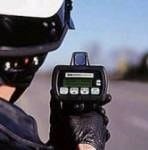 In a criminal prosecution under § 46.2-862, the Commonwealth must prove the offense beyond a reasonable doubt. When the charge is based on driving faster than 85 MPH, proof of the alleged speed is a central issue.
RADAR and LIDAR Speed Measurements
Police officers frequently use RADAR or LIDAR equipment to measure vehicle speed.
The Commonwealth may offer testimony concerning the officer’s observations, the speed reading, and the method used to identify the defendant’s vehicle.
The operation, accuracy, and applicable testing or calibration requirements for the equipment may become relevant to the evidence.
PACE and VASCAR Evidence
Speed may also be estimated or measured through other methods, including pacing a vehicle with a patrol car or using VASCAR where applicable.
Each method involves its own factual and evidentiary considerations.
The court must evaluate the admissible evidence establishing the alleged speed.
Speed Measurement and Calibration Evidence
The reliability of a speed measurement may depend on the particular device, its operation, the surrounding circumstances, and compliance with applicable evidentiary requirements.
Records concerning testing or calibration may be relevant to a contested prosecution.
An equipment issue does not automatically establish that the case must be dismissed.
The effect depends on the evidence and applicable law.
What if My Vehicle’s Speedometer Was Incorrect?
A motorist may discover that the vehicle’s speedometer does not display speed accurately.
A properly documented speedometer calibration may provide useful information concerning the discrepancy between the indicated speed and the vehicle’s actual speed.
However, a speedometer calibration does not automatically defeat a police speed measurement or require dismissal of a reckless driving charge.
The circumstances of the case and the applicable legal issues determine its significance.
Does the Commonwealth Have to Prove Dangerous Driving?
When the prosecution relies on § 46.2-862 and establishes that the defendant drove faster than 85 MPH, it does not have to prove a separate dangerous lane change, collision, or other unsafe maneuver.
The statutory speed itself can establish reckless driving.
However, the Commonwealth must still prove the required elements of the charged offense beyond a reasonable doubt.
Why the Alleged Speed Matters Near 85 MPH
The difference between 85 and 86 MPH can be important when the charge depends on the over-85-MPH provision.
For example, if the applicable speed limit is 70 MPH, an alleged speed of exactly 85 MPH does not satisfy either § 46.2-862 threshold.
Whether the evidence proves a speed faster than 85 MPH may therefore be central to the case.
For additional information about evidentiary issues and possible defenses, see our Virginia Reckless Driving Defenses and Reductions Guide.
Out-of-State Drivers Charged With Reckless Driving Over 85 MPH
Many motorists charged with reckless driving over 85 MPH in Virginia are residents of other states traveling on interstate highways.
An out-of-state driver’s lack of familiarity with Virginia law does not automatically excuse a violation of § 46.2-862.
A Virginia Reckless Driving Conviction Is Still a Criminal Conviction
A motorist licensed in another state may be convicted of criminal reckless driving in Virginia.
The criminal classification does not disappear because the driver resides elsewhere.
The conviction may also have consequences for background checks, employment, and insurance independent of how the driver’s home state treats the traffic offense.
Will Virginia Report the Conviction to My Home State?
Virginia DMV maintains information about reckless driving convictions and may share conviction information with other state licensing authorities through applicable reporting arrangements.
The effect on an out-of-state driver’s points, license, or driving record depends on the home state’s laws and how that jurisdiction processes the reported information.
A motorist should not assume that the home state will impose Virginia’s six-demerit-point system in the same manner.
Will I Have to Return to Virginia for Court?
A reckless driving summons alleges a criminal offense, and the scheduled court date must be addressed.
Depending on the circumstances and the court’s requirements, an out-of-state defendant may be required to appear personally.
In some cases, counsel may be able to appear or seek authorization for the defendant’s personal appearance to be excused.
A motorist should not assume that personal attendance has been waived without confirmation.
Can an Out-of-State Driver Be Prohibited From Driving in Virginia?
Yes.
Virginia Code § 46.2-393 contains provisions concerning the driving privileges of nonresidents convicted of qualifying reckless driving offenses.
A prohibition against driving in Virginia may have consequences separate from any action taken by the driver’s home state.
For more information about the interstate consequences of Virginia reckless driving convictions, see our Virginia Reckless Driving Guide for Out-of-State Drivers.
What Should You Do After Receiving a Reckless Driving Over 85 MPH Summons?
 A summons for reckless driving over 85 MPH is a criminal charge rather than an ordinary prepaid speeding ticket. The driver should confirm the alleged speed, the statutory charge, the court date, and any requirements concerning personal appearance.
Continue Reading
Review the Virginia Uniform Summons
The summons generally identifies the applicable Virginia Code section, the alleged violation, the scheduled court, and the hearing date.
A charge under § 46.2-862 alleges reckless driving by speed.
The alleged speed and posted speed limit may be important when determining which statutory threshold is involved.
Do Not Assume the Charge Can Be Prepaid
Criminal reckless driving is different from an ordinary speeding infraction.
A driver should not assume that paying a fine in advance will resolve a § 46.2-862 criminal summons.
The case generally must be addressed through the applicable court process.
Preserve Relevant Information
Depending on the circumstances, useful information may include:
- A copy of the summons
- The alleged speed and applicable speed limit
- The location of the traffic stop
- Any available dashcam footage
- Information concerning traffic and weather conditions
- Relevant vehicle or speedometer records
- The driver’s prior driving record
Evidence should be preserved promptly when it may be relevant to the allegations.
Understand the Court Appearance Requirements
Reckless driving by speed cases involving adult defendants are generally heard in Virginia General District Court.
A driver who fails to appear when required may face additional legal consequences, potentially including court action to secure the defendant’s appearance.
Whether personal attendance may be excused depends on the circumstances and the court’s requirements.
Prepare for the Criminal Court Process
The court may consider the evidence concerning the alleged speed, the defendant’s driving history, and other legally relevant matters.
A defendant may contest the charge or pursue another legally available disposition.
The particular procedure depends on the court and the circumstances.
For more information about summonses, appearances, and the court process, see our Virginia Reckless Driving Ticket and Court Process Guide.
Can a Reckless Driving Over 85 MPH Charge Be Reduced or Dismissed?
A summons for driving faster than 85 MPH does not mean that a criminal conviction is inevitable.
The outcome depends on the evidence, the driver’s history, the circumstances, and the applicable law.
Dismissal or Acquittal
A defendant may be acquitted if the Commonwealth fails to prove the offense beyond a reasonable doubt.
A charge may also be dismissed when another legally sufficient basis exists.
For example, the evidence concerning the alleged speed may be particularly important when the charge is based on a speed close to the 85 MPH threshold.
A dismissal is not guaranteed simply because the driver has a favorable record or no accident occurred.
Reduction to a Speeding Infraction
Depending on the evidence and circumstances, a reckless driving by speed charge may sometimes be reduced to a noncriminal speeding offense.
A reduction may eliminate the criminal reckless driving conviction, but the reduced charge may still carry a fine, court costs, and DMV consequences.
The availability of a reduction depends on the particular case and the authorized court process.
Reduction to Improper Driving
Virginia Code § 46.2-869 authorizes a reduction from reckless driving to improper driving under qualifying circumstances.
Improper driving is a traffic infraction rather than a criminal offense.
The statute permits a fine of up to $500.
The court may find improper driving when the degree of culpability is slight, and the Commonwealth’s attorney may reduce the charge before the court’s decision.
A motorist is not automatically entitled to improper driving merely because the reckless driving charge is a first offense.
Other Possible Dispositions
Other legally authorized dispositions may be available depending on the evidence and circumstances.
The court may consider the defendant’s driving history, the degree of excessive speed, and any legally relevant mitigating information.
No particular outcome, including dismissal, reduction, or avoidance of jail, can be guaranteed.
Why the Exact Speed and Circumstances Matter
A charge at 86 MPH in a 70 MPH zone may present different evidentiary and sentencing considerations from a charge at 100 MPH in a 55 MPH zone.
Both involve speeds faster than 85 MPH, but the circumstances differ substantially.
The appropriate evaluation should focus on the actual allegation rather than assume that every over-85-MPH case will be treated identically.
Virginia Reckless Driving Over 85 MPH – Frequently Asked Questions
Is driving exactly 85 MPH reckless driving in Virginia?
Not necessarily. Driving exactly 85 MPH does not satisfy the portion of Virginia Code § 46.2-862 that prohibits speeds faster than 85 MPH. However, a driver traveling exactly 85 MPH in a 65 MPH zone is 20 MPH over the limit and may be charged under the statute’s separate 20-MPH-over provision. Driving 85 MPH in a 70 MPH zone does not satisfy either threshold based on speed alone.
Is driving 86 MPH in a 70 MPH zone reckless driving?
Yes. Virginia Code § 46.2-862 makes driving faster than 85 MPH reckless driving regardless of the posted speed limit. A motorist traveling 86 MPH in a 70 MPH zone may therefore be charged with criminal reckless driving even though the speed is only 16 MPH above the limit.
Is 85 MPH in a 65 MPH zone reckless driving?
Yes. Driving exactly 85 MPH in a 65 MPH zone is 20 MPH above the posted limit, which satisfies one of the reckless driving thresholds under § 46.2-862. Although the driver is not exceeding 85 MPH, the separate provision concerning driving 20 MPH or more above the applicable maximum speed limit applies.
Is reckless driving over 85 MPH a misdemeanor or felony?
Reckless driving for driving faster than 85 MPH is ordinarily a Class 1 misdemeanor under Virginia Code § 46.2-868. The offense does not become a felony merely because the alleged speed is 90, 100, or 110 MPH. Section 46.2-868(B) establishes a separate Class 6 felony provision involving reckless driving that causes another person’s death when the driver was operating without a valid license because of a suspension or revocation for a moving violation and the other statutory requirements are met.
Can I go to jail for driving 90 or 95 MPH in Virginia?
Yes. A conviction for driving faster than 85 MPH under § 46.2-862 is ordinarily a Class 1 misdemeanor carrying up to 12 months in jail, a fine of up to $2,500, or both. However, Virginia law does not automatically require a particular jail sentence merely because the motorist reached 90 or 95 MPH. The court considers the circumstances and applicable law.
Does a first reckless driving offense carry possible jail time?
Yes. A first reckless driving conviction can carry jail exposure because § 46.2-862 is ordinarily a Class 1 misdemeanor. A favorable driving record may be relevant to sentencing, but it does not automatically eliminate the possibility of jail. The actual sentence depends on the alleged speed, surrounding circumstances, and the court’s determination.
What happens if I’m convicted of driving faster than 100 MPH?
A conviction under § 46.2-862 for driving faster than 100 MPH carries the ordinary criminal reckless driving penalties and triggers a specific provision of § 46.2-393(C). The court must order enrollment in Virginia’s Intelligent Speed Assistance Program for the statutory period unless the court orders driver’s license suspension instead. This particular mandatory-enrollment provision applies to speeds in excess of 100 MPH, not exactly 100 MPH.
How many DMV points does an over 85 MPH conviction carry?
Virginia DMV assigns six demerit points for a reckless driving conviction involving speeding in excess of 85 MPH. The DMV lists an 11-year driving-record retention period for the conviction. Demerit points and conviction retention are separate consequences. For out-of-state drivers, the treatment of the conviction by the home state’s licensing authority depends on that state’s laws.
Can my driver’s license be suspended for reckless driving over 85 MPH?
Yes. Under Virginia Code § 46.2-393, a court may suspend a Virginia-issued driver’s license for 60 days to six months following a conviction under § 46.2-862. The court may also order an authorized Intelligent Speed Assistance alternative in qualifying cases. Nonresident drivers are subject to separate provisions concerning their permission to drive in Virginia.
Can radar, LIDAR, pacing, or speedometer evidence affect my charge?
Yes. Speed measurements and the evidence supporting them may be important in a § 46.2-862 prosecution. The Commonwealth may rely on RADAR, LIDAR, pacing, or other admissible speed evidence. Applicable testing, calibration, and evidentiary requirements may affect a particular case. A vehicle speedometer calibration may also provide relevant information, but it does not automatically require dismissal of the charge.
Will an out-of-state driver have to return to Virginia for court?
Possibly. Reckless driving over 85 MPH is a criminal charge, and an out-of-state defendant must comply with the applicable court appearance requirements. In some cases, counsel may be able to appear or request that the court excuse the defendant’s personal attendance. Whether an appearance can be excused depends on the case and court requirements. A motorist should not assume that personal attendance has been waived without confirmation.
Can a reckless driving charge for going over 85 MPH be reduced or dismissed?
Yes, depending on the evidence and applicable law. A charge may result in dismissal or acquittal when the Commonwealth fails to establish the offense or another legal basis applies. A reduction to a noncriminal speeding infraction or improper driving may also be available in qualifying circumstances. No particular reduction, dismissal, or other outcome is guaranteed.
For a broader explanation of Virginia reckless driving offenses and related legal questions, see our Virginia Reckless Driving Guide.
Discuss a Reckless Driving Over 85 MPH Charge With a Virginia Attorney
 A criminal reckless driving charge involving a speed faster than 85 MPH can have consequences extending beyond the court’s fine or sentence. Jail exposure, possible license suspension, DMV points, automobile insurance costs, and a criminal record are all important considerations. Our attorneys represent motorists charged with reckless driving throughout Virginia, including drivers accused of traveling 86, 90, 95, 100 MPH, or faster. We evaluate the alleged speed, the available evidence, the driver’s history, and the circumstances of each case. If you have been charged with reckless driving for traveling faster than 85 MPH, learn more about legal representation from our Virginia reckless driving lawyers.
8/12/2024 | Updated 11/10/2026