
Virginia Reckless Driving Penalties: Jail, Fine, Points
 Virginia reckless driving penalties can include jail time, fines, driver’s license suspension, DMV demerit points and consequences extending well beyond the courtroom. This guide explains how those penalties vary according to the offense and circumstances. Most reckless driving convictions are Class 1 misdemeanors, although certain offenses can result in felony charges and significantly greater punishment. The sentence imposed in an individual case depends on the applicable Virginia Code section, the evidence, the driver’s record, statutory requirements and the court’s findings. An arrest or summons is not a conviction, and the maximum authorized punishment is not necessarily the sentence a court will impose.
Virginia Reckless Driving Penalties Guide
Virginia Reckless Driving Penalties Overview
 Most Virginia reckless driving convictions are Class 1 misdemeanors, but the precise punishment depends on the statute charged and the facts established in court. A person may face incarceration, a fine, driving restrictions, DMV consequences and longer-term effects even if no jail sentence is imposed.
Continue Reading
Under Virginia Code § 46.2-868, reckless driving is generally punished as a Class 1 misdemeanor. Virginia Code § 18.2-11 authorizes a sentence of up to 12 months in jail, a fine of up to $2,500, or both.
Those maximum penalties do not mean that every conviction produces jail time, the maximum fine or a license suspension. Courts consider the offense, driving behavior, prior record and circumstances of the case. Some reckless driving statutes also contain additional consequences or special sentencing requirements.
There is an important distinction between penalties imposed by a judge and consequences resulting from the conviction. A court may impose jail, a fine or a license suspension, while the Virginia DMV may separately assess demerit points. Insurance companies, employers and licensing authorities may also respond to the conviction under their own rules.
| Penalty or Consequence | Virginia Reckless Driving |
|---|---|
| Criminal Classification | Usually a Class 1 misdemeanor; certain offenses may be felonies |
| Jail Time | Up to 12 months for an ordinary Class 1 misdemeanor |
| Fine | Up to $2,500 for an ordinary Class 1 misdemeanor, plus applicable court costs |
| License Suspension | Possible suspension; duration and requirements depend on the statute |
| DMV Demerit Points | Generally 6 points; certain violations carry 4 points |
| DMV Record | Reckless driving convictions generally remain for 11 years |
| Criminal Record | A criminal conviction that may qualify for petition-based sealing under applicable law |
| Insurance | Possible premium increases, nonrenewal or other underwriting consequences |
| Other Consequences | Potential effects on employment, professional licensing and driving privileges |
The table provides a general overview. Felony reckless driving, racing, exhibition driving and certain other offenses may carry penalties different from the ordinary misdemeanor maximums.
Misdemeanor and Felony Reckless Driving Penalties
 Reckless driving in Virginia is ordinarily a Class 1 misdemeanor criminal offense rather than a traffic infraction. Certain forms of reckless driving involving a death or serious bodily injury can result in felony charges carrying substantially greater punishment.
Continue Reading
Class 1 Misdemeanor Reckless Driving
Virginia Code § 46.2-868(A) classifies ordinary reckless driving as a Class 1 misdemeanor, punishable by up to 12 months in jail, a fine of up to $2,500, or both. The court may impose a lesser sentence and, where authorized, separate license-related penalties.
These are maximum authorized criminal penalties, not mandatory punishments for every conviction.
Class 6 Felony Reckless Driving
Virginia Code § 46.2-868(B) establishes a Class 6 felony when a person commits reckless driving while operating without a valid license because of a suspension or revocation for a moving violation and, as the sole and proximate result of that reckless driving, causes another person’s death.
A Class 6 felony is ordinarily punishable by imprisonment for one to five years or, as authorized by Virginia Code § 18.2-10, a lesser jail sentence of up to 12 months and a fine of up to $2,500, either or both, within the sentencing options permitted by law.
Felony Racing or Exhibition Driving
Virginia Code § 46.2-865.1 addresses serious bodily injury or death caused by qualifying racing or exhibition driving conducted with the required gross, wanton and culpable disregard for human life.
- Serious bodily injury to another person who was not involved in the prohibited racing or exhibition driving can constitute a Class 6 felony.
- Causing another person’s death under the statute is punishable by imprisonment for one to 20 years.
- A conviction under § 46.2-865.1 also requires a driver’s license suspension of one to three years.
These felony provisions require proof of additional statutory elements. An accident, injury or fatality does not automatically establish the elements of a felony reckless driving offense.
Criminal Conviction Versus Traffic Infraction
A reckless driving misdemeanor conviction is criminal, unlike an ordinary traffic infraction. Our separate guide explains reckless driving as a criminal offense in greater detail.
Jail Time for Reckless Driving in Virginia

A Virginia reckless driving conviction can result in incarceration even when the driver has no prior criminal record. For an ordinary Class 1 misdemeanor reckless driving conviction, the maximum authorized jail sentence is 12 months.
Continue Reading
Is Jail Mandatory for Reckless Driving?
Ordinary misdemeanor reckless driving does not require the court to impose an active jail sentence merely because the defendant is convicted. The judge may consider the seriousness of the conduct, speed, prior record, danger to others and mitigating circumstances.
However, jail remains legally available even for a first offense. A defendant should not assume that a clean driving record or the absence of an accident eliminates incarceration risk.
Active Jail Time and Suspended Sentences
An active jail sentence requires the defendant to serve the portion of incarceration ordered by the court. A suspended sentence is a sentence the court does not require the defendant to serve immediately, subject to the conditions imposed.
The court may impose conditions associated with a suspended sentence, and violations of those conditions can create additional legal exposure. Sentencing arrangements differ according to the circumstances and the court’s lawful authority.
When Jail Becomes a Greater Concern
Very high speeds, particularly dangerous conduct, injuries, significant prior offenses and other aggravating circumstances may increase the possibility of incarceration. Speed alone does not establish a mandatory jail sentence for an ordinary misdemeanor under § 46.2-862, but it can be an important sentencing consideration.
For a more detailed examination of active incarceration, suspended sentences and sentencing practices, see our Virginia reckless driving jail time guide.
Reckless Driving Fines and Court Costs
 The maximum fine for an ordinary Class 1 misdemeanor reckless driving conviction in Virginia is $2,500. Court costs are separate from the fine and may increase the total amount a convicted driver must pay.
Continue Reading
How Does the Court Determine the Fine?
The court determines the amount of the fine within the applicable statutory limits. Relevant circumstances may include the speed involved, the nature of the driving behavior, an accident, the driver’s record and any mitigating evidence.
The statutory maximum is not a standard fine imposed in every reckless driving case. A judge may impose a lower fine or another sentence authorized by law, subject to any mandatory statutory requirements.
Mandatory Minimum Fines for Certain Offenses
Some circumstances create additional requirements. For example, Virginia Code § 46.2-868(C) requires a minimum $250 fine when the reckless driving offense was committed while the person was also in violation of § 46.2-818.2, the move-over statute.
The precise charge and applicable statutory provisions must therefore be reviewed before assuming the court has unrestricted discretion over the amount of every fine.
Costs Beyond the Fine
Court costs and applicable fees are assessed separately under Virginia law. Depending on the circumstances, there may also be expenses associated with license reinstatement, required programs, transportation arrangements or other court-ordered conditions.
Insurance changes can add significantly to the overall financial consequences, although the amount and duration of any increase depend on the insurer and the policy.
Driver’s License Suspension and Restricted Driving Privileges
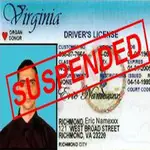 Virginia courts have authority to suspend driving privileges following a reckless driving conviction, but a suspension is not automatic for every offense. The applicable suspension period and any special requirements depend on the statute of conviction and the circumstances.
Continue Reading
General Reckless Driving License Suspension
Virginia Code § 46.2-392 generally authorizes a discretionary license suspension of 10 days to six months for a reckless driving conviction. Virginia Code § 46.2-393 separately addresses convictions under §§ 46.2-853 through 46.2-864 and authorizes a discretionary suspension of 60 days to six months.
These periods apply when the court elects to impose a suspension under the applicable provision. They should not be confused with a mandatory minimum suspension for every reckless driving conviction.
Racing and Exhibition Driving
Virginia Code § 46.2-865 contains different license consequences for racing and exhibition driving.
- A conviction for racing under § 46.2-865(B) generally requires a license suspension of six months to two years or, where authorized and ordered by the court for good cause, participation in the Intelligent Speed Assistance Program for the statutory period.
- A conviction for exhibition driving under § 46.2-865(C) carries the separate license-suspension provision specified in that subsection, permitting a period of up to six months.
- Felony racing or exhibition driving under § 46.2-865.1 carries a required suspension of one to three years.
Virginia Intelligent Speed Assistance Program
Effective July 1, 2026, Virginia established additional alternatives involving the Intelligent Speed Assistance Program, commonly called ISAP.
For qualifying convictions under §§ 46.2-861 and 46.2-862, a court may order participation in ISAP for 60 days to six months instead of suspending the driver’s license under § 46.2-393. The decision is subject to the statutory requirements.
For a conviction under § 46.2-862 involving a finding that the driver exceeded 100 mph, the court must order ISAP participation for the applicable period unless it orders a driver’s license suspension under the statute.
ISAP uses approved speed-limiting technology and is not equivalent to unrestricted driving privileges. Enrollment and operation are subject to program requirements, and the applicable provisions do not authorize commercial motor vehicle operation under ISAP or a restricted license.
Restricted Driving Privileges
A court may authorize restricted driving privileges when permitted by the applicable statute and for good cause shown. Restrictions may address particular purposes such as employment, education, medical treatment and other authorized necessities.
A restricted license is not a general authorization to drive whenever the motorist wishes. Driving outside the restrictions can create a separate criminal violation.
Out-of-State Drivers
For a person licensed outside Virginia, a Virginia court may suspend or restrict the person’s privilege to drive in the Commonwealth. Any additional consequences imposed by the driver’s home state depend on that state’s laws and reporting practices. See our Virginia reckless driving guide for out-of-state drivers for more information.
Virginia DMV Demerit Points and Driving Records
 Most Virginia reckless driving convictions carry six DMV demerit points, but not every reckless driving offense receives the same point assessment. DMV points, the length of time a conviction appears on the driving record, and an insurer’s rating decisions are three separate matters.
Continue Reading
Six-Point and Four-Point Reckless Driving Offenses
The Virginia DMV classifies most reckless driving convictions as six-point violations, including reckless driving by speed, general reckless driving, improper control, passing a stopped school bus and racing.
However, reckless driving for failing to stop before entering a highway, under § 46.2-863, is classified by the DMV as a four-point violation. The actual DMV classification should therefore be confirmed from the offense rather than assuming that every reckless driving conviction produces six points.
How Long Do DMV Demerit Points Last?
Virginia DMV demerit points generally remain effective for two years from the date of the offense. That is different from the length of time the underlying conviction remains on the DMV driving record.
The DMV generally retains reckless driving convictions on a Virginia driving record for 11 years. A conviction’s record-retention period should not be described as the period during which demerit points remain active.
Driver Improvement and Administrative Consequences
Accumulating multiple traffic convictions and demerit points can result in additional DMV actions, including driver improvement requirements and possible administrative suspension. Virginia also provides an ISAP option in certain excessive-point situations.
These administrative consequences are separate from a court-ordered suspension arising directly from a reckless driving conviction.
Insurance Company Points
Insurance companies may apply their own rating systems and evaluate a reckless driving conviction differently from the Virginia DMV. An insurer is not required to use the DMV’s six-point or four-point assessment as its insurance rating formula.
A reckless driving conviction can result in increased premiums, changed underwriting terms or nonrenewal, but the amount and duration of the consequences depend on the insurer, driving history and policy.
Factors That Influence Reckless Driving Penalties
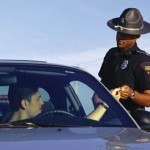 Not all Virginia reckless driving charges involve the same conduct, and not every conviction results in the same sentence. Although many offenses share the Class 1 misdemeanor classification, their facts, statutory requirements and potential license consequences may differ substantially.
Continue Reading
Different Offenses and Different Sentencing Risks
Reckless driving by speed, general reckless driving, racing, exhibition driving and reckless driving involving vehicle control can present different sentencing considerations.
A speed-based charge may focus heavily on the alleged speed and the accuracy of the measurement. A general reckless driving case may involve an accident, manner of operation, road conditions, witness testimony and the actual risk created by the conduct.
Racing and exhibition driving have additional statutory provisions that can affect license suspension and, in certain serious cases, felony punishment.
What Factors Can Make Reckless Driving Penalties Worse?
 Courts may consider very high speeds, dangerous driving maneuvers, prior offenses, injuries and other aggravating circumstances when deciding a reckless driving sentence. The weight assigned to each factor depends on the evidence and the particular offense rather than a single statewide sentencing formula.
Continue Reading
Factors that may influence the sentence include:
- The speed alleged and the applicable speed limit
- The degree of danger created by the driving conduct
- Traffic volume, road design, visibility and weather conditions
- Whether a collision, property damage or injury occurred
- Prior reckless driving, DUI or other relevant convictions
- The driver’s overall driving and criminal history
- The existence of statutory enhancements or mandatory penalties
- Evidence presented by the prosecution and defense
- Credible mitigating circumstances and steps taken before court
Judges may also consider lawful mitigating evidence, including a driver’s prior record, documented efforts to address the conduct, circumstances surrounding the offense and other reliable information presented at sentencing.
Sentencing follows the court’s determination of the offense. An arresting officer’s decision to charge reckless driving does not itself establish guilt or determine what punishment the court will impose.
Additional Consequences of a Reckless Driving Conviction
 A Virginia reckless driving conviction can have consequences beyond the sentence imposed by the court. Employers, insurance companies, professional licensing authorities and other organizations may consider the conviction when making decisions under their applicable policies and legal requirements.
Continue Reading
Employment and Professional Licensing
A criminal reckless driving conviction may appear in employment background checks and can create concerns for jobs involving driving responsibilities, public trust, safety-sensitive duties or professional licensing.
The impact is not automatic or identical across employers. It depends on the position, applicable regulations, the nature of the conviction and the employer’s policies.
Commercial Drivers
Commercial drivers may face additional professional consequences from a reckless driving conviction. Employer reporting requirements, qualification standards and commercial driving regulations can create risks that are separate from an ordinary passenger-vehicle driver’s DMV consequences.
A restricted driver’s license or ISAP enrollment does not authorize operation of a commercial motor vehicle where Virginia law expressly prohibits it.
Insurance and Financial Consequences
Insurance companies may view a reckless driving conviction as evidence of increased driving risk. Depending on the insurer and policy, this can affect premiums, eligibility or renewal decisions.
For some drivers, insurance consequences can exceed the original court fine over time. The actual amount cannot be predicted from the statutory conviction alone.
Criminal Records and Virginia Record Sealing
Reckless driving is ordinarily a criminal misdemeanor, and a conviction may remain accessible in criminal history and court records. Under Virginia law, certain misdemeanor reckless driving convictions may qualify for petition-based sealing if statutory waiting periods and other eligibility requirements are satisfied; sealing is not automatic.
Military, Security Clearance and Other Consequences
Service members, government employees and individuals holding security clearances may have reporting or review obligations after a criminal charge or conviction. The applicable requirements depend on the person’s position, governing standards and individual circumstances.
Can Virginia Reckless Driving Penalties Be Reduced or Avoided?

Reckless driving penalties may be reduced or avoided when the evidence supports an acquittal, dismissal, reduction to a lesser offense or a less severe sentence. The available outcome depends on the facts, the charged statute, legal arguments and the court’s authority.
Continue Reading
Challenging the Evidence
If the Commonwealth cannot prove the charged offense beyond a reasonable doubt, an acquittal avoids the penalties of a reckless driving conviction. The specific evidentiary defenses depend on the facts and are addressed in our separate defenses guide.
Reduction to Improper Driving
Virginia Code § 46.2-869 permits a court, when the degree of culpability is slight, to find a defendant charged with reckless driving not guilty of reckless driving but guilty of improper driving. The Commonwealth’s attorney may also reduce a reckless driving charge to improper driving before the court’s decision.
Improper driving is a traffic infraction rather than a criminal misdemeanor and carries a maximum fine of $500 under § 46.2-869. The legal basis for a reduction must be evaluated in the context of the particular case.
Mitigation and Sentencing Alternatives
When a conviction is supported by the evidence, mitigation may still influence the penalty imposed. Relevant considerations can include the driver’s record, documented corrective steps and evidence bearing on culpability or sentencing.
Mitigation does not guarantee a dismissal, reduction or particular sentence.
Our detailed Virginia reckless driving defenses and reductions guide examines the evidentiary and legal considerations in greater depth.
Virginia Reckless Driving Penalties – Frequently Asked Questions
Can you go to jail for a first reckless driving conviction in Virginia?
Yes. An ordinary Class 1 misdemeanor reckless driving conviction carries a possible jail sentence of up to 12 months, even for a first offense. A first conviction does not automatically require incarceration, however. The court considers the driving conduct, applicable law, criminal history and other relevant circumstances when deciding the sentence.
Is jail time mandatory for reckless driving in Virginia?
Jail time is not mandatory simply because a person is convicted of an ordinary Class 1 misdemeanor reckless driving offense. A court can impose an active jail sentence, a suspended sentence or another lawful punishment. Certain felony offenses have different sentencing requirements, so the particular statute must be reviewed.
What is the maximum fine for reckless driving in Virginia?
For an ordinary Class 1 misdemeanor reckless driving conviction, the maximum fine is $2,500 under Virginia Code § 18.2-11. Court costs are separate, and some circumstances have specific statutory fine requirements. The amount actually imposed depends on the offense and the court’s sentencing determination.
Can a Virginia judge suspend my driver’s license for reckless driving?
Yes. A Virginia judge can suspend driving privileges following a reckless driving conviction when authorized by the applicable statute. Many ordinary reckless driving suspensions fall within statutory ranges ending at six months, but racing and certain other offenses have different requirements. A conviction does not automatically mean every driver will receive the same suspension.
Does Virginia require license suspension for certain reckless driving offenses?
Yes. Racing under Virginia Code § 46.2-865 generally requires a six-month to two-year suspension, unless the court orders an authorized Intelligent Speed Assistance Program alternative for good cause. Exhibition driving under that statute requires a separate suspension for a period of up to six months. Felony racing or exhibition driving under § 46.2-865.1 requires a one-to-three-year suspension.
How many DMV demerit points does reckless driving carry in Virginia?
Most reckless driving convictions are assigned six Virginia DMV demerit points. However, reckless driving for failing to stop before entering a highway is listed as a four-point offense. The point assessment depends on the actual violation reported to the DMV.
How long does reckless driving remain on a Virginia driving record?
Reckless driving convictions generally remain on Virginia DMV driving records for 11 years, while demerit points remain active for two years from the offense date. A DMV driving record is distinct from a criminal history record. Different rules govern criminal-record access and eligibility for sealing.
Will a reckless driving conviction increase my automobile insurance?
A reckless driving conviction can result in higher automobile insurance premiums, changes in underwriting or nonrenewal. Insurance companies make those decisions under their own rating practices rather than simply adopting Virginia DMV demerit points. The amount and duration of any increase depend on the insurer, policy and driving history.
Can reckless driving penalties be reduced through improper driving?
Yes, when the legal requirements are satisfied. Under Virginia Code § 46.2-869, a court may find a defendant not guilty of reckless driving but guilty of improper driving when the degree of culpability is slight. The Commonwealth’s attorney may also reduce the charge before the court’s decision. Improper driving is a traffic infraction with a maximum fine of $500 rather than a criminal misdemeanor.
Does a Virginia reckless driving conviction create a permanent criminal record?
A reckless driving conviction generally creates a criminal record separate from the DMV driving record. Although a criminal conviction does not automatically disappear, certain misdemeanor reckless driving convictions may qualify for petition-based sealing under Virginia law. Eligibility depends on the offense, statutory waiting periods, criminal history and other requirements. Sealing is not automatic and does not necessarily eliminate all authorized access to the record.
For a broader overview of Virginia reckless driving laws and related topics, see our Virginia Reckless Driving Guide.
Discuss Your Virginia Reckless Driving Charge With an Attorney
 A reckless driving charge can expose a motorist to criminal penalties, driving restrictions and long-term consequences that depend on the exact offense and the evidence. Our attorneys evaluate the statute charged, circumstances of the alleged violation, supporting evidence, driving history and available defenses to determine how the case should be approached. Our attorneys represent drivers facing reckless driving allegations throughout Virginia, including cases involving excessive speed, dangerous driving, accidents, racing and other criminal traffic offenses. An appropriate defense may focus on contesting the charge, pursuing a legally supported reduction or presenting mitigating evidence relevant to sentencing. If you are facing a reckless driving charge and need legal representation, learn more about our Virginia reckless driving lawyers and the services available for your case.
8/21/2024 | Updated 11/9/2026