
Virginia Reckless Driving Ticket: What to Expect
 Receiving a reckless driving ticket in Virginia can be particularly concerning if you believed you were receiving an ordinary speeding ticket or were charged following a motor vehicle accident. Under Virginia law, reckless driving is generally a criminal misdemeanor that can result in a criminal record, fines, increased insurance premiums, driver’s license suspension and possible jail time. Whether you were stopped on an interstate highway, city street, rural roadway or charged following another driving incident, you may be wondering whether you will have to appear in court, whether you could go to jail and whether there is anything you can do to avoid a criminal conviction. Unlike an ordinary speeding ticket, a Virginia reckless driving charge cannot simply be prepaid. Understanding your charge, the potential consequences and the options available before your court date can help you make informed decisions about protecting your future.
Virginia Reckless Driving Ticket Guide
Understanding Your Virginia Reckless Driving Ticket
 A police officer who charges a motorist with reckless driving in Virginia will ordinarily issue a Virginia Uniform Summons identifying the alleged offense, applicable Virginia Code section and scheduled court appearance. Although motorists commonly refer to this document as a reckless driving ticket, the summons represents a criminal accusation rather than an ordinary traffic infraction.
Continue Reading
Signing the summons generally does not constitute an admission of guilt. It acknowledges your obligation to appear in court or otherwise respond as required.
Being permitted to continue driving after receiving the summons rather than being taken into custody does not change the criminal classification of the offense.
Virginia law establishes multiple types of reckless driving charges. The precise Virginia Code section identified on your summons determines the offense you are charged with, the elements the Commonwealth must prove and the legal issues that may arise when defending the charge.
Virginia’s Criminal Reckless Driving Speed Thresholds
Under Virginia Code § 46.2-862, a motorist may be charged with reckless driving for traveling:
- 20 miles per hour or more above the applicable maximum speed limit; or
- More than 85 miles per hour regardless of the applicable maximum speed limit.
Either condition may independently support a criminal reckless driving charge.
The following examples illustrate how Virginia’s reckless driving speed thresholds may apply to motorists traveling on residential streets, secondary roads, expressways and interstate highways.
| Alleged Speed | Speed Limit | Meets Reckless Driving Speed Threshold |
|---|---|---|
| 44 mph | 25 mph | No |
| 45 mph | 25 mph | Yes |
| 55 mph | 35 mph | Yes |
| 65 mph | 45 mph | Yes |
| 75 mph | 55 mph | Yes |
| 85 mph | 65 mph | Yes |
| 85 mph | 70 mph | No |
| 86 mph | 70 mph | Yes |
| 95 mph | 70 mph | Yes |
These examples illustrate the numerical requirements of Virginia Code § 46.2-862. Other reckless driving statutes may apply at speeds below these thresholds.
A motorist does not have to be traveling at interstate highway speeds to receive a criminal reckless driving ticket in Virginia. Traveling 45 mph in a 25-mph zone may satisfy the same criminal speeding statute as traveling 90 mph on an interstate highway.
Reckless Driving Without an Accident or Dangerous Driving Behavior
Many motorists charged with reckless driving by speed are surprised because they were not involved in an accident, racing, weaving through traffic or otherwise operating their vehicles in an obviously dangerous manner.
Virginia’s reckless driving by speed statute establishes specific numerical speed thresholds. The Commonwealth does not have to prove that an accident occurred or that another person was actually endangered to establish a violation of that statute.
Traveling with the flow of traffic, driving on an open interstate highway, passing another vehicle or encountering favorable weather conditions does not automatically provide a legal defense to reckless driving by speed.
The Commonwealth must nevertheless establish the alleged speed and other required elements of the offense beyond a reasonable doubt.
Reckless Driving Following a Motor Vehicle Accident
 Not every Virginia reckless driving ticket involves excessive speed. Some motorists are charged following collisions, single-vehicle accidents, allegations of losing control of a vehicle or other driving incidents.
Continue Reading
An officer investigating an accident may issue a summons under Virginia Code § 46.2-852 for general reckless driving or § 46.2-853 for allegedly operating a vehicle without proper control.
The mere occurrence of an accident does not establish that a motorist was driving recklessly. Criminal reckless driving requires more than simply showing that an accident occurred or that a driver may have been ordinarily negligent.
An unexpected roadway condition, momentary loss of traction, mechanical problem or other circumstance may help explain an accident without establishing criminal recklessness.
In Powers v. Commonwealth, 211 Va. 386 (1970), the Supreme Court of Virginia recognized that the mere occurrence of an accident does not give rise to an inference of reckless driving.
The extent of vehicle damage, the financial cost of an accident or the fact that a vehicle left the roadway does not, by itself, establish the conduct necessary for a criminal reckless driving conviction.
Photographs, witness statements, video recordings, roadway conditions, mechanical evidence and information concerning how the accident occurred may be important when evaluating the charge.
Reckless Driving Too Fast for Existing Conditions
Virginia Code § 46.2-861 addresses driving at a speed that is unreasonable under the existing circumstances and traffic conditions, regardless of the posted speed limit.
Unlike reckless driving by speed under § 46.2-862, this offense does not depend on satisfying a particular numerical speed threshold.
A motorist may be charged with reckless driving while traveling below the posted speed limit if the alleged speed was unreasonable considering weather, visibility, traffic, roadway conditions or other relevant circumstances.
The reasonableness of the motorist’s conduct and the evidence establishing the circumstances at the time of the alleged offense are important considerations.
Other Types of Virginia Reckless Driving Charges
Virginia’s reckless driving laws extend beyond excessive speed, dangerous vehicle operation and allegations involving motor vehicle accidents.
Other conduct that may result in a reckless driving charge under the applicable statutory requirements includes:
- Passing another vehicle on a grade or curve.
- Operating a vehicle with an obstructed view or impaired control.
- Improperly passing vehicles traveling abreast.
- Improperly operating vehicles abreast in a single lane.
- Improper passing at railroad crossings or intersections.
- Unlawfully passing a stopped school bus.
- Failing to give required signals.
- Certain violations of Virginia’s Move Over law.
- Failing to yield the right-of-way under specified circumstances.
- Reckless driving in qualifying parking areas.
- Racing or exhibition driving.
Some statutes contain exceptions or distinguish between conduct classified as reckless driving and conduct classified as an ordinary traffic infraction.
Virginia Code §§ 46.2-852 through 46.2-865, including § 46.2-861.1, contain 15 principal statutory provisions addressing reckless driving conduct. Additional provisions address penalties, aggravated offenses and other related matters.
The exact Virginia Code section printed on your summons is important because different offenses involve different legal elements, evidence, defenses and potential consequences.
Our comprehensive Virginia Reckless Driving Laws Guide explains the individual statutory offenses and provides access to more detailed information about the commonly charged reckless driving statutes.
For additional information about the criminal classification of these offenses, see our Virginia Reckless Driving Criminal Offense Guide.
Many motorists who receive a reckless driving ticket are uncertain whether they need an attorney or can handle the charge themselves. Because reckless driving is generally a criminal misdemeanor in Virginia, the decision to represent yourself deserves careful consideration.
Before making that decision, understand the potential criminal and financial consequences of a conviction, the responsibilities of representing yourself in court and the potential benefits of legal representation.
First-Offense Reckless Driving in Virginia
 A first reckless driving ticket may be a motorist’s first experience with the criminal justice system. Many first-time offenders have favorable driving records, established careers, educational goals, family responsibilities and no previous experience appearing in criminal court.
Continue Reading
They may be particularly concerned about whether a single traffic incident could result in a criminal conviction.
Criminal Consequences for First-Time Offenders
Virginia law does not automatically classify an ordinary reckless driving offense differently simply because it is your first offense.
Reckless driving by speed and most other Virginia reckless driving offenses are classified as Class 1 misdemeanors whether the motorist has an extensive driving history or has never previously received a traffic ticket.
The same statutory maximum punishment generally applies to an ordinary Class 1 misdemeanor reckless driving conviction involving a first-time offender as it does to other convictions of that classification. However, a person’s background, driving history and the circumstances of the charge may influence the available dispositions and potential sentence.
Receiving a criminal summons does not mean that a criminal conviction is inevitable.
Jail Exposure for a First Reckless Driving Offense
A Virginia judge may impose jail time following a reckless driving conviction even when the defendant has no prior criminal record.
Nevertheless, incarceration is not automatic. A favorable driving record and the absence of previous criminal convictions may be important mitigating circumstances.
The potential for incarceration generally becomes a greater concern when the case involves particularly high speeds, racing, dangerous driving conduct, serious accidents, injuries, previous convictions or other aggravating circumstances.
Virginia law does not establish a universal speed at which every person convicted of ordinary reckless driving by speed must receive a jail sentence.
Motorists charged with traveling 90 mph, 95 mph, 100 mph or more should obtain an individualized evaluation rather than rely on another person’s reported experience or an assumed sentencing formula.
Our separate guide addressing jail time for reckless driving in Virginia explains incarceration risks and sentencing considerations in greater detail.
The Importance of a Favorable Driving Record
A favorable driving record may help demonstrate that the alleged offense is inconsistent with your usual driving behavior.
Depending on the circumstances, your driving history may be relevant when seeking a reduction, presenting mitigation or requesting a favorable sentence.
However, a clean driving record does not establish a legal defense or automatically eliminate the possibility of incarceration.
The alleged speed, applicable speed limit, particular driving conduct, strength of the evidence and surrounding circumstances must also be considered.
Protecting Your Future After a First-Offense Charge
For many first-time offenders, avoiding a criminal conviction is more important than minimizing the immediate fine.
A relatively modest court-imposed fine may accompany a misdemeanor conviction that creates long-term concerns involving employment, education, professional licensing, security clearances, automobile insurance and background checks.
Motorists who have never previously been charged with a criminal offense may not appreciate the distinction between accepting responsibility for an ordinary traffic violation and entering a guilty plea to a criminal misdemeanor.
These considerations should be evaluated before entering a guilty plea or accepting a particular disposition.
Reckless Driving Enforcement in Virginia
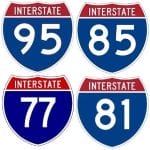 Virginia contains an extensive network of interstate highways, expressways, primary and secondary roads, urban streets, rural transportation corridors and heavily traveled commercial routes. Motorists may encounter traffic enforcement while commuting, traveling for employment, attending college, taking a vacation or passing through Virginia on a longer interstate trip.
Continue Reading
Virginia State Police and Local Law Enforcement
Reckless driving charges may be initiated by Virginia State Police, county police departments, city police departments, sheriff’s offices, university police departments or other law enforcement agencies with authority at the location of the alleged offense.
Enforcement may involve routine patrols, targeted traffic safety initiatives, responses to reported dangerous driving or investigations following motor vehicle accidents.
A Virginia reckless driving charge may result from an officer’s personal observations, speed-measuring equipment, witness statements, video recordings, physical evidence or other information obtained during an investigation.
The issuing law enforcement agency and the location of the alleged offense are relevant when determining the circumstances of the charge and the court responsible for handling the case.
Virginia Interstate Highway Reckless Driving Tickets
Virginia’s interstate highways carry substantial volumes of local commuters, commercial vehicles, tourists and motorists traveling between states.
Drivers may encounter changing speed limits, construction zones, closely spaced interchanges, merging traffic, steep grades, adverse weather conditions and other circumstances affecting traffic enforcement.
Many motorists receive Virginia reckless driving summonses while traveling long distances and may not discover the criminal classification of the charge until they have returned home.
Our interstate corridor guides provide information about major travel routes, traffic enforcement, roadway conditions, relevant jurisdictions and the courts responsible for handling traffic and criminal charges.
| Interstate 95 (I-95) | Interstate 81 (I-81) |
| Interstate 64 (I-64) | Interstate 66 (I-66) |
| Interstate 77 (I-77) | Interstate 85 (I-85) |
Reckless Driving Tickets on Other Virginia Highways and Local Roads
Reckless driving enforcement is not limited to the interstate highway system.
Motorists may receive criminal reckless driving summonses on U.S. highways, Virginia state routes, expressways, parkways, residential streets, commercial roads and other transportation corridors.
Roadway configurations, posted speed limits, traffic signals, intersections, pedestrian activity, school zones and surrounding development may create substantially different driving conditions from those encountered on interstate highways.
A criminal reckless driving allegation may arise at a considerably lower speed on a local road than on an interstate highway.
For a complete directory of interstate and non-interstate highway resources, visit our Virginia Interstate & Major Highway Traffic Enforcement Corridors Guide.
Additional non-interstate resources are available in our Major Virginia Highway Enforcement Corridors Guide.
Virginia Reckless Driving Tickets by City and County
Although Virginia’s reckless driving laws apply statewide, local traffic enforcement, court scheduling, appearance requirements and approaches to resolving reckless driving cases may vary among Virginia cities and counties.
A motorist traveling on a highway that passes through multiple jurisdictions may remember the roadway, nearest exit or approximate mile marker without knowing the particular jurisdiction where the alleged offense occurred.
Understanding the jurisdiction where your reckless driving charge will be prosecuted can help you prepare for your court date and better understand the procedures applicable to your case.
We have developed individual reckless driving ticket articles addressing local enforcement activity, courthouse information, potential penalties, out-of-state motorists and available legal options in jurisdictions throughout Virginia.
Browse our Virginia Reckless Driving Ticket Articles by City and County to learn more about the jurisdiction where you received your ticket.
Virginia Reckless Driving Courts and Court Appearances
 Most adult misdemeanor reckless driving charges are initially heard in the Virginia General District Court responsible for the jurisdiction where the alleged offense occurred. The court name, court date and appearance time printed on your Virginia Uniform Summons are important.
Continue Reading
Motorists should not assume that the closest courthouse or the courthouse serving their home address will handle the charge.
Checking Your Virginia Reckless Driving Court Date
Information concerning your pending case may be available through the official Virginia General District Court Online Case Information System.
Select the appropriate court and review the available case information.
Recently issued summonses may not immediately appear in the online database. The absence of a case from the system does not establish that the charge has been dismissed or that your obligation to appear has been eliminated.
Contact the appropriate court if necessary to confirm administrative information concerning your hearing.
Prepayment Restrictions for Reckless Driving Tickets
Reckless driving is not a prepayable traffic offense in Virginia.
Unlike many ordinary speeding tickets, a criminal reckless driving charge cannot be resolved simply by paying a predetermined fine before your scheduled court date.
The charge must be addressed through the criminal court process.
The fact that your summons resembles an ordinary traffic ticket does not change the criminal nature of the offense.
Initial Court Appearances and Arraignments
Depending on the particular charge and circumstances, your first scheduled court appearance may involve an arraignment, advisement, trial or another proceeding.
An arraignment or advisement may involve notification of the criminal charge, potential penalties and your right to legal representation.
Alternatively, the date identified on your summons may be your actual trial date.
Do not assume that the first court appearance is merely administrative or that the judge will automatically continue the case because you have not retained an attorney.
Personal Court Appearance Requirements
A motorist charged with reckless driving in Virginia is not necessarily required to attend every court proceeding personally.
In appropriate cases, an attorney may obtain permission to appear on the motorist’s behalf.
Whether your personal appearance may be waived depends on the charge, circumstances, potential penalties, need for testimony and court requirements.
When incarceration is a realistic possibility, the court may require your personal attendance.
Hiring an attorney does not automatically excuse a court appearance. Confirm that your personal attendance is not required before missing a scheduled hearing.
Continuing a Virginia Reckless Driving Court Date
Employment obligations, academic commitments, travel plans, medical appointments and residence outside Virginia do not automatically excuse a defendant from attending court.
A continuance may be available depending on the circumstances, applicable procedures and court approval.
Submitting a continuance request does not establish that the request has been granted. Always confirm that your court date has actually been changed before failing to attend the originally scheduled hearing.
Virginia Reckless Driving Trials
Reckless driving trials in General District Court are heard by a judge rather than a jury.
The Commonwealth must prove the charged offense beyond a reasonable doubt.
Depending on the allegation, evidence may include police officer testimony, radar or lidar readings, pacing evidence, equipment calibration records, video recordings, witness testimony or evidence concerning a motor vehicle accident.
A contested trial is not the only possible way to resolve a reckless driving case. Other dispositions may be available depending on the evidence and circumstances.
Failure to Appear in Virginia Reckless Driving Court
Ignoring a criminal reckless driving summons can create additional legal problems.
Depending on the circumstances, the court may proceed in your absence when legally permitted, continue the case, issue a warrant or take other action.
A willful failure to appear may also result in a separate criminal charge.
If you have already missed your court date, promptly determine the status of the case rather than assume that the matter can be resolved by paying a fine.
Appealing a Virginia Reckless Driving Conviction
Under Virginia Code § 16.1-132, a person convicted of a non-felony offense in General District Court generally has 10 days from the conviction to note an appeal to Circuit Court.
The appeal is heard de novo, meaning that the case is heard again rather than reviewed solely for legal error.
An appeal presents additional strategic considerations and does not guarantee a more favorable outcome.
Because the time for noting an appeal is short, motorists considering this option should evaluate it promptly.
Our comprehensive Virginia Reckless Driving Court Process Guide explains court procedures, arraignments, continuances, pleas, trials, sentencing and appeals in greater detail.
Virginia Reckless Driving Penalties and License Consequences
 Reckless driving by speed and most other Virginia reckless driving offenses are classified as Class 1 misdemeanors. Under Virginia Code §§ 46.2-868 and 18.2-11, an ordinary Class 1 misdemeanor reckless driving conviction carries a maximum authorized punishment of up to 12 months in jail, a fine of up to $2,500, or both.
However, the consequences of a reckless driving conviction may extend considerably beyond the sentence imposed by the court.
| Potential Consequence | General Exposure |
|---|---|
| Jail | Up to 12 months for a Class 1 misdemeanor |
| Fine | Up to $2,500, plus applicable court costs |
| Driver’s License | Possible suspension or other driving restrictions |
| Virginia DMV Points | Generally six demerit points |
| Virginia Driving Record | Generally 11 years for many reckless driving convictions |
| Criminal Record | Criminal misdemeanor conviction |
| Automobile Insurance | Potential premium increases or other underwriting consequences |
| Employment & Education | Potential background-check, reporting, licensing or professional consequences |
| Intelligent Speed Assistance | Potential or required program participation in qualifying cases |
Continue Reading
Certain reckless driving offenses and aggravated circumstances may carry different or additional statutory penalties, including more serious criminal classifications.
The maximum authorized punishment should not be confused with the penalties likely to be imposed in a particular case.
Criminal Records and Background Checks
A misdemeanor reckless driving conviction may appear in criminal background checks and may require disclosure in certain employment, professional licensing, educational or other applications.
The criminal court record is separate from the Virginia DMV driving record.
The expiration of DMV demerit points or removal of a conviction from the DMV driving record does not automatically eliminate the criminal court record.
A pending charge may also appear in certain court-record searches and background investigations before the case has been resolved.
Whether a charge or conviction is eligible for expungement, record sealing or other available criminal record relief depends on the applicable law, case outcome and individual circumstances.
Motorists should not assume that a criminal reckless driving conviction can automatically be removed from their record at a later date.
Virginia Driver’s License Suspension
Under Virginia Code § 46.2-393(A), a court may suspend a driver’s license for a period of 60 days to six months following a reckless driving conviction under §§ 46.2-853 through 46.2-864.
For nonresidents and individuals who have not obtained the required Virginia driver’s license, subsection A directs the court to prohibit driving in Virginia for a period of 60 days to six months, subject to the statute’s other provisions.
Restricted driving privileges may be available for qualifying purposes when authorized by the court.
Other reckless driving statutes may establish separate licensing consequences.
A Virginia prohibition on driving does not itself suspend an out-of-state driver’s license in every jurisdiction. However, the driver’s home licensing authority may impose additional consequences under its own laws.
Reckless Driving Above 100 MPH and Intelligent Speed Assistance
Virginia’s Intelligent Speed Assistance Program, effective July 1, 2026, creates additional considerations for motorists charged with particularly high speeds.
Under Virginia Code § 46.2-393(C), the court may, for good cause shown, require participation in the program for qualifying reckless driving convictions under §§ 46.2-861 or 46.2-862 as an alternative to license suspension.
When a motorist is convicted under § 46.2-862 and the court finds that the motorist was driving more than 100 mph, the court must order enrollment in the Intelligent Speed Assistance Program unless it instead orders a license suspension.
The applicable period under this provision is between 60 days and six months.
The statutory threshold is more than 100 mph, not exactly 100 mph. Other criminal penalties and discretionary licensing consequences may still apply to convictions involving exactly 100 mph or lower speeds.
Intelligent Speed Assistance Program Costs and Restrictions
An Intelligent Speed Assistance device is designed to restrict the speed at which a motor vehicle can travel based on the applicable speed limit.
Participation in the program may involve device installation expenses, ongoing monitoring costs and restrictions on the vehicles a motorist may operate.
These requirements can create practical difficulties for individuals who operate multiple vehicles, regularly travel outside Virginia, share vehicles with family members or depend on driving for employment.
Enrollment under § 46.2-393 does not authorize operation of a commercial motor vehicle.
The potential financial and practical consequences of program participation should be evaluated alongside the other criminal and licensing consequences of the charge.
Virginia DMV Demerit Points and Driving Records
For Virginia-licensed motorists, a reckless driving by speed conviction generally results in six DMV demerit points and an entry on the Virginia driving record for 11 years.
Many other Virginia reckless driving convictions carry the same demerit-point assessment and driving-record retention period.
The associated demerit points ordinarily remain active for two years from the offense date.
The accumulation of demerit points from multiple convictions may create additional DMV requirements or driver’s license consequences.
A reckless driving summons alone does not result in the assessment of DMV demerit points. The points are associated with a qualifying conviction.
Automobile Insurance Consequences
A reckless driving conviction may result in higher automobile insurance premiums, loss of favorable driving discounts or other underwriting consequences.
The amount and duration of any insurance increase depend on the insurer, driving history, state of residence and particular offense of conviction.
Increased insurance expenses may continue for several years and ultimately exceed the amount of the court-imposed fine.
For motorists insured under a family automobile policy, a conviction may also affect the cost of coverage maintained by other members of the household.
A reduction to a noncriminal traffic offense may help minimize certain consequences, although the reduced conviction may still affect insurance premiums.
The financial consequences of a reckless driving conviction may extend far beyond the fine and court costs. Increased automobile insurance premiums alone can cost motorists thousands of dollars over several years.
The long-term financial cost of a reckless driving conviction can easily exceed the legal fee associated with defending the charge. Attempting to save money by not retaining an attorney may ultimately prove to be a much more expensive decision.
Although insurance increases vary by driver, insurer and state, the potential long-term financial consequences should be considered when deciding how to handle a reckless driving charge.
Commercial Drivers and Driving-Related Employment
Motorists who hold commercial driver’s licenses or operate vehicles as part of their employment may face consequences beyond the Virginia criminal court case.
Reckless driving may qualify as a serious traffic violation under applicable commercial driver licensing rules.
Employment policies, reporting obligations, previous convictions and licensing requirements may also affect a person’s ability to continue operating commercial or employer-owned vehicles.
Depending on the applicable regulations, a conviction occurring while operating a personal vehicle may also be relevant to a commercial driver’s licensing status.
Even when the court does not suspend driving privileges, a conviction may affect employment opportunities or eligibility to operate an employer’s vehicle.
Our comprehensive Virginia Reckless Driving Penalties Guide provides additional information about criminal punishment, statutory licensing consequences and the potential effects of a conviction.
College Students and Professional Consequences of Reckless Driving
 Virginia is home to numerous colleges, universities, government agencies, military installations, healthcare facilities, professional organizations and private-sector employers. A reckless driving conviction can be particularly concerning for individuals who are beginning their careers, pursuing professional licenses or applying for opportunities that involve criminal background checks.
Continue Reading
College and University Students Charged With Reckless Driving
College students may receive Virginia reckless driving tickets while traveling to and from school, returning home for academic breaks, commuting to employment or traveling with friends.
A student who receives a reckless driving summons may have concerns about criminal background checks, internships, graduate school applications, scholarships, athletics, professional programs or university disciplinary requirements.
Students who are licensed outside Virginia may also need to consider the effect of a conviction on their home-state driver’s license and automobile insurance.
A reckless driving charge or conviction does not automatically result in university discipline or the loss of educational opportunities. The applicable university policies, reporting requirements and individual circumstances must be considered.
Internships, Graduate School and Future Employment
For college students and young professionals, the potential long-term consequences of a criminal conviction may be more significant than the immediate court-imposed fine.
Applications for employment, internships, graduate programs and professional opportunities may include questions concerning criminal convictions or pending criminal charges.
The scope of any disclosure obligation depends on the wording of the application, applicable law and policies of the particular institution or employer.
A motorist who is not currently subject to criminal background checks may encounter such requirements later when applying for employment or pursuing additional education.
Avoiding a criminal conviction may be an important consideration when evaluating possible resolutions of a Virginia reckless driving charge.
Healthcare Professionals and Professional Licensing
Physicians, nurses, medical students, pharmacists, attorneys, educators, financial professionals and other individuals pursuing or maintaining professional credentials may have concerns about the effect of a reckless driving conviction.
A criminal charge or conviction may create reporting obligations or licensing concerns depending on the profession, licensing authority, nature of the offense and applicable regulations.
A reckless driving conviction does not automatically result in disciplinary action or loss of a professional license.
However, motorists should evaluate their actual licensing and reporting obligations before accepting a disposition based solely on the amount of the fine.
Government Employment and Security Clearances
Virginia residents and out-of-state motorists employed by government agencies, defense contractors, military organizations and other entities may be subject to employment-related background checks or security-clearance requirements.
A reckless driving charge or conviction may require disclosure or an explanation depending on applicable policies.
The seriousness of the conduct, the circumstances of the offense and compliance with applicable reporting obligations may be relevant.
A conviction does not automatically result in the loss of government employment or a security clearance. Nevertheless, the potential professional consequences should be considered independently of the penalties imposed by the court.
Out-of-State Drivers Charged With Reckless Driving in Virginia
 Virginia’s location along major interstate transportation routes results in reckless driving charges involving motorists licensed throughout the United States. Some drivers are traveling between states, visiting Virginia for business, attending college, visiting family or passing through the Commonwealth on a longer trip.
Continue Reading
By the time they begin researching the charge, they may already have returned home and discovered that the summons represents a pending criminal offense.
Differences Between Virginia Law and Your Home State’s Law
Motorists who live outside Virginia may be unfamiliar with the Commonwealth’s criminal reckless driving statutes.
Driving conduct that results in an ordinary traffic infraction in another state may satisfy the requirements of a criminal reckless driving statute in Virginia.
The law of the jurisdiction that issued your driver’s license does not determine whether your conduct constitutes reckless driving under Virginia law.
Your Virginia criminal charge must be evaluated under the applicable Virginia statute, regardless of how similar conduct might be classified in your home state.
Home-State Driver’s License Consequences
A Virginia reckless driving conviction may be reported to the jurisdiction that issued your driver’s license.
Your home licensing authority determines how the reported conviction affects your driving record, demerit points, licensing status and other administrative consequences.
The number of Virginia DMV demerit points associated with a particular conviction does not necessarily determine the number of points assessed by another state.
Some jurisdictions may impose licensing consequences based on the nature of the Virginia conviction, the reported speed or other underlying driving conduct.
The criminal classification of the Virginia offense may also create concerns independent of the home-state driving record.
Returning to Virginia for Reckless Driving Court
An out-of-state motorist is not necessarily required to return to Virginia for every reckless driving court proceeding.
In appropriate cases, an attorney may be able to obtain permission to appear on the motorist’s behalf.
Whether a personal appearance may be waived depends on the particular charge, alleged speed or driving conduct, potential penalties, need for testimony and court requirements.
When incarceration is a realistic possibility, the court may require the defendant to appear personally.
Hiring an attorney does not automatically excuse a court appearance. Confirm that your personal attendance is not required before missing a scheduled hearing.
Travel Expenses and Multiple Court Appearances
For motorists who live several hours or hundreds of miles from the Virginia courthouse, returning for court may involve transportation expenses, lodging, missed work, childcare and other financial obligations.
If a case requires multiple court appearances, those expenses may increase substantially.
In appropriate circumstances, having an attorney appear on your behalf may eliminate one or more return trips to Virginia.
The potential cost of returning to Virginia should be evaluated alongside the criminal, licensing and insurance consequences of the charge.
Additional information about home-state licensing consequences, court appearances and other practical considerations is available in our guide for out-of-state drivers charged with reckless driving in Virginia, which also provides access to individual state-specific information guides.
Avoiding a Criminal Reckless Driving Conviction in Virginia
 Receiving a reckless driving summons does not establish that the Commonwealth can prove the charged offense or that a criminal conviction is inevitable. Depending on the evidence, alleged conduct, driving history and circumstances, potential outcomes may include dismissal, acquittal, reduction to a traffic infraction or another appropriate disposition.
Continue Reading
Avoiding a criminal conviction may be particularly important for first-time offenders, college students, young professionals, commercial drivers and individuals concerned about employment or professional licensing.
Reduction to Improper Driving
Virginia Code § 46.2-869 permits a court to find a person charged with reckless driving guilty of improper driving when the degree of culpability is slight.
The Commonwealth’s Attorney may also reduce a reckless driving charge to improper driving before the court’s decision.
Improper driving is a traffic infraction rather than a criminal misdemeanor. It carries a maximum fine of $500 and generally three Virginia DMV demerit points.
Although improper driving may still have driving-record and insurance consequences, it does not result in a criminal reckless driving conviction.
A reduction is not automatic and depends on the circumstances of the individual case.
Reduction to Ordinary Speeding or Another Traffic Infraction
A reckless driving by speed charge may, in appropriate circumstances, be amended to an ordinary speeding infraction.
Other traffic dispositions, including defective equipment or another appropriate traffic offense, may also be available when supported by the evidence, applicable law and circumstances.
A reduction to a noncriminal traffic offense may avoid the criminal classification of the original charge while still potentially resulting in fines, court costs or driving-record consequences.
Some nonmoving traffic dispositions may carry no Virginia DMV demerit points.
The financial and professional benefits of a particular disposition should be evaluated in light of the motorist’s circumstances rather than simply comparing the amount of the fines.
Dismissals and Acquittals in Speed-Related Cases
The Commonwealth must prove every element of the charged offense beyond a reasonable doubt.
In reckless driving by speed cases, relevant questions may involve:
- The accuracy and reliability of radar or lidar measurements.
- Police vehicle pacing evidence.
- Equipment testing and calibration documentation.
- Identification of the vehicle whose speed was measured.
- The officer’s observations and location.
- Proof of the applicable speed limit.
- The admissibility and sufficiency of the Commonwealth’s evidence.
A dismissal or acquittal may be available when the Commonwealth cannot establish the charged offense or when other appropriate legal grounds exist.
Defending Accident-Related Reckless Driving Charges
Accident-related reckless driving cases may present substantially different evidentiary issues from cases involving numerical speed thresholds.
An officer may arrive after an accident and rely on witness statements, physical evidence, driver statements and observations of the accident scene rather than having personally observed the driving conduct.
Relevant questions may include whether anyone actually observed the alleged reckless behavior, whether roadway or weather conditions contributed to the collision, whether another vehicle created an unexpected hazard and whether the evidence establishes criminal recklessness rather than ordinary negligence.
A momentary loss of traction, unexpected mechanical problem or other event may provide an explanation for the accident that does not establish criminal recklessness.
The seriousness of vehicle damage or the financial cost of an accident does not, by itself, establish that the motorist committed criminal reckless driving.
The defense should focus on the elements of the particular statute and the evidence concerning the conduct that allegedly caused the accident.
Defending Other Types of Reckless Driving Charges
Reckless driving allegations involving stopped school buses, move-over requirements, improper passing, failure to yield, racing or other prohibited conduct may involve different statutory requirements and evidentiary issues.
The location of the incident, roadway configuration, applicable traffic controls, warning lights, witness observations and statutory exceptions may be particularly important.
A defense appropriate for a reckless driving by speed charge may have little relevance to another type of reckless driving offense.
The evidence and available legal options should be evaluated according to the specific statute charged rather than treating all reckless driving tickets as identical.
Evaluating a Proposed Case Resolution
The most favorable resolution of a reckless driving charge depends on the particular circumstances and the motorist’s individual concerns.
For some motorists, avoiding a criminal conviction may be the principal objective. Others may be particularly concerned about driver’s license suspension, incarceration, commercial driving privileges, insurance consequences or professional reporting obligations.
A proposed disposition should be evaluated in light of all relevant consequences rather than simply the amount of the court-imposed fine.
No particular dismissal, reduction or other outcome is guaranteed.
Our comprehensive Virginia Reckless Driving Defenses and Reductions Guide explains evidentiary issues, legal defenses and potential alternative dispositions in greater detail.
Preparing for Your Virginia Reckless Driving Court Date
 The period between receiving a Virginia reckless driving ticket and appearing in court provides an opportunity to understand the charge, preserve relevant evidence and determine which preparation may be appropriate. Waiting until the scheduled hearing to begin preparing may limit the available options.
Continue Reading
Reviewing Your Virginia Uniform Summons
Preserve the complete summons and identify:
- The exact offense and Virginia Code section charged.
- The alleged speed or driving conduct.
- The applicable speed limit, if relevant.
- The location of the alleged offense.
- The issuing law enforcement agency.
- The officer’s name and identifying information.
- The assigned court and courthouse.
- The court date and appearance time.
- Any accompanying charges or additional instructions.
Keep the front and back of your summons, along with any additional documents provided by the investigating officer.
The Virginia Code section, precise location of the alleged offense and assigned court should be confirmed before making assumptions about the charge or anticipated court process.
Obtaining Your Driving Record
A current driving record may help establish your driving history and identify information relevant to the potential outcome.
Virginia-licensed motorists may obtain their driving records through the Virginia Department of Motor Vehicles.
Motorists licensed outside Virginia may need to obtain a driving record from their home licensing authority.
A favorable driving record can be particularly valuable when evaluating potential mitigation or a reduction in a first-offense reckless driving case.
The type of driving record obtained should be appropriate for the purpose for which it may be used.
Preserving Evidence of the Traffic Stop or Accident
Potentially relevant evidence may include dash-camera recordings, photographs, witness information, vehicle records, navigation information, accident reports and other documentation.
Record the circumstances surrounding the traffic stop or incident while the details are still fresh in your memory.
Relevant information may include:
- Your location and direction of travel.
- Posted speed limits and traffic control devices.
- Weather, visibility and roadway conditions.
- Traffic volume and surrounding vehicle movements.
- Statements made by the investigating officer.
- Witness observations and contact information.
- Vehicle or mechanical issues.
- Available photographs and video recordings.
Motorists charged following an accident should preserve available photographs of vehicle damage, roadway conditions, traffic signs, visibility and other relevant circumstances.
Relevant recordings may also exist from nearby businesses, residential properties, other vehicles or other sources.
The availability of such recordings is not guaranteed, and video may be overwritten before the scheduled court date.
Witness information and potentially relevant recordings should be preserved promptly whenever possible.
Vehicle Speedometer Calibration
A speedometer calibration compares the speed displayed by your vehicle’s speedometer with the vehicle’s measured actual speed.
Virginia Code § 46.2-942 provides for the introduction of qualifying calibration evidence in prosecutions involving alleged speed violations.
A favorable calibration may help establish that the vehicle was traveling faster than its speedometer indicated.
A calibration is a test of the speedometer’s accuracy rather than a repair. Testing may also reveal that the speedometer was accurate or displayed a speed higher than the vehicle’s actual speed.
A calibration is not necessarily appropriate for every reckless driving charge and does not automatically establish a defense or guarantee a reduction.
The potential value of obtaining a calibration should be evaluated in light of the particular charge, alleged speed, applicable speed limit and other evidence.
Driver Improvement Courses and Other Mitigation
Completing an appropriate driver improvement course may provide useful mitigating evidence in certain Virginia reckless driving cases.
Other potentially relevant mitigation may include community service, a favorable driving history, educational achievements, employment responsibilities or documentation concerning unusual circumstances.
Not every case benefits from the same mitigation strategy.
Completing a driver improvement course or community service does not automatically entitle a defendant to a dismissal, reduction or favorable sentence.
The type of course, timing and other preparation should be evaluated in light of the particular charge before spending time and money on a program.
Preparing for Your Courthouse Appearance
If your personal attendance is required, confirm the courthouse address, court date, appearance time and courtroom assignment.
Allow sufficient time for travel, parking, courthouse security screening and locating the assigned courtroom.
Review applicable courthouse rules concerning portable electronic devices and other restricted items before your appearance.
Motorists traveling from outside the jurisdiction should consider possible traffic delays, travel distances and other practical considerations.
Do not assume that a hearing will be continued simply because you arrive unprepared or experience a scheduling conflict.
Evaluating the Risks of Self-Representation
Although you have the right to represent yourself, a Virginia reckless driving charge is a criminal prosecution rather than a routine administrative matter.
An unrepresented defendant may be responsible for identifying applicable legal defenses, questioning witnesses, challenging the admissibility or sufficiency of the evidence and requesting appropriate relief.
A motorist unfamiliar with criminal court proceedings may also have difficulty evaluating whether a proposed disposition represents a favorable outcome.
When deciding whether to retain an attorney, consider the potential criminal record, licensing, employment, educational, insurance and travel consequences as well as the immediate court expenses.
The decision should involve considerably more than comparing an attorney’s fee with the anticipated court-imposed fine.
Virginia Reckless Driving Ticket Frequently Asked Questions
Below are answers to frequently asked questions about Virginia reckless driving tickets, first offenses, criminal charges, court appearances, penalties, driver’s license consequences, college students, professionals, out-of-state motorists and possible case outcomes.
View Frequently Asked Questions
Is a Virginia reckless driving ticket a criminal charge?
Yes. Reckless driving by speed and most other Virginia reckless driving offenses are Class 1 misdemeanors rather than ordinary traffic infractions. Receiving a summons is an accusation, not a criminal conviction.
Is a Virginia reckless driving ticket the same as an ordinary speeding ticket?
No. Ordinary speeding is generally a traffic infraction, while reckless driving is ordinarily a criminal misdemeanor. The Virginia Code section identified on your summons determines the specific offense charged.
Are there different types of reckless driving tickets in Virginia?
Yes. Virginia has 15 principal statutory provisions addressing reckless driving conduct, including excessive speed, dangerous driving, failure to maintain proper control, improper passing, school-bus violations, qualifying move-over violations, racing and other prohibited conduct.
How do I know which type of reckless driving offense I have been charged with?
Review the Virginia Code section and offense description printed on your Virginia Uniform Summons. Different reckless driving statutes establish different legal elements that the Commonwealth must prove to obtain a conviction.
What speed is considered reckless driving in Virginia?
Under Virginia Code § 46.2-862, a motorist may be charged with reckless driving for traveling 20 mph or more above the applicable maximum speed limit or more than 85 mph regardless of the applicable maximum speed limit.
Is driving exactly 85 mph automatically reckless driving in Virginia?
No. The independent statutory speed threshold is more than 85 mph. However, traveling exactly 85 mph may constitute reckless driving if it is at least 20 mph above the applicable maximum speed limit or if other reckless driving conduct is established.
Can I receive a reckless driving ticket while traveling below the posted speed limit?
Yes. Virginia Code § 46.2-861 prohibits driving faster than is reasonable under existing circumstances and traffic conditions, regardless of the posted speed limit. Other reckless driving statutes may also apply to conduct unrelated to numerical speed thresholds.
Can I be charged with reckless driving without causing an accident or driving dangerously?
Yes. Virginia’s reckless driving by speed statute establishes numerical speed thresholds. The Commonwealth does not have to prove that an accident occurred or that another person was actually endangered to establish a violation of that statute.
Can a motor vehicle accident alone establish reckless driving in Virginia?
No. The mere occurrence of an accident does not establish reckless driving. The Commonwealth must prove the elements of the particular offense beyond a reasonable doubt.
Does signing a Virginia reckless driving ticket mean I pleaded guilty?
No. Signing a Virginia Uniform Summons generally acknowledges your obligation to appear in court or otherwise respond as required. It does not constitute a guilty plea or establish that you committed the alleged offense.
Will my first Virginia reckless driving ticket result in a criminal record?
A reckless driving conviction ordinarily results in a criminal misdemeanor record. However, a charge is not a conviction, and a dismissal, acquittal or reduction to a noncriminal traffic offense may be available depending on the circumstances.
Can I go to jail for a first reckless driving offense in Virginia?
Yes. Jail is legally possible even for a first offense, but incarceration is not automatic. The alleged speed or conduct, driving history, evidence and other circumstances may influence the outcome.
At what speed will a Virginia judge impose jail time for reckless driving?
Virginia law does not establish a universal mandatory jail threshold for ordinary reckless driving by speed. The risk of incarceration depends on the alleged speed, driving history, evidence and other aggravating or mitigating circumstances.
Can I pay my Virginia reckless driving ticket online before court?
No. Reckless driving is not a prepayable offense in Virginia. The criminal charge must be addressed through the court process. Paying a fine and court costs after the case has been decided is different from prepaying the original ticket.
What should I do immediately after receiving a Virginia reckless driving ticket?
Review the summons, identify the exact charge, confirm your court information and preserve relevant evidence. You should also evaluate the potential consequences and available legal options before your court date.
How do I determine which Virginia court will handle my reckless driving ticket?
Review the court name, location and appearance information printed on your summons. Most adult misdemeanor reckless driving charges are initially heard in the General District Court responsible for the jurisdiction where the alleged offense occurred.
Will my first Virginia reckless driving court date be an arraignment or a trial?
It depends on the particular charge, circumstances and court procedures. The first scheduled appearance may involve an advisement, arraignment, trial or another proceeding. Do not assume that the case will automatically be continued.
Can I reschedule my Virginia reckless driving court date?
A continuance may be available depending on the circumstances and applicable court procedures. A request does not automatically excuse attendance. Confirm that the court has granted the continuance before missing the originally scheduled hearing.
Do I have to appear personally in court for a Virginia reckless driving ticket?
Not necessarily. In appropriate cases, an attorney may obtain permission to appear on your behalf. Whether your personal appearance is required depends on the charge, circumstances and court requirements. Hiring an attorney does not automatically excuse attendance.
What happens if I miss my Virginia reckless driving court date?
The court may proceed in your absence when legally permitted, continue the case, issue a warrant or take other action. A willful failure to appear may also result in a separate criminal charge.
What are the maximum penalties for an ordinary misdemeanor reckless driving conviction in Virginia?
A Class 1 misdemeanor reckless driving conviction carries a maximum authorized punishment of up to 12 months in jail, a fine of up to $2,500, or both. Additional licensing, driving-record and other consequences may apply.
Can I lose my driver’s license for reckless driving in Virginia?
Yes. Depending on the particular statute and circumstances, a reckless driving conviction may result in suspension of your driver’s license or restrictions on your Virginia driving privileges.
What happens if I receive a Virginia reckless driving ticket for more than 100 mph?
For qualifying convictions under Virginia Code § 46.2-862 involving speeds exceeding 100 mph, the court must order participation in the Intelligent Speed Assistance Program unless it instead orders a license suspension. Other criminal penalties may also apply.
Does receiving a Virginia reckless driving ticket immediately add points to my driving record?
No. Virginia DMV demerit points are generally assessed following a qualifying conviction rather than when a summons is issued.
How long does reckless driving remain on a Virginia driving record?
A reckless driving by speed conviction generally remains on the Virginia DMV driving record for 11 years. Many other reckless driving convictions have the same retention period. The associated six demerit points ordinarily remain active for two years from the offense date.
Will a Virginia reckless driving conviction increase my automobile insurance premiums?
It may. Insurance consequences depend on the insurer, driving history, state of residence and particular offense of conviction. Increased premiums or the loss of favorable driving discounts may continue for several years.
Can a Virginia reckless driving conviction affect a college student?
Possibly. A criminal conviction may create concerns involving internships, employment, graduate school applications, professional programs or university reporting requirements. The consequences depend on applicable policies and individual circumstances.
Can a Virginia reckless driving conviction affect my employment, professional license or security clearance?
Possibly. A criminal charge or conviction may create background-check, reporting, employment, licensing or security-clearance concerns. A reckless driving conviction does not automatically result in the loss of employment, a professional license or a security clearance.
Can a Virginia reckless driving conviction affect my commercial driver’s license?
Yes. Reckless driving may qualify as a serious traffic violation under applicable commercial driver licensing rules. The circumstances, previous convictions, applicable regulations and final disposition may affect commercial driving privileges or employment.
Do I have to return to Virginia for reckless driving court if I live outside the state?
Not necessarily. In appropriate cases, an attorney may obtain permission to appear on your behalf. Whether your personal appearance is required depends on the circumstances and court requirements.
Will my home state find out about my Virginia reckless driving conviction?
A Virginia reckless driving conviction may be reported to the jurisdiction that issued your driver’s license. Your home licensing authority determines the resulting driving-record, licensing and administrative consequences.
Can a Virginia reckless driving ticket be reduced to improper driving?
Possibly. Virginia law permits an improper driving disposition when the degree of culpability is slight. Improper driving is a traffic infraction rather than a criminal misdemeanor. A reduction depends on the evidence and circumstances.
Can a Virginia reckless driving charge be reduced to speeding or defective equipment?
Yes, in appropriate cases. Depending on the evidence, alleged conduct, driving history and circumstances, a reckless driving charge may be amended to ordinary speeding, defective equipment or another appropriate traffic offense. No particular reduction is guaranteed.
Can a Virginia reckless driving charge be dismissed?
Yes. Depending on the evidence, applicable law and circumstances, a reckless driving charge may be dismissed or result in an acquittal. No particular outcome is guaranteed.
Can I appeal a Virginia reckless driving conviction?
Yes. A person convicted of a misdemeanor in General District Court generally has 10 days from the conviction to note an appeal to Circuit Court, where the case is heard de novo.
Legal Representation for a Virginia Reckless Driving Ticket
 A reckless driving ticket received in Virginia can have consequences that extend well beyond your court date. Riley & Wells Attorneys-At-Law represents Virginia residents, college students, professionals, commercial drivers, commuters and out-of-state motorists charged with reckless driving throughout the Commonwealth. Our attorneys can evaluate your charge, review the available evidence, explain your court appearance requirements and discuss defense strategies focused on protecting your interests and minimizing the potential consequences of a criminal conviction. Learn more about our representation on our Virginia Reckless Driving Lawyer page.
8/29/2024 | Updated 11/28/2026