
Chesterfield County Fraud & Forgery Lawyer | 1500+ Reviews
 Riley & Wells Attorneys-At-Law represents clients facing misdemeanor and felony fraud and forgery charges in Chesterfield County, Virginia. These cases may involve allegations concerning forged checks, signatures, financial documents, credit or gift cards, electronic transactions, false pretenses, identity-related offenses, or other conduct allegedly intended to obtain money or property unlawfully. Virginia has separate criminal statutes governing different types of fraud, including forgery and uttering under § 18.2-172 and obtaining property by false pretenses under § 18.2-178. The exact charge, required elements, and evidence are important to determining the appropriate defense. Our Chesterfield County fraud and forgery lawyers regularly represent clients before the local courts and examine financial records, electronic communications, disputed transactions, authorization, identification evidence, and whether the Commonwealth can prove the required criminal intent beyond a reasonable doubt. Each case requires an individualized evaluation of the allegations, applicable law, evidence, and available defenses.







Chesterfield County Fraud & Forgery Defense Guide
Chesterfield County Defense Services
For broader statewide guidance, see our Virginia Theft & Fraud Defense Lawyers page.
Fraud and Forgery Charges Under Virginia Law
 Virginia criminal law contains numerous statutes addressing fraud, forgery, false representations, financial instruments, credit cards, gift cards, identity-related offenses, and other conduct involving money, property, or documents. Fraud and forgery allegations in Chesterfield County may arise from disputed financial transactions, checks, signatures, business records, credit-card activity, electronic payments, employment-related documents, or representations allegedly made to obtain money or property. The precise charge depends on the conduct alleged and the applicable Virginia statute. Some offenses are misdemeanors, while others are felonies carrying substantial potential penalties. Our Chesterfield County fraud and forgery lawyers represent clients facing criminal allegations before the local courts. The defense begins with reviewing the charging documents, identifying the elements the Commonwealth must prove, and examining the financial, documentary, and electronic evidence. An investigation or accusation does not establish that the accused person committed fraud. The Commonwealth must prove the charged offense beyond a reasonable doubt.
Types of Fraud and Forgery Allegations
Criminal allegations may involve:
- Forgery of checks or other writings
- Uttering forged documents
- Obtaining property by false pretenses
- Obtaining signatures through deception
- Credit-card fraud
- Credit-card theft or forgery
- Gift-card fraud or theft
- Fraudulent financial statements
- Identity-related offenses
- Unauthorized financial transactions
- Fraud involving business records
- Other document-related offenses
Different offenses require different evidence. For example, a forgery allegation involving a signature may present questions concerning document authenticity and knowledge, while a credit-card fraud allegation may depend on authorization, transaction records, value, and intent.
The applicable statute should be identified before assuming what the Commonwealth must prove or what punishment may apply.
Forgery and Uttering Under Virginia Code § 18.2-172
Virginia Code § 18.2-172 addresses forgery and uttering involving certain writings not covered by separate forgery statutes.
The statute makes it a Class 5 felony to forge a qualifying writing to the prejudice of another person’s right.
It also prohibits uttering, or attempting to employ as true, a forged writing when the accused knows the writing was forged.
Forgery and uttering are related but distinct forms of prohibited conduct. An individual accused of creating or altering a writing may face different factual issues from someone accused of knowingly presenting an already-forged document as genuine.
What Must Be Proven in a Forgery Case?
Depending on the allegation, important questions may include:
- Whether the writing was actually forged;
- Whether the accused created or altered the writing;
- Whether the writing falls within the applicable statute;
- Whether another person’s rights were prejudiced;
- Whether the accused knew the writing was forged;
- Whether the accused attempted to use the writing as genuine; and
- Whether the Commonwealth can establish the mental state required for the charged offense.
A disputed signature or inaccurate document does not automatically establish that the defendant committed forgery.
The defense may examine who prepared the document, whether permission existed, how the writing was obtained, and whether the evidence connects the accused person to the alleged falsification.
What Is Uttering a Forged Document?
Uttering generally involves presenting or attempting to use a forged writing as genuine while knowing it is forged.
A person may be accused of uttering even if the Commonwealth does not allege that the person personally created the forged writing.
Evidence concerning knowledge may therefore become particularly important.
For example, the defense may examine whether the accused knew the document was false, how it came into the accused person’s possession, and what representations were made when it was presented.
Virginia Forgery Penalties
Forgery and qualifying uttering under § 18.2-172 are Class 5 felonies.
A Class 5 felony generally carries a punishment of one to 10 years of imprisonment. Virginia law also authorizes an alternative sentence of up to 12 months in jail, a fine of up to $2,500, or both, in the discretion of the jury or court trying the case without a jury.
The actual sentence depends on the offense, criminal history, evidence, statutory requirements, and sentencing circumstances.
Other forgery statutes may establish different classifications and penalties. The precise charge should be reviewed carefully.
Obtaining Money or Property by False Pretenses
Virginia Code § 18.2-178 addresses obtaining money, gift certificates, or other property through a false pretense or token with the intent to defraud.
When the applicable statutory requirements are met, obtaining property through false pretenses is treated as larceny of that property.
The property involved and its value may therefore affect whether the allegation is punished as misdemeanor petit larceny or felony grand larceny.
Section 18.2-178 also separately addresses obtaining another person’s signature to certain writings through false pretenses with intent to defraud. That offense can constitute a Class 4 felony.
False Representations and Criminal Intent
False-pretenses allegations may involve disputed transactions in which one person claims another made a material misrepresentation to obtain money or property.
The defense may examine:
- The exact representation allegedly made;
- Whether the representation was false;
- Whether the accused knew it was false;
- Whether the required fraudulent intent existed;
- The relationship between the representation and the transfer of property;
- The value and identity of the property obtained; and
- Whether the evidence establishes each element of the charged offense.
A financial disagreement, unsuccessful transaction, broken promise, or unpaid debt does not automatically establish criminal fraud.
The Commonwealth must establish the elements required by the applicable statute. Financial records, contractual documents, communications, and the circumstances surrounding the transaction may be particularly important.
Business and Contractual Disputes
Some fraud allegations arise from failed business transactions, loans, disputed invoices, shared accounts, contractual disagreements, or disagreements involving the ownership or use of money.
These situations require careful examination because a civil dispute is not necessarily a criminal offense.
Relevant questions may include whether a representation concerned an existing fact, whether the accused possessed fraudulent intent, whether another person relied on the representation, and whether the evidence establishes the alleged criminal conduct.
The mere existence of a financial loss does not establish every element of fraud.
Credit Card and Gift Card Fraud Allegations
Virginia has separate statutes addressing credit-card theft, credit-card forgery, credit-card fraud, and certain offenses involving gift cards and gift-card redemption information.
The applicable statute is important because these offenses have different elements, classifications, and punishments.
Credit Card and Gift Card Theft
Virginia Code § 18.2-192 addresses specified conduct involving unlawfully obtaining, retaining, receiving, selling, or transferring credit cards or credit-card numbers.
It also addresses acquiring or retaining gift cards or gift-card redemption information without the required consent and with intent to defraud.
Violations of § 18.2-192 are classified as grand larceny and punished under the applicable grand-larceny statute.
The defense may examine how the card or information was obtained, whether consent existed, whether the accused knowingly possessed it, and whether the Commonwealth can establish the required intent.
Credit Card and Gift Card Forgery
Virginia Code § 18.2-193 addresses specified forms of credit-card forgery, including falsely making or altering cards, forging certain transaction records, and other prohibited conduct.
The statute also addresses altering or tampering with a gift card or its packaging with intent to defraud.
Credit-card and gift-card forgery under this statute is classified as a Class 5 felony.
Important issues may include the accused person’s authorization, knowledge, intent, identity, and connection to the allegedly forged card or transaction.
Credit Card and Gift Card Fraud
Virginia Code § 18.2-195 addresses specified fraudulent uses of credit cards, credit-card numbers, and gift cards.
Depending on the conduct alleged, a prosecution may involve using a stolen or revoked card, representing oneself as an authorized cardholder, obtaining money or goods through unauthorized card transactions, or other prohibited financial activity.
The statute also addresses schemes to obtain gift cards or redemption information through fraudulent representations.
For qualifying credit-card or gift-card fraud, the statute provides different punishment classifications based on the relevant value during a six-month period:
- Less than $1,000: Class 1 misdemeanor;
- $1,000 or more: Class 6 felony.
Separate provisions address certain conspiracies involving credit-card or gift-card fraud.
The value, relevant time period, authorization, transaction records, and applicable statutory subsection can determine how the Commonwealth prosecutes the offense.
Evidence in Credit Card Fraud Cases
Financial-card investigations may involve:
- Credit-card statements
- Bank account records
- Transaction histories
- Electronic-payment records
- Merchant receipts
- Store surveillance video
- Cardholder statements
- Account-access information
- Gift-card redemption records
- Electronic communications
The defense should evaluate whether the accused actually initiated or authorized the transactions, whether the records are complete, and whether the Commonwealth can establish the required intent.
Intent to Defraud in Virginia Criminal Cases
Intent is frequently a central issue in fraud and forgery prosecutions.
Many fraud-related offenses require proof that the accused acted with a particular fraudulent purpose or with knowledge of circumstances prohibited by the statute.
An incorrect document, disputed transaction, inaccurate financial statement, unpaid obligation, or financial loss does not necessarily establish criminal intent.
The Commonwealth may rely on circumstantial evidence to establish intent, but the evidence must satisfy the elements of the charged offense.
Relevant circumstances may include:
- Statements attributed to the accused
- Emails and text messages
- Bank and financial records
- Transaction histories
- Repeated conduct
- Efforts to conceal activity
- Relationship between the parties
- Authorization or permission
- Business and contractual records
- Events surrounding the transaction
For example, the existence of a disputed payment may be consistent with different explanations depending on whether authorization existed, what the parties understood, and what communications occurred before and after the transaction.
A defense strategy should examine the complete circumstances rather than assuming that a financial loss establishes intentional fraud.
Financial, Documentary and Electronic Evidence
 Fraud and forgery cases often depend heavily on financial records, documents, electronic communications, and evidence concerning access to accounts or property. Our Chesterfield criminal defense attorneys examine the documents and transactions underlying the allegations to determine what the Commonwealth can establish. A financial record should not necessarily be viewed in isolation. The complete history of a transaction, the parties’ communications, authorization, and how records were created may affect whether the evidence supports the prosecution’s theory. The defense may also examine whether documents are authentic, whether electronic records are complete, and whether the accused person can reliably be identified as the individual responsible for the alleged conduct.
Evidence That May Require Review
Depending on the charge, relevant evidence may include:
- Checks and disputed writings
- Bank statements
- Credit-card and gift-card records
- Transaction histories
- Contracts and invoices
- Electronic payment records
- Emails and text messages
- Computer and account records
- Surveillance recordings
- Signature exemplars
- Identification documents
- Business records
- Witness statements
- Statements attributed to the accused
Evidence should be evaluated for accuracy, authenticity, completeness, and context.
Financial transactions may involve multiple individuals with account access or authority to initiate payments. The existence of an electronic transaction does not automatically establish who initiated it or whether it was unauthorized.
Electronic Records and Account Access
Modern fraud investigations may involve computer records, online transactions, banking applications, mobile devices, or electronic communications.
Important questions may include who had access to an account, what authentication measures were used, whether a transaction was authorized, and whether records accurately establish the accused person’s involvement.
The defense may examine transaction timestamps, account histories, messages, access records, and other available evidence.
Electronic records should be preserved in their original form. Altering or deleting potentially relevant information can create additional legal or evidentiary problems.
Common Defense Issues in Chesterfield Fraud and Forgery Cases
 The appropriate defense depends on the particular statute, the Commonwealth’s theory of prosecution, and the available financial, documentary, and electronic evidence. Our attorneys regularly represent clients in Chesterfield criminal proceedings and evaluate whether the evidence establishes the required conduct, knowledge, intent, and identity. Fraud cases can involve substantial records and complex transactions. The defense should determine whether those records support the accusation or provide a different explanation for the disputed conduct. A failed agreement, financial loss, inaccurate record, or disputed signature does not automatically prove a criminal offense.
Lack of Intent to Defraud
Many fraud prosecutions require proof of a particular fraudulent intent.
Mistake, misunderstanding, accounting error, contractual disagreement, or another innocent explanation may create an important defense issue.
The surrounding communications and conduct should be examined to determine whether the evidence actually supports the required criminal intent.
Authorization or Permission
Permission to sign a document, access an account, initiate a transaction, or use financial information may be central to the defense.
The existence and scope of authorization may be established through contracts, messages, prior conduct, account records, or witness testimony.
Mistaken Identity
Financial documents and electronic transactions do not necessarily establish who created, submitted, or used them.
The Commonwealth must connect the accused person to the charged conduct through admissible evidence.
Account access, identification records, surveillance footage, and other evidence may be important.
Lack of Knowledge of Forgery
An uttering allegation may require proof that the accused knew a writing was forged.
A person who unknowingly receives or presents a false document may have a different defense from someone who knowingly attempts to use a forged writing as genuine.
The defense should examine how the document was obtained and what the accused knew at the relevant time.
Incomplete or Inaccurate Financial Records
Financial records may be incomplete, incorrectly interpreted, or missing information that provides necessary context.
A disputed transaction may involve multiple payments, prior authorization, refunds, account adjustments, or other circumstances not reflected in a single record.
The defense may need to reconstruct the transaction history before evaluating the prosecution’s allegations.
Civil Dispute vs. Criminal Fraud
Some fraud allegations arise from failed business arrangements, loans, unpaid invoices, contractual disagreements, or disputes involving jointly controlled property.
A civil disagreement does not automatically establish a criminal offense.
The Commonwealth must prove the elements and mental state required by the particular criminal statute.
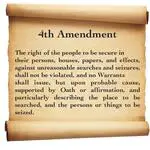
Search and Seizure Issues
Fraud and forgery investigations may involve searches of mobile phones, computers, business premises, residences, or other locations.
The defense may examine whether law enforcement obtained the evidence through a lawful warrant, valid consent, or another recognized legal basis.
Questions may also arise concerning the scope of a search warrant, the manner in which electronic evidence was collected, and whether statements were obtained in compliance with constitutional requirements.
When legally appropriate, a motion to suppress may seek to exclude improperly obtained evidence.
Negotiation, Mitigation and Alternative Dispositions
Not every fraud or forgery case proceeds to a contested trial.
Depending on the evidence and applicable law, some cases may present opportunities for dismissal, amendment, charge reduction, negotiation, restitution, or other legally available dispositions.
Restitution or repayment does not automatically dismiss a criminal charge.
The appropriate strategy depends on the particular offense, evidence, criminal history, prosecutorial decisions, and applicable court procedures.
Chesterfield County Fraud and Forgery Court Process
 The criminal court process depends on the precise fraud or forgery statute and whether the allegation is classified as a misdemeanor or felony. Adult misdemeanor charges are generally tried in General District Court. Felony allegations may begin in General District Court with proceedings involving bond, examination of evidence, negotiations, motions, and a preliminary hearing. At a preliminary hearing, the court generally determines whether probable cause exists for the felony charge to proceed toward Circuit Court. It is not the felony trial. A felony prosecution may also proceed through a direct indictment without a preliminary hearing. Felony trials, guilty pleas, sentencing, and other final felony proceedings are handled in Circuit Court. Cases involving juveniles may proceed through Juvenile and Domestic Relations District Court. The warrant, summons, or indictment should be reviewed carefully because the term “fraud” may describe different offenses with different statutory elements and potential penalties.
General District Court and Circuit Court
9500 Courthouse Road
Chesterfield, Virginia 23832
Stages of a Fraud or Forgery Case
Depending on the circumstances, criminal proceedings may include:
- Criminal investigation
- Arrest warrant or criminal summons
- Magistrate appearance when applicable
- Bond determination or review
- Arraignment or advisement
- Review of financial and electronic evidence
- Pretrial motions or negotiations
- Preliminary hearing when applicable
- Grand jury proceedings
- Trial or other disposition
- Sentencing if convicted
- Appeal when authorized by law
Not every case proceeds through every stage. The appropriate procedure depends on the charge, evidence, and manner in which the prosecution begins.
Chesterfield Criminal Jurisdiction and Venue
Fraud and forgery allegations may involve transactions, documents, or communications connected to more than one location.
Virginia law contains specific venue provisions for certain fraud offenses. Depending on the statute, a criminal prosecution may be authorized in a locality connected to the alleged conduct, transaction, or other statutory venue factor.
The defense should examine the exact charge, alleged conduct, location of relevant transactions, and applicable venue rules.
An allegation involving a Chesterfield resident or business does not necessarily establish that every related criminal charge must be prosecuted in Chesterfield County.
Fraud and Forgery Defense Throughout Chesterfield County
Our attorneys represents clients facing fraud, forgery, and other financial-crime allegations arising throughout Chesterfield County.
Our representation includes cases involving individuals, businesses, financial transactions, and investigations connected to the county’s census-designated communities.
Communities we serve include:
- Bellwood
- Bensley
- Bon Air
- Brandermill
- Chester
- Enon
- Ettrick
- Manchester
- Matoaca
- Meadowbrook
- Midlothian
- Rockwood
- Woodlake
Fraud and forgery investigations may arise from transactions involving Chesterfield businesses, financial institutions, retail establishments, employers, contractors, personal accounts, or other financial relationships.
For example, allegations may involve a disputed check, unauthorized credit-card transaction, electronic payment, falsified document, or business transaction connected to Chester, Midlothian, Bon Air, or another Chesterfield community.
The specific charge, investigating agency, locations connected to the alleged offense, and applicable venue provisions determine how the prosecution may proceed.
Our countywide criminal-defense practice represents clients whose cases are assigned to the Chesterfield courts.
What to Send for a Chesterfield Fraud or Forgery Case Review
Complete charging documents and accurate information concerning the disputed transaction or writing can help our attorneys identify the applicable statute, available evidence, procedural status, and possible defense issues.
Useful materials may include:
- Criminal warrant or summons
- Indictment or charging documents
- Scheduled court date
- Checks or disputed writings
- Bank and credit-card statements
- Gift-card and transaction records
- Contracts and invoices
- Business and financial records
- Emails and text messages
- Electronic account statements
- Authorization or permission documents
- Photographs or surveillance recordings
- Names and contact information for witnesses
- Other relevant investigative records
Potentially relevant documents and electronic records should be preserved in their original form.
Financial statements, communications, recordings, and other evidence should not be deleted, edited, or altered.
A written account of the transaction or incident may also help preserve important details concerning authorization, intent, identity, account access, and the sequence of events.
Chesterfield County Fraud & Forgery Lawyer Client Review

Frequently Asked Questions About Chesterfield County Fraud and Forgery Charges
The court process, possible penalties, and available defenses depend on the particular criminal statute and evidence. These answers address common questions concerning fraud and forgery charges in Chesterfield County.
Are fraud and forgery the same criminal offense?
No. Virginia has separate statutes addressing different types of fraudulent conduct. Forgery generally concerns falsely making, altering, or knowingly using certain writings, while fraud may involve deception or false representations used to obtain money, property, signatures, or another benefit. The precise charge determines what the Commonwealth must prove.
What is forgery under Virginia Code § 18.2-172?
Section 18.2-172 addresses forging certain writings to the prejudice of another person’s right and knowingly uttering or attempting to use such a forged writing as genuine. The statute also addresses certain circumstances involving obtaining a signature through false pretenses.
Is forgery a felony in Virginia?
Forgery and qualifying uttering under Virginia Code § 18.2-172 are Class 5 felonies. Other forgery statutes may establish different classifications or penalties depending on the conduct and documents involved.
What is the punishment for a Class 5 felony forgery charge?
A Class 5 felony generally carries a term of imprisonment of one to 10 years. Virginia law also permits the jury or the court trying the case without a jury to impose alternative punishment of up to 12 months in jail, a fine of up to $2,500, or both.
What are false pretenses under Virginia law?
Virginia Code § 18.2-178 addresses obtaining money, gift certificates, or other property by a false pretense or token with intent to defraud. The statute also separately addresses obtaining another person’s signature to certain writings through false pretenses. The precise charge and punishment depend on the conduct and applicable law.
Is credit-card fraud a misdemeanor or felony?
Under Virginia Code § 18.2-195, qualifying credit-card or gift-card fraud involving a relevant value of less than $1,000 during a six-month period is generally a Class 1 misdemeanor, while a value of $1,000 or more is a Class 6 felony. Different provisions govern card theft, forgery, and certain conspiracies.
Does the Commonwealth have to prove intent to defraud?
Many fraud and forgery offenses require proof of fraudulent intent, knowledge, or another specified mental state. The exact requirements depend on the statute charged. Financial records, communications, authorization, and the circumstances of the transaction may be important.
Can a business or contractual disagreement become a criminal fraud case?
Potentially, but an unsuccessful business transaction, unpaid obligation, or contractual disagreement does not automatically establish criminal fraud. The Commonwealth must prove the elements and criminal intent required by the particular statute.
Can a fraud or forgery charge be reduced or dismissed?
Possibly. The outcome depends on the applicable statute, available evidence, intent, knowledge, authorization, identity, witness credibility, criminal history, legal defenses, and court proceedings. Some cases may present opportunities for dismissal, amendment, reduction, or another legally available disposition.
What evidence is commonly used in fraud and forgery cases?
Evidence may include checks, bank statements, transaction records, credit-card information, electronic communications, contracts, invoices, signature evidence, account histories, surveillance recordings, witness statements, and other financial or business records.
Where are Chesterfield County fraud and forgery cases heard?
Adult misdemeanor charges are generally handled in General District Court. Felony charges may begin there and proceed toward Circuit Court following a preliminary hearing, or may proceed by direct indictment. General District Court and Circuit Court are located at 9500 Courthouse Road in Chesterfield.
Chesterfield County Fraud and Forgery Case Review
If you are facing a fraud or forgery charge in Chesterfield County, identifying the exact criminal statute and reviewing the financial records, documents, electronic evidence, alleged representations, authorization, identity evidence, and proof of intent can help determine the issues that may affect your case. Our attorneys regularly represent clients facing misdemeanor and felony criminal allegations before the Chesterfield courts. Contact us for a confidential case review with a Chesterfield County fraud and forgery lawyer.
10/29/2026