
Chesterfield County Drug Charges Lawyer | 1500+ Reviews
 Riley & Wells Attorneys-At-Law represents clients facing misdemeanor and felony drug charges in Chesterfield County, Virginia. These cases may involve possession of cocaine, heroin, fentanyl, methamphetamine, prescription medications, or other controlled substances, as well as possession with intent to distribute (PWID), drug distribution, and marijuana-related offenses. Our Chesterfield County drug charges lawyers regularly defend clients before the local courts and examine the circumstances of the traffic stop, search, arrest, or investigation; where the alleged drugs were discovered; who had access to the location; statements made to police; body-camera and surveillance recordings; laboratory testing; and evidence of an alleged intent to distribute. Issues involving unlawful searches and seizures, actual or constructive possession, confidential informants, witness credibility, and the admissibility of evidence can be central to the defense. Drug charges can range from misdemeanors to serious felonies carrying substantial penalties, including incarceration, fines, probation, and consequences affecting employment, professional licensing, security clearances, and future opportunities. Our attorneys evaluate the Commonwealth’s evidence, identify potential weaknesses in the prosecution’s case, and develop an individualized defense strategy based on the particular charge, applicable Virginia law, and available defenses.







Chesterfield County Drug Charges Defense Guide
Chesterfield County Defense Services
For broader statewide guidance, see our Virginia Drug Charges Defense Lawyer page.
Drug Charges Under Virginia Law
 Drug charges in Chesterfield County can involve simple possession of controlled substances, possession with intent to distribute, drug distribution, prescription medications, marijuana offenses, conspiracy, and other allegations involving controlled substances. Virginia criminal law distinguishes between possessing drugs for personal use and possessing or transferring drugs with the intent to distribute them. The exact statute, substance, quantity, circumstances of the investigation, and defendant’s prior criminal history can significantly affect the potential punishment. Our Chesterfield County drug charges lawyers represent clients facing misdemeanor and felony controlled-substance allegations before the local courts. These cases may arise from traffic stops, vehicle searches, searches of residences, execution of search warrants, controlled purchases, confidential informants, or investigations involving electronic communications and financial transactions. We examine whether the Commonwealth can establish knowing possession, an intent to distribute, an unlawful transfer, or another prohibited act. We also review whether law enforcement obtained the evidence legally and whether laboratory testing, witness testimony, and electronic records support the prosecution’s allegations.
Types of Drug Charges in Chesterfield County
Common allegations include:
- Possession of Schedule I or II drugs
- Possession of other controlled substances
- Possession with intent to distribute
- Distribution of controlled substances
- Cocaine possession or distribution
- Heroin possession or distribution
- Fentanyl-related offenses
- Methamphetamine offenses
- Prescription drug violations
- Drug conspiracy allegations
- Marijuana distribution offenses
- Drug paraphernalia allegations
The precise charge matters because different statutes require different evidence and carry different penalties.
The defense should begin with a review of the warrant, indictment, applicable Virginia Code section, substance allegedly involved, and evidence the Commonwealth intends to rely upon.
Drug Possession Under Virginia Code § 18.2-250
Virginia Code § 18.2-250 generally prohibits knowingly or intentionally possessing a controlled substance unless the possession is authorized by law, including possession pursuant to a valid prescription or order from an authorized practitioner.
The Commonwealth must establish more than the fact that a controlled substance was discovered somewhere near the accused.
Virginia law specifically provides that ownership or occupancy of a vehicle or premises where a controlled substance is found does not, by itself, create a presumption that the person knowingly or intentionally possessed it.
Drug Possession Penalties in Virginia
The classification of an ordinary drug possession charge generally depends on the schedule of the controlled substance.
| Controlled Substance | Possession Classification |
|---|---|
| Schedule I or II | Generally a Class 5 felony |
| Schedule III | Generally a Class 1 misdemeanor |
| Schedule IV | Class 2 misdemeanor |
| Schedule V | Class 3 misdemeanor |
| Schedule VI | Class 4 misdemeanor |
Special statutory provisions and exceptions apply to particular substances and circumstances.
A Class 5 felony generally carries one to 10 years of imprisonment. Virginia law also permits alternative punishment of up to 12 months in jail, a fine of up to $2,500, or both, in appropriate circumstances.
A Class 1 misdemeanor carries up to 12 months in jail, a fine of up to $2,500, or both.
The actual potential punishment depends on the precise charge and statutory provisions involved.
Cocaine, Heroin, Fentanyl and Methamphetamine Possession
Drug possession cases in Chesterfield County may involve allegations concerning cocaine, heroin, fentanyl, methamphetamine, or other controlled substances.
The Commonwealth must establish the identity of the controlled substance and the required knowing or intentional possession.
Important questions may include:
- Where the substance was discovered;
- Whether the accused knew it was present;
- Whether the accused knew its general nature and character;
- Whether another person had access to the location;
- Whether police lawfully obtained the evidence;
- Whether statements attributed to the accused are admissible; and
- Whether laboratory evidence establishes the substance alleged.
A charge involving a Schedule I or II controlled substance is serious, but an accusation alone does not establish that the Commonwealth can prove the offense.
Actual and Constructive Possession in Chesterfield Drug Cases
Drug possession allegations do not necessarily involve a substance found directly in a person’s hand, pocket, or clothing.
Virginia law recognizes actual possession and constructive possession.
The distinction is particularly important in Chesterfield cases involving vehicles, shared residences, apartments, hotel rooms, or other locations accessible to multiple individuals.
Actual Possession
Actual possession generally involves a controlled substance allegedly found directly on the accused or otherwise within the person’s immediate physical possession or control.
Even when a substance is discovered on a person, the Commonwealth must establish the knowledge and intent required by the charged statute.
The defense may examine how the substance was discovered, whether the accused knew of its presence, and whether the evidence supports the required mental state.
Constructive Possession
Constructive possession may be alleged when drugs are found somewhere other than directly on the accused.
Examples may include substances discovered in:
- A vehicle occupied by several people;
- A center console, glove compartment, or trunk;
- A shared residence or apartment;
- A bedroom or common area;
- A hotel room;
- A purse, backpack, or suitcase;
- A container accessible to multiple individuals; or
- Another location not exclusively controlled by the accused.
Mere proximity to a controlled substance does not automatically establish knowing possession.
The Commonwealth may rely on statements, personal belongings, physical evidence, proximity, access, conduct, or other circumstances allegedly establishing knowledge and dominion or control.
The defense should examine whether those circumstances actually establish the accused person’s possession rather than merely showing that the person was present.
Drugs Found During a Chesterfield Traffic Stop
Vehicle-related possession cases may begin with a stop by Chesterfield County Police or Virginia State Police.
Controlled substances may be discovered during a search of the passenger compartment, center console, glove compartment, trunk, or another part of the vehicle.
When several people occupy the vehicle, identifying the person who knowingly possessed the substance may become a disputed issue.
Vehicle ownership, seating location, access, statements, physical evidence, and the circumstances of the search may all affect the defense.
The lawfulness of the traffic stop and subsequent search should also be examined.
Drug Distribution and Possession With Intent to Distribute
Virginia Code § 18.2-248 prohibits manufacturing, selling, giving, distributing, or possessing with intent to manufacture, sell, give, or distribute a controlled substance or imitation controlled substance except as otherwise authorized by law.
Distribution does not necessarily require proof that money changed hands.
An alleged transfer or gift of a controlled substance may fall within the statute when the other elements are established.
Possession with intent to distribute, commonly called PWID, is different from simple possession because the Commonwealth must establish both possession and an intent to distribute.
How Does the Commonwealth Attempt to Prove Intent to Distribute?
Drug distribution and PWID prosecutions frequently rely on circumstantial evidence.
The Commonwealth may attempt to establish intent through:
- Drug type and quantity
- Individual packaging
- Scales or measuring equipment
- Cash or alleged proceeds
- Multiple cellphones
- Text messages
- Social-media communications
- Observed transactions
- Controlled purchases
- Confidential informant statements
- Surveillance recordings
- Statements attributed to the accused
- Presence or absence of personal-use items
- Expert testimony
No single circumstance should necessarily be considered in isolation.
For example, the presence of cash, multiple phones, packaging materials, or a particular quantity of drugs does not automatically establish an intent to distribute.
The defense should examine the complete circumstances, the accused person’s connection to the evidence, and whether the Commonwealth can prove the required intent beyond a reasonable doubt.
Drug Distribution Penalties Under Virginia Code § 18.2-248
The potential punishment depends substantially on the controlled substance, quantity, prior convictions, and other statutory circumstances.
For ordinary distribution or PWID involving Schedule I or II controlled substances, a first conviction under § 18.2-248 generally carries imprisonment of five to 40 years and a fine of up to $500,000.
Separate provisions establish different or substantially greater penalties for particular quantities, substances, repeat offenses, and aggravated conduct.
Distribution or PWID involving Schedule III substances is generally a Class 5 felony.
Distribution or PWID involving Schedule IV substances is generally a Class 6 felony.
Distribution involving Schedule V or VI substances is generally a Class 1 misdemeanor.
Because § 18.2-248 contains exceptions, enhanced penalties, and other specialized provisions, the exact statutory subsection must be reviewed before determining the potential punishment.
Accommodation Distribution
Virginia law contains provisions addressing certain situations in which a person proves that a controlled substance was given, distributed, or possessed with intent to give or distribute only as an accommodation to another person.
The applicable statutory requirements generally involve the absence of an intent to profit or induce addiction or dependence.
Whether accommodation treatment is available depends on the substance, conduct, and statutory provision involved.
The mere absence of an exchange of money does not automatically establish an accommodation defense.
Marijuana Distribution and PWID in Chesterfield County
 Virginia’s marijuana laws have changed substantially, but certain marijuana activities remain criminal offenses. As of October 2026, Virginia Code § 18.2-248.1 continues to govern unlawful marijuana distribution and possession with intent to distribute. The statute establishes different penalties based on the amount of marijuana and other circumstances. Virginia law separately permits qualifying adult sharing without compensation or another exchange of value. Section 18.2-248.1 is presently scheduled for repeal effective July 1, 2027, when a different statutory framework is scheduled to apply. The law in effect on the alleged offense date is therefore important. In a Chesterfield marijuana distribution case, the defense may examine quantity, packaging, alleged transfers, financial evidence, surveillance recordings, communications, and whether the Commonwealth can establish an intent to distribute.
Current Virginia Marijuana Possession Laws
Virginia Code § 4.1-1100 generally permits adults 21 years of age or older to possess up to two ounces of marijuana in public, subject to applicable restrictions.
Possession of more than two ounces but not more than four ounces in public generally carries a civil penalty.
Possession of more than four ounces but not more than one pound in the circumstances covered by the statute is a Class 3 misdemeanor for a first offense and a Class 2 misdemeanor for a subsequent offense.
Possession of more than one pound in circumstances covered by the statute is a felony.
Virginia also regulates home cultivation, marijuana use in vehicles, possession by minors, and other conduct.
Ordinary lawful adult marijuana possession should not be confused with felony controlled-substance possession, distribution, or PWID.
The exact quantity, location, circumstances, and offense date should be evaluated under the applicable statute.
Search and Seizure Issues in Chesterfield Drug Cases
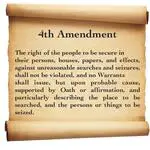 Drug prosecutions frequently involve questions concerning the legality of police stops, investigative detentions, arrests, vehicle searches, residence searches, search warrants, and the seizure of electronic devices. The Fourth Amendment to the United States Constitution and applicable Virginia law may affect whether law enforcement was permitted to obtain the evidence. Our Chesterfield County drug defense attorneys examine how the police encounter began, the legal basis for the detention, statements made before a search, and the circumstances under which officers obtained the alleged controlled substances or other evidence.
Important questions may include:
- Whether officers had reasonable suspicion for a traffic stop or investigative detention;
- Whether the detention was unlawfully prolonged;
- Whether the accused voluntarily consented to a search;
- Whether officers exceeded the scope of any consent;
- Whether probable cause supported a warrantless vehicle search;
- Whether a search warrant was supported by probable cause;
- Whether the warrant properly identified the place or items to be searched;
- Whether officers remained within the scope of the warrant;
- Whether electronic evidence was obtained lawfully; and
- Whether statements or physical evidence should be suppressed.
A motion to suppress may be appropriate when evidence was obtained through an unlawful stop, detention, search, or seizure.
Whether suppression is available depends on the circumstances and applicable law.
Vehicle Searches and Drug Investigations
Vehicle searches may occur during investigations involving Interstate 95, Route 288, Route 360, Route 10, and other roadways in Chesterfield County.
The roadway where the stop occurred does not determine whether a search was lawful.
The defense should examine the reason for the stop, duration of the detention, asserted basis for the search, consent, probable cause, and any available police recordings.
Drug evidence discovered during a search does not eliminate the need to evaluate whether law enforcement complied with constitutional requirements.
Search Warrants for Residences and Electronic Devices
Drug investigations may involve search warrants for residences, apartments, vehicles, phones, computers, or other property.
The defense may examine whether the warrant was supported by a sufficient factual basis, whether the information supplied to obtain it was accurate, and whether officers remained within its lawful scope.
Search-warrant affidavits, inventories, body-camera recordings, and other available records may be important.
Controlled Buys, Confidential Informants and Surveillance
Chesterfield drug distribution investigations may involve confidential informants, cooperating witnesses, undercover officers, controlled purchases, surveillance, or recorded communications.
In a controlled-buy investigation, law enforcement may claim that an informant purchased drugs from an identified individual under police supervision.
The reliability of the investigation depends on what actually occurred and what evidence supports the allegation.
Evidence in Controlled-Buy Cases
Important questions may include:
- Whether the informant was searched before and after the transaction;
- Whether officers maintained adequate surveillance;
- Whether the alleged transaction was recorded;
- Whether the accused can reliably be identified;
- Whether the informant had pending charges or other incentives to cooperate;
- Whether police documented the alleged buy money;
- Whether surveillance contains gaps;
- Whether officers personally observed the transaction;
- Whether police reports accurately describe the investigation;
- Whether the recovered substance can be connected to the accused; and
- Whether subsequent warrants relied on accurate information.
Informant testimony should be examined alongside recordings, officer observations, laboratory evidence, search-warrant materials, and any independent corroboration.
When the prosecution relies heavily on an informant’s account, credibility, reliability, and possible incentives may be important defense issues.
Cellphones, Text Messages and Electronic Evidence
Drug distribution and PWID prosecutions may rely on text messages, social-media communications, photographs, electronic payment information, call records, or data obtained from mobile devices.
The defense may examine:
- Whether the device was searched lawfully;
- Whether the accused controlled the device or account;
- Whether another person had access;
- Whether communications are complete;
- Whether messages have been interpreted accurately;
- Whether transaction or location information supports the accusation; and
- Whether electronic evidence can reliably be attributed to the accused.
A message that appears incriminating when viewed alone may have a different meaning when the complete conversation, participants, dates, and circumstances are examined.
Laboratory Testing, Drug Weight and Chain of Custody
The Commonwealth generally must establish that the substance involved in a prosecution is the controlled substance alleged.
Depending on the case, this may involve a certificate of analysis, laboratory testimony, drug identification, weight measurements, and evidence showing how the substance was collected and maintained.
Drug identity and weight can be especially important in distribution cases because the type and quantity of a controlled substance may affect the charge or potential punishment.
Reviewing Drug Laboratory Evidence
Important issues may include:
- Laboratory certificate of analysis
- Field-test results
- Reported drug weight
- Packaging and weight calculations
- Evidence collection procedures
- Property and evidence records
- Chain-of-custody documentation
- Sample identification
- Representative sample testing
- Laboratory testing procedures
- Identification of the substance
- Compliance with evidentiary requirements
Laboratory evidence must be considered together with the remaining proof.
Establishing that a particular substance is cocaine, heroin, fentanyl, methamphetamine, or another controlled substance does not automatically establish who possessed it or whether the accused intended to distribute it.
Chesterfield County Marijuana Possession Case Result — Dismissed
 Our attorneys previously defended a Chesterfield County marijuana possession prosecution in which the admissibility of the plant-material testing evidence became a central issue. The defense challenged whether the Commonwealth and arresting officer had complied with the legal requirements necessary to introduce the testing evidence. The court agreed that the evidence was insufficient to establish the alleged offense without the required test results, and the charge was dismissed. This was a historical marijuana prosecution under the law applicable at that time. Virginia’s marijuana possession laws have since changed substantially. The result illustrates the importance of examining whether the Commonwealth can properly identify and prove the substance involved in a criminal prosecution. Each case depends on its particular evidence, applicable law, and circumstances. A previous result does not guarantee a similar outcome.
Prescription Drug Charges in Chesterfield County
Controlled prescription medications may result in criminal allegations when the Commonwealth contends that a person possessed medication without lawful authorization, distributed prescription drugs, or obtained medication through fraud or misrepresentation.
Virginia Code § 18.2-250 recognizes lawful possession pursuant to a valid prescription or other legal authorization.
Separate statutes may apply to fraudulent acquisition, forged prescriptions, or other prohibited conduct involving prescription medications.
Evidence in Prescription Drug Cases
Relevant materials may include:
- The prescription or other authorization;
- Pharmacy records;
- Medical records;
- Prescription bottles or packaging;
- Records showing when medication was dispensed;
- Statements attributed to the accused;
- Electronic communications; and
- Evidence concerning how the medication was obtained.
The defense should determine whether the accused lawfully possessed the medication and whether the Commonwealth can establish the particular violation alleged.
First-Offender Drug Possession Disposition Under Virginia Code § 18.2-251
Virginia Code § 18.2-251 provides a deferred-disposition procedure for certain eligible defendants charged with a first offense of possession of a controlled substance under § 18.2-250.
When the statutory requirements are satisfied, the court may defer further proceedings without immediately entering a judgment of guilt.
The accused may be placed on probation subject to statutory terms and conditions.
Requirements of the First-Offender Program
Depending on the circumstances, conditions may include:
- Substance-abuse assessment;
- Treatment or education programs;
- Drug and alcohol abstinence;
- Periodic drug and alcohol testing;
- Probation supervision;
- Employment-related requirements;
- Community service;
- Payment of applicable program costs based on ability to pay; and
- Other conditions authorized by law.
The current statute requires a plan of at least 100 hours of community service for a felony disposition and up to 24 hours for a misdemeanor disposition.
Successful completion may result in discharge and dismissal without an adjudication of guilt.
Failure to comply with the conditions may result in an adjudication of guilt and sentencing.
Is First-Offender Treatment Available for PWID or Distribution?
The deferred-disposition procedure under § 18.2-251 applies to qualifying possession charges under § 18.2-250.
It should not be assumed to provide a first-offender dismissal for a drug distribution or possession-with-intent-to-distribute offense.
Eligibility for any particular disposition depends on the charge, criminal history, statutory requirements, and circumstances.
Before pursuing a deferred disposition, the defense should evaluate whether the Commonwealth can establish possession, whether evidence was obtained lawfully, and whether other defenses may be available.
Common Defense Issues in Chesterfield Drug Cases
The appropriate defense depends on the precise charge and evidence.
In drug possession, PWID, distribution, and prescription-drug cases, important questions may include:
- Whether the accused knowingly or intentionally possessed a controlled substance;
- Whether constructive possession can be established;
- Whether another person had access to the location where drugs were found;
- Whether a traffic stop or investigative detention was lawful;
- Whether the accused voluntarily consented to a search;
- Whether police obtained or executed a search warrant lawfully;
- Whether statements were obtained in compliance with constitutional requirements;
- Whether laboratory testing reliably identifies the alleged substance;
- Whether drug weight and quantity were accurately established;
- Whether the chain of custody is sufficient;
- Whether an alleged controlled purchase is supported by reliable evidence;
- Whether informant testimony is credible;
- Whether electronic communications can be attributed to the accused;
- Whether the evidence establishes an actual distribution;
- Whether the Commonwealth can establish intent to distribute rather than personal possession;
- Whether prescription medication was lawfully possessed; and
- Whether the evidence establishes every element of the charged offense.
The discovery of drugs, cash, packaging, or electronic communications does not automatically establish every element of a drug offense.
Our Chesterfield County drug charges lawyers evaluate the evidence according to what the Commonwealth must prove under the particular Virginia statute.
Chesterfield County Drug Charges Court Process
 The court handling a drug charge in Chesterfield County depends on whether the allegation is a misdemeanor or felony and the procedural stage of the prosecution. Adult misdemeanor drug charges are generally handled in General District Court. Felony possession, drug distribution, and PWID charges may begin in General District Court for preliminary proceedings before proceeding to Circuit Court. A felony prosecution may also proceed through direct indictment. The charging document should be reviewed to determine the precise statute, substance, alleged conduct, court date, and assigned court.
General District Court
9500 Courthouse Road
Chesterfield, VA 23832
General District Court proceedings may involve an advisement or arraignment, bond issues, pretrial motions, misdemeanor trials, and preliminary hearings for felony offenses.
At a preliminary hearing, the court determines whether probable cause exists for the felony allegation to proceed.
The preliminary hearing is not the felony trial.
Circuit Court
9500 Courthouse Road
Chesterfield, VA 23832
Circuit Court handles felony trials, guilty pleas, sentencing, and other final felony proceedings after indictment.
It also hears appeals of qualifying misdemeanor convictions from General District Court.
Drug cases in Circuit Court may involve motions concerning vehicle or residence searches, search warrants, statements, electronic evidence, drug testing, laboratory certificates, confidential informants, controlled purchases, and other evidentiary issues.
Juvenile Drug Charges
Drug charges involving juveniles may proceed in Juvenile and Domestic Relations District Court.
7000 Lucy Corr Boulevard
Chesterfield, VA 23832
The applicable procedures and potential dispositions depend on the defendant’s age, offense, and circumstances.
Drug Charges Defense Throughout Chesterfield County
We represent clients facing drug possession, possession with intent to distribute, drug distribution, prescription-drug allegations, marijuana offenses, and other controlled-substance charges throughout Chesterfield County.
Our representation includes cases arising in the county’s census-designated communities:
- Bellwood
- Bensley
- Bon Air
- Brandermill
- Chester
- Enon
- Ettrick
- Manchester
- Matoaca
- Meadowbrook
- Midlothian
- Rockwood
- Woodlake
Drug investigations may arise from traffic stops, vehicle searches, residential search warrants, controlled purchases, or investigations involving alleged distribution activity throughout Chesterfield County.
For example, a possession case arising in Chester or Midlothian may involve constructive-possession questions when drugs are found in a shared vehicle or residence.
A distribution or PWID investigation connected to Bon Air, Brandermill, Enon, or another Chesterfield community may involve surveillance, informants, electronic communications, or alleged transfers.
The exact charge, investigating agency, evidence, and applicable court procedures determine how a particular case should be evaluated.
Our attorneys represent clients whose drug-related cases are assigned to the Chesterfield courts.
What to Send for a Chesterfield Drug Charges Case Review
Providing complete information concerning the charge and circumstances of the investigation can help our attorneys identify the applicable statute, court procedures, and potential defense issues.
Helpful materials may include:
- Criminal summons or warrant
- Indictment or charging documents
- Scheduled Chesterfield court date
- Bond or release paperwork
- Search warrants
- Search-warrant inventories
- Property and evidence receipts
- Photographs or video recordings
- Prescription records
- Names of passengers or roommates
- Witness contact information
- Vehicle ownership information
- Residence or lease information
- Text messages and emails
- Information concerning seized cellphones
- Laboratory reports already received
- Information concerning controlled buys
- Other police or court paperwork
Potential evidence should be preserved in its original form.
Do not alter, delete, crop, edit, or overwrite messages, photographs, video recordings, location information, or other materials that may relate to the charge.
Chesterfield County Drug Charges Lawyer Client Reviews

Frequently Asked Questions About Chesterfield County Drug Charges
What is the difference between drug possession, PWID, and drug distribution?
Simple possession generally alleges that a person knowingly or intentionally possessed a controlled substance. Possession with intent to distribute adds an allegation that the person intended to manufacture, sell, give, or distribute the substance. Distribution involves an alleged sale, gift, transfer, or other prohibited distribution.
Is drug possession a felony in Chesterfield County?
Possession of Schedule I or II controlled substances under Virginia Code § 18.2-250 is generally a Class 5 felony. Possession of substances in other schedules may be classified as misdemeanors. Special statutory exceptions and provisions can apply depending on the substance and circumstances.
What does the Commonwealth have to prove in a Virginia drug possession case?
The Commonwealth generally must prove that the accused knowingly or intentionally possessed the controlled substance without lawful authorization. Ownership or occupancy of a vehicle or premises where drugs were found does not, by itself, establish knowing possession.
What is constructive possession in a drug case?
Constructive possession may be alleged when drugs are not found directly on a person but are discovered in a vehicle, residence, room, container, or other location. The Commonwealth must establish the knowledge and control necessary for possession based on the surrounding evidence.
Are drugs found in a shared vehicle automatically attributed to everyone inside?
No. The presence of drugs in a shared vehicle does not automatically establish knowing possession by every occupant. The Commonwealth must establish the required elements as to each accused person.
What evidence can establish possession with intent to distribute?
The Commonwealth may rely on quantity, packaging, scales, cash, electronic communications, alleged transactions, surveillance, controlled purchases, witness statements, and other circumstances. Whether that evidence establishes intent to distribute depends on the complete facts of the case.
What are the penalties for drug distribution in Virginia?
Penalties depend on the substance, quantity, prior convictions, and applicable statute. An ordinary first distribution or PWID conviction involving Schedule I or II controlled substances under § 18.2-248 generally carries five to 40 years of imprisonment and a fine of up to $500,000. Other statutory provisions may establish different or enhanced penalties.
Can an unlawful search result in drug evidence being suppressed?
Potentially. If evidence was obtained through an unlawful stop, detention, search, or seizure, the defense may have grounds to request suppression. Whether suppression is available depends on the facts and applicable law.
Can text messages or cellphone evidence be used in a Chesterfield drug case?
Yes. Drug investigations may involve text messages, social-media communications, call records, photographs, location information, and other cellphone data. The defense may examine whether the evidence was obtained lawfully, can be attributed to the accused, and has been interpreted accurately.
Is marijuana possession still illegal in Virginia?
Virginia generally permits adults 21 or older to possess up to two ounces of marijuana in public, subject to applicable restrictions. Possession of greater amounts may result in civil or criminal penalties. Marijuana distribution, certain cultivation violations, and other prohibited conduct may also result in charges under the applicable law.
Is there a first-offender disposition for drug possession in Virginia?
Virginia Code § 18.2-251 provides a deferred-disposition procedure for certain eligible defendants charged with first-offense possession under § 18.2-250. Successful completion of statutory conditions may result in discharge and dismissal without an adjudication of guilt. Eligibility is not automatic, and the procedure should not be assumed to apply to PWID or distribution charges.
Can a Chesterfield drug charge be reduced or dismissed?
Possibly. The outcome depends on the particular charge, evidence, search-and-seizure issues, proof of knowing possession, intent to distribute, laboratory evidence, witness credibility, prior record, prosecutorial decisions, and court rulings. Some cases may present grounds for suppression, dismissal, reduction, deferred disposition, or another legally available resolution.
Where are Chesterfield County drug charges heard?
Adult misdemeanor drug charges are generally handled in General District Court at 9500 Courthouse Road. Felony drug charges may begin there and proceed to Circuit Court at the same address following indictment or other authorized procedures. Juvenile drug matters may proceed in Juvenile and Domestic Relations District Court.
Request a Confidential Chesterfield County Drug Charges Case Review
If you are facing a drug possession, possession-with-intent-to-distribute, distribution, prescription-drug, marijuana-related, or other controlled-substance charge in Chesterfield County, reviewing the evidence early may help identify the legal issues affecting your case. Our Chesterfield County drug charges lawyers examine how the investigation began, where the alleged substance was discovered, whether the Commonwealth can establish possession or intent to distribute, whether law enforcement obtained evidence lawfully, and whether laboratory testing, electronic evidence, confidential informants, or other defense issues may affect the prosecution. Contact our lawyers for a confidential Chesterfield drug charges case review. Please provide the exact charge, scheduled court date, and available charging documents.
10/29/2026