
Virginia Concealed Weapon Lawyer
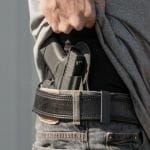 Virginia Code § 18.2-308 generally prohibits carrying a handgun or certain other specified weapons about the person while hidden from common observation, unless a statutory exception or other legal protection applies. A first offense is a Class 1 misdemeanor, a second qualifying violation is a Class 6 felony, and a third or subsequent violation is a Class 5 felony. Concealed weapon cases often turn on details such as where the firearm was located, whether it was actually hidden from common observation, whether the accused knowingly possessed it, and whether a concealed handgun permit, vehicle exception, residence or business exception, or another provision of Virginia law applies. Vehicle cases can present additional issues involving consoles, glove compartments, bags, shared vehicles, passengers, and who actually knew the firearm was present. Our attorneys represent clients charged with concealed weapon offenses in courts throughout Virginia. We review the precise circumstances of the alleged concealment, possession evidence, vehicle or container location, permit status, statutory exceptions, statements, and the legality of any traffic stop or search to determine what the Commonwealth must prove and what defenses may apply.







Virginia Concealed Weapon Defense Guide
Related Virginia Defense Services
Virginia Gun Law: Armed And Educated
 Our attorneys published Virginia Gun Law: Armed And Educated. Concealed weapon cases frequently turn on the precise language of Virginia firearm statutes, including what qualifies as concealment, whether a handgun was carried about the person, whether a vehicle or permit exception applies, and whether the Commonwealth can prove possession. That statutory detail matters because a firearm being present does not automatically establish a violation of Virginia’s concealed weapon law. The location of the weapon, manner in which it was carried, permit status, applicable exceptions, police observations, and circumstances of any search should all be considered.
Virginia Concealed Weapon Lawyer Client Review

Virginia Concealed Weapon Law — § 18.2-308
Virginia Code § 18.2-308 generally prohibits carrying specified weapons about the person while hidden from common observation unless a statutory exception or other legal protection applies.
The statute covers:
- Pistols and revolvers;
- Other firearms fitting the statutory description;
- Certain specifically listed knives;
- Metal knucks and blackjacks;
- Certain flailing weapons, throwing weapons, and other listed weapons; and
- Weapons of like kind to those identified in the statute.
A concealed weapon prosecution should therefore begin with the exact object involved and the precise subsection charged. A concealed handgun case may present different legal issues from a case involving another type of weapon.
For handgun cases, a valid concealed handgun permit can provide an affirmative defense under the statute, and § 18.2-308 also contains several separate exceptions that may apply depending on where and how the handgun was carried.
What the Commonwealth Must Prove
A charge under § 18.2-308 generally requires the Commonwealth to establish facts showing that the accused carried a weapon covered by the statute about his or her person and that the weapon was hidden from common observation.
Important proof issues can include:
Whether the Object Is a Covered Weapon
The Commonwealth must establish that the item falls within the weapons covered by § 18.2-308.
Whether the Weapon Was Carried About the Person
The physical location and accessibility of the weapon can matter. Cases may involve weapons located directly on the accused, beneath clothing, inside a bag, or in an area of a vehicle allegedly associated with the accused.
Whether the Weapon Was Hidden From Common Observation
This is frequently the central issue in a concealed weapon case. The officer’s vantage point, clothing, vehicle configuration, bag or container, lighting, and what was actually visible can all become important.
Whether the Accused Possessed the Weapon
When the firearm was not found directly on the accused, the Commonwealth may rely on constructive-possession evidence. The surrounding facts must support the conclusion that the accused was aware of the firearm and exercised dominion or control over it.
Proximity alone does not necessarily resolve that question. Shared vehicles, passengers, borrowed vehicles, shared homes, and bags belonging to other people can create important possession issues.
What Does “Hidden From Common Observation” Mean?
Virginia’s concealed weapon statute applies when a covered weapon is carried about the person while hidden from common observation.
Section 18.2-308 also provides that a weapon can be treated as hidden from common observation even when it is technically observable if it has such a deceptive appearance that its true nature as a weapon is disguised.
Whether a weapon was concealed may depend on:
- How much of the firearm or weapon was visible;
- Whether clothing covered the firearm;
- Whether a holster or other part of the firearm was visible;
- Where the firearm was positioned on the body;
- Whether the weapon was inside a purse, backpack, bag, or other container;
- The location of the firearm inside a vehicle;
- The officer’s position and opportunity to observe the weapon;
- Body-worn camera or other video evidence;
- Photographs of the clothing, container, or vehicle; and
- Whether the object appeared to be something other than a weapon.
The fact that an officer ultimately found a firearm does not by itself answer whether it had been hidden from common observation before the discovery.
Handguns in Vehicles and the Virginia Vehicle Exception
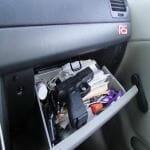 Virginia Code § 18.2-308 contains an important exception for a person who may lawfully possess a firearm and carries a handgun in a personal, private motor vehicle or vessel when the handgun is secured in a container or compartment in the vehicle or vessel. The vehicle exception can be important because a handgun inside a vehicle is not automatically being carried unlawfully concealed. The precise location of the handgun, whether it was secured in a container or compartment, who had access to it, and whether the accused could lawfully possess a firearm can all affect whether the exception applies. The § 18.2-308 vehicle exception requires the handgun to be “secured in a container or compartment.” The concealed weapon statute does not itself require that qualifying container or compartment to be locked.
Common vehicle locations or containers that may become relevant include:
- A glove compartment;
- A center console;
- A closed bag or container;
- A zippered backpack;
- Another compartment within the vehicle; or
- A container associated with another occupant of the vehicle.
This rule should not be confused with Virginia’s separate law governing a handgun left in certain unattended motor vehicles. Under current § 18.2-308.7:2, a person generally may not knowingly leave a handgun in a covered unattended vehicle or trunk unless the handgun is out of plain view in a locked hard-sided container, subject to the exceptions contained in that statute.
The rules governing a handgun while a person is occupying or traveling in a vehicle are therefore not necessarily the same as the rules governing storage of a handgun after the vehicle has been left unattended.
Shared Vehicles and Constructive Possession
A handgun discovered inside a vehicle does not automatically establish that the driver possessed it. This issue can be particularly important when several people occupied the vehicle, the vehicle was borrowed or rented, or the firearm was found in a bag or compartment associated with someone else.
Relevant circumstances may include:
- Who owned the vehicle;
- Who owned the firearm;
- Whether the vehicle was borrowed or rented;
- Where the firearm was located;
- Whether a passenger was closer to or had access to the firearm;
- Who owned the bag or container;
- Statements made by the occupants;
- Whether the accused knew the firearm was present; and
- Other evidence connecting the firearm to a particular person.
Virginia Concealed Handgun Permits
 A valid Virginia concealed handgun permit generally authorizes the permit holder to carry a concealed handgun, subject to other restrictions imposed by Virginia law. A concealed handgun permit applies to a handgun. It does not provide blanket authorization to carry every type of weapon identified in § 18.2-308, and it does not override laws that independently prohibit firearms in particular locations. A permit holder should also distinguish lawful possession from separate prohibited conduct. For example, Virginia Code § 18.2-308.012 makes it a Class 1 misdemeanor for a person permitted to carry a concealed handgun to be under the influence of alcohol, marijuana, or illegal drugs while carrying the handgun in a public place.
Permit-related issues in a criminal case may include:
- Whether a permit was valid on the alleged offense date;
- Whether the permit had expired;
- Whether the permit had been suspended or revoked;
- Whether an out-of-state permit was valid in Virginia;
- Whether the accused had the permit and identification required by law;
- Whether the location independently prohibited firearm possession; and
- Whether the accused was legally eligible to possess the firearm.
Out-of-State Concealed Handgun Permits
Under the Virginia reciprocity law currently effective through June 30, 2027, qualifying permits or licenses issued by other states may authorize a permit holder age 21 or older to carry a concealed handgun in Virginia when the statutory requirements are satisfied.
Virginia’s reciprocity statute is scheduled to change effective July 1, 2027. The law in effect on the date of the alleged offense should therefore be checked in any case involving an out-of-state permit.
Concealed Handgun Permit Applications and Denials
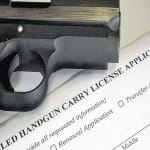 A denied concealed handgun permit application is a different legal matter from defending a criminal charge under § 18.2-308. Virginia residents age 21 or older generally apply for a permit through the circuit court clerk for the county or city in which they reside. Virginia law contains numerous eligibility requirements and disqualifications, and a person whose application has been denied may have appeal rights subject to applicable procedures and deadlines. For information about a permit denial rather than a criminal concealed weapon charge, see our Virginia Concealed Handgun Permit Denial page.
Exceptions to Virginia’s Concealed Weapon Law
Section 18.2-308 contains several exceptions to the general concealed weapon prohibition. Whether an exception applies depends on the particular weapon, person, location, and manner of transportation.
Examples include specified circumstances involving:
- A person in his or her own place of abode or its curtilage;
- A person in his or her own place of business;
- A qualifying handgun secured in a container or compartment of a personal private motor vehicle or vessel;
- Travel to or from certain shooting ranges;
- Transportation between a residence and a place of purchase or repair under specified conditions;
- Certain firearms training activities;
- Lawful hunting under specified circumstances;
- Certain law-enforcement officers, judges, prosecutors, and other persons identified by statute; and
- A valid concealed handgun permit for a handgun.
The exceptions do not all operate identically. The precise statutory language and the facts supporting the claimed exception should therefore be reviewed rather than assuming that any general firearm exception applies.
Penalties for Carrying a Concealed Weapon in Virginia
Under the general penalty structure in § 18.2-308:
- First offense: Class 1 misdemeanor;
- Second qualifying violation: Class 6 felony; and
- Third or subsequent qualifying violation: Class 5 felony.
The statute also treats a conviction under a substantially similar local ordinance as relevant to the enhanced penalty provisions.
The effect of a concealed weapon conviction can extend beyond the immediate criminal sentence. Depending on the offense and the person’s circumstances, separate issues involving a concealed handgun permit or future firearm possession may also need to be considered.
Open Carry Versus Concealed Carry in Virginia
 Open carry and concealed carry are legally different concepts. Virginia does not generally require a concealed handgun permit merely because an otherwise lawful firearm is openly carried. However, separate restrictions can apply based on the person’s eligibility to possess a firearm, the type or configuration of the firearm, the location, and other state or local laws. A concealed weapon prosecution may therefore involve a factual dispute about whether the firearm was actually concealed at all.
Common Ways Virginia Concealed Weapon Charges Arise
Virginia concealed weapon charges frequently arise during traffic stops, vehicle searches, calls for service, or other police encounters that did not begin as firearm investigations. An officer may discover a handgun during a search, while asking occupants to exit a vehicle, after an arrest for another allegation, or while investigating unrelated conduct. The circumstances surrounding the discovery matter. A firearm may be found beneath clothing, inside a vehicle compartment, in a purse or backpack, or in an area accessible to several people. The location of the firearm, who knew it was present, whether it was actually concealed, and whether a permit or statutory exception applies can all affect the charge.
Common situations include:
- A handgun concealed beneath clothing;
- A firearm inside an unclosed or unsecured area of a vehicle;
- A gun discovered in a purse, backpack, or other bag;
- A firearm belonging to a passenger or another occupant;
- An expired, suspended, or otherwise disputed concealed handgun permit;
- Carrying a concealed handgun while allegedly under the influence;
- A firearm discovered during a consent search;
- A weapon discovered during a protective search or frisk;
- A firearm discovered after an arrest for an unrelated allegation; and
- A firearm carried into a location where separate possession restrictions apply.
The discovery of a firearm does not by itself establish every element of a concealed weapon offense. The Commonwealth may still have to prove possession, concealment, and the other requirements of the particular charge, while any applicable permit, statutory exception, or search-and-seizure issue must also be considered.
Concealed Weapons in Restricted Locations
A concealed handgun permit does not authorize firearm possession everywhere.
Virginia has separate laws regulating firearms in particular locations, including certain:
- School property;
- Courthouses;
- Government property;
- Air carrier airport terminals; and
- Other locations regulated by Virginia or applicable local law.
A person may therefore face a location-based firearm allegation even when the manner in which the handgun was carried would otherwise have been lawful.
For cases involving firearms or ammunition discovered inside an airport terminal, see our Virginia Gun in Airport Lawyer page.
Search and Seizure in Concealed Weapon Cases
Many concealed weapon cases begin with a traffic stop, vehicle search, frisk, consent search, arrest, or other police encounter.
Potential issues include:
- Whether police had reasonable suspicion for the initial stop;
- Whether a traffic stop was unlawfully prolonged;
- Whether a frisk or protective search was justified;
- Whether consent to search was actually given;
- Whether consent was voluntary;
- Whether police exceeded the scope of consent;
- Whether probable cause supported a vehicle or other warrantless search;
- Whether a search warrant was valid;
- Whether a bag or container was lawfully opened; and
- Whether statements or other evidence resulted from unlawful police conduct.
A firearm can be physical evidence central to the prosecution. When the weapon was obtained through an unconstitutional stop or search, a suppression issue can therefore materially affect the case.
Common Defenses to a Virginia Concealed Weapon Charge
The appropriate defense depends on the particular weapon, location, manner of carrying, permit status, and evidence.
The Weapon Was Not Hidden From Common Observation
Section 18.2-308 requires concealment. Video, photographs, clothing, holster configuration, officer observations, and witness testimony may be relevant to whether the weapon was actually hidden.
Knowing Possession Was Not Proven
When a weapon is found in a shared vehicle, residence, bag, console, or other location, the Commonwealth may have to establish that the accused was aware of the weapon and exercised dominion or control over it.
The Vehicle Container or Compartment Exception Applies
A person who may lawfully possess a firearm may fall within the statutory vehicle exception when a handgun is secured in a container or compartment in a personal private vehicle or vessel.
A Valid Concealed Handgun Permit Applies
A valid concealed handgun permit may provide an affirmative defense to the handgun provision of § 18.2-308, subject to the permit’s scope and other applicable restrictions.
The Residence or Business Exception Applies
The statute contains exceptions involving a person’s own abode and curtilage and, in specified circumstances, the person’s own place of business.
The Object Is Not a Weapon Covered by the Statute
A concealed weapon prosecution requires an object that falls within the language of § 18.2-308.
The Stop or Search Was Unlawful
A firearm obtained through unconstitutional police conduct may present grounds for suppression.
The Officer’s Observation Is Inaccurate or Incomplete
A case may turn on whether the firearm was visible before police manipulated clothing, ordered a person to move, opened a compartment, or otherwise obtained an unusual vantage point.
Another Statutory Exception Applies
Depending on the circumstances, another exception in § 18.2-308 may remove the conduct from the general prohibition.
What to Do After a Virginia Concealed Weapon Charge
Begin by identifying the exact statute and subsection charged and confirming the court date and jurisdiction.
Also consider:
- Preserving the summons, warrant, indictment, or other charging paperwork;
- Preserving a concealed handgun permit and identification if relevant;
- Keeping any property or firearm seizure receipt;
- Preserving photographs showing the firearm, container, clothing, or vehicle configuration;
- Preserving vehicle ownership, rental, or borrowing information;
- Identifying passengers or other people with access to the firearm;
- Preserving relevant messages, photographs, or video;
- Keeping copies of search-warrant or consent-search paperwork;
- Complying with all bond and firearm-related conditions; and
- Avoiding unnecessary statements about the pending allegation.
Potentially relevant physical or electronic evidence should not be altered or deleted.
What to Send for a Concealed Weapon Case Review
Helpful information may include:
- The warrant, summons, indictment, or other charging document;
- The court date and jurisdiction;
- The exact Virginia Code section charged;
- A copy of any concealed handgun permit;
- Firearm seizure or property paperwork;
- Photographs showing where the firearm was located;
- Photographs of the bag, console, glove compartment, holster, or other container;
- Vehicle title, registration, rental, or borrowing information where relevant;
- Names of passengers or other witnesses;
- Search-warrant or inventory paperwork;
- Video or photographs relating to the encounter; and
- Information about any prior concealed weapon conviction if the Commonwealth is alleging an enhanced offense.
Frequently Asked Questions About Virginia Concealed Weapon Charges
What is carrying a concealed weapon in Virginia?
Virginia Code § 18.2-308 generally prohibits carrying certain weapons, including handguns, about the person while hidden from common observation unless a statutory exception or other legal protection applies.
What does “hidden from common observation” mean?
Whether a weapon is hidden from common observation depends on how it was carried and what an ordinary observer could see. Virginia law also provides that an observable weapon may be treated as hidden when its deceptive appearance disguises its true nature.
Is a first concealed weapon charge a misdemeanor in Virginia?
Yes. A first violation of the general concealed weapon prohibition in § 18.2-308 is a Class 1 misdemeanor. A second qualifying violation is a Class 6 felony, and a third or subsequent qualifying violation is a Class 5 felony.
Can I have a handgun in my vehicle without a concealed handgun permit?
Potentially. Section 18.2-308 contains an exception for a person who may lawfully possess a firearm and is carrying a handgun in a personal private motor vehicle or vessel when the handgun is secured in a container or compartment.
Does a handgun have to be locked inside a vehicle container?
The vehicle exception in § 18.2-308 requires a handgun to be secured in a container or compartment but does not itself require the container to be locked. A separate Virginia law governing handguns left in certain unattended vehicles has different requirements and generally requires the handgun to be out of plain view in a locked hard-sided container.
Can I be charged if the gun belonged to a passenger or someone else?
A person may be charged, but ownership is not the same thing as possession. When a firearm is found in a shared vehicle or other location, the Commonwealth may have to prove that the accused knew the firearm was present and exercised the required control over it.
Does a Virginia concealed handgun permit allow me to carry everywhere?
No. A concealed handgun permit does not override separate laws prohibiting firearm possession in particular locations, and Virginia law also regulates certain conduct by permit holders, including carrying a concealed handgun in public while under the influence.
Can I use an out-of-state concealed carry permit in Virginia?
Under the Virginia reciprocity law currently effective through June 30, 2027, certain valid permits or licenses issued by other states may authorize a person age 21 or older to carry a concealed handgun in Virginia when the statutory requirements are satisfied. Virginia’s reciprocity law changes effective July 1, 2027.
Can an illegal search affect a concealed weapon charge?
Yes. If the firearm was discovered through an unconstitutional stop, detention, frisk, vehicle search, or other search, a motion to suppress may affect whether the Commonwealth can use the firearm or related evidence at trial.
What defenses can apply to a Virginia concealed weapon charge?
Potential defenses can involve whether the weapon was actually concealed, whether possession was proven, whether a vehicle or other statutory exception applies, whether the accused had a valid concealed handgun permit, whether the object is covered by § 18.2-308, and whether police lawfully obtained the evidence.
Request a Confidential Case Review
A Virginia concealed weapon case can turn on the precise location of the weapon, whether it was hidden from common observation, whether the accused knowingly possessed it, whether a permit or statutory exception applies, and whether police lawfully obtained the firearm and other evidence. Our attorneys represent clients facing concealed weapon and other firearm charges in courts throughout Virginia. Contact us for a confidential case review and include the jurisdiction, court date, exact charge, and a copy or photograph of the available charging documents.
5/16/2021 | Updated 9/21/2026