
Virginia False Statement on Firearm Form Lawyer
 A Virginia firearm purchase from a licensed dealer generally requires completion of federal ATF Form 4473 and the Virginia State Police firearm transaction consent form. These records ask questions designed to determine whether the prospective buyer is legally eligible to receive or possess a firearm. Virginia Code § 18.2-308.2:2 makes it a Class 5 felony to willfully and intentionally make a materially false statement on the required Virginia consent form or on firearm transaction records required by federal law. An incorrect answer does not automatically establish this offense. The Commonwealth must prove that the statement was false, material, and made willfully and intentionally. False-statement cases can involve questions about prior felony or qualifying misdemeanor convictions, protective orders, mental-health adjudications or commitments, substantial-risk orders, firearm-rights restoration, and other eligibility issues. Our attorneys represent clients facing these felony allegations throughout Virginia and reviews the exact form, question, underlying court or mental-health record, background-check information, and evidence of intent to determine what the Commonwealth must prove and what defenses may apply.







Virginia False Statement on Firearm Form Defense Guide
Related Virginia Defense Services
Virginia Gun Law: Armed And Educated
Our attorneys published Virginia Gun Law: Armed And Educated. False-statement firearm cases illustrate why detailed knowledge of both criminal law and firearm-disability law matters.
The criminal charge may depend not only on what box was checked on a government form, but also on the legal meaning of an old conviction, protective order, mental-health proceeding, restoration order, or other record. The underlying legal history should therefore be reviewed along with the firearm transaction paperwork before deciding whether an answer was actually false and whether the Commonwealth can prove the required intent.
Virginia False Statement on Firearm Form Client Review

False Statement on a Firearm Form Under Virginia Law
Virginia Code § 18.2-308.2:2 governs criminal-history record checks for firearm transactions covered by the statute. Subsection K makes it a Class 5 felony for a person to willfully and intentionally make a materially false statement on the required Virginia consent form or on firearm transaction records required by federal law.
The statutory language is important. The offense is not defined merely as putting an incorrect answer on a form. The Commonwealth must establish a statement that was:
- False;
- Materially false;
- Made willfully; and
- Made intentionally.
A firearm transaction may therefore trigger an investigation without necessarily establishing that a felony occurred. The exact question, answer, underlying record, and evidence concerning what the purchaser understood at the time can all matter.
ATF Form 4473 and Virginia Firearm Transaction Forms
 ATF Form 4473, the federal Firearms Transaction Record, is used by federally licensed firearms dealers in connection with firearm transfers. Virginia also requires written consent and information for the Virginia State Police criminal-history record check required by § 18.2-308.2:2. These forms ask questions intended to determine whether state or federal law prohibits the proposed purchaser from receiving or possessing a firearm. A false-statement prosecution may focus on one particular answer even though the transaction paperwork contains numerous questions. The exact version of the form completed on the transaction date should be reviewed. Form 4473 has been revised over time, and question wording and numbering can change. The defense should work from the actual form involved in the alleged offense rather than from a different or later version.
Relevant transaction documents may include:
- ATF Form 4473;
- The Virginia State Police consent or transaction form;
- Dealer records;
- Background-check results;
- Any denial or delay documentation;
- Identification presented during the transaction; and
- Records concerning the legal event allegedly making an answer false.
What the Commonwealth Must Prove
A felony charge under § 18.2-308.2:2(K) should be evaluated element by element.
A Statement Was Actually False
The prosecution must identify the particular statement or answer alleged to be false and establish what the truthful answer should have been.
That frequently requires examining an underlying legal record rather than simply relying on a computerized background-check entry.
The Statement Was Materially False
The statute specifically requires a materially false statement. The alleged discrepancy must therefore be evaluated in relation to the firearm transaction and eligibility determination.
The Statement Was Made Willfully and Intentionally
The statutory mental-state language is particularly important. An incorrect answer caused by confusion, misunderstanding, mistake, an ambiguous legal history, or an inaccurate record presents a different issue from deliberately supplying information known to be false.
The Statement Was Made on a Covered Transaction Record
Section 18.2-308.2:2(K) applies to the Virginia consent form covered by the statute and firearm transaction records required by federal law.
What Does “Willfully and Intentionally” Mean in a Firearm Form Case?
A central issue in many false-statement cases is what the purchaser actually knew and intended when completing the form.
A person may have an old legal event in his or her background without understanding that the event falls within the terminology used on the firearm form. Other cases may involve uncertainty about whether a conviction was reduced, dismissed, deferred, pardoned, expunged, sealed, or otherwise affected by a later court order.
Intent issues can arise from:
- Misunderstanding an old conviction;
- Confusion about whether an offense was a felony or misdemeanor;
- A charge that was amended before final disposition;
- A deferred disposition or unusual sentencing order;
- A protective order whose legal effect was misunderstood;
- A mental-health proceeding from many years earlier;
- Confusion concerning restoration of civil or firearm rights;
- An out-of-state conviction or order;
- A clerical or marking error;
- Misreading the question;
- Incorrect information provided by another person; or
- A government database record that does not accurately reflect the underlying court disposition.
The form itself, the underlying legal documents, and any statements made before or after the transaction may therefore become important evidence of state of mind.
What Is a Materially False Statement?
The word “materially” is part of the Virginia offense. A criminal case should therefore identify not merely an inaccurate statement, but the significance of that statement to the firearm transaction.
Questions to examine can include:
- What exact question appeared on the form?
- What answer did the purchaser provide?
- What does the Commonwealth contend made that answer false?
- What document proves the underlying legal status?
- Was the purchaser actually subject to the alleged disqualification?
- Had the relevant order expired, been modified, or been vacated?
- Had firearm rights been restored?
- Was the underlying offense legally within the category described by the question?
- Was the alleged discrepancy relevant to whether the firearm could lawfully be transferred?
A computer record and a checked box should not be evaluated in isolation from the actual legal history.
Common Firearm Form Questions That Can Lead to Investigations
Current firearm transaction paperwork can inquire about several categories of legal status that may affect firearm eligibility.
Depending on the form and transaction date, issues may include:
- Felony convictions;
- Certain qualifying misdemeanor convictions;
- Juvenile adjudications that can affect firearm eligibility;
- Protective or restraining orders;
- Certain domestic or intimate-partner assault convictions;
- Mental-health adjudications or commitments;
- Temporary detention followed by specified voluntary admission;
- Emergency or final substantial-risk orders;
- Whether the purchaser is the actual buyer or transferee;
- Other state or federal firearm disabilities; and
- Other eligibility questions appearing on the version of the form used in the transaction.
The defense should review the exact transaction-date form. Question numbers and wording should not be assumed from a different version of Form 4473.
Prior Convictions and Underlying Court Records
A prior criminal record is often central to a false-statement investigation, but a criminal-history printout may not tell the entire story.
The underlying court documents may show that:
- The original felony charge was reduced to a misdemeanor;
- The charged offense was dismissed;
- A deferred disposition was used;
- The conviction occurred in another state under different statutory terminology;
- A conviction or adjudication was later affected by another order;
- Civil rights were restored;
- Firearm rights were separately restored; or
- The database description does not accurately communicate the final legal disposition.
Certified final orders, sentencing orders, docket information, restoration orders, and other original records may therefore be more important than a shorthand database description.
Mental-Health Records and Firearm Form Questions
Virginia firearm eligibility laws include several mental-health-related categories. Current § 18.2-308.2:2 requires the Virginia transaction form to address specified circumstances involving insanity acquittals, legal incompetence or incapacity, involuntary inpatient or outpatient treatment, and certain temporary detention proceedings followed by voluntary admission.
A mental-health-related firearm form case may require determining:
- What type of proceeding actually occurred;
- What court or special justice entered the order;
- Whether the proceeding created a firearm disability;
- Whether the available database information accurately describes the proceeding;
- Whether the purchaser understood that the event fell within the question being asked; and
- Whether the disability had subsequently been removed.
Protective Orders and Domestic-Violence-Related Firearm Restrictions
Firearm transaction questions can also involve protective orders and specified domestic or intimate-partner convictions.
The existence of a domestic dispute does not by itself answer the firearm-eligibility question. The actual order or conviction should be reviewed to determine:
- What statute was involved;
- Who the protected or complaining person was;
- When the order or conviction was entered;
- Whether the order remained in effect on the transaction date;
- Whether the conviction falls within the applicable state or federal firearm prohibition; and
- Whether any later relief or restoration affects the disability.
Because state and federal firearm prohibitions are not always identical, the same underlying event may require analysis under both systems.
Virginia State Police Background Checks, Delays, and Denials
 The Virginia Department of State Police administers the Virginia Firearms Transaction Program. Information submitted during a firearm transaction is checked against state and national records to determine whether the proposed purchaser is prohibited from receiving or possessing the firearm. A transaction may be approved, delayed while potentially matching records are reviewed, or denied. A delay or denial can arise from criminal-history information, protective orders, mental-health records, federal records, identity questions, or other potential prohibitions. A denied transaction can also prompt further investigation when law enforcement believes that an answer on the transaction paperwork conflicts with information uncovered during the background check. A denial, however, does not by itself prove a violation of § 18.2-308.2:2(K). A criminal prosecution still requires proof of the statutory elements, including falsity, materiality, and a willful and intentional false statement. A person who believes a denial is based on an inaccurate record may also have separate procedures available to challenge or correct the eligibility determination. That administrative or civil issue is different from defending a pending felony charge.
Statements to a Virginia State Police Investigator
False-statement investigations may involve contact from a Virginia State Police trooper or other investigator after a firearm transaction is delayed or denied.
Statements about:
- Why a particular answer was selected;
- What the purchaser remembered about an old case;
- Whether the purchaser believed firearm rights had been restored;
- What the purchaser understood a particular question to mean; or
- Whether the purchaser knew about an underlying disqualifying event
can become important evidence concerning intent.
A person under investigation should therefore understand the potential significance of additional statements before attempting to explain a disputed answer.
Virginia Gun Show Firearm Transactions
 False-statement investigations can arise from firearm purchases attempted at Virginia gun shows as well as permanent dealer locations. Virginia law requires the Department of State Police to be available at firearms shows in the Commonwealth to make firearm-eligibility determinations in accordance with the statutory background-check procedures. A firearm show therefore does not eliminate the criminal-history check or the importance of accurately completing the transaction paperwork. A discrepancy discovered during the check may prevent the transaction and can lead to further investigation. The same defense questions remain important: what form was completed, what exact answer is disputed, what the underlying legal record actually shows, and whether the Commonwealth can prove that any materially false answer was given willfully and intentionally.
False Statement Firearm Case Result
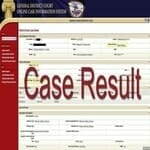 Our attorneys represented a client who was charged with felony offenses arising from firearm transaction forms completed at the Meadow Event Park gun show. The allegations included making a false statement on a firearm consent form and attempting to possess a firearm as a convicted felon. A central issue was whether the Commonwealth could prove that the client knowingly and intentionally provided false information rather than making a mistake concerning the underlying legal history. The charges were ultimately dropped. Click the image to review the case-result document. Past results depend on the facts and law of the individual case and do not guarantee a similar result in another matter.
Penalties for a False Statement on a Firearm Form
A violation of § 18.2-308.2:2(K) is a Class 5 felony.
Under Virginia’s general felony punishment statute, a Class 5 felony is punishable by:
- One to 10 years of imprisonment; or
- In the discretion of the jury or the court trying the case without a jury, confinement in jail for not more than 12 months and a fine of not more than $2,500, either or both.
A felony conviction can also have consequences beyond the sentence imposed in the criminal case, including future firearm-possession restrictions and other collateral consequences.
Attempt to Possess a Firearm by a Prohibited Person
 A false-statement investigation can sometimes produce an additional charge based on an allegation that the purchaser was legally prohibited from possessing a firearm and nevertheless attempted to acquire one. The false-statement allegation and the attempted-possession allegation involve related facts, but they are not the same offense. The defense should separately examine the alleged firearm disability, whether the person was actually prohibited, what conduct constituted the alleged attempt, and the evidence concerning the purchaser’s intent. The underlying conviction, protective order, mental-health record, restoration order, or other alleged source of the firearm disability may therefore become important to both charges.
State and Federal Firearm Law Issues
ATF Form 4473 is a federal firearm transaction record, while § 18.2-308.2:2(K) creates a Virginia criminal offense that expressly reaches materially false statements made on firearm transaction records required by federal law.
A transaction can therefore involve overlapping state and federal legal issues. State and federal firearm disabilities are also not always identical.
A person should not assume that:
- Restoration of Virginia civil rights automatically restores Virginia firearm rights;
- Restoration of Virginia firearm rights automatically eliminates every federal prohibition;
- A prior Virginia purchase approval guarantees continued eligibility;
- A state-court order necessarily resolves a separate federal disability; or
- A denied transaction automatically proves that the purchaser committed a criminal offense.
Private Firearm Sales and Background Checks in Virginia
 Virginia law also regulates firearm sales between private individuals. Under current § 18.2-308.2:5, a person generally may not sell a firearm for money, goods, services, or other value unless the required background-check verification has been obtained, subject to statutory provisions and exceptions. Effective July 1, 2026, Virginia State Police advises that firearm sales, including private sales, are subject to mandatory background checks under §§ 18.2-308.2:2 and 18.2-308.2:5. The legal requirements for a private transfer can differ depending on whether the transaction is a sale for value, occurs at a firearms show, involves a licensed dealer, or falls within another statutory provision. The exact transaction should therefore be identified before determining what paperwork or background-check requirement applied.
Evidence in a Virginia False Statement Firearm Form Case
These prosecutions are heavily document-driven.
Important evidence may include:
- The actual completed ATF Form 4473;
- The Virginia firearm transaction consent form;
- Dealer transaction records;
- Virginia State Police background-check records;
- Any approval, delay, or denial information;
- The underlying criminal conviction or disposition order;
- Protective orders;
- Mental-health orders or court records where legally relevant;
- Substantial-risk orders;
- Restoration or pardon documents;
- Out-of-state court records;
- Video or audio from the firearm dealer or gun show;
- Statements made to law enforcement;
- Emails, messages, or other communications concerning firearm eligibility; and
- Evidence concerning advice or information the purchaser received before completing the form.
The defense should compare the actual underlying documents with both the wording of the form and the government’s description of the alleged disqualification.
Common Defenses to a Virginia False Statement on Firearm Form Charge
The appropriate defense depends on the precise question, answer, underlying record, and evidence concerning the purchaser’s intent.
The Answer Was Actually Correct
The government’s description of an old conviction, protective order, mental-health matter, or other event may not accurately establish the legal status addressed by the form.
The Underlying Record Does Not Create the Alleged Firearm Disability
A charge may depend on an assumption that a particular conviction or order legally prohibited firearm possession. The original record and applicable law should be reviewed rather than accepting that assumption.
The Statement Was Not Willful or Intentional
Section 18.2-308.2:2(K) requires a willfully and intentionally made false statement. A mistake, misunderstanding, or confusion concerning an old legal event may present a materially different case from deliberate falsification.
The Statement Was Not Materially False
The statute separately requires materiality. The prosecution must establish the significance of the allegedly false information to the firearm transaction.
The Question Was Misunderstood
Firearm forms use legal terminology that may interact with old criminal cases, mental-health proceedings, protective orders, restoration proceedings, and federal law. What the purchaser reasonably understood the question to be asking may be relevant to intent.
Clerical or Marking Error
Selecting the wrong box or making another paperwork mistake is not necessarily the same as intentionally making a materially false statement.
Firearm Rights Had Been Restored
A restoration order may affect whether the underlying firearm disability continued to exist. The precise scope of the restoration and any separate federal restriction must be examined.
The Protective Order or Mental-Health Record Was Mischaracterized
Not every court proceeding creates the same firearm consequences. The actual order should be reviewed to determine what occurred and whether the form question applied.
The Government Record Was Incorrect or Incomplete
Database records can contain incomplete or shorthand information. Certified underlying court records may establish a different final disposition.
Statements or Other Evidence Should Be Suppressed
Depending on how an investigation was conducted, constitutional or evidentiary issues may affect the admissibility of statements or other evidence relied upon by the Commonwealth.
What to Do After a False Statement Firearm Form Investigation or Charge
Begin by identifying the exact charge and transaction at issue.
Also:
- Preserve the warrant, indictment, summons, or other charging document;
- Obtain the actual firearm transaction forms if available;
- Identify the firearm dealer and exact transaction date;
- Preserve any denial or delay paperwork;
- Obtain the underlying court orders that allegedly created the firearm disability;
- Preserve any firearm-rights restoration documents;
- Preserve protective-order or mental-health court paperwork if relevant;
- Keep any correspondence with the dealer, Virginia State Police, NICS, or other agency;
- Do not alter or destroy electronic communications or documents;
- Do not submit another firearm transaction merely to test whether the background check will now be approved; and
- Be cautious about making additional statements concerning what you knew or intended when completing the form.
What to Send for a False Statement Firearm Form Case Review
Helpful information may include:
- The warrant or indictment;
- The court date and jurisdiction;
- The date and location of the attempted firearm transaction;
- The name of the firearm dealer or gun show;
- ATF Form 4473, if available;
- The Virginia transaction or consent form, if available;
- Background-check denial or delay documents;
- The conviction, sentencing, or disposition order allegedly causing the problem;
- Protective-order documents;
- Mental-health court orders where relevant;
- Firearm-rights restoration orders;
- Executive restoration or pardon documents where relevant;
- Out-of-state court records;
- Correspondence with Virginia State Police, NICS, or the dealer; and
- Any written or recorded statement provided during the investigation.
Frequently Asked Questions About Virginia False Statement Firearm Form Charges
What is a false statement on a firearm form in Virginia?
Virginia Code § 18.2-308.2:2(K) makes it a Class 5 felony to willfully and intentionally make a materially false statement on the Virginia firearm transaction consent form or on firearm transaction records required by federal law.
Is a false statement on ATF Form 4473 a felony in Virginia?
It can be. Section 18.2-308.2:2(K) expressly applies to materially false statements made willfully and intentionally on firearm transaction records required by federal law. A violation is a Class 5 felony.
Does every incorrect answer on a firearm form result in a felony?
No. The Virginia statute requires more than an inaccurate answer. The Commonwealth must prove that the statement was materially false and that it was made willfully and intentionally.
What does “willfully and intentionally” mean in a firearm form case?
The language concerns the accused person’s state of mind when the statement was made. Evidence that an answer resulted from a mistake, misunderstanding, confusion about an old legal proceeding, or another nonintentional error may be important when the Commonwealth is required to prove a willful and intentional false statement.
What does “materially false” mean on a firearm transaction form?
The statute specifically requires a materially false statement. The prosecution must identify the allegedly false information and its significance to the firearm transaction or eligibility determination rather than merely showing that some information was inaccurate.
Can an old felony or misdemeanor lead to a false statement firearm form charge?
Yes. Prior convictions can affect firearm eligibility and answers on transaction forms. However, the original charge, final conviction, amendment, disposition, date, later court orders, and any restoration of rights should be reviewed before determining whether an answer was actually false.
Can a protective order or mental-health record lead to a false statement charge?
Potentially. Virginia firearm transaction questions address specified protective orders and several categories of mental-health proceedings. The exact order or proceeding must be reviewed to determine whether it created the alleged firearm disability and whether the purchaser’s answer was false.
Does a denied firearm background check mean I committed a crime?
No. A denial means the firearm transaction was not approved based on the eligibility determination. A criminal false-statement charge separately requires proof of a materially false statement made willfully and intentionally.
What if I believed my firearm rights had already been restored?
The restoration documents and the source of the firearm disability should be reviewed carefully. Virginia civil-rights restoration, Virginia firearm-rights restoration, and federal firearm disabilities are separate issues, and the purchaser’s understanding of the legal status may also be relevant to whether a false statement was made willfully and intentionally.
What defenses are available to a Virginia false statement on firearm form charge?
Potential defenses can involve whether the answer was actually false, whether the underlying record created the alleged disability, whether the statement was material, whether it was made willfully and intentionally, whether the question was misunderstood, whether firearm rights had been restored, whether government records were inaccurate, and whether statements or other evidence are admissible.
Request a Confidential Case Review
A Virginia false statement on firearm form case can turn on the exact wording of the transaction form, the purchaser’s answer, the underlying criminal or court record, whether a firearm disability actually existed, and whether the Commonwealth can prove a materially false statement made willfully and intentionally. Our attorneys represent clients facing these felony firearm allegations in courts throughout Virginia. Contact us for a confidential case review and include the jurisdiction, court date, transaction date, dealer or gun-show location, and copies of the available firearm transaction and court records.
5/28/2021 | Updated 9/21/2026