
How Virginia Reckless Driving Can Affect an Ohio Driver’s License
 An Ohio-licensed driver charged with reckless driving in Virginia may face consequences extending well beyond the Virginia courtroom. Reckless driving is generally a Class 1 misdemeanor in Virginia, and a conviction can create a criminal record, affect automobile insurance and potentially result in restrictions on driving privileges. Ohio separately determines how a reported Virginia conviction affects the driver’s Ohio driving record and license. For an Ohio motorist, avoiding a Virginia criminal conviction may be more important than the number of points, if any, ultimately assessed by the Ohio Bureau of Motor Vehicles (BMV). A conviction may remain on a criminal record for years, and an automobile insurance company may discover the offense and substantially increase premiums. These risks exist even when the home licensing state does not impose additional penalties. This guide explains how Virginia reckless driving convictions are reported to Ohio, the differences between Virginia and Ohio reckless driving laws, possible Ohio license consequences, Virginia criminal penalties, record sealing, insurance concerns and why obtaining a dismissal or reduction to a noncriminal traffic offense may be especially valuable.
Ohio Driver Virginia Reckless Driving Guide
Will a Virginia Reckless Driving Conviction Affect an Ohio Driver’s License?
 An Ohio-licensed motorist charged with reckless driving in Virginia faces a Virginia criminal case, not simply an Ohio licensing question. Even if Ohio does not assess driver’s license points, a Virginia misdemeanor conviction can remain on the criminal record and may affect automobile insurance.
Continue Reading
Ohio participates in the Driver License Compact, an interstate agreement providing for the exchange of information about certain motor vehicle convictions. The Ohio BMV may therefore receive information about the final disposition of a Virginia reckless driving charge.
Ohio does not simply adopt Virginia’s demerit-point system. Ohio applies its own laws to determine how a reported conviction affects the driver’s record and whether any separate licensing action is authorized.
The possible consequences should be examined separately:
- Virginia criminal conviction;
- Virginia fine and court costs;
- Possible Virginia jail sentence;
- Restrictions on driving in Virginia;
- Ohio BMV reporting and record implications;
- Possible Ohio licensing action;
- Automobile insurance consequences; and
- Employment or professional concerns.
A dismissal, acquittal or reduction to speeding, improper driving or another traffic offense may produce a materially different result from a Virginia reckless driving conviction. The exact Virginia disposition matters when evaluating both criminal-record consequences and possible Ohio licensing action.
Will an Ohio Driver Have a Criminal Record After a Virginia Reckless Driving Conviction?
Yes. An Ohio resident convicted of ordinary reckless driving in Virginia receives a Virginia misdemeanor criminal conviction. The fact that Ohio may classify comparable driving conduct differently does not change the legal classification of the Virginia conviction.
Under Virginia Code § 46.2-868, reckless driving is generally a Class 1 misdemeanor. The criminal conviction can create concerns involving background checks, employment applications, professional licensing, security clearances and other circumstances in which a criminal history may be reviewed.
An Ohio motorist should not assume the conviction disappears after paying the fine, completing a driver-improvement course or waiting until Ohio driver’s license points would otherwise expire. The criminal court record and motor vehicle records are distinct, and they are governed by different laws.
Can a Virginia Reckless Driving Conviction Be Sealed?
Virginia’s criminal-record sealing laws, which took effect July 1, 2026, provide a petition-based process for certain misdemeanor convictions, including qualifying reckless driving convictions. However, reckless driving convictions are not among the misdemeanor convictions automatically sealed solely because a specified waiting period has passed.
Under Virginia Code § 19.2-392.12, a person seeking petition-based sealing of an eligible misdemeanor conviction generally must satisfy a seven-year period without disqualifying criminal convictions, calculated from the latest applicable statutory event. Other requirements include restrictions involving prior felony convictions, limits on previously granted sealing petitions and a showing that continued dissemination of the record causes or may cause a manifest injustice.
Eligibility does not guarantee that a court will grant sealing. Even when a record is sealed, certain government and other legally authorized access may remain available. Sealing also should not be assumed to remove information already obtained by an insurance company or another lawful recipient.
For these reasons, avoiding a reckless driving conviction at the original Virginia court proceeding is generally preferable to relying on the possibility of obtaining record relief years later.
For the governing requirements, review Virginia Code § 19.2-392.12 and the Virginia State Crime Commission’s criminal-record sealing guidance.
How Does a Virginia Reckless Driving Conviction Get Reported to the Ohio BMV?
 Ohio participates in the Driver License Compact, which provides for participating states to exchange traffic-conviction information. The Ohio BMV may receive a report of the final Virginia disposition rather than merely the original charge written on the summons.
Continue Reading
The Driver License Compact is incorporated into Ohio law under Ohio Revised Code § 4510.61. Article III provides for reporting convictions involving motorists licensed in other participating jurisdictions.
The report generally identifies the motorist, offense, statutory provision, court and disposition. Ohio then determines the consequences authorized under Ohio law.
Article IV distinguishes certain serious offenses from other reported convictions. The specifically identified categories include offenses involving impaired driving, certain vehicular homicides, motor vehicle felonies and failure to stop and render aid after an accident involving injury or death.
For other reported convictions, including ordinary reckless driving, Article IV(b) directs the home state to give the conduct the effect provided by its own laws.
This distinction is important because Virginia’s reckless driving statutes are not identical to Ohio’s reckless operation law.
There are two separate legal decisions:
- The Virginia court determines guilt or innocence.
- The Virginia court determines the final offense.
- Virginia imposes any criminal sentence.
- Virginia determines any restriction on driving in Virginia.
- Ohio receives applicable interstate conviction information.
- Ohio determines how the disposition is recorded.
- Ohio applies its own point and licensing statutes.
- Ohio controls the status of the Ohio driver’s license.
A Virginia traffic summons is not itself a conviction. Receiving or signing the summons does not mean that the Ohio driver has already been found guilty of reckless driving.
See Ohio Revised Code § 4510.61 — Driver License Compact.
Will Ohio Add Points for a Virginia Reckless Driving Conviction?
Ohio’s point system differs from Virginia’s. An Ohio driver should not assume that Virginia’s six demerit points for reckless driving automatically become six Ohio points, or that every reported Virginia reckless driving conviction automatically receives four Ohio points.
Ohio Reckless Operation and the Four-Point Rule
Ohio Revised Code § 4511.20 prohibits operating a vehicle in willful or wanton disregard for the safety of persons or property. Under Ohio Revised Code § 4510.036(C)(11), an Ohio conviction for this offense carries four points.
However, that four-point provision does not establish that the Ohio BMV automatically assigns four points whenever an Ohio motorist is convicted of reckless driving in Virginia.
Ohio’s point-assessment statute addresses points assessed by courts for offenses recognized under Ohio law. The Driver License Compact separately governs the reporting and treatment of convictions occurring in other states. The precise treatment of a particular Virginia conviction must be evaluated under those provisions and applicable BMV procedures.
Virginia Reckless Driving by Speed Versus Ohio Reckless Operation
Virginia Code § 46.2-862 permits a reckless driving conviction based on specified excessive speeds, without requiring the Commonwealth to prove willful or wanton disregard as an additional element under that statute.
Ohio’s reckless operation statute is phrased differently and requires willful or wanton disregard for safety. Consequently, the mere fact that a Virginia offense is labeled reckless driving does not establish that the conduct necessarily satisfies every element of Ohio reckless operation.
For example, driving 86 mph in a posted 70 mph zone can constitute reckless driving under Virginia law. The same numerical speed allegation should not automatically be equated with an Ohio reckless operation conviction without examining the applicable Ohio law and the conduct involved.
An Ohio driver who wants to know whether a reported Virginia disposition has resulted in points should review the Ohio driving record and, when necessary, obtain clarification from the Ohio BMV. Neither a four-point assessment nor the absence of points should be guaranteed solely from the Virginia charge description.
Relevant Ohio authorities include Ohio Revised Code § 4511.20 and Ohio Revised Code § 4510.036.
Can Ohio Suspend an Ohio Driver’s License Because of a Virginia Reckless Driving Conviction?
Potentially, if an applicable provision of Ohio law authorizes licensing action based on the reported conviction or the driver’s circumstances. An ordinary first Virginia reckless driving conviction should not automatically be treated as an Ohio license suspension merely because Ohio receives notice of the conviction.
The Ohio BMV must apply Ohio law, including the Driver License Compact and any independently applicable licensing provisions. The offense involved, driving history, license status and any additional violations may affect the analysis.
Ohio also operates a point-accumulation suspension system. Under Ohio Revised Code § 4510.036, accumulating 12 points within a two-year period can result in a six-month suspension. However, the existence of that system does not establish that a particular Virginia reckless driving conviction contributes four points or any other specified number of Ohio points.
Virginia Can Separately Restrict Driving Privileges
Even if an Ohio driver’s license remains valid, Virginia has authority to restrict the person’s privilege to operate a motor vehicle within Virginia.
Virginia Code § 46.2-393 addresses suspension and driving restrictions following convictions for specified reckless driving offenses, including provisions applicable to nonresident motorists. An Ohio license does not exempt the motorist from a Virginia court’s lawful order restricting driving in the Commonwealth.
The distinction is important: Ohio controls the Ohio license, while Virginia controls the criminal case and the driver’s privilege to operate a vehicle in Virginia.
Will a Virginia Reckless Driving Conviction Increase an Ohio Driver’s Automobile Insurance?
A Virginia reckless driving conviction can create significant automobile insurance consequences for an Ohio motorist. Insurance companies may obtain motor vehicle records, review reported convictions and consider the offense when determining premiums, renewal eligibility or other underwriting decisions.
Reckless driving is generally viewed as more serious than an ordinary minor speeding violation. Depending on the insurer, policy, driving history and final disposition, the resulting premium increase may be substantial and can affect the driver for multiple policy periods.
Importantly, Ohio driver’s license points and insurance underwriting are not the same system. Even if Ohio does not assign points for a particular Virginia conviction, an insurance company may still learn of the offense and consider it when evaluating the driver’s risk.
An Ohio driver should not assume that receiving no Ohio points means the automobile insurer will never discover the Virginia conviction. Conversely, no specific premium increase can be guaranteed because insurance companies use different underwriting standards and rating practices.
A dismissal or reduction to a less serious, noncriminal traffic offense may therefore have financial benefits beyond the driver’s license consequences. The final insurance effect still depends on the insurer and how the disposition is obtained and reported.
Virginia Criminal Penalties for an Ohio Driver Convicted of Reckless Driving
Virginia reckless driving is generally a Class 1 misdemeanor under Virginia Code § 46.2-868. The maximum punishment for a Class 1 misdemeanor includes up to 12 months in jail and a fine of up to $2,500, either or both.
These are statutory maximum penalties, not the punishment imposed in every reckless driving case. The actual result depends on the statute charged, alleged speed or driving conduct, evidence, driving history, circumstances of the offense and the Virginia court handling the case.
Potential consequences include:
- A misdemeanor criminal conviction;
- A fine and court costs;
- Possible jail in serious cases;
- Restrictions on driving in Virginia;
- A Virginia criminal court record;
- Traffic-conviction reporting;
- Employment or professional consequences; and
- Automobile insurance increases.
The fact that an Ohio resident has no previous Virginia traffic convictions does not eliminate the possibility of a misdemeanor conviction. Virginia applies its reckless driving statutes to residents and nonresidents alike.
Review our guide to Virginia reckless driving penalties.
What Happens if an Ohio Driver’s Virginia Reckless Driving Charge Is Reduced?
Obtaining a dismissal, acquittal or reduction of a Virginia reckless driving charge can be particularly valuable to an Ohio motorist. A reduction to ordinary speeding, improper driving or another noncriminal traffic infraction may avoid the misdemeanor conviction that otherwise could remain on the driver’s criminal record.
This distinction matters even when the Ohio BMV would not impose additional points or suspend the Ohio driver’s license. Avoiding a criminal conviction and potentially reducing the seriousness of the reported traffic offense can independently benefit the motorist.
Depending on the facts, evidence and Virginia court, possible outcomes may include:
- Dismissal of the charge;
- A finding of not guilty;
- Reduction to ordinary speeding;
- Reduction to improper driving;
- Amendment to another traffic offense;
- A deferred or conditional disposition when authorized;
- A reckless driving conviction; or
- A sentencing recommendation or other lawful resolution.
No dismissal or reduction is guaranteed. The available disposition depends on the strength of the Commonwealth’s evidence, the driver’s record, the circumstances of the charge, the prosecutor when applicable, and the authority and practices of the court.
A reduced charge may still carry fines, court costs, driving-record consequences and possible insurance implications. However, the difference between a criminal misdemeanor conviction and a noncriminal traffic infraction is often one of the most important considerations in defending a Virginia reckless driving case.
Virginia Reckless Driving by Speed for Ohio Drivers
 Virginia can prosecute a motorist for reckless driving when the alleged speed is at least 20 mph above the applicable speed limit or exceeds 85 mph regardless of the posted limit. An Ohio driver accused of traveling 86 mph in a 70 mph zone can therefore face a Virginia misdemeanor charge even though the alleged speed is only 16 mph above the posted limit.
Continue Reading
Virginia Code § 46.2-862 establishes these two independent reckless driving by speed thresholds. An alleged speed of 90 mph in a 70 mph zone satisfies both thresholds, while 86 mph in a 70 mph zone satisfies the threshold for driving in excess of 85 mph.
Ohio motorists traveling through Virginia may be accustomed to speed-related charges being prosecuted under different statutory classifications. However, Ohio’s classification of a similar offense does not determine the seriousness of the charge filed in a Virginia court.
Virginia reckless driving by speed cases commonly involve evidence obtained through radar, lidar, pacing or other speed-measurement techniques. Relevant considerations may include the reliability of the evidence, applicable calibration requirements, posted speed limits, vehicle identification and any available defense evidence.
The specific speed alleged may also influence the court’s assessment of the case and the availability of a reduction or alternative disposition.
Read more about Virginia reckless driving by speed under Code § 46.2-862.
What Should an Ohio Driver Check on a Virginia Reckless Driving Summons?
 An Ohio driver should carefully review the Virginia Uniform Summons instead of assuming the document is an ordinary speeding ticket. The summons identifies the alleged offense, Virginia Code section, court and scheduled hearing date, all of which can affect how the case must be handled.
Continue Reading
The Virginia court generally handles the case because the alleged offense occurred within that court’s jurisdiction. The location of the traffic stop determines which Virginia court has authority over the prosecution, not the state that issued the motorist’s driver’s license.
Review the following details:
- The exact charge and offense description;
- The Virginia Code section;
- The alleged speed and posted limit;
- The county or city where the stop occurred;
- The Virginia court listed on the summons;
- The court date and hearing time;
- The issuing officer and agency; and
- Any additional charges or accident allegations.
Receiving or signing a summons does not establish guilt. The Virginia court must resolve the charge through the applicable judicial process.
Before entering a plea or making other decisions about the case, an Ohio motorist should understand the potential criminal, licensing and insurance consequences of the available dispositions.
Must an Ohio Driver Return to Virginia for a Reckless Driving Court Date?
Not necessarily. Whether an Ohio driver must personally appear in Virginia depends on the particular court, charge, alleged speed, facts and anticipated method of resolution.
In some Virginia General District Court cases, a lawyer may be permitted to appear on behalf of an out-of-state defendant without the defendant attending in person. Other courts or circumstances may require the driver’s personal appearance, particularly when the allegations or possible consequences are more serious.
Hiring a Virginia lawyer does not automatically eliminate the requirement to attend court. Whether an appearance may be waived or handled through counsel should be determined before the scheduled court date and in accordance with the applicable court’s requirements.
An Ohio motorist should not ignore the summons or assume the charge can be resolved simply by mailing a payment. Failure to appear when attendance is required may lead to additional proceedings, a failure-to-appear charge, a warrant or further licensing complications.
One potential benefit of obtaining Virginia legal representation is the ability to determine the necessary court procedures and whether the motorist’s personal return trip may be avoided in an appropriate case.
Ohio Commercial Driver’s License, Employment and Professional Concerns
An Ohio driver who holds a commercial driver’s license or whose employment requires a favorable driving record may face additional consequences following a Virginia reckless driving conviction.
Ohio Revised Code § 4506.18 imposes reporting obligations on Ohio CDL holders convicted of qualifying out-of-state motor vehicle traffic offenses. Generally, the CDL holder must provide written notice within 30 days of conviction to the Ohio BMV and the driver’s employer, subject to the statutory requirements.
This reporting obligation is separate from the ordinary Driver License Compact process and from the Virginia criminal court proceeding.
Other potential concerns include:
- CDL reporting requirements;
- Commercial driving eligibility;
- Employer notification obligations;
- Company vehicle privileges;
- Delivery and transportation employment;
- Professional licensing requirements;
- Security-clearance obligations; and
- Employment-related background checks.
Commercial drivers should also consider applicable federal regulations, including rules affecting reporting, disqualification and the treatment of serious traffic violations.
An outcome that may be manageable for an ordinary passenger-vehicle driver can create different consequences for someone whose employment depends on maintaining a commercial license.
Review Ohio Revised Code § 4506.18 for the state’s out-of-state conviction reporting requirements for CDL holders.
Virginia Highways Commonly Used by Ohio Drivers
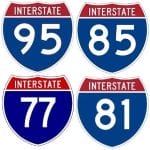 Ohio motorists traveling to Virginia and destinations farther south may use Interstate 77, which runs from Ohio through West Virginia before entering southwestern Virginia. In Virginia, I-77 passes through Bland, Wythe and Carroll counties, with the Wytheville area providing a major connection to Interstate 81.
Continue Reading
Interstate 77 is especially relevant to Ohio drivers traveling toward North Carolina, South Carolina and other southeastern destinations. Other routes, including I-64 and connecting sections of I-81, also serve Ohio motorists traveling through Virginia.
The court handling a reckless driving charge depends on the location of the alleged offense. A traffic stop on I-77 in Bland County is handled by a different Virginia court than a stop occurring farther south in Wythe or Carroll County.
For highway-specific information, review these guides:
Ohio drivers should identify the exact Virginia jurisdiction on their summons rather than assuming that every traffic stop along the same interstate is handled by the same court. Court procedures, appearance requirements and approaches to resolving reckless driving cases can vary.
Possible Defenses, Reductions and Case Preparation for Ohio Drivers
An Ohio driver’s license does not prevent a Virginia reckless driving charge from being contested. The available defense depends on the particular Virginia statute, the Commonwealth’s evidence, the alleged speed or driving conduct, and the circumstances of the traffic stop.
In reckless driving by speed cases, the defense may involve examining the reliability of speed-measurement evidence, the officer’s observations, calibration documentation and any evidence supporting a different finding concerning the alleged speed.
Possible issues and preparation include:
- The officer’s speed-measurement method;
- Radar, lidar or pacing evidence;
- Calibration and testing documentation;
- Identification of the vehicle or driver;
- The posted speed limit;
- Road and traffic conditions;
- Weather and visibility;
- Statements attributed to the driver;
- Whether the evidence establishes the charged offense;
- Vehicle speedometer calibration;
- The Ohio driving record; and
- Driver-improvement or other mitigation evidence.
Where the evidence supports it, the defense may seek a dismissal, acquittal or reduction to a noncriminal traffic offense. Virginia law also permits a finding of improper driving when the statutory requirements are satisfied, including slight culpability under Virginia Code § 46.2-869.
Any reduction must be legally supported and appropriate to the facts and evidence. A particular disposition cannot be guaranteed based solely on an otherwise favorable driving record or the fact that the defendant resides outside Virginia.
For an Ohio motorist, the defense should consider both the immediate Virginia court consequences and the longer-term criminal-record, insurance and Ohio licensing implications of the final disposition.
Review our guide to Virginia reckless driving defenses.
Related Virginia Reckless Driving Guides
- Virginia Reckless Driving Guide
- Out-of-State Driver Guide
- Virginia Reckless Driving Ticket
- Reckless Driving General
Frequently Asked Questions About Virginia Reckless Driving and an Ohio Driver’s License
Will Virginia report a reckless driving conviction to Ohio?
Virginia and Ohio participate in the Driver License Compact, which provides for interstate reporting of applicable traffic convictions. The Ohio BMV may receive information about the final Virginia disposition and determine any consequences authorized by Ohio law.
Will Ohio assess four points for a Virginia reckless driving conviction?
Not necessarily. Ohio law assigns four points for an Ohio reckless operation conviction involving willful or wanton disregard for safety. That provision does not establish that every Virginia reckless driving conviction automatically receives four Ohio points. The actual handling of a reported out-of-state conviction must be determined under applicable Ohio law and BMV procedures.
Can Ohio suspend my license because of a Virginia reckless driving conviction?
Potentially, if applicable Ohio law authorizes licensing action based on the reported offense or the driver’s circumstances. A Virginia reckless driving conviction should not automatically be treated as an Ohio license suspension. Virginia separately controls any restriction on the driver’s privilege to operate a motor vehicle within Virginia.
Is reckless driving in Virginia a criminal offense?
Yes. Ordinary Virginia reckless driving is generally a Class 1 misdemeanor, even when the driver holds an Ohio license. A conviction can create a criminal record and carries a maximum punishment of 12 months in jail and a $2,500 fine, either or both.
Can a Virginia reckless driving conviction eventually be sealed?
Potentially. Under Virginia’s petition-based sealing law, qualifying reckless driving convictions may become eligible for sealing after the applicable waiting period, generally at least seven years for a misdemeanor, if all other statutory conditions are satisfied. Sealing is not automatic and is not guaranteed.
Will a Virginia reckless driving conviction affect my automobile insurance in Ohio?
It may. Automobile insurers can consider reported traffic convictions and driving history when setting premiums or making underwriting decisions. Even without an Ohio point assessment, a Virginia reckless driving conviction may lead to a significant insurance increase. The actual effect depends on the insurer, policy and driver’s circumstances.
Can driving 86 mph be reckless driving in Virginia?
Yes. Virginia Code § 46.2-862 permits a reckless driving charge when the alleged speed exceeds 85 mph, regardless of the posted limit. An allegation of 86 mph in a 70 mph zone therefore satisfies that statutory threshold.
What happens if my Virginia reckless driving charge is reduced?
A reduction to ordinary speeding, improper driving or another noncriminal traffic offense may avoid a Virginia misdemeanor conviction. The reduced offense may still carry driving-record or insurance consequences, but the distinction between a criminal conviction and a traffic infraction can be significant.
Do I have to return to Virginia for court?
It depends on the Virginia court, the alleged offense and the circumstances of the case. In some cases, a Virginia lawyer may be permitted to appear without the Ohio driver attending personally. Other cases require the defendant’s attendance. The appearance requirement should be determined before the scheduled court date.
Can a Virginia lawyer represent an Ohio driver?
Yes. A Virginia reckless driving lawyer can evaluate the summons, examine the evidence, explain the applicable court procedures, present defenses and determine whether a reduction or other lawful disposition may be available. The lawyer can also address whether the driver’s personal court appearance may be required.
Talk to a Virginia Reckless Driving Lawyer
 An Ohio driver charged with reckless driving in Virginia should consider more than the immediate fine or possible Ohio driver’s license points. A Virginia misdemeanor conviction can create long-term criminal-record consequences, potentially substantial automobile insurance increases and additional concerns involving employment or professional licensing. Our attorneys represent motorists charged with reckless driving in Virginia, including drivers licensed in other states. Our attorneys can review the summons, identify the Virginia court, examine the available evidence, evaluate possible defenses or reductions and determine whether the driver’s personal appearance may be required. Because the final Virginia disposition may affect both the driver’s criminal record and possible home-state licensing consequences, the options should be evaluated before the scheduled court date. Learn more about working with a Virginia reckless driving lawyer.
11/8/2026