
Top Rated Richmond VA Traffic Lawyer • 1500+ Reviews
 Riley & Wells Attorneys-At-Law is an established local Richmond VA law firm. Our lawyers have over 60 years of combined traffic law experience. We are recognized for superior legal ability and high ethical standards. Our law firm is a recognized “Best Law Firm” by U.S. News & World Report. We examine each traffic case in detail. There are many strategies that an experienced Richmond VA traffic lawyer must know. We know how to best use these strategies. Our top rated attorneys use every resource the law available to secure our client the best possible outcome. CAUTION: A traffic violation conviction may increase the automobile insurance premium by as much as 79%, according to a study conducted by Insurance.com
Put our experience to work for you – Let us review your case!
30,000+ Clients Represented
1500+ Client Reviews
60+ Years of Combined Experience
Experienced Traffic Attorneys Richmond VA
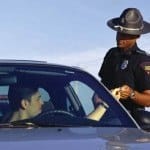 Title 46.2 of the Virginia Motor Vehicle Code classifies traffic offenses. Offenses can range from minor traffic infractions to serious criminal felony offenses. Richmond Police, VCU Police, State Troopers, Capital Police & U of R Police aggressively enforce these traffic laws. Most Richmond VA, traffic violations are issued on a Virginia Uniform Summons. This is also known as the ticket. More serious offenses such as DUI / DWI, eluding the police, and leaving the scene of an accident/hit and run will trigger an arrest. Do not plead guilty or pre-pay any Richmond VA traffic violation without first consulting an experienced traffic attorney. Our firm has been favorably reviewed more times than any other firm that defends traffic cases in Richmond VA.
Richmond VA Traffic Lawyer Client Review


Exceptional Traffic Court Representation Richmond VA
 Traffic cases goes before the Judge on the trial date in the Richmond General District Court. The defendant motorist must either retain a Richmond VA traffic lawyer or the motorist must appear in court to defend the case. The procedural rules of trial are very rigid and are followed closely by the Judge. Non lawyers are often confused by these rigid procedural rules, especially the rules of evidence. Evidence and arguments are presented to the Judge. Improve your chances of successfully defending your case by retaining a top rated Richmond VA traffic lawyer who will present your best defense. Let us review your case! We can protect you even if you think you are guilty.
Riley & Wells Attorneys-At-Law Can Defend Any Richmond VA Traffic Violation
- Aggressive driving
- Out-of-state drivers
- Speeding ticket
- Accidents
- Toll violations
- Moving violations
- Fail to yield to emergency vehicle
- No valid driver’s license
- No automobile insurance
- Reckless Driving
- Fail to “Move Over”
- Suspended driver’s license
- Handheld cellphone use while driving
- Habitual offender
- Hit & Run
- DUI / DWI
- Eluding the police
- License restoration
- Commercial driver violations
- Driving revoked 18.2-272
Free Consultation with Most Rated Richmond VA Traffic Lawyers
 Some folks think they do not need a Richmond VA traffic lawyer for their case. One of the biggest issues with representing yourself is being able to spend hours in Richmond courthouse. The average person typically does not understand the best course of action to defend a particular traffic case. Experienced Richmond VA traffic attorneys know the best tactics and options for obtaining the best results. Our traffic attorneys spend hours in the Richmond VA Courts every week and are familiar with the habits of the different judges and the law enforcement officers who make the arrests and issue tickets for traffic violations. This local knowledge is invaluable in order to present the best defense.
Richmond VA Traffic Violation Defense Attorneys
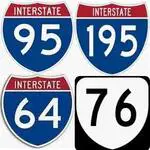 Richmond VA Interstates 95, 64, 195, other limited access highways like the Downtown Expressway (Route 195) & the Powhite Parkway (Route 76) and hundreds of secondary roads are patrolled by the law enforcement community. The Virginia State Police is the primary agency that patrols the interstates highways. The Richmond Police Department tends to limit its patrols to the limited access highways and city streets. VCU Police, Capitol Police and U of R police have a specific narrow jurisdiction to patrol. Specific areas within the city that are patrolled by law enforcement include: Downtown, The Fan, Church Hill, Shockoe Bottom, VCU, Ginter Park, Manchester, Midtown, Stratford Hills, Carytown & the Museum District to name a few.
Richmond VA Traffic Ticket Traffic Court Representation
 A Richmond VA traffic ticket and the associated penalty can jeopardize your future. A professional can assist you with your traffic case. Most traffic ticket violations are classified as moving violations. These offenses can trigger various negative consequences. We can protect your driving record and automobile insurance policy. The Court imposes incarceration and loss of driving privileges in more serious cases. Our Richmond VA Traffic Lawyers can help you secure the best outcome possible with any case.
Penalties for Traffic Violations Richmond VA
- Maximum $2,500 fine
- Incarceration
- Loss of driving privileges
- Moving violation demerit points
- Auto insurance premium increases
- Employment issues
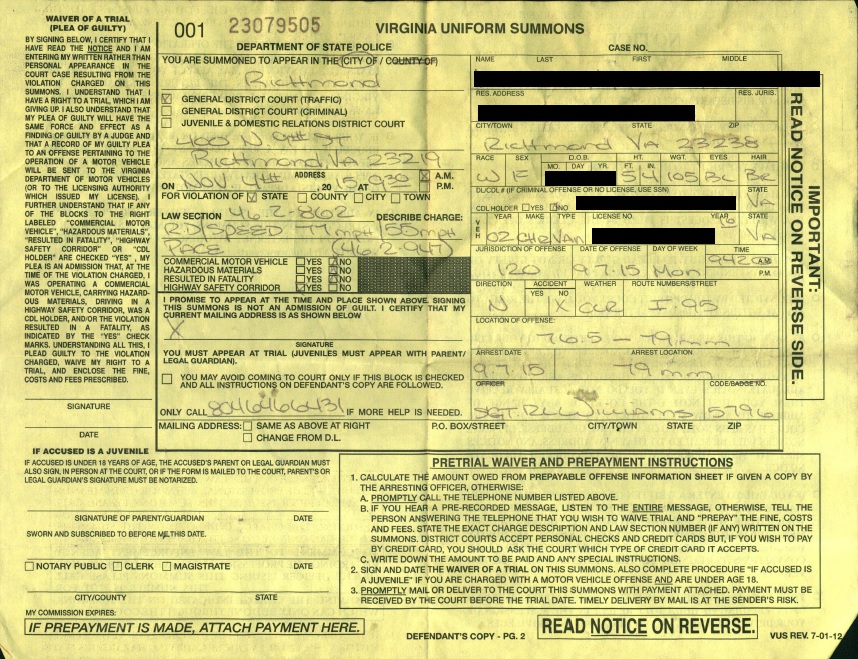
Virginia Uniform Summons Traffic Ticket Issued by Richmond Police
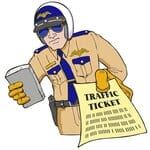 A Virginia Uniform Summons is the legal document issued by Richmond VA law enforcement officers during a traffic stop. Motorists often refer to this document as either a traffic ticket or citation. The summons serves as legal notice for the alleged traffic violation. Signing the summons is not an admission of guilt. The summons advises you that a hearing will be at one of three of Richmond’s Courthouses on a particular date and time. Law enforcement can also issue a summons for criminal offenses such as reckless driving and other misdemeanor offenses. Allow our top rated Richmond VA traffic lawyers to review your summons. We can develop a defense strategy even if you think you are guilty.
Richmond VA Traffic Attorney Recognized by Virginia Super Lawyers
 Super Lawyers is a legal rating service of outstanding attorneys from over 70 practice areas including traffic law who have attained the highest degree of recognition and professional achievement. This organization recognizes the nation’s top rated lawyers using a patented process of independent research and peer input. Our Richmond VA traffic lawyers have been recognized by this publication since 2009. No more than five percent of the Virginia lawyers are named to this list and no more than 2.5 percent are named to the Rising Stars list. This recognition is merit based. Retain a New Richmond VA traffic attorney who has been recognized by Virginia Super Lawyers with this elite award.
Richmond Virginia Traffic Court is Adversarial By Design
 If you have been accused of a traffic violation, then your case will eventually be set for trial before the Richmond General District Court. Trials are adversarial in nature. This involves a structured and formalized dispute between the defense and the Richmond Commonwealth Attorney. The adversarial system ensures a fair trial according to the rules of law and evidence by allowing each party to present their case and challenge the other party’s evidence and arguments. The Richmond judge evaluates the evidence, arguments, and reaches a verdict. This system ensures that the prosecution meets its high standard of proof. Our Richmond traffic lawyer can help you with your case.
Petition Richmond Circuit Court to Restore Virginia Driving Privileges
 Convictions for certain offenses will revoke Virginia driving privileges. This can be true with certain DUI convictions or an old Habitual Offender revocation. In most cases, a driving privilege revocation requires a Petition to Restore Driving Privileges to be filed and argued before the Richmond Circuit Court. We frequently represent clients with this Petition. In many instances our client now resides in another state and needs to resolve an old Virginia suspension or revocation of driving privileges. This scenario require the petitioner to clear up his/her Virginia status in the National Driver Registry.
Out of State Driver Retain Top Rated Richmond Traffic Lawyer
 Richmond is located along the Interstate 95 and 64 corridors. Millions of travelers use this highway every day. Out-of-state drivers must defend their Richmond traffic ticket because a conviction will be reported back to the home state. The home state and automobile insurance company may then take action against the driver. As such, many licensed drivers from states like Florida, Georgia, South Carolina, North Carolina, Maryland, District of Columbia, Delaware, Pennsylvania, New Jersey, New York, Connecticut & Massachusetts drive through Richmond VA. In many instances, we can motion to waive our client’s appearance so that our client does not have to return to Richmond VA for the trial. Let our top rated traffic lawyers review your case!
Superb Avvo Rated Richmond Virginia Traffic Lawyers
 The Avvo Rating can help you find the right Richmond Virginia traffic lawyer. Avvo is a legal directory that rates lawyers using a special model on a scale of 1 (Extreme Caution) to 10 (Superb). Members of our Richmond traffic law firm maintain a 10.0 Superb Avvo rating. Avvo gathers relevant information from state bar associations, other organizations that license legal professionals and consumers to calculate the Avvo rating. The same set of standards is used for all lawyers evaluated. The Avvo rating is merit based. You cannot pay a fee to improve your Avvo rating. Exercise caution when you consult with a Richmond VA traffic attorney who is not properly rated.
Holding Cell Phone While Driving is a Richmond VA Traffic Violation
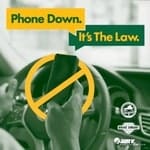 The Richmond law enforcement community aggressively enforces the Virginia “Hands Free” driving law. The law prohibits having a phone or handheld personal communication device in your hand while driving pursuant to Va. Code §46.2-818.2. Richmond police officers do not need to obtain evidence that you were doing anything in particular on the phone or device like texting to prove a violation. This offense is a moving violation demerit point offense. A conviction will post to the driving record. However, there are exceptions. The hands free law does not apply to drivers who are lawfully parked or stopped, drivers reporting emergencies, and drivers using an amateur or citizens band radio.
VCU Police Aggressively Enforce The Richmond VA Traffic Laws
 The VCU Police Department is serious about traffic enforcement. It is common for 25 of the police department’s 85 officers to be on patrol. The Virginia Commonwealth University campus is located in Downtown Richmond. According to VDOT, VCU accounts for 7% of the road mileage in Richmond, but accounts for over 60% of serious or fatal crashes.
Richmond Virginia Hit & Run DISMISSED
 Our traffic lawyers represented a client for a felony hit and run. The accident involved personal injury. The client was driving through an Intersection in the City of Richmond. The vehicle struck an object later determined to be a pedestrian near a crosswalk. The pedestrian was injured. The client circled the block to return to the scene of the accident. The client explained to police that she never saw a pedestrian. The Judge agreed with our argument that our client did not violate the Hit & Run law and dismissed the case.
Richmond Reckless Driving Speeding 81/55 DISMISSED
 Our traffic attorneys represented a client from New York for reckless driving because he was driving 81 mph. The State Trooper used R.A.D.A.R. to calculate the speed. The State Trooper alleged a criminal misdemeanor reckless driving violation pursuant to Va. Code 46.2-862 due to the speed of 81 mph in a 55 mph speed zone. We could appear in Court for our client without her having to return. We were successful with arguments to protect our client. We convinced the Judge to dismiss the case.
Richmond DUI with BAC 0.10 DISMISSED
 Our lawyers represented a client who was pulled over by the police for defective equipment. The police officer suspected our client of DUI. Our client performed well on all the field sobriety exercises. A Breath Test at the police station produced a blood alcohol content (BAC) result of 0.10. We also made permissible inference breath test arguments. Intoxication must be proved during the operation, not at the police station. The Judge agreed with our arguments and the theory of the case. Case dismissed.
Contact us today for a free evaluation of YOUR case!
11/10/2015 | Updated 2/23/2024
Richmond Reckless Driving << Previous < > Next >> Richmond Speeding