
Top Henrico County VA Speeding Ticket Attorney • 1500+ Reviews
 Henrico Police and State Police aggressively enforce the speed limit. An experienced top rated Henrico County VA speeding ticket attorney can insure that your rights are protected, that you are not intimidated in the courtroom and that you increase your chances of securing the best result possible. In many cases, our Henrico VA speeding ticket lawyers can successfully resolve speeding ticket cases without the client motorist having to appear in court. We analyze every case in detail and use proven strategies to secure the best outcome. Let us review your case! CAUTION: A Henrico VA reckless driving speeding conviction will on average increase the automobile insurance premium by as much as 73% or $1,046 EACH YEAR according to Insurance.com.
30,000+ Clients Represented
1500+ Client Reviews
60+ Years of Combined Experience
Experienced Henrico County Speeding Ticket Defense Lawyer
 Riley & Wells Attorneys-At-Law are local Henrico County VA speeding ticket attorneys that are dedicated to representing clients before the Henrico Courts who have been accused of speeding offenses. Our lawyers defend speeding ticket cases every week in the General District Court. Representing clients before the same Henrico Judges every week gives us an advantage over lawyers unfamiliar with local rules. We have been recognized as a “Best Law Firm” for traffic law by U.S. News & World Report. Our attorneys have accumulated over 60 years of combined traffic law experience. You can benefit from our experience. Our firm has been positively reviewed more than any other law firm that defends Henrico County VA speeding ticket cases.
Speeding Ticket Defense Attorney Client Review – Henrico VA


Penalties for Speeding Ticket Convictions – Henrico County, Virginia
- Excessive fines and court costs
- Auto Insurance premium increases
- Assessment of DMV demerit points
Henrico County VA Reckless Driving Speeding Ticket Attorneys
 The most serious type of speeding ticket is the criminal misdemeanor reckless driving speeding ticket. Virginia law states that driving faster than 85 mph or driving 20 mph or more above the speed limit is reckless driving according to Va. Code 46.2-862. The speed limit on some Interstates in Henrico VA is 70 mph. It can be hard to believe, but you can be convicted of a criminal misdemeanor offense for driving 16 mph over the speed limit. We defend this type of speeding ticket in the Henrico General District Courts every week. We know what defenses work with Henrico Judges. Put our experience to work for you. We have the expertise to present your best defense.
Riley & Wells Attorneys-At-Law Defend Henrico VA Speeding Ticket Cases
- 46.2-862 Reckless Driving – Speeding
- 46.2-870 Speeding
- 46.2-871 School Buses
- 46.2-872 Vehicles Under Special Permits
- 46.2-873 Speeding in a School Zone
- 46.2-873.1 Nonsurface Treated Highways
- 46.2-873.2 Rural Rustic Roads
- 46.2-874 Business or Residential District
- 46.2-875 Certain Other Highways
- 46.2-877 Impeding the Flow of Traffic
- 46.2-878 Change Speed Limits
- 46.2-878.1 Highway Work Zone
- 46.2-881 Bridges, Tunnels and Interstates
- 46.2-947 Highway Safety Corridor
Virginia Uniform Summons Speeding Ticket Issued by Henrico Police
 A Virginia Uniform Summons is the legal document issued by Henrico police officers during a traffic stop for speeding. Most people refer to this document as either a speeding ticket. The summons serves as legal notice for the alleged speeding violation. Signing the summons is not an admission of guilt. The summons advises you that a trial date has been set in the Henrico County VA General District Court. A law enforcement officer can also issue a summons for criminal offenses such as reckless driving and other misdemeanor offenses. Allow our Henrico VA speeding ticket attorneys to review your summons. We can develop a defense strategy for your Henrico VA speeding ticket case even if you think you are guilty.
Free Henrico VA Speeding Ticket Consultation with Top Rated Lawyers
 The biggest issue with representing yourself before the Henrico General District Court for a speeding ticket case is often being to make the trial date. Other considerations involve the lack of experience and legal knowledge. The average person does not understand the best course of action to defend a particular speeding ticket case. Experienced Henrico VA speeding ticket lawyers know the best tactics for obtaining the best results. Our lawyers spend hours in the Henrico County VA Courts every week and are familiar with the habits of the different judges and the law enforcement officers who issue speeding tickets. This local knowledge can prove to be invaluable in deciding how to best defend a Henrico County speeding ticket.
Henrico VA Speeding Attorneys Recognized by Virginia Super Lawyers
 Super Lawyers is a lawyer rating service of outstanding attorneys from more than 70 practice areas who have attained the highest degree of peer recognition and professional achievement. This organization recognizes the top lawyers nationwide across a variety of practice areas and firm sizes using a patented process of independent research and peer input. Our Henrico County VA speeding ticket lawyers have been recognized by this publication since 2009. No more than five percent of the Virginia lawyers are named to this list and no more than 2.5 percent are named to the Rising Stars list. This recognition is merit based. Retain a top rated Henrico VA speeding ticket attorney who has been recognized with this elite award.
Representation for the Best Speeding Ticket Defense – Henrico VA
 The Virginia State Troopers & Henrico Police who issue speeding tickets in Henrico VA use RADAR, LIDAR and the PACE method to gather speed evidence. Henrico VA law enforcement officers must be trained by the Virginia Department of Criminal Justice Services before they can use any of these devices for enforcement purposes. Our Henrico VA speeding ticket lawyers understand these methods of detecting speed. We use effective traffic court procedures and technical defenses to protect our clients. There are several key steps that must be followed in order for a law enforcement officer’s testimony about a speed detection result can be admissible. Va. Code 46.2-882 must also be following by the prosecution in speeding cases. Allow us to review your case.
Interstate 295 Henrico VA Speeding Ticket Attorneys
 The primary purpose of Interstate 295 is to direct long-distance travel away from Downtown Richmond. I-295 is a 53 mile long corridor in the central part of Virginia beginning south of the I-85 / I-95 interchange in Petersburg VA and connecting to I-64 in the westend of Henrico County. This interstate is 52 miles long with approximately 20 of those miles being in Henrico County. There are 9 exits on I-295 that serve as interchanges with some of the major highways in the area. Many of the travelers on this stretch of interstate highway are either not from the area or are out-of-state drivers. Consult a top rated Henrico VA speeding ticket attorney for your Henrico I-295 speeding ticket.
Henrico County is Home to Various Speed Traps Throughout the County
 Henrico County is home to 3 major interstates, several busy U.S. highways and over 700 miles of Virginia Department of Transportation (VDOT) maintained roads. State Police and Henrico Police set up speed traps throughout the County. Speed traps are an area of the road where police officers hide in order to detect vehicles exceeding a speed limit. One of the more popular speed traps is located within the I-95 / I-295 interchange. The I-95 south exit ramp at Exit 84 to I-295 south has a speed trap on the left side of the ramp at an “Authorized Vehicles Only” median cut through before the travel lanes merge with I-295. State Police refers to this speed trap as the “fishing hole.”
Speedometer Calibration For Henrico County VA Speeding Ticket Cases
 There are instances in Henrico County speeding ticket cases where the motorist is operating a vehicle with a defective speedometer. A speedometer calibration may assist our top rated Henrico VA speeding ticket lawyer. A speedometer calibration is a specialized test performed by qualified mechanics that measures the accuracy of a vehicle’s speedometer. Not just any mechanic can perform this type of diagnostic test. The test comes with a report showing whether the speedometer was off and by how many miles per hour. An experienced Henrico VA speeding ticket lawyer will introduce evidence of the calibration results pursuant to Va. Code 46.2-942. Such evidence shall be considered by the court in both determining guilt or innocence and in fixing punishment.
Henrico Virginia Speeding Ticket Cases Are Adversarial By Design
 If you have been issued a Henrico speeding ticket, then your case will eventually be set for trial before the Henrico General District Court. Trials are adversarial. This involves a structured and formalized dispute between the Henrico prosecutor’s office and the defense. The adversarial system is designed to ensure a fair trial process subject to the rules of law and evidence by allowing each side to present their case and to be able to challenge the other’s arguments and evidence. The Henrico judge evaluates the evidence and arguments to reach a verdict. This system ensures that the prosecution meets its high standard of proof. Do not come to court and say I was not speeding and expect that to work.
Henrico VA Interstate 64 Speeding Ticket Defense Lawyers
 There are two sections of Interstate 64 in Henrico County that are separated by the City of Richmond. Approximately 20 miles of I-64 highway miles are located in Henrico. The westend section of I-64 enters the county from Goochland County near Short Pump. I-64 eventually interchanges and overlaps with I-95 and I-195 shortly after it enters Richmond. I-64 then re-enters the county near the Route 360/Mechanicsville Turnpike interchange and runs through the eastern part of the county, passing the Richmond Airport, before eventually exiting near the Bottoms Bridge area of New Kent County. Henrico Police and State Police routinely set up Henrico VA traffic speed traps along this stretch of interstate highway. Allow us to review your case.
Henrico VA Speeding Ticket Attorney for Virginia State Police Cases
 The Virginia State Police has primary highway patrol responsibility for all Henrico County interstate highways. This includes I-95, I-295, I-64 and Route 895 also known as the Pocahontas Parkway and Pocahontas 895. The Henrico County State Police barracks or Division I Area Offices 1 & 8 are located on Brook Road near I-295. These are the state troopers, including the specialty motorcycle unit, that patrol the Henrico County interstates 24 hours a day, 7 days a week, 365 days a year. A speeding ticket issued by a State Trooper will be set for trial in the Henrico General District Court. Our Henrico County VA speeding ticket lawyers defend these cases and experience to present your best defense before the Court.
Out of State Motorist Speeding Ticket in Henrico County VA
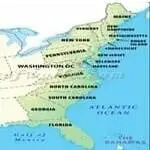 Out-of-state drivers are frequently pulled over by Henrico Police and State Police for speeding violations. Do not be so quick to dismiss your Henrico County VA speeding ticket if this has happened to you. A conviction will be reported back to the home state Department of Motor Vehicles along with the automobile insurance company. Exercise caution because sometimes what you think is a speeding ticket is actually a reckless driving criminal misdemeanor case. Many of our clients are not from the area or are drivers from other states such as Florida, Georgia, South Carolina, North Carolina, Maryland, Delaware, Pennsylvania, New Jersey, New York, Connecticut, Massachusetts, Vermont & Maine because large numbers of motorists drive through Henrico County on the interstates.
Driver Improvement Clinic for Henrico VA Speeding Ticket Cases
 There are instances where completing a Virginia DMV approved driver improvement clinic can assist our top rated Henrico VA speeding ticket lawyer with your defense. Allow us to review your speeding ticket case. There are some instances where completing such a course will not benefit your case. An experienced Henrico County Virginia speeding ticket lawyer that specializes in this area will be able to properly advise you. The Virginia DMV approved course is an eight-hour session. These clinics can be completed on-line without our client having to return to Henrico. The driver improvement class educates students about the current traffic laws and teaches defensive driving techniques that can help you avoid and prevent crashes.
Henrico Police Issue Speeding Tickets in Response to Citizen Complaints
 The Henrico Division of Police is a police department with 600 sworn police officers. Many of these officers are assigned to the patrol division who issue speeding tickets. The police department also has a specialty unit called the Traffic Safety Unit. This unit accepts traffic and excessive speed complaints from the general public. Increased police patrols and the installation of more speed traps are often a result of these speeding complaints. The police officer must be in uniform and display his badge of authority if LASER or RADAR is being used to gather evidence to then issue a speeding ticket. Our top rated Henrico VA speeding ticket attorneys can help you with your case. Call us!
Henrico County Work Zone Speed Limit Photo Camera Enforced
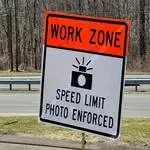 Photo speed cameras are a technological tool for enforcing the speed limit. Speed cameras may be fixed or portable, and are placed along the roadway to automatically record speed limit violations. In 2020, Virginia passed a law authorizing the use of speed cameras in work zones. The Henrico police officer can either mail a summons or personally issue a summons. If mailed, there is a rebuttable presumption that the owner of the vehicle was the driver at the time of the speeding violation. If Henrico Police personally issues a summons at the time of the violation, then the resulting conviction is added to the driving record and can be used for insurance purposes in determining coverage.
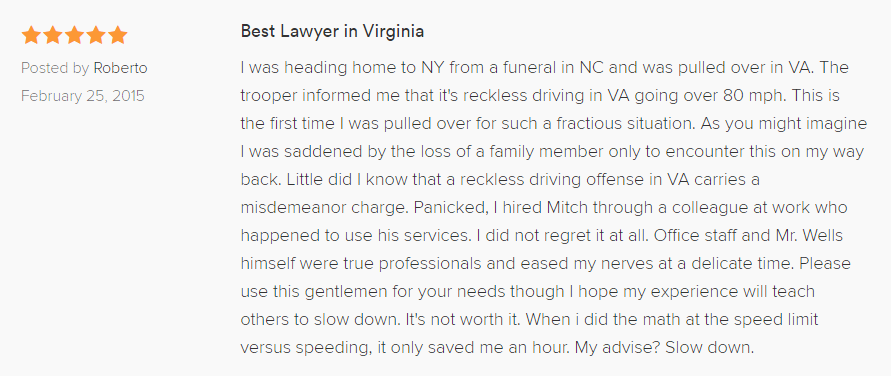
Henrico County Speeding Ticket Defense Lawyer Client Review
“AV Preeminent” Henrico VA Speeding Ticket Attorneys
 For over 135 years, Martindale-Hubbell has been the authority for evaluating lawyers for legal ability and ethical standards through an established Peer Review Rating system. Riley & Wells Attorneys-At-Law are AV Preeminent® rated Henrico VA Speeding Ticket Attorneys. The top Martindale-Hubbell rating standard. This is awarded to accomplished attorneys who are ranked at the highest level of professional excellence for legal expertise, communication skills, and ethical standards. Retain a Martindale-Hubbell AV Preeminent rated Henrico County VA speeding ticket lawyer for your speeding case. Review the lawyer or law firm’s legal rating along with any prior client reviews and exercise caution before you retain a Henrico VA attorney with an inferior rating for legal ability and ethical standards.
State Police Speed Limit Enforcement by Aircraft in Henrico VA
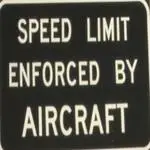 Visual Average Speed Computer and Recorder or VASCAR has been a method of speed detection in Virginia since 1988. The VASCAR operator uses a microcomputer along with a known distance to calculate a vehicle’s speed. In 2000, the Virginia General Assembly authorized the State Police to use VASCAR in aircraft for enforcement on the interstate. A single-engine Cessna 182 then takes to the skies and circles the area looking for speeders. The VASCAR operator and vehicle spotter in the plane then radios a state trooper on the ground who makes the traffic stop to issue the speeding ticket. The highway signs are still up but the State Police aircraft speed enforcement program is not in operation because of funding.
Let us review YOUR case. We can help!
11/10/2015 | Updated 12/1/2023